Isabel Hardman

Isabel Hardman

Isabel Hardman is assistant editor of The Spectator and author of Why We Get the Wrong Politicians. She also presents Radio 4’s Week in Westminster.

Badenoch’s substitute fails to land on Rayner at PMQs

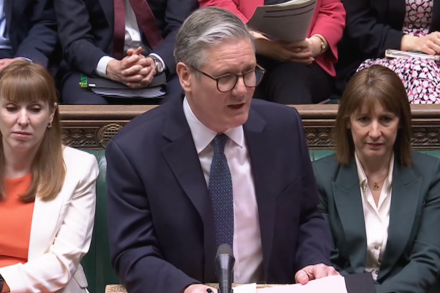
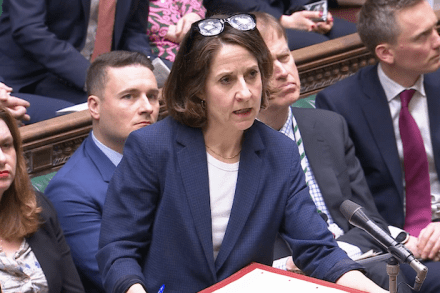
Angela Rayner was so keen to get out of the traps with her criticism of the last Conservative government at today’s deputy prime minister’s questions that she almost forgot to welcome her new sparring partner. Alex Burghart is not yet a household name: in fact, he isn’t even Rayner’s direct counterpart, as Kemi Badenoch hasn’t yet named a deputy. He had a reasonable session, and even made a stab at doing something no-one else has yet managed, which is to define ‘Starmerism’. Rayner enjoyed herself, as ever, while Rachel Reeves, sitting next to her on the government benches, had the most uncomfortable session.

Resignations alone won’t fix the Church of England

Will there be more resignations following the departure of Justin Welby as Archbishop of Canterbury? The Church is, as on everything else, split on the issue, with some bishops saying that there needs to be wider accountability, and the Archbishop of York Stephen Cottrell saying that no more resignations are necessary. Given part of the criticism of the Makin report that triggered Welby’s departure was that he did not ensure that others performed their responsibilities around trying to stop Smyth, it would be odd for there not to be some wider ramifications.  The report repeatedly refers to Church officers knowing of the abuse that Smyth was still perpetrating, but not reporting it to the police.

Keir Starmer has a problem answering questions

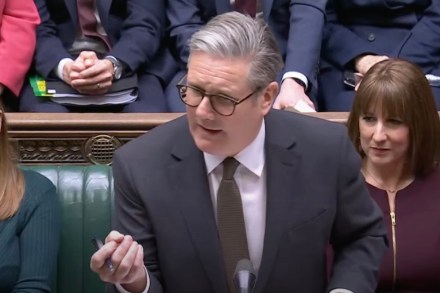
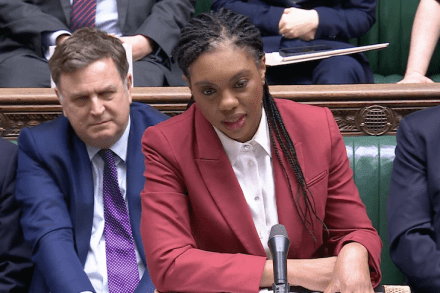
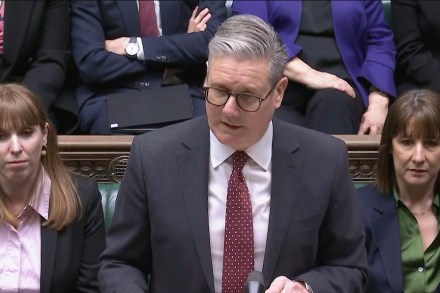
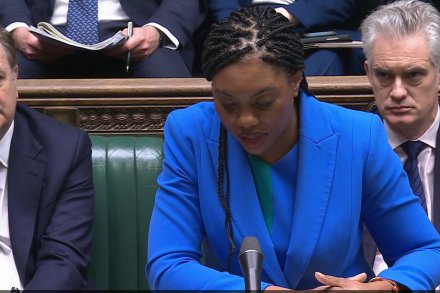
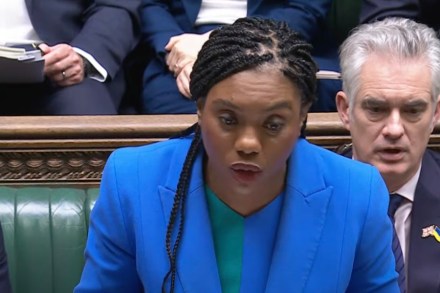
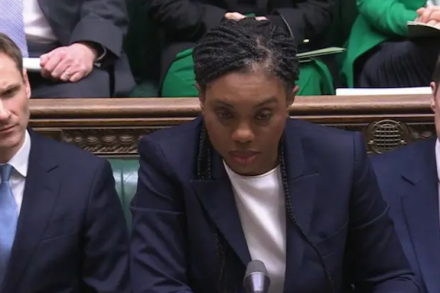
Kemi Badenoch didn’t have the best start at today’s Prime Minister’s Questions: she asked a question that had apparently already been answered, allowing Keir Starmer to mock her early on. But the Prime Minister ultimately had the tougher session. That repeated question first came from Lib Dem Christine Jardine at the very start of the session. She reported GPs and charities worrying that the rise in employers’ national insurance contributions meant they would not be able to keep offering patients the service they deserved. Starmer started replying that ‘because of the tough decisions we took’, before he was interrupted by theatrical groans from opposition MPs. He then continued: We have put forward a Budget with an extra £25.

Justin Welby quits as Archbishop of Canterbury

13 min listen

Justin Welby has announced he is resigning as Archbishop of Canterbury over his handling of serial child abuser John Smyth. In a statement, he said ‘it is very clear that I must take personal and institutional responsibility for the long and retraumatising period between 2013 and 2024’. He says he believes stepping aside ‘is in the best interests of the Church of England’. Did he have to go? And who might replace him?  Also on the podcast, the assisted dying bill was published last night, 38 pages long, and will be debated in just under three weeks’ time. Keir Starmer admitted that he hasn't decided yet which way way he will vote, so is Kim leadbeater's bill enough to sway the floating voters?  Katy Balls speaks to James Heale and Isabel Hardman.

MPs should take their time over the assisted dying bill

You don't need to have a strong opinion either way on assisted dying to be concerned about the latest attempt to legalise it: from a scrutiny perspective, Kim Leadbeater's bill leaves a lot to be desired. It was published last night, 38 pages long, and will be debated in just under three weeks' time. Most MPs only find out the implications of a bill when they see them in human form Critics who are saying MPs will get just five hours to debate the bill are referring to the second reading stage, with further detailed scrutiny available at its committee, report and third reading stages. However, once a bill passes its second reading, the Commons is seen to have approved its principles and overall design, and the following stages are more about finessing that.

Justin Welby quits as Archbishop of Canterbury

In the past few minutes, Justin Welby has announced he is resigning as Archbishop of Canterbury over his handling of serial child abuser John Smyth. In a statement, he said 'it is very clear that I must take personal and institutional responsibility for the long and retraumatising period between 2013 and 2024'. He says he believes stepping aside 'is in the best interests of the Church of England'. At the end of last week, Welby had said he had considered resigning, and had decided that it would not be in the best interests of the church to do so. So what changed? Like so many resignations, it came after those both inside the church and outside made it very clear that they did not agree that Welby staying on was in the best interests of the church after all.

Can Justin Welby cling on?

MPs are getting involved in the row over Justin Welby’s position as Archbishop of Canterbury, with Conservative MP Nick Timothy requesting an urgent question in the Commons today. Pressure for Welby to resign has been building from various quarters within the Church of England's General Synod and the wider church. As in politics, some are focused on specific issues, while others have broader grievances with Welby. How will the Church and other institutions commit to meaningful change? The current pressure stems from the Makin Review’s report on the Church’s handling of ‘serial child abuser’ John Smyth, a barrister and Christian leader who is said to have abused boys in a garden shed in Winchester.

Evangelicals have questions to answer over the John Smyth scandal

Justin Welby has said he considered resigning as Archbishop of Canterbury over the findings of the Makin Review into the serial abuser John Smyth. That report, which emerged this week, found the Church of England had, from 2013, missed opportunities to bring Smyth to justice: from that point onwards, Welby and other senior figures knew about the abuse that Smyth exacted on his victims in the late 1970s and early 1980s.  That line, ‘you will protect the work?’, is particularly telling Smyth, a barrister and Christian leader, was accused of beating and abusing boys in the shed in his garden in Winchester. Instead of ever being brought to justice, Smyth was allowed to move to South Africa, where he ran summer camps.

Laura Trott’s Commons debut gives a clue to Kemi’s tactics

What difference has Kemi Badenoch’s victory made to the way the party talks about education? Badenoch doesn’t want to make policy straight away, having stood on a platform promising a fundamental rethink of what the Conservatives stand for. Today’s Education Questions in the Commons suggested that in the meantime, she wants her frontbenchers to put their efforts into defending the party’s legacy. Laura Trott had been appointed to the shadow education secretary brief just hours before the question session, along with Neil O’Brien in the shadow minister of state role.

Who will make up Kemi’s shadow cabinet?

12 min listen

Kemi Badenoch is the new leader of the opposition, and we have an early indication of who will make up her shadow cabinet. She has already chosen her chief whip in loyalist Rebecca Harris; Nigel Huddleston and Dominic Johnson will be party chairman; Laura Trott will be shadow education secretary; Neil O’Brien will be shadow minister for education – crucially, a Jenrick backer. Is she going for party unity? Who will take the top jobs in team Badenoch? Also on the podcast, it’s anything-but-the-budget-week for Labour, who are trying to move the agenda along from last week’s fiscal event with a raft of announcements. Today, the prime minister unveiled his plan to ‘smash the gangs’ and announced that university tuition fees would rise.

Rishi Sunak enjoyed his last Commons hurrah

Rishi Sunak’s final act in the Commons as leader of the opposition was one he clearly enjoyed. The outgoing Conservative leader had what is normally the unenviable task of responding to the Budget just minutes after it had been delivered, before the small print reveals the real story. Rachel Reeves had helped him quite a bit with this, though, by announcing or hinting at a lot of what was to come over the past week or so. Sunak could also dodge the demands of Labour ministers to offer an alternative plan, as he’s off in just a few days and will be replaced by a new leader who will at some point have to answer that question.

Rachel Reeves’s ‘stability Budget’ contained few surprises

All the political framing of the past three months has been around Rachel Reeves’ first Budget. Black holes have been ‘discovered’, public services have been found to be in a worse state than expected, and Liz Truss has been exhumed at every opportunity (or at least, when she hasn’t been inserting herself into the political narrative). Today’s speech from Rachel Reeves contained quite a few attempts to deal with the failures of that framing, too. She repeatedly insisted that she was keeping the promises in Labour’s election manifesto, after weeks of confusion about what ‘working people’ are.

Rishi Sunak says farewell to Keir Starmer

When Rishi Sunak was Prime Minister, he and Keir Starmer had some of the most repetitive and uninformative sessions at Prime Minister’s Questions. Today was his final stint as leader of the opposition in this forum, and the session was charming. It covered the coast-to-coast route, which travels through his Richmond constituency, the importance of cricket in schools, AI and tolerance. Even the question covering the thorniest topic, Northern Ireland, was polite: Sunak merely pointed out that it was a special part of the UK which required great care, and asked Starmer not to neglect it. The Prime Minister agreed. Starmer paid tribute to Sunak’s service, hard work and decency, while nodding to the fact that the pair had disagreed and argued at some length.

The row over Chelsea’s AI garden

The gardening world is a gentle, friendly place. Rows are rare, with disagreements creeping in softly like moss, not blowing up the way they do in politics. Everyone is quite nice to one another, almost to a fault. Which is why the row over Tom Massey’s AI garden at the Chelsea Flower Show is quite so striking. Since the line-up for the 2025 Royal Horticultural Society version of London Fashion Week was announced last week, gardeners have been absolutely and abnormally furious about the first shoots of AI appearing. Massey's garden promises to be an ‘intelligent’ one, using AI trained on RHS plant data and advice to tell visitors how the plot is doing.

The problem with Labour’s ‘sticking plaster politics’

14 min listen

Wes Streeting has been out on the airwaves this morning, giving us a better idea of what will be in the Budget when it comes to the NHS. In an attempt to resuscitate a ‘broken but not beaten’ NHS, he has announced a cash injection reported to be up to £7 billion – including £1.57 billion for new surgical hubs, scanners, and radiotherapy machines. The Health Secretary did stress, however, that this will not be enough to save the NHS from a winter crisis. How far will this money go? Oscar Edmondson speaks to James Heale and Isabel Hardman. Produced by Oscar Edmondson.

Why is Lindsay Hoyle telling off Rachel Reeves?

Is the Speaker being a bit precious with his complaint about pre-Budget announcements? Lindsay Hoyle made a statement in the Commons this afternoon in which he issued a stinging rebuke to Rachel Reeves and other ministers for going ‘around the world telling everybody’ about significant Budget policies, rather than making the announcements to MPs first. He was very clear that he meant the Chancellor in particular, saying: While this can hardly be described as a leak – the Chancellor herself gave interviews on the record, and on camera – the premature disclosure of the contents of the Budget has always been regarded as a supreme discourtesy to the House; indeed, I still regard it as such.

Keir Starmer is borrowing from Nick Clegg’s playbook

Keir Starmer has given up trying to define what a ‘working person’ is after last week’s debacle, announcing at the start of his pre-Budget speech today that working people know who they are. The Prime Minister said: ‘I know some people want to have a debate about this, and I know there will always be an exception that proves the rule. Welcome to the wonders of a diverse country. But I also know that the working people of this country know exactly who they are.’ Even though Starmer is explicitly copying the Tories in 2010, he sounded more like Nick Clegg in that era It’s a better move than attempting to draw increasingly tight circles around the people Labour isn’t going to raise taxes on.

Dowden and Rayner do battle for the last time

Angela Rayner and Oliver Dowden shared a tender moment today at Deputy Prime Minister’s Questions as they bade farewell to each other. This will be the last time the pair face each other across the House because the Tories are – finally – about to pick their new leader who will bring in their own deputy. ‘I will miss our exchanges, the battle of the gingers,’ joked Rayner, who got through the questions easily. Dowden used his last session to try to pin Labour down on its planned rises to National Insurance contributions for employers. His opening question was: ‘Mr Speaker, what is the Deputy Prime Minister’s definition of working people?

Do we really need more ‘national conversations’?

Other than being fired out of a cannon to raise funds for the NHS, what could Wes Streeting possibly learn from a ‘national conversation’ about the NHS that he hasn’t already picked up from his time studying his own brief? At the launch event for that consultation, the Health Secretary explained that public buy-in was essential for the big reforms necessary to save the health service. He said: ‘I suppose you could say, well, you should just come in and impose your view of change,’ he said. ‘I’d just say to people, be careful what you wish for. The last time a new health secretary came in after a general election where their party won power, that was Andrew Lansley.

Does Streeting’s NHS plan amount to anything?

13 min listen

This morning, Health Secretary Wes Streeting launched the ‘biggest consultation in NHS history’ in a bid to get public input into how to save the UK’s flailing health service. The British public and clinicians are being asked to share their experiences and ideas to help 'fix our NHS'. After years of discussion and reviews, how likely is it that Labour delivers the urgent reform that the NHS needs?  Elsewhere, there have been more signs of what might be in the budget at the end of the month. Who might the big winners and losers be? James Heale discusses with Katy Balls and Isabel Hardman.  Join Freddy Gray a special live recording of Americano on Thursday 24 October. You can buy tickets at spectator.com/electionspecial.