Helen Nugent

Pay rises, payday loans, students and savings

From our UK edition

Women do ask for pay rises - they just don't get them. That's according to research by Cass Business School and the universities of Warwick and Wisconsin. The theory that women get paid less than men because they are not sufficiently pushy in the workplace is not true. Women are as likely as men to ask for a pay rise - but are less likely to get one, the study, which looked at 4,600 workers, revealed It found 'no support' for the 'reticent female' theory, whereby women avoided asking for more money. For what it claimed was the first time, the study eliminated any impact from part-time workers earning less than their full-time counterparts, by comparing full-time males with full-time females, and part-time males with part-time females.
Parents willing to pay tens of thousands more to live near a top school

From our UK edition

I have no recollection of my first day at school. I was four-years-old so it's not surprising that I can't dredge up the memory. I do recall, however, refusing to return to nursery after being scared witless by Father Christmas. Back then (late 1970s), kids were dropped off at a new school and expected to get on with it. Today it's markedly different. Ahead of my four-year-old niece's foray into education, she has visited the school at least twice and had a couple of home visits from her teachers. Luxury! But there were still tears this morning, from daughter and mum. And I'll be fretting all day, desperate to know how she's getting on and whether she's making new friends. I'm lucky, though. As Aunty Helen, that's all I have to worry about.

Employment, student accounts, food prices and homeowners

From our UK edition

Ill-health or disability is forcing one in eight people to stop working before they reach the state pension age, according to the TUC. The union found almost half a million people have had to leave work for medical reasons within five years before they were due to retire. In March the Government announced an independent review into the state pension age. The Government said it already provides support for ill or disabled workers. Research by the TUC, however, points to a significant north/south divide. In the south west of England, just one in 13 people blamed sickness or disability for leaving work. However, that figure rises to one in seven in the north of England, Scotland and Wales and one in four in Northern Ireland.

Jobs, lending, energy bills and inheritance

From our UK edition

Companies have cut new graduate jobs for the first time in four years because of fears about the economy since the Brexit vote. The number of vacancies has fallen by 8 per cent compared with last year, according to the Association of Graduate Recruiters’ annual survey. The Times reports that the latest figures follow four years of growth and last year the number of graduate jobs increased by 13 per cent. This year’s fall also reflects nervousness about the effect of the incoming apprenticeship levy, which will be introduced in April with the aim of raising cash from business to fund expanded training in the workplace, the association said.

Energy, pensions, property and savings

From our UK edition

The gap between the best and worst performing energy firms is the widest ever, according to Citizens Advice. Small energy firm Extra Energy attracted 80 times more complaints than the best performing supplier SSE between April and June. Extra Energy received 1,791 complaints per 100,000 customers, which was worse than its record low of 1,682 complaints in the previous quarter. SSE improved its ratio to just over 22 complaints, the charity found. Gillian Guy, chief executive of Citizens Advice, said: 'The latest league table shows some suppliers are getting much better at sorting out their customers' problems, but it's disappointing to see others getting worse at dealing with complaints.

New pensions help may not reach those who need it most

From our UK edition

Pensions advice allowance. It's not the sexiest of phrases but, if all goes to the Government's plan, this new proposal could help millions of pensioners. So, what's it all about? Well, it goes back to George Osborne's final Budget earlier this year. At the time, he said that the existing tax exemption for employer arranged advice would increase from £150 to £500. Yesterday the Treasury published a consultation document setting out plans for something else: a new pensions advice allowance. Under the proposals, consumers aged under 55 would be able to take £500 tax-free from their defined contribution pension to redeem against the cost of advice.

House prices, consumer confidence, tax bills and holiday costs

From our UK edition

August saw a 'slight pick-up' in house price growth despite the Brexit vote, according to the Nationwide building society, but the outlook is still 'clouded'. The building society said prices rose by 0.6 per cent compared with July, making the average cost of a home £206,145. Prices in August were 5.6 per cent higher than a year earlier, compared with 5.2 per cent in July. 'The pick-up in price growth is somewhat at odds with signs that housing market activity has slowed in recent months,' Nationwide said. Meanwhile, The Telegraph reports that families should be blocked from selling their homes if they fail to meet minimum energy efficiency standards, under radical proposals from a Conservative think-tank.

What would you save from a fire? For many people, it’s their mobile phone

From our UK edition

We Brits love a good anniversary - and a round number. This year we're celebrating, among other things, the bicentenary of Charlotte Brontë's birth and the 400th anniversary of Shakespeare's death. It's also been 350 years since the Great Fire of London, the devastating blaze which burned for four days and in the process wiped out more than 13,500 homes and 87 churches in the capital. Its destruction was such that it is credited with creating the modern property insurance industry and, in turn, the fire service. Thanks to the plethora of insurance plans on offer in the 21st century, we're no longer reduced to burying cheese in the back garden in the event of a fire (although admittedly that worked a treat for Samuel Pepys).

Debt, investment, car insurance and savings

From our UK edition

After a glorious Bank Holiday weekend, there's depressing news for young people this morning: more than a third of them have debts of almost £3,000 and experience significant concerns about money. A survey of 2,042 people aged 18 to 24, conducted for the Money Advice Trust by YouGov, found that they borrowed using credit cards, overdrafts and loans from family and friends. Just over half said they regularly worried about money, with 32 per cent feeling their debts were a 'heavy burden'. Women were much more likely to worry about money than men, the survey found. The average debt of £2,989 excludes student loans and mortgages. The average student loan balance is £25,505.

House prices, spending, staycations and mortgages

From our UK edition

A shift in house price momentum is underway in the UK, as southern cities start to slow down with the north taking their place at the top of the leaderboard. The Telegraph reports that Glasgow has emerged as the city with the fastest growing quarterly house prices, according to Hometrack's monitor of the biggest 20 cities in the country. Prices there rose 5.2 per cent in the three months to July. Leeds, Manchester, Birmingham and Cardiff all recorded high quarterly increases, benefiting from high yields on rental properties, increased affordability and low mortgage rates. Spending The under-35s are not a spendthrift generation, but are struggling to save owing to daily financial pressures and low wages, a trade body has said.

Rule changes could scupper full state pension payouts

From our UK edition

Pensions: about as easy to understand as the theory of relativity. Successive governments have pledged to simplify and clarify the UK pensions system. Each one has failed. If anything, the financial ins and outs of our retirement have become ever more complex. Now the powers that be have made changes to the state pension. If, as is likely, the new rules pass people by, many risk missing out altogether. So, what's happening? In a nutshell, ministers have increased the number of years of national insurance contributions needed to qualify for a full state pension. From April this year, individuals are required to have 35 years of national insurance payments under their belts, five years more than the previous system.

Tax, housing, credit cards and the bank holiday weekend

From our UK edition

Some people are being hit with an unexpected tax bill after unlocking their money from a pension pot, according to Citizens Advice. Others are facing reductions in welfare payments owing to the income received by releasing the funds. 'Pension freedoms' began in April 2015. Since then, anyone aged 55 and over has been free to withdraw as much as they like from their pension pots, subject to income tax. A report by Citizens Advice looked into the cases of 500 people who have accessed their pension pots. Of those, 9 per cent had unexpected tax issues and 6 per cent found that their benefits were affected. Nearly twice as many people used the money to pay for daily living costs rather than pay off debts.

Never mind the gap, what about working women who decide not to have children?

From our UK edition

There's nothing like the issue of the gender wage gap to get people going. Research published yesterday by the Institute of Fiscal Studies revealed that women earn 18 per cent less than men on average. The IFS also found that the gap widens after women have children, raising the prospect that mothers are missing out on pay rises and promotions. According to the Institute, the pay differential widens consistently for 12 years after a first child is born, by which point women receive 33 per cent less pay an hour than men. Although the IFS points out that is partly because women who return to work often do so in a part-time capacity. Well, colour me surprised. Women returning to work part-time earn less than men? What will they think of next.

Property sales, first-time buyers, pensions and students

From our UK edition

Investors took £5.7 billion out of UK-based stock market funds and a further £470 million from property funds last month in the wake of Britain’s vote to leave the EU, according to latest market figures. The Guardian reports that statistics from data company Morningstar show that some of the money appears to have been redeployed to other types of UK funds specialising in assets regarded as less risky, such as corporate and government bonds. In other Brexit news, Thisismoney reports that over half of households across the UK are concerned about the potential impact of Britain's vote to leave the EU on their personal finances and jobs.

Wage gap, contactless cards, debt and motor insurance

From our UK edition

Women who return to work part-time after having a baby continue to earn less than men for many years afterwards, according to a report by the Institute for Fiscal Studies. The wage gap between men and women becomes steadily wider in the years after babies are born, the IFS says. Women miss out on promotions and accrue less experience than men, which holds back their earning power, it adds. During the subsequent 12 years, the gap grows to 33 per cent of men's hourly pay rates. A second report from the Chartered Management Institute suggests men are more likely than women to have been promoted into senior roles last year.

How to slay your investment returns: spend money on things you love

From our UK edition

When I moved to Manchester from London a few years back, I hummed and hawed over what to do with my VHS collection of Buffy the Vampire Slayer. With seven series and a total of 144 episodes, carting them more than 200 miles north was no small undertaking. In the end, I took them with me. Fast forward to 2013 and I'm at the local animal charity shop with said collection. The advent of Sky On Demand had negated my need for a roomful of Buffy videos. I was sad to see them go but glad of the extra space in my house. Now I discover that pristine copies of cult VHS tapes are worth a few bob.

House prices, pensions, help-to-buy and BHS

From our UK edition

Britain's biggest estate agent expects UK house prices to fall 1 per cent in 2017 before recovering in 2018 because of economic weakness caused by uncertainty following the referendum decision on 23 June. Countrywide says that the Brexit vote will have an impact on the economy generally, which will feed into household incomes and possibly delay decisions to move house. People are also trying their luck more when it comes to negotiating the price of their new homes, as higher stamp duty payments and Brexit mean people feel able to ask for a lower price. Although availability of finance is good, Fionnuala Earley, Countrywide's chief economist, said we shouldn't 'push' to buy a home while prices are slightly lower.

Property, pensions and home insurance

From our UK edition

Britain's obsession with property has propelled the country’s net worth to an estimated £8.8 trillion, an increase of 6 per cent (£493 billion) compared with the end of 2014, The Guardian reports. A surge in house prices in 2015 offset the UK’s decline in savings, the slow recovery of the banking sector and the Government’s growing debt mountain. Overall, house prices increased by 7 per cent in 2015 to add a further £355 billion to the already huge value locked up in Britain’s homes. The Office for National Statistics said in its annual assessment of Britain’s assets and liabilities that the value of dwellings was estimated at £5.

Students, exchange rates, car insurance and energy bills

From our UK edition

It's A level results day, the final hurdle for teenagers hoping to fly the coop and go to university next month. But new research suggests that parents with children approaching university years could find their youngsters living at home for years to come. Figures obtained by Aviva reveal that the number of students living with parents while at university rose from 247,965 to 327,390 between academic years 2004/5 and 2014/15, now accounting for around one in five students in higher education. The total number of UK students taking full time and sandwich courses has risen from 1,391,180 to 1,697,150 over the same period. Earlier this year Aviva reported that there could be 2.2 million people living in multi-family households and 3.

PANKs (Professional Aunt, No Kids) spend more than £350 a year on their nieces and nephews

From our UK edition

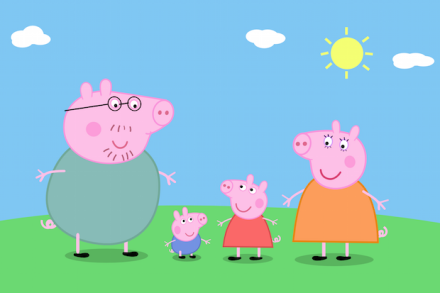
As acronyms go, it's a good one. PANK. It stands for 'Professional Aunt, No Kids'. I'm a fully paid-up member of this group, a 40-something professional woman with little interest in kids of my own but an overwhelming love for my sister's four-year-old daughter. Now I can't pass a newsagent without buying the latest Peppa Pig magazine. Browsing the shelves in toy shops for Nemo and Dory has become a popular past-time. And I know all the words to the Sofia the First theme tune. New research, conducted by Opinium for Spectator Money, shows I'm not alone. PANKs lavish an average of £352 a year on their nieces and nephews, with some spending considerably more (yes, I'm in the latter camp).