Helen Nugent

It’s the season of mists, mellow fruitfulness…and turning the heating on

From our UK edition

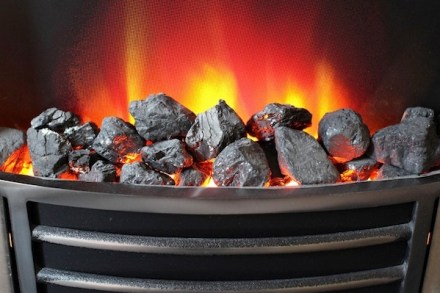
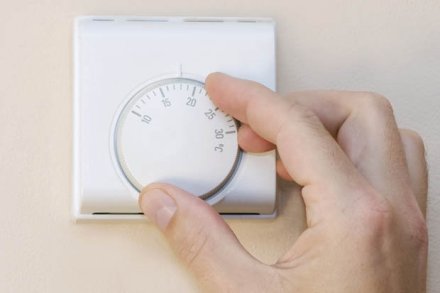
My name is Helen Nugent and yesterday I turned the heating on. I daren't tell my dad, a man who resolutely refuses to even approach the thermostat until November because 'once you turn on the radiators there's no going back'. I was nine-years-old before I realised we had central heating. During the bitter Northern winter months, my mum would lay mine and my sister's clothes in front of the fire before we got up for school. I have many memories of getting dressed in the half-light, silently lamenting the face that our radiators were just for show. I'm still cross about that. Now I fear the cold. So it felt good to hear the familiar whumph of the heating firing up yesterday morning.
RBS, property, spending and identity theft

From our UK edition

Royal Bank of Scotland is to pay $1.1 billion (£846 million) to settle US lawsuits over claims it sold toxic mortgage securities to two American credit unions in the run-up to the financial crisis, according to The Telegraph. But the bank still faces almost 20 claims over its sale of mortgage-backed securities in the US, the largest of which are those brought by the Federal Housing Finance Agency and the US Department of Justice (DoJ). RBS investors were rattled earlier this month when the DoJ demanded a $14 billion settlement from Deutsche Bank, sparking fears the German lender will be crippled by the bill. Analysts estimate RBS could end up paying billions of dollars to settle the various suits.

Property funds, equity release, debt and pensions

From our UK edition

Standard Life Investments has become the latest financial institution to announce plans to reopen its suspended property fund after declaring that the commercial property market had stabilised, The Times reports. The announcement that its UK Real Estate Fund and associated feeder funds would be reopened on October 17 is regarded as an important move as it was the first fund to suspend trading after the Brexit vote. It was one of several funds to apply discounts and suspend trading in July after what it described as 'an unprecedented level of redemptions' after the European Union referendum.

In an endless sea of financial press releases, there’s always a gem

From our UK edition

When you write for The Spectator, it's tempting to stick to the more cerebral issues of the day. As money editor, this can include tracking the progress of Sterling post-Brexit, ruminating on the downward trajectory of house price growth or reflecting on the merits of equity release. Some days, however, that's the last thing you want to do - Monday mornings being a case in point. We're only a few hours in to the working week and already I've been invited to breakfast with the Austrian federal minister of finance, Hans Jörg Schelling, to an obesity lecture, a hotel show, and a FinTech launch. Sometimes I wish I'd never gotten out of bed. As a financial journalist, I'm inundated with press releases, invitations, unsolicited requests for coverage and phone calls.

Business pessimism, pensions, tax credits and online banking

From our UK edition

UK financial services firms are becoming more pessimistic about their prospects in the wake of the Brexit vote, an industry survey suggests. Optimism fell for the third consecutive quarter according to the CBI employers group. It is the sector's longest period of falling sentiment since 2009 - in the midst of the financial crisis. The survey of 115 companies found low interest rates and potential restricted EU market access were seen as risks. But while 28 per cent of the respondents were gloomier, 15 per cent were more optimistic. And almost 40 per cent of the firms surveyed reported healthy profits in the last quarter. Meanwhile, Sterling is trading near a five-week low as lingering worries about Brexit prompted investors to sell the pound.

Fraud, renting, property and energy

From our UK edition

UK banks should do more to protect customers tricked into transferring money to fraudsters, according to a consumer body that has lodged a 'supercomplaint' with financial regulators. The move by Which? means banks could now face a formal investigation into whether they can continue refusing to reimburse victims. The Guardian reports that the organisation submitted its first supercomplaint this year in the same week that official data revealed that fraud in the UK payments industry had soared by 53 per cent as criminals develop increasingly sophisticated tactics to steal bank customers’ cash.

Brexit, insurance, debt and help to buy

From our UK edition

Fears that Britain will slide into a post-referendum recession have been allayed after a Guardian newspaper analysis showed the latest news on the economy has confounded analysts’ gloomy expectations, with consumer spending strong, unemployment low and the housing market holding steady. The finding comes as a leading think tank toned down its earlier dire warnings of economic turmoil for the UK and its neighbours in the event of a leave vote. The Paris-based Organisation for Economic Cooperation and Development said prompt action by the Bank of England to cut interest rates had cushioned the blow from June’s Brexit vote but it still believes the UK will suffer a sharp slowdown next year amid heightened uncertainty.

Let’s put a stop to letting agents taking advantage of young people

From our UK edition

It's with a shiver down my spine and clenched teeth that I recall my first rented flat in London. I was 22-years-old, looking for work and had never lived south of Manchester. Looking back, I was terribly naive and, truth be told, absolutely petrified about moving to the big city. Put simply, I was fair game for an unscrupulous letting agent. To say the agent took his duties lightly would be an understatement. From the gas boiler which broke down repeatedly to the coin-operated lekky, it wasn't an easy time. Add into the mix a bitterly cold winter and damp in the bathroom and these weren't exactly halcyon days. When it came time to move out (six months later and not a moment too soon), he insisted on keeping my deposit, citing the damp (hardly my fault) and cat hairs on the carpet.

Mortgages, wealth, banking and students

From our UK edition

The fixed interest rate of mortgages could fall to less than 1 per cent next year if the Bank of England cuts the base rate again, in a move that would give the housing market a boost, The Guardian reports. Rates on two-year, fixed-rate mortgages – already at record lows – could fall even further because of tough competition among lenders to attract new customers, according to leading City analysts. Super-cheap home loans could give the market a boost after the vote for Brexit, which forced Threadneedle Street to cut rates to 0.25 per cent in August. This was the first rate-cut for more than seven years and economists expect the Bank to cut the base rate again – to just 0.1 per cent, possibly in November.

Financial scams, savings, pensions and investment

From our UK edition

A financial scam was committed once every 15 seconds in the first half of the year, prompting a new campaign to highlight the risks. More than one million cases of card, cheque, phone or online fraud were recorded from January to June, Financial Fraud Action (FFA) said. That was a 53 per cent rise on the same period last year. The FFA, which is funded by banks and payment card firms, is pushing advice to help prevent fraud. Losses are often refunded by banks, but not in every case. Many people are too embarrassed to admit they have been caught out.  Savers At a time when savings rates are reaching record lows, there are clearly far fewer ways of earning a decent return.

Interest rates, executive pay, first-time buyers and shopping habits

From our UK edition

Interest rates are on track to be cut for a second time before Christmas despite the economy’s surprising resilience since the EU referendum, the Bank of England has indicated. The Bank’s message that stronger growth may not dissuade rate-setters from a second post-Brexit vote cut was made in the minutes to this month’s meeting, when they decided to leave policy unchanged, The Times reports. Last month the Bank announced its biggest package of measures since the launch of quantitative easing at the height of the recession seven years ago. Rates were cut by a quarter-point to 0.

Base rate, debt, pensions and university costs

From our UK edition

The chances of another Bank of England rate cut today are close to zero after some recent upbeat economic data, although further action is expected later in the year, according to Thisismoney. The Bank’s Monetary Policy Committee, which announces its latest interest rate decision at midday today, cut the base rate from 0.5 per cent to a new record low of 0.25 per cent in August to cushion the impact of Brexit on the UK economy. However, recent surveys have suggested that the economy has held up well so far, with the services sector returning to growth in August after July’s contraction and the construction sector defying expectations of a drop in output.

The business of dying: funeral costs soar

From our UK edition

It is more than half a century since Jessica Mitford published her landmark work of investigative journalism, The American Way of Death. But her exposé of the specific and often nefarious ways the funeral industry had made the average service more expensive remain pertinent today. Back in 1963, Mitford, one of the celebrated aristocratic Mitford sisters, reflected on the mortuary's talent for re-branding — bury became inter, coffins became caskets, morgues became preparation rooms. This, she argued, sanitised the funeral business and allowed those in the trade to hike up prices. An updated version of Mitford's book was published in 1998, two years after her own death, and is still widely available and widely read.

Energy, renting, wages and savings

From our UK edition

Consumers who are forced to have prepayment energy meters put in should face a maximum installation fee of £150, the regulator has proposed. Currently such energy users - already the most vulnerable to debt - face a charge of up to £900, said Ofgem. As many as 4.5 million people use prepayment meters for electricity, while 3.5 million use them for gas. Consumers who pay in advance also face higher energy bills, although from April 2017 these prices will be capped. Renting London is no longer the world's most expensive city in which to rent, The Telegraph reports. This is according to the CBRE Global Living report, which monitors property costs in 35 global cities.

Fraudulent claims, new £5 note, pensions and cowboy builders

From our UK edition

The number of fraudulent insurance claims rose to 2,500 a week last year, according to industry figures. In total there were 130,000 fraudulent claims, up 6 per cent on 2014, the Association of British Insurers (ABI) said. Dishonest motor claims remained the most common crime, accounting for over half the total. But fraudulent claims for injury, supposedly as a result of negligence, such as so-called 'slip and trip' claims, was the fastest-growing crime. False claims in this area were up by over a third compared to 2014, the ABI said. New plastic The new plastic £5 note is being launched in England and Wales today, but most people may have to wait up to a week to get one.

Rail fares, holiday visas, housing and pensions

From our UK edition

Commuters spend more than a tenth of disposable income on annual rail season tickets, a BBC investigation has found. Figures also show some commuters pay almost 40p per mile of railway while others pay 11p per mile. Campaigners for better railways said people were 'astonished' so much of their income was going on travel. Train operators say rail travel is better value for money than running a car. The Government said it had capped rail fares in line with inflation. Holidays British holidaymakers could be forced to pay for visas to travel to Europe as a trade-off for the Brexit vote, the Home Secretary has admitted. The Telegraph reports that Amber Rudd said she could not 'rule out' the introduction of a scheme which would force those from outside the EU to pay for visas.

Rental costs, Mastercard, energy and motor insurance

From our UK edition

The cost of renting a home in England and Wales was 5.2 per cent higher in July than the same month a year earlier, according to lettings agent Your Move. Its survey, based on analysis of about 20,000 properties, suggested that average monthly rent paid by private tenants rose to £846. The increase was sharpest in the South East of England. The annual rise in this region of 14.9 per cent was explained by a ripple effect from high rents in London. London had the highest average monthly rents, at £1,273, the survey suggested. Mastercard A £14 billion legal claim has been filed against Mastercard on behalf of UK consumers seeking damages for anti-competitive card fees.

Current accounts, housing, ISAs and tax avoidance

From our UK edition

Consumers are getting better value for money from their current account and benefiting from a more competitive market, according to a new report from the Social Market Foundation published today. The report, A switch in time: The evolution of Britain’s personal current account market, supported by Bacs, has found a 17 per cent fall in bank revenue from personal current accounts over the past eight years – a sign of increased competition in the personal banking market. Most consumers are now paying less for their accounts and receiving more back from their banks through higher interest rates and other bonuses such as cashback on purchases. The savings available through switching have also increased for consumers.

House prices, hired help, debt and inheritance tax

From our UK edition

House price growth slowed in August but buying a property was still 6.9 per cent more expensive than a year ago, new figures show. The Halifax, part of Lloyds Banking Group, said that the average home in the UK cost £213,930. Prices in the three months to the end of August were 0.7 per cent higher than the previous quarter - marking a slowdown in the pace of growth. Property values fell by 0.2 per cent in August compared with July, the lender added. Responding to the figures, Ian Thomas, co-founder and director at online mortgage lender LendInvest, said: 'There have been a number of external factors that have chipped away at the property market in recent months, from the additional Stamp Duty charge to Brexit, with the traditional summer slowdown weighing in as well.

‘Pulling a sickie’ doesn’t pay

From our UK edition

Ah, the time-honoured tradition of pulling a sickie. It's as old as employment itself and us Brits have forged a reputation for making the most of it. Everyone's done it, right? That early morning call to your boss, the feeble 'I can't make it in today', the creeping sensation of guilt quickly quashed by the sofa, a duvet and trash TV. Yeah, you've done it. But are sickness rates really that high? According to XpertHR, sickness absence is an average of 2.8 per cent of working time each year, or 6.5 days. This costs employers an average of £16 billion. Historically, it's the public sector which has suffered from higher rates of sickness absence, compared with the private sector.