Harry Mount

Harry Mount is a barrister, editor of The Oldie and author of How England Made the English (Penguin) and Et Tu, Brute? The Best Latin Lines Ever (Bloomsbury).

To be topp at lat., throw your Cambridge Latin Course away

The wisest words about learning Latin were said by that gifted prep-school boy, Nigel Molesworth: ‘Actually, it is quite easy to be topp in lat. You just have to work.’ But things have changed since Molesworth learnt Latin at St Custard’s in the 1950s. Over the last half-century, the work has been extracted from Latin learning and, without the work, the whole point of the language disappears. As Gwynne’s Latin — an uplifting throwback to the good old days — reveals, many schools now don’t teach the vocative case. In the Cambridge Latin Course, used in 85 per cent of schools, you learn the nominative, accusative and dative cases in the first volume. Two more cases appear in the second, and you only learn the ablative at the end of the fourth.

The German devotion to high culture is quite shaming

The 300th anniversary of George I coming to the British throne on 1 August 1714 is big news in his home town of Hanover in Lower Saxony. Five shows are being put on in Hanover and the Hanoverian country schloss in nearby Celle, an utterly charming town that largely escaped the attentions of Allied bombers in the war. The same can’t be said for Hanover, an important railway and manufacturing city flattened by our boys.  Still, enough has been restored to make it worth a visit, not least the Herrenhausen Palace, the Hanovers’ austerely classical summer residence, burnt to the ground in 1943 and rebuilt last year by Volkswagen at vast expense.

How to buy your way into the British establishment

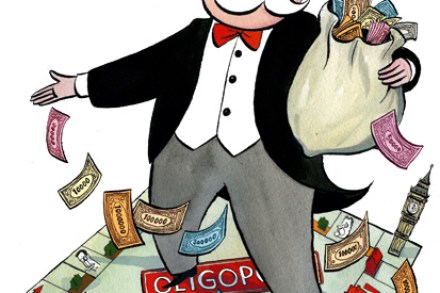
[audioplayer src="http://traffic.libsyn.com/spectator/TheViewFrom22_20_March_2014_v4.mp3" title="Harry Mount and Ben Judah discuss how to buy your way into Britain"] Listen [/audioplayer]‘Money has won,’ Martin Amis said this week, promoting his BBC4 programme Martin Amis’s England on telly this Sunday. The class gulf has disappeared, he said, replaced by a money society. It’s a little more complicated than that. Class differences are still stonkingly obvious in this country, whenever you open your mouth or put your clothes on in the morning. But it’s never been easier, or quicker, to hurtle up the class ladder by the deft application of huge amounts of money.

The case against London cabbies

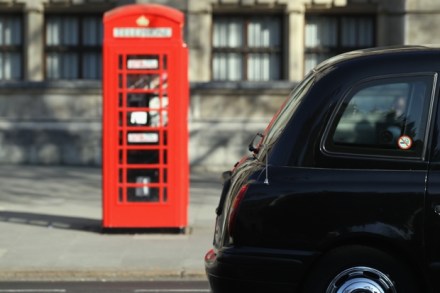
I lost my misguided faith in black cabs last week, on the corner of Royal College Street in north London. It was the tiniest trip — 2.4 miles from Bloomsbury to my Camden flat at 11.30 in the evening. Hard to mess up, too: empty roads, good weather and the easiest of routes — practically a straight line to my flat. To my horror, the cabbie dodged the obvious, straight route and embarked on an extended loop through the traffic-choked hub of Camden Town tube station and Camden Market. I pointed him in the right direction and he reluctantly did a U-turn and headed up Royal College Street. Not a word of apology — and still a £11.20 fare for a ten-minute journey. No tip, needless to say. I can’t know whether he was ripping me off or merely clueless.

‘The pure pleasure of annoying people’ – Peregrine Worsthorne at 90

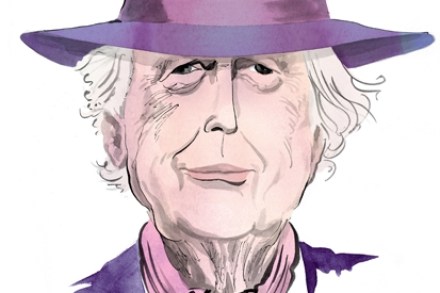
Sir Peregrine Worsthorne isn’t much looking forward to his 90th birthday on 22 December. ‘It’s awful,’ he cries. ‘It makes me so angry Diana Athill writing about the joys of old age. My eyes, teeth, heart — everything starts to go. Keeping alive becomes a full-time job. I’m so lucky to have a much younger wife. If I was on my own, I’d crumble. But as they say, it’s better than the alternative.’ Worsthorne is speaking in the high Gothic drawing room of the old rectory in Hedgerley, Buckinghamshire, where he lives with his second wife, the architectural writer Lucy Lambton. Over lunch, he says to Lucy, ‘My brain isn’t working!

The men who demolished Victorian Britain

Anyone with a passing interest in old British buildings must get angry at the horrors inflicted on our town centres over the last half-century or so. Gavin Stamp is wonderfully, amusingly, movingly angry. And he has been ever since the early 1960s when, as a boy at Dulwich College, he saw workmen hack off the stiff-leaf column capitals in the school cloisters. He reserves particular rage for that ‘cynical, philistine Whig’ Harold Macmillan for murdering the Euston Arch. Not that Stamp’s a ranting fogey, reserving his anger only for the demolition of Victorian buildings.

Notes on… Motoring in Greece and Italy

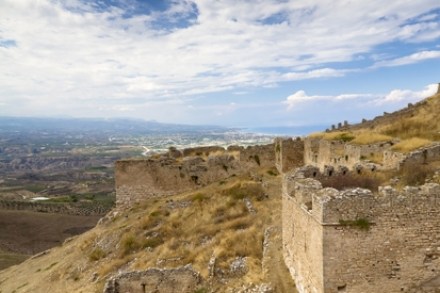
‘Buy on the bullets’ is the cry of the most ruthless stockbrokers — invest just before a war, after the stock markets dive, before the recovery kicks in. In the same way, now is the time for us heartless continental drivers to head for poor, battered Greece. Maybe it’s not quite war-torn yet, but driving around the Peloponnese this autumn was like touring a post-apocalyptic ghost town. Once you get out of the sun-bleached concrete sprawl of Athens, the splendid motorway to Kalamata is eerily empty at all hours of the day. Rocketing along at 80 mph, I could afford to stare for several seconds at the Corinth canal below me, and the ancient acropolis of Corinth above, with little danger — there was no one to crash into.

Public-school slang continues to thrive, particularly in rural boarding schools

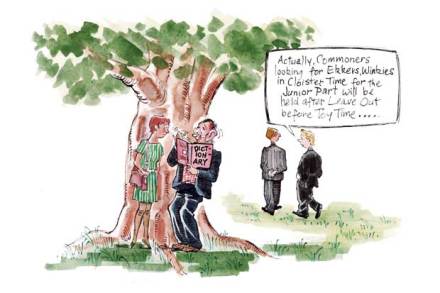
‘Give me a child until he is seven and I’ll give you the man,’ said St Francis Xavier, co-founder of the Jesuit order. Public schools are given children until they’re 18 — it’s no surprise they can control their world view for the rest of their life. And their language, too. When Prince William teased his new-born son for his ‘tardiness’ in arriving some time after his due date, he was unconsciously unearthing the memory of Eton’s ‘Tardy Book’ for boys who were late to lessons — erm, I mean divs.

Horace and Me, by Harry Eyres – review

After Zorba the Greek, here comes Horace the Roman. The peasant Zorba, you’ll remember from the film, releases uptight, genteel Alan Bates from his cage of repressed Englishness. Now it’s Horace, the Augustan lyric poet, releasing another repressed Englishman: Harry Eyres, Old Etonian scholar, Cambridge graduate, poet and author of the ‘Slow Lane’ column in the Financial Times. This charming, moving book calls itself ‘Life Lessons’, as if it were a general teaching guide for the reader. Really, though, it’s a personal guide for Eyres — who realises that the poet he first struggled to appreciate at school has valuable lessons to teach about love, wine and friendship.

Take it from a former barrister: Chris Grayling is right to reform legal aid

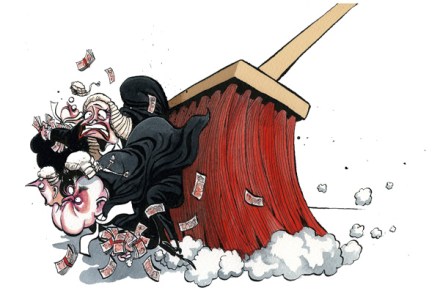
Shakespeare took it a little far in Henry IV, Part II, when Dick the Butcher said, ‘Let’s kill all the lawyers.’ Chris Grayling hasn’t made the same proposal but you could be forgiven for thinking otherwise, listening to the howls of anguish and indignation coming from the Inns of Court. Grayling, the first non-lawyer to be made Lord Chancellor since the 17th century, has simply said he wants to make some savings in the legal aid bill. To the lawyers, unaccustomed to having their privileges and subsidies challenged by anyone, this means war. Already, 90 millionaire QCs — poor, impoverished Cherie Blair among them — have written a letter to the Telegraph attacking legal aid cuts for judicial review cases.

Catherine the Great’s purchases returned to Houghton Hall

When the Marquess of Cholmondeley inherited Houghton Hall, the Palladian palace by Colen Campbell and James Gibbs, he started rootling through the cupboards and drawers. In one drawer, he found a treasure map — the original picture-hanging plan for the house, as built by his ancestor Sir Robert Walpole, Britain’s first prime minister. The only problem was, he didn’t have the pictures any more — Walpole’s cash-starved grandson had flogged them to Catherine the Great in 1779, in a sale arranged by James Christie, founder of the auction house. Now the best pictures have been brought back, mostly from the Hermitage, in a show (until 29 September) that is less an exhibition, more a recreation.

Springtime of the Renaissance: Sculpture and the Arts in Florence, 1400–1460

Sixty per cent of the best Renaissance art is said to be in Italy, and half of that is in Florence. So why bother going to Florence for a particular Renaissance sculpture exhibition when there’s huge amounts of the stuff on show in the city’s museums any day of the year? It’s true that some of the best Donatellos at the Palazzo Strozzi have taken only a short trip from the Bargello, ten minutes’ stroll away; ditto works from the Duomo Museum. But there’s lots more from museums around the world — from the Louvre, Berlin and the V&A — and from the rest of Italy, Naples in particular, that make this show a must, even for Firenze addicts. It’s even more of a must for anyone who’s a bit hazy about the Renaissance.

Diary – 9 May 2013

At evensong in Trinity College, Cambridge last Sunday, Ann Widdecombe was preaching. The pews were packed, with many in the congregation bagging seats half an hour before the service began. ‘Strictly Come Dancing fans,’ my neighbour whispered to me. They might have been a little disappointed when she didn’t tango down the nave past the statue of Isaac Newton. Instead, she gave a learned speech on the question of doubt, inspired by Cima da Conegliano’s painting of Doubting Thomas in the National Gallery. Prince Harry will not be starved of local press attention on his trip to New York this week.

An artistic rebirth: reopening the Rijksmuseum

Hallelujah! The minimalist fashion for dreary acres of white walls is coming to an end. During the long decade that the Rijksmuseum has been closed — it was only supposed to be shut for three years — the taste for colourless voids has come and, please God, is going. Jean-Michel Wilmotte, the designer behind the museum’s new interior decoration, is obsessively anti-white. It kills anything on show, he says — that’s why he’s gone for a series of hangings of blue-grey shades as the background for objects and paintings. Occasionally, the fine gauze over the windows gives the place a touch of sepulchral gloom, but that’s a minor gripe. The sombre colours work, lingering backstage, not swamping the pictures.

The Russian desecration of London

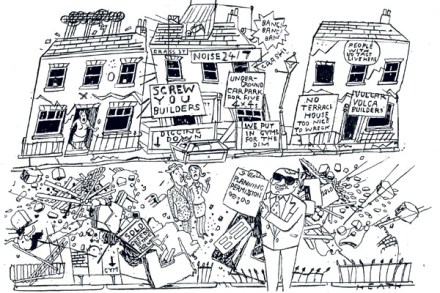
Now that his old arch-enemy, Boris Berezovsky, has bitten the dust, Roman Abramovich can devote his full attention to another bête noire — London’s terraced houses. In his £10 million plan to knock together three houses, worth £100 million, in Chelsea’s Cheyne Walk, the oligarch is raising the roof, ripping out internal floors and walls, and burrowing two floors down into the courtyard. He is also ripping out two staircases. Russian expats may hanker after the steppes but they don’t like British stairs. The cement mixers will whirr for three years in one of London’s loveliest streets.

The hate of the new

The title of the new show at the Palazzo Strozzi is a little confusing. Most of the artists in Italy in the 1930s weren’t beyond fascism; they were in it up to their necks. They didn’t really need much persuading by Mussolini to come up with pictures like Luciano Ricchetti’s 1939 painting ‘Listening to a Speech by the Duce’: enraptured, bare-footed Italian peasants in headscarves sit dangling babies on their knees, hanging on Il Duce’s every word. Today lots of Italians still don’t like to admit it, but much of Florence, and Italy, were really rather keen on Mussolini, and Hitler, too.

Rural idol

Ronald Blythe, our greatest rural writer, remembers sheep being driven through Lavenham, the Suffolk wool town, before the war. Now he’s lived long enough to see the same street filled with Japanese tourists. On the eve of his 90th birthday, on 6 November, Blythe doesn’t mourn that lost way of life. If anything, Akenfield — his 1969 bestseller about a fictional Suffolk village from 1880 to 1966 — exposed quite how back-breakingly grim country life was for most farmworkers, like his own father, a Gallipoli veteran. ‘The old farm work was terribly hard on people — there was terrible rural poverty,’ says Blythe. ‘A lot of the people think of depressions in terms of manufacturing and the cities.

Building on the past

London was an industrial city until remarkably recently. It seems extraordinary now, but Bankside Power Station was built in 1947, by Sir Giles Gilbert Scott, to burn oil right on the banks of the Thames, opposite St Paul’s. What’s more, Gilbert Scott’s other great power station, Battersea, built in 1929, is less than a mile upstream. In the early 1970s, more than 1.1 million people in the capital — almost a third of the workforce — had manufacturing jobs. Now only 117,000 do — one in 40 workers. Still, the old industrial architecture survives in pleasingly generous quantities.

This sheltered isle

This rainy weather has occasionally softened my rock-hard cynicism about climate change. I have bicycled around London for 25 years — and I usually get drenched about half a dozen times a year. This week, I have been soaked six times in as many days. For a moment, I nearly fell for the theory, suggested by some scientists, that the jet stream had slipped south, pushed downwards by warming polar temperatures.  But then the sun came out, and reason — and cynicism — returned. This summer’s weather is unusual, but it isn’t freakish. If anything, our extreme reaction to not-so-extreme rainfall shows how limited the capacities of the British climate are.

A sporting life

If you wanted a little more excitement in this year’s Olympic marathon, you could do worse than imitate the race in 1908 — the first time the Games were held in ­London. Competitors, running from Windsor Castle to Shepherd’s Bush in the boiling heat,  were given hot and cold Oxo, rice pudding and milk, but no water. Still, there was free eau de cologne and champagne — that’s what did for the South African leading at the halfway mark. He suffered stomach cramps after a glass of champagne, surrendering the lead to a plucky little Italian confectioner, Dorando Pietri. Just short of the finishing line, Pietri collapsed.