Gus Carter

Gus Carter

Gus Carter is the deputy editor of The Spectator’s US edition.

Keir Starmer’s plan to soften Brexit

42 min listen

This week: Keir Starmer’s plan to soften BrexitKaty Balls writes this week’s cover piece on Labour’s plans to establish close ties with the EU. Every member of Starmer’s cabinet voted Remain, and the government is trying to ‘reset EU relations through a charm offensive’. Brussels figures are hopeful: ‘There was no real goodwill for the Conservative government.’ There are tests coming: the first deal, Katy writes, could be harmonisation on veterinary standards. But will the UK have to abide by the European Court of Justice? Then there’s the issue of Chinese electric cars: will Starmer accept cheap imports, or follow the EU in raising tariffs on them? For now, EU officials see the new PM as ‘workman-like and not playing to the gallery’. How long will that last?

Are you a Gail’s or a Wimpy voter?

Liberal Democrat activists were reportedly told to ‘get out the Gail’s vote’, targeting people who visit the over-priced artisanal cafés. There are 131 Gail’s in the UK and around half are in Lib Dem marginals. If you’ve never come across one, think spinach, feta and filo pastry for £6, sold by a stressed Spanish girl in Twickenham. As I squirted more special sauce on to my plate, I witnessed the true meaning of Wimpy (est. 1954) I mentioned the Lib Dems’ Gail’s strategy to a Reform adviser. He laughed. ‘Oh, we tended to go after places with a Wimpy Bar at the election.’ I can confirm that Nigel Farage’s seat of Clacton-on-Sea has a Wimpy on the same road as his campaign HQ and there is another in Thurrock.

A brief history of presidential assassinations

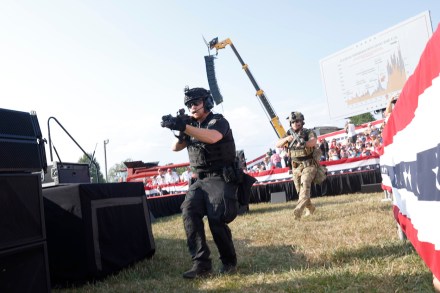
That image of Donald Trump, blood streaming down his face, fist raised in front of the banner of the republic, will be a defining photo of the 21st century. Someone attempted to kill the former and would-be president, they missed, and Trump survived. His response to his followers? ‘Fight’. We can expect to see him on stage at the Republican National Convention next week in Milwaukee, a bullet wound to his right ear clearly visible. How might America respond? The man who shot Reagan was obsessed with the actress Jodie Foster and the Robert De Nero film Taxi Driver There have been four successful assassinations of United States presidents – Abraham Lincoln, James Garfield, William McKinley and John F.

How to bet like a politician

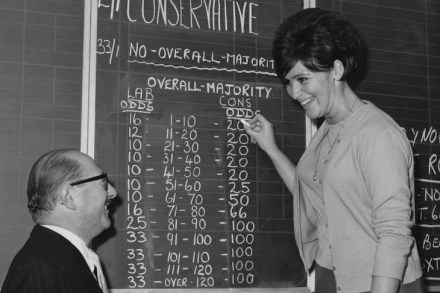
If you’re going to fleece a bookies, it would be wise to ask a friend to place the bet on your behalf, or do it with cash down the local Coral. Craig Williams didn’t. The Gambling Commission is investigating the Prime Minister’s parliamentary private secretary after he placed a bet on the date of the election – three days before his boss called it. Williams’s online bet was flagged as suspicious, which, in his words, has resulted in ‘some routine inquiries’. What’s worse, he only put £100 on at 5/1. It barely seems worth it. Political betting is not big business. Only £426,000 has been placed on the outcome of the next general election through Betfair Exchange, while around £300 million is put on the Grand National each year.

Macron’s game: can he still outplay Le Pen?

45 min listen

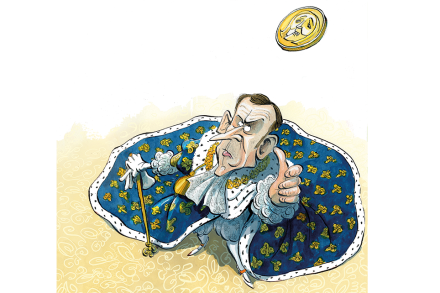
This week: Macron’s game. Our cover piece looks at the big news following the European elections at the weekend, President Macron’s decision to call early parliamentary elections in France. Madness or genius, either way the decision comes with huge risk. And can he still outplay Le Pen, asks writer Jonathan Miller. Jonathan joins the podcast to analyse Macron’s decision alongside Professor Alberto Alemanno, who explains how the decision is realigning French politics, and argues it must be seen in its wider European context. (01:58) Then: Will and Gus take us through some of their favourite pieces from the magazine, including Catriona Olding’s Life column and Sam McPhail’s notes on Madri.  Also on the podcast: who decides how we see the past?

Wannabes: are any of them ready?

36 min listen

On this week's Edition: Wannabes - are any of them ready? Our cover piece takes a look at the state of the parties a week into the UK general election campaign. The election announcement took everyone by surprise, including Tory MPs, so what’s been the fallout since? To provide the latest analysis, The Spectator’s political editor Katy Balls joins the podcast (2:00). Then: Angus Colwell reports on how the election is playing out on social media, and the increasing role of the political ‘spinfluencer’. These accounts have millions of likes, but how influential could they be during the election? Alongside Angus, Harry Boeken, aka @thechampagne_socialist on TikTok, joins us to share their thoughts on who is winning the social media war (15:08).

The deluge: Rishi Sunak’s election gamble

53 min listen

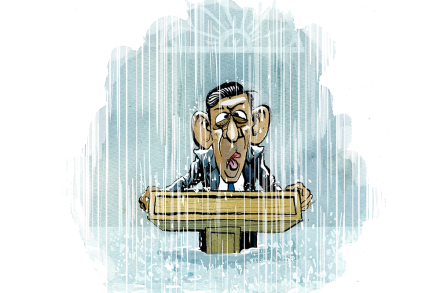
It’s a bumper edition of The Edition this week. After Rishi Sunak called a surprise – and perhaps misguided – snap election just a couple of hours after our press deadline, we had to frantically come up with a new digital cover. To take us through a breathless day in Westminster and the fallout of Rishi’s botched announcement, The Spectator’s political editor Katy Balls joins the podcast. (01:35) Next: Our print magazine leads on the electric car bust. Ross Clark runs through all the issues facing electric cars today – from China flooding the market with discounted EVs to Rishi Sunak dropping the unrealistic target of banning new petrol car sales by 2030. ‘Could the outlook suddenly improve for British EVs?’ asks Ross. ‘It’s hard to see how.

The paradox of a novelty doughnut

There are moments when you realise the world is a more complicated place than you had previously thought. I had such moment earlier this week when I saw a new doughnut at a concession stand in Hammersmith station: a Krispy Kreme x Pretty Little Thing doughnut. Sure, you could probably get one in a town the size of Padstow. But invent it? The only possible connection between the two companies I can think of is that their lines of business often invite the same prefix: fast food and fast fashion. Beyond that, I’m at a loss. And yet there the doughnut sat, a pink ring with swirly purple bumps and a unicorn horn. It looked like Kandinsky had tried his hand at illustrating a gynaecology textbook.

Survival plan: is Rishi ready for the rebels?

34 min listen

This week: Survival plan: is Rishi ready for the rebels? Ever since his election, Rishi Sunak has been preparing for this weekend – where the most likely scenario is that dire local election results are slow-released, leaving him at a moment of maximum vulnerability. He has his defences ready against his regicidal party, says Katy Balls: the Rwanda plan, a welfare reform agenda and a 4p NI cut (with hints of 2p more to come). And while the rebels have a (published) agenda they do not – yet – have a candidate. Katy joins the podcast alongside Stephen Bush, associate editor of the Financial Times. (02:12) Next: Lara and Gus take us through some of their favourite pieces from the magazine, including Damian Thompson's Life column, and Joel Golby’s notes on ⅓ pints.

The Xi files: how China spies

38 min listen

This week: The Xi files: China’s global spy network. A Tory parliamentary aide and an academic were arrested this week for allegedly passing ‘prejudicial information’ to China. In his cover piece Nigel Inkster, MI6’s former director of operations and intelligence, explains the nature of this global spy network: hacking, bribery, manhunts for targets and more. To discuss, Ian Williams, author of Fire of the Dragon - China's New Cold War, and historian and Guardian columnist Simon Jenkins joined the podcast.. (02:05) Next: Lara and Gus take us through some of their favourite pieces in the magazine, including Douglas Murray’s column and Gus’s interview with the philosopher Daniel Dennett.

Daniel Dennett’s last interview: ‘AI could signal the end of human civilisation’

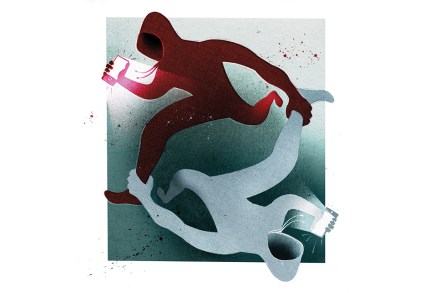
Do we still need philosophers? Daniel Dennett, who died last week, believed strongly that we do. ‘Scientists have a tendency to get down in the trenches and commit themselves to a particular school of thought,’ he told me from his home in Maine, not long before he died. ‘They’re caught in the trenches so a bird’s eye view can be very useful to them. Philosophers are good at bird’s eye views.’ Scientists of all sorts valued their conversations with him, ‘I think because I could ask them questions that they realised they should have had answers to,’ he said. I grew up with Dennett. First, as a teenager, watching YouTube videos as he raged joyfully against the irrationalities of religion. Then, as an undergraduate, I came to his ideas about consciousness.

The dangers of political prosecution

31 min listen

This week: the usual targets First: Trump is on trial again – and America is bored rather than scandalised. This is his 91st criminal charge and his supporters see this as politicised prosecution. As an American, Kate Andrews has seen how the law can be used as a political weapon – so why, she asks, is Britain importing the same system? In less than 18 months, the police have been sent to investigate Rishi Sunak for his seat-belt, Nicola Sturgeon for campaign funds, and Angela Rayner over her electoral registry: each time, the complainant is political and the process is the punishment. Kate joins the podcast alongside The Spectator’s editor Fraser Nelson to discuss. (01:34) Then: Confessions of a defecting Starmtrooper.

The Starmer supremacy

40 min listen

On the podcast this week: what could achieving a large majority at the next election mean for Labour; how much should parents worry about picky eating; and why are humans fascinated with the apocalypse?  First up: The Starmer supremacy. If the polls are correct, Labour could be on to a record landslide at the next general election. Any political leader would relish such a win. But can achieving such a large majority present internal problems of its own? Labour MP Harriet Harman joins The Spectator’s political editor Katy Balls to discuss. (1:32) Then: Lara and Gus discuss some of their favourite pieces from the magazine, from Charles Moore’s column to Christopher Matthew’s piece on A. A. Milne’s time at Punch magazine.

War on words: is Scotland ready for its new hate crime law?

51 min listen

On the podcast: Scotland’s new hate crime law; the man who could be France’s next PM; and why do directors meddle with Shakespeare?  First up: Scotland is smothering free speech. Scotland is getting a new, modern blasphemy code in the form of the Hate Crime and Public Order (Scotland) Act, which takes effect from 1 April. The offence of ‘stirring up racial hatred’ will be extended to disability, religion, sexual orientation, age, transgender identity and variations in sex characteristics. The new law gives few assurances for protecting freedom of speech writes Lucy Hunter Blackburn, former senior Scottish civil servant. Lucy joins the podcast, alongside Baroness Claire Fox, unaffiliated peer and founder of the Academy of Ideas think tank.

Why can police sue for being asked to do their jobs?

I can’t imagine being confronted with the body of someone who has jumped to their death: limbs splayed in ways that shouldn’t be possible, clothes shredded by velocity and tarmac, the bloodied remains of a face. The idea is appalling. So I have every sympathy for the police officers who saw just that at the Grenfell Tower fire and are currently seeking damages in the High Court. But while they have my sympathy, I happen to think that their case is bad news for the rest of us.  We seem to be entering a more litigious era, one in which tragedy becomes industry Thirty-three officers are suing 12 different parties, including the Met police commissioner and Kensington and Chelsea council, for ‘psychiatric injuries’.

Trump II: Back with a Vengeance

47 min listen

On the podcast: what would Trump’s second term look like?  Vengeance is a lifelong theme of Donald Trump’s, writes Freddy Gray in this week’s cover story – and this year’s presidential election could provide his most delectable payback of all. Meanwhile, Kate Andrews writes that Nikki Haley’s campaign is over – and with it went the hopes of the Never Trump movement. Where did it all go wrong? They both join the podcast to discuss what to expect from Trump’s second coming. (03:11) Then: Will and Gus take us through some of their favourite pieces from the magazine, including Michael Hann’s Pop review and Cosmo Landesman’s City Life column. (16:38) Next: Flora Watkins writes in The Spectator about on private schools.

Why don’t my local police work nights?

Every few weeks, I leave my front door to find a car missing its side window and a pile of glass on the pavement. One morning there were four windowless cars, all in a row; someone had already been out with duct tape and some bin bags in an attempt to keep the rain from their back seats. The debris from these thefts is just another feature of our London street, like the confetti from Chelsea’s Registry Office which flutters all the way down the King’s Road. But last Wednesday, at 8.15 p.m. to be exact, I witnessed my first attempted smash and grab.  There’s something vindictive about law breaking. This isn’t an exercise in pure economics The two cyclists hadn’t seen me, fag in hand, watching them from my balcony when they pulled up outside.

The weirdness of our new migrant god

Funny to think what our taxes go on. I wouldn’t have had ‘the invention of a deity’ on my 2024 government expenditure bingo card, but here we are. The National Maritime Museum, which last year received £20 million from the Department for Culture, Media and Sport, has unveiled a statue of a ‘god-like protector of all migrants’ to sit next to a bust of Horatio Nelson. The pair will engage in a pre-recorded conversation in which the gender-neutral god praises the ‘resilience’ of those ‘escaping war’ while moaning about our national hero’s ‘fancy medals and uniform’.  We find a sort of syncretic religion in the National Maritime Museum’s migrant god  There’s plenty to laugh at in this commission.

Hong Kong’s fading Britishness

Not much of Hong Kong still feels British. There is the odd tube stop – Admiralty, Kennedy Town, Prince Edward – but that’s about it. On the car ride from the airport, I chatted to the driver as we passed under half-built concrete arches covered in green construction cloth. He told me the authorities were building another runway; we’ve been arguing over a third runway for the best part of 30 years, I said, and it still hadn't started. He laughed. ‘We used to be run by England. Now the communists are in charge, it’s much easier.’  I went to Java Road in search of the morgues and black bunting My cheapy British phone contract is allergic to Hong Kong networks and insists on gobbling up around £20 of credit a day. None of my bank cards seem to work either.

Scattering my father’s ashes in Santiago de Compostela

We are in the holy city of Santiago de Compostela to scatter our father’s ashes. He and my youngest sister had planned to walk the Camino, which finishes here at the resting place of Saint James, to mark the start of her adulthood and the beginning of his retirement. Instead, my two sisters have been walking the ancient pilgrims’ route for the past few weeks. I’ve flown into the city to meet them at the end. Most of Dad’s ashes went into a smart Regency tea caddy. The funeral directors had offered us a standard-issue urn but we decided he’d prefer something jolly and Georgian. The lacquered box didn’t quite hold all of his remains so the youngest put the rest in a Tupperware tub and brought him here to Spain.