Gus Carter

Gus Carter

Gus Carter is the deputy editor of The Spectator’s US edition.

In defence of Warhammer

Warhammer is a tabletop battle game. Players build and paint little models of aliens, tanks and killer robots and then set their armies against one another on a miniature battlefield. It’s a hobby that lights up the obsessive bits of the male brain: collecting, DIY, military uniforms, hierarchy and complex calculation – all in the name of domination. There are Warhammer clubs across the country as well as 138 dedicated Games Workshops where players can battle one another. Enthusiasts have long been stigmatised as hygienically challenged young men with limited knowledge of the opposite sex; that’s certainly how I remember my early teens when I was – briefly – into Warhammer.

Prima donna: is Giorgia Meloni the most dangerous woman in Europe?

43 min listen

In this week’s episode:Is Giorgia Meloni the most dangerous woman in Europe?Spectator contributor, Nicholas Farrell is joined by Chiara Albanese, a political correspondent at Bloomberg, to discuss the road ahead for Italy’s next likely leader. (01.10)Also this week: Are we entering a new age of digital censorship?Lord Sumption unpicks the Online Safety Bill in this week’s magazine. He’s joined by Baroness Nicky Morgan, a firm supporter of the bill. (17.53)And finally: why has holiday hand luggage become such a hassle this summer?Spectator contributor and marketing guru, Rory Sutherland joins us to get to the bottom of this. (31.56)Hosted by Lara Prendergast and Gus CarterProduced by Natasha Feroze.

Boris 2029!

OK, it might sound a little fanciful, but hear me out. I think there could just be a way for Boris to scrape back in to power. Some Johnson loyalists in Westminster think that whoever replaces him will implode, that there could be another leadership race before the 2024 election and that Boris could run and win. That seems like wishful thinking. Instead, I'd suggest he plays the long game. It's a little convoluted and involves quite a few what-ifs – but if anyone can do it, it’s the great greased piglet himself.  Step one: take over the Evening Standard. The ailing London paper has been in trouble for some time. It recorded a £14 million loss last year even after the majority of commuters returned post-Covid.

The rise of the neo-Luddites

Yesterday, a pair of Just Stop Oil protesters glued themselves to a John Constable painting in the National Gallery, covering The Hay Wain with a printout of an alternative vision of England. The cart crossing the River Stour in Suffolk is perhaps Constable’s most famous painting. But instead of a bucolic, biscuit tin Albion, Just Stop Oil’s version shows the Stour tarmacked over, a belching power plant in the distance and a commercial jet overhead. The message is clear: our modern world is sick. I have some sympathy with these student activists, or at least I envy their certainty. Their view of the world is simple: bad things like fossil fuels, industrialisation, and consumerism can be stopped merely by taking a stand.

In defence of ‘Stop Brexit Man’ Steve Bray

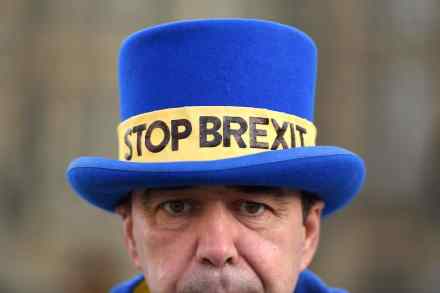
It is a great and ancient right of all freeborn Englishmen, stretching back far beyond the reaches of our recorded history. From Magna Carta to the Glorious Revolution, it has been woven into each of the defining constitutional moments of the British story, a principle bled and died for on the battlefields of Europe. It is, of course, the right to make a tit of yourself. Whitehall’s Stop Brexit Man has been the most vociferous pursuer of that right in recent years. Steve Bray, with his Brussels blue top hat and shouty megaphone demeanour, loves to make a tit of himself. He marches around Westminster barking inanities at any unsuspecting Tory MP, usually something demented about Russia and Brexit.

Are the Abraham Accords working?

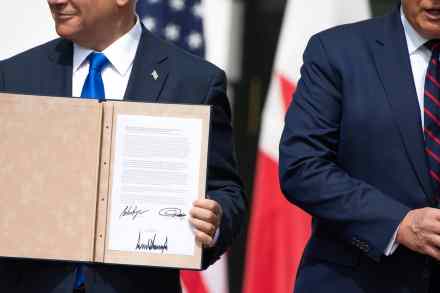
Two years ago, UAE citizens were barred from entering Israel. No longer. The inaugural Emirates flight touched down in Tel Aviv last week, a Boeing 777 carrying 335 passengers. For much of the 20th century, the only thing that the Middle East could agree on was the destruction of the Jewish state. But attitudes are changing. The purported reason is the so-called Abraham Accords, signed in 2020 after Donald Trump decided to solve the seemingly intractable problem of the Middle East. If Don the Dealmaker couldn’t do it, who could? Seven decades of antagonism had failed, the White House argued, and the Palestinian cause seemed as troubled as ever, so why not try a different approach?

Zelensky’s peculiar Glastonbury appearance

Volodymyr Zelensky didn’t quite make it onto the Glastonbury line-up posters. Perhaps Michael Eavis, the owner of ever-so Worthy Farm, had last-minute difficulties with the Ukrainian President’s booking agent. No matter. An eight-foot-high image of President Zelensky’s face graced the Pyramid Stage on Friday, right before ageing indie rockers The Libertines belted out their two-decades-old bangers. ‘Time for Heroes’, but not before festival-goers had enjoyed a brief set by Europe’s very own hero. You’d be forgiven for thinking the shtick’s getting a bit tired – but at least Pete Doherty can just about hold a tune. ‘Glastonbury is the greatest concentration of freedom these days,’ Zelensky told the festival.

Is Britain heading into a wage-price spiral?

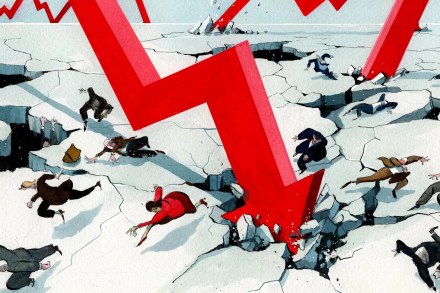
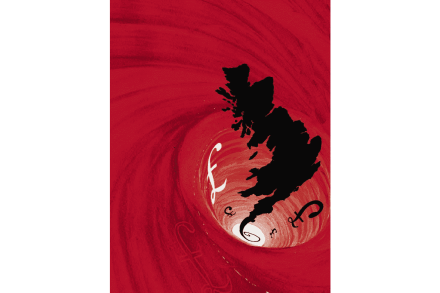
Are wages about to spiral out of control? Boris Johnson certainly thinks there’s a risk. Last week he warned that the economy was ‘steering into the wind’ and that the UK could be entering a 1970s-style malaise. With inflation shooting up to 9 per cent – and expected to go higher still – rail workers are embarking on the first of three days of industrial action today, demanding a minimum pay rise of 7 per cent. Network Rail has offered just 2 per cent, with the potential for an extra 1 per cent on top if they can meet productivity targets later this year. Barristers too have voted for a walkout, and teachers and doctors are threatening to join the strikes.

What’s the alternative to the Rwanda plan?

Last night, a Boeing 767 that was supposed to fly 130 asylum seekers to Rwanda returned to Spain without a single passenger on board. Throughout the day, the number of people planned for that flight had been whittled down by multiple legal challenges. Then, minutes before take-off, the European Court of Human Rights made an injunction stopping an Iraqi man known as KN from being taken to Central Africa because, it said, he faced ‘a real risk of irreversible harm’. The question some are asking is why the Home Secretary didn’t wait. There is supposed to be a broader challenge at the High Court next month which would, perhaps, have dealt with Strasbourg’s concerns – namely, that there was no legal mechanism for asylum seekers to return to the UK.

Why is Apple getting into lending?

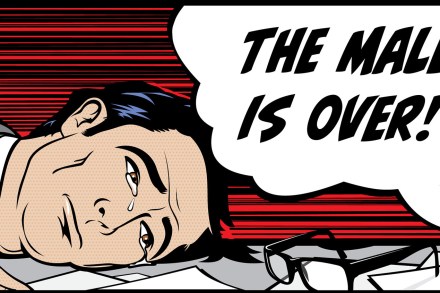
It’s the highest form of flattery, but is Apple really trying to copy Klarna? That’s the allegation made by the Swedish firm, which has led the way with so-called ‘buy now, pay later’ credit. Last week Apple announced that it too would be offering deferred payments via Apple Pay, as well as the option to split repayments over several instalments. It’s something that Klarna has been flogging for over a decade. And it’s already pretty popular: nearly a quarter of British shoppers have used Klarna’s services. Now its founder ​​Sebastian Siemiatkowski has accused Apple of nicking his concept. In reality, Klarna isn’t the only, or even the first, company to offer short-term interest-free loans. But it is one of the largest.

Katy Balls, John Connolly and Gus Carter

17 min listen

On this week's episode: Katy Balls reads her article on the cadets gunning for the Tory leadership. (00:52)John Connolly reads his investigation into the new warehouse ghettos where Britain is sending migrants. (06:36) Gus Carter reads his piece on why he's not getting invited to any dinner parties. (12:05)Presented by Angus Colwell.Produced by Angus Colwell and Sam Holmes.

How the rebels plan to finish off Boris

45 min listen

In this week’s episode: Is the Prime Minister a dead man walking? Spectator Political Editor James Forsyth and MP Jesse Norman who expressed no confidence in Monday's vote discuss the future of Boris Johnson and the Conservative Party. (00:45)Also this week:Why is there so much virtue signalling in modern advertising? Spectator Columnist Lionel Shriver and veteran copywriter Paul Burke discuss its origins, its prevalence, and its effectiveness. (20:20)And finally:Is the dinner party dead? Gus Carter writes in The Spectator this week about how he is never invited to any. He’s joined by Mary Killen to give him some tips on planning a sophisticated bash on a budget.

Dinner parties are dying

I don’t get invited to that many dinner parties. I hope it’s not a problem with me, although I can’t rule it out. Instead, I have a feeling that the era of nibbles, laying the table and stressing about the starters is over. When I asked my friends how many invites they get, there was a reasonably consistent answer: roughly one every few months. I’m not talking here about spag bol with pals. A dinner party is a sit-down affair, with multiple courses and, ideally, a few people you don’t know for company. In their twenties, my parents were apparently having a dinner party every week. My mum has three smartly bound journals, all with the title ‘Guest & Menu Book’.

The dreary truth about partygate

I’m starting to get a bit annoyed about partygate. Well no, that’s a lie. I’m angry in theory. On paper I’m fuming. In real life? Meh. This whole saga has trundled on for so long now I’ve just stopped caring. I’m probably annoyed about something else. Train timetables or maybe the fact that broccoli is £1.60 in M&S. Given how miserable the rest of us were during lockdown, those making the rules should really have done the polite thing and followed them. But then when you read the details of ‘partygate’, you can’t help but think that they weren't really enjoying themselves. A Colin the Caterpillar cake in between meetings? ‘Wine time Fridays’?

Sadiq Khan shows why London doesn’t need a mayor

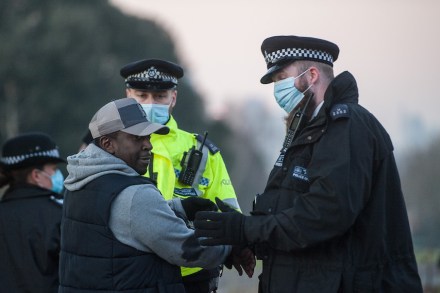
Sadiq Khan doesn’t seem to know what his job is. The Mayor of London announced on Thursday morning that he was setting up a review to examine whether cannabis should be legalised. Just a few hours later, the Home Secretary Priti Patel reminded him that ‘the mayor has no powers to legalise drugs’. Duh. Labour didn’t seem that happy either. Yvette Cooper also gave Khan a ticking off, saying that the national party already had a policy and, no, they wouldn’t be pushing for legalisation. So please be quiet Sadiq. But we all know what the mayor was really up to. Sadiq Khan wants attention. He wants to be a national politician by using a local politician’s platform.

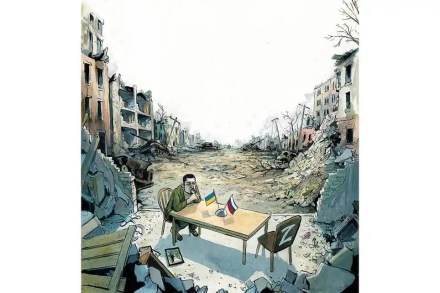
Don’t make war in Ukraine about Putin’s mental health

There was a time when supposedly serious commentators on world affairs used to at least feign historical knowledge. They might quote Bismarck or Castlereagh. Now, international relations punditry, like almost everything else, has succumbed to the language of pop psychology. Vladimir Putin is ‘gaslighting’ the Russian people, we are told, motivated by his ‘hypermasculinity’. His invasion of Ukraine is, according to one commentator on Radio 4 this morning, ‘unforgivable abuse’. I thought abuse meant kicking a dog or being cruel to a partner. Now it means starting a war. It’s almost as though we’re unable to think of Putin as anything other than a nasty contestant on reality TV.

Border farce

42 min listen

In this week’s episode: is the UK dragging its feet when it comes to Ukrainian refugees?For this week’s cover piece, Kate Andrews and Max Jeffery report from Calais, where they have been talking with Ukrainian refugees hoping to make it to Britain. Kate joins the podcast along with former MEP Patrick O’Flynn to discuss the UK’s handling of the refugee crisis. (00:48)Also this week: are commodity traders finding a moral compass?In the wake of colossal sanctions on Russia are commodity traders feeling pressured to look more critically at the people they buy from? In this week’s issue, Javier Blas, Bloomberg’s commodities columnist and the co-author of The World for Sale, reveals what’s going on in the world of commodity trading.

Are you man enough to eat raw offal?

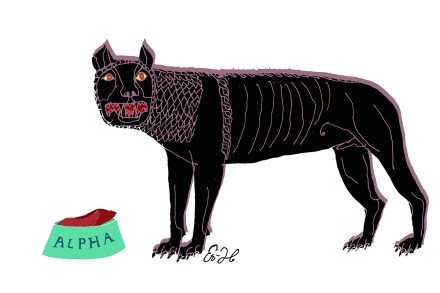
The dominant wolf gets the liver, at least according to the American podcaster Joe Rogan. In one episode, a bodybuilder called ‘CarnivoreMD’ (real name Paul Saladino) tells him: ‘If you eat liver, you get to be an alpha male… or alpha female.’ Offal has taken a markedly macho turn in recent years. No longer resigned to memories of the postwar school canteen, organs have become the preferred food of a certain type of gym bro. The word offal implies wastage – from the Middle Dutch for offcuts – but it can also be a delicacy. Recently saved from a government ban on cruel foods, foie gras is only the most obvious example. For the most part, though, the West has become squeamish about what was once called ‘variety meat’.

The cult of the daffodil

Spring is the season of supermarket daffodils. At a pound a bunch, you can deck out your home like Elton John and still have change from a fiver. From January until April, daffodils burst from village greens and quiet churchyards. The wild daffodil found across Britain is the Narcissus pseudonarcissus, known also as the ‘Lent lily’. Native to northern Europe, the hardy bulbs followed the British empire around the world and can now be found in Canada, New Zealand, Australia and the Falklands. There are thought to be 27,000 different cultivars of daffodil bred from 36 different species. Most are yellow but there are white varieties and a few with splashes of pink. Generally the flowers are a trumpet-like corona encircled by petals.

How much trouble is Boris Johnson in?

Just how bad is it for Boris Johnson? In some ways it's difficult to tell, this is a prime minister who seems almost unable to exist without a crisis.  But last night's new Covid rules — mixed up with the unending stories about Downing Street parties in the depths of lockdown — seem to have ushered in a different level of Westminster discontent. It's more the timing than anything else. On Tuesday morning, the Deputy Prime Minister Dominic Raab said 'We don’t think that Plan B is required'. On Wednesday evening the PM implemented Plan B. What happened?  During those intervening 36 hours, the data on Omicron only seemed to have improved.