Gus Carter

Gus Carter

Gus Carter is the deputy editor of The Spectator’s US edition.

The real Brexit betrayal, bite-sized history & is being a bridesmaid brutal?

44 min listen

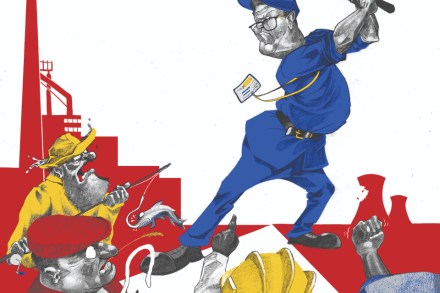
The real Brexit betrayal: Starmer vs the workers‘This week Starmer fell… into the embrace of Ursula von der Leyen’ writes Michael Gove in our cover article this week. He writes that this week’s agreement with the EU perpetuates the failure to understand Brexit’s opportunities, and that Labour ‘doesn’t, or at least shouldn’t exist to make the lives of the fortunate more favourable’. Michael makes the argument that ‘the real Brexit betrayal’ is Labour’s failure to understand how Brexit can protect British jobs and industries and save our manufacturing sector. Historian of the Labour Party Dr Richard Johnson, a politics lecturer at Queen Mary University writes an accompanying piece arguing that Labour ‘needs to learn to love Brexit’.

Why fishing matters

Not everything is about money. If it were, we’d be merrily sending our oldies off to assisted dying hubs to free up the social care budget. The fishing industry is one of those parts of public life that is about more than raw GDP. But Keir Starmer has handed over access to British waters for another full 12 years in return for what he deems more lucrative EU concessions. It’s a mistake, because fishing is about more than cash. It’s about what it means for us to be a free and confident country.  There is something more than a little irksome about letting foreign fishermen into our waters in return for faster passport gates, especially when it’s going to make this declining industry worse off For a start, there’s the obvious point about sovereignty.

Britain’s billionaire exodus, Michael Gove interviews Shabana Mahmood & Hampstead’s ‘terf war’

42 min listen

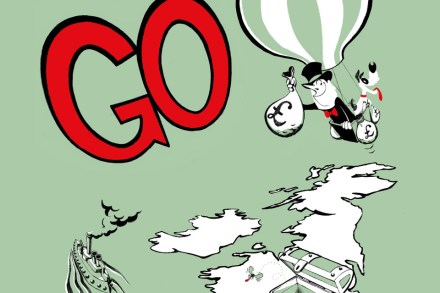
The great escape: why the rich are fleeing BritainKeir Starmer worries about who is coming into Britain but, our economics editor Michael Simmons writes in the magazine this week, he should have ‘sleepless nights’ thinking about those leaving. Since 2016, nearly 30,000 millionaires have left – ‘an outflow unmatched in the developed world’.  Tax changes have made Britain a ‘hostile environment’ for the wealthy, yet we are ‘dangerously dependent’ on our highest earners: the top 0.01 per cent pay 6 per cent of all income tax. If the exodus is ‘half as bad’ as those he has spoken to think, Simmons warns, a 2p hike to income tax looms.

Scuzz Nation, the death of English literature & are you a bad house guest?

40 min listen

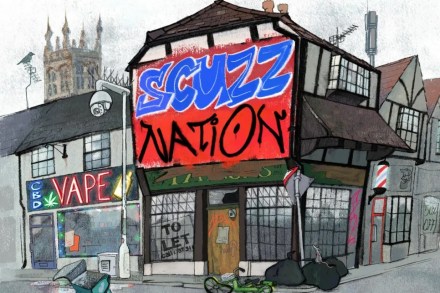
Scuzz Nation: Britain’s slow and grubby declineIf you want to understand why voters flocked to Reform last week, Gus Carter says, look no further than Goat Man. In one ward in Runcorn, ‘residents found that no one would listen when a neighbour filled his derelict house with goats and burned the animals’ manure in his garden’. This embodies Scuzz Nation – a ‘grubbier and more unpleasant’ Britain, ‘where decay happens faster than repair, where crime largely goes unpunished, and where the social fabric has been slashed, graffitied and left by the side of the road’. On the podcast, Gus speaks to Dr Lawrence Newport, founder of Crush Crime, to diagnose the issues facing Britain – and offer some solutions to stop the rot. (01:28) Next: is it demeaning to study Dickens?

Welcome to Scuzz Nation

Reform’s success in last week’s local elections has been attributed to many causes. Labour’s abolition of the winter fuel payment for pensioners. The hollowing out of the Conservative party’s campaigning base. Nigel Farage’s mastery of social media. But if you want an emblem of why voters turned their back on the political establishment let me give you Goat Man. In one ward in Runcorn, the seat Labour lost to Reform by just six votes, residents found that no one would listen when a neighbour filled his derelict house with goats and burned the animals’ manure in his garden. Despite repeated appeals to authority, no action was taken.

Maybe you’re not anxious. Maybe you’re just stressed

Something rather odd has happened to the way we talk about worry. The straightforward term ‘stress’ has been overtaken by the quasi-medical concept of ‘anxiety’. The problem is that the words don’t mean the same thing and treating them as interchangeable can have unhappy consequences. The way we use the term ‘stress’ is different to the semantics of ‘anxiety’. Stress tends to have its causes outside – deadlines, bills, crying kids, nagging bosses. Events can be stressful. We all suffer from occasional stresses and strains. These are things that happen to us. Stress is circumstantial, episodic, even inevitable.

Yes, men need saving

A few weeks ago, when Adolescence first came out, I found myself reading some of the academic literature on incels. It turns out they are a risk – but only really to themselves. When interviewed, over half of incels said they had considered killing themselves in the previous two weeks, compared to 5 per cent of the population who had thought about it in the past year. There isn’t much research directly linking suicide to incel culture, but we do know that the rate at which teenage boys are killing themselves is at its highest level for 30 years. Incels that kill tend only to kill themselves. But hang on, aren’t those screen-addled teenage boys still a risk to others? A little bit, but not massively.

Pensioners, it’s your turn to cough up

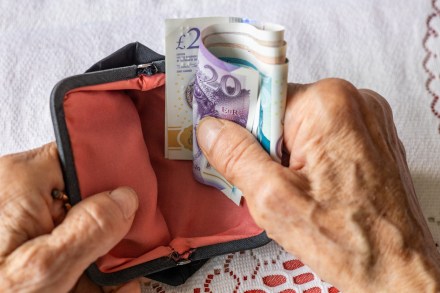
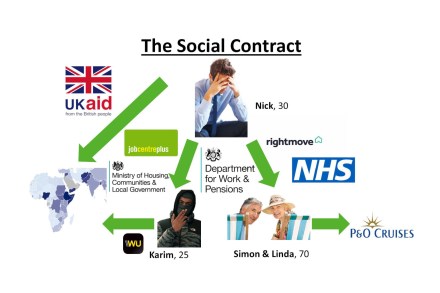
The welfare state is grotesquely unfair. There are people who receive thousands of pounds from the taxpayer with little government oversight, even when they have no genuine need for the cash. They spend it on things like cars, flat screen TVs and other luxury ephemera. And there is a sense of entitlement among these scroungers, a feeling that they are somehow owed the fruits of other people’s labour. These people are of course pensioners. ‘But, but, but,’ I hear them gargle through Wine Society crémant, ‘I’ve paid into the system all my life, I’ve earnt my pension!’ No you haven’t. You very unwisely handed over your taxes to successive governments who spaffed it on Millennium Domes and Ethiopian Spice Girls.

Meet the Zoomer Doomers: Britain’s secret right-wing movement

One of the striking aspects of the AfD’s success in the German elections was the party’s popularity among the young, especially men under 25: one in four voted for the hard-right movement. Support for bracingly conservative positions among Gen-Z men isn’t just a German phenomenon, however. In Westminster and beyond, a new breed of young right-wing influencers is seeking to shift our politics. Meet the Zoomer Doomers. They use acerbic posts to humiliate the defenders of the status quo, in a strategy known as ‘from posting to policy’. Terms such as ‘Boriswave’ – which refers to the net migration figure that spiked at 900,000 under Johnson’s leadership – first appeared within this network.

What’s wrong with Spotify?

Spotify is bad, apparently. The charges levied against the app are that it stifles artists by paying them a pittance and listeners with its all-pervasive algorithm. ‘How Spotify ruined music,’ was the title of one recent Washington Post article, while the New Yorker asked ‘Is there any escape from Spotify syndrome?’ going on to conclude that ‘what we have now is a perverse, frictionless vision for art, where a song stays on repeat not because it’s our new favourite but because it’s just pleasant enough to ignore’. Is it worth spending £20 to £30 on a record? Can you really be bothered with all the faff? Really?   Interest in iPods is said to be on the rise, with music influencers insisting that they’re a better option because they’re algorithm free.

Could inheritance tax changes help farmers in the long run?

Britain’s farmers are in a bind. Despite sitting on land worth millions, they are unable to release that wealth without selling – and many struggle to make money from what they produce. According to Defra, almost one in five farms make a loss, while a quarter made less than £25,000 last year. Yet there are parts of the Labour movement that see farmers as money-grubbing, tweed-clad elites benefiting from special tax breaks and hefty subsidies. James Buckle, a farmer from Suffolk, understands those frustrations: ‘If our farm is worth £10 million, and we’ve got these new inheritance tax rules, we’ve got to pay something like £1.6 million to pass it on. And £10 million is a ridiculous value for an asset that one person owns.

Christopher Caldwell, Gus Carter, Ruaridh Nicoll, Tanya Gold, and Books of the Year I

34 min listen

On this week’s Spectator Out Loud: Christopher Caldwell asks what a Trump victory could mean for Ukraine (1:07); Gus Carter argues that leaving the ECHR won’t fix Britain’s immigration system (8:29); Ruaridh Nicoll reads his letter from Havana (18:04); Tanya Gold provides her notes on toffee apples (23:51); and a selection of our books of the year from Jonathan Sumption, Hadley Freeman, Mark Mason, Christopher Howse, Sam Leith and Frances Wilson (27:08).  Produced and presented by Patrick Gibbons.

Leaving the ECHR won’t fix Britain’s immigration chaos

If you tuned into the Tory party leadership race, you will have heard rather a lot about the European Convention on Human Rights (ECHR). Robert Jenrick wants Britain to leave because it stops us deporting foreign criminals. Kemi Badenoch argues that leaving won’t fix our immigration woes. She’s not wrong. Of the 144,200 people who have arrived on small boats since the start of the crisis in 2018, just 3,788 have been returned. That’s despite the fact that, according to the left-leaning charity the Refugee Council, some 40 per cent of people who come to the UK this way are not refugees. If you apply that rather liberal calculation to the total number, 57,200 should have been made to leave. And yet here they still are.

Labour’s China pivot, Yvette Cooper’s extremism crackdown & the ladies who punch

48 min listen

Successive governments have struggled with how to deal with China, balancing them as a geopolitical rival yet necessary trade partner. Recent moves from Labour have sent mixed signals, from the free speech act to the return of the Chagos Islands. Further decisions loom on the horizon. As Rachel Reeves seeks some economic wiggle room, can Labour resist the lure of the Chinese market? The Spectator’s Katy Balls, and visiting fellow at the European Council on Foreign Relations (ECFR) James Crabtree, join the podcast to discuss further (02:05). Plus: as the first issue under The Spectator’s new editor Michael Gove, what are his reflections as he succeeds Fraser Nelson? He reads an excerpt from his diary (19:05).

Tory wars, the reality of trail hunting & is Sally Rooney-mania over?

43 min listen

This week: who’s on top in the Conservative leadership race? That’s the question Katy Balls asks in the magazine this week as she looks ahead to the Conservative Party conference. Each Tory hopeful will be pitching for the support of MPs and the party faithful ahead of the next round of voting. Who’s got the most to lose, and could there be some sneaky tactics behind the scenes? Katy joins the podcast to discuss, alongside Conservative peer Ruth Porter, who ran Liz Truss’s leadership campaign in 2022. We also include an excerpt from the hustings that Katy conducted with each of the candidates earlier this week. You can find the full interviews on The Spectator’s YouTube channel: https://www.youtube.

Why state schools need old boys’ clubs too

Ask a certain type of class warrior about the old boys’ network and they’ll tell you of ruddy-faced men in club ties, offering each other’s offspring summer internships. Or perhaps they’ll talk of thrusting bankers, who as children shared showers and a chilly dormitory, plotting to hire old school friends over more deserving candidates. Wink wink, nudge nudge, chortle chortle. What websites like ToucanTech and Gravyty have developed is essentially social media in a school tie There is probably still a little bit of truth in that. But in the past few years, it’s become much easier for any school to run an alumni network. Many independent schools, and an increasing number of state schools, have built dedicated websites where former students can find one another.

Power play: Zelensky’s plan for his Russian conquests

40 min listen

This week: Power play. The Spectator’s Svitlana Morenets writes the cover article in this week’s magazine exploring Zelensky’s plan for his Russian conquests. What’s his aim? And how could Putin respond? Svitlana joins the podcast alongside historian and author Mark Galeotti (02:10).Next: Will and Gus discuss their favourite pieces from the magazine, including Richard Madeley’s diary and Lara Prendergast’s argument that bankers are hot again.Then: how concerned should we be about falling fertility rates? In the magazine this week Jesus Fernandez-Villaverde argues that the problem is already far more grave, and far more global, than we realise. Why should we worry about this, and what can be done to stem this?

Gus Carter, Paul Wood, Jonathan Aitken, Laura Gascoigne and Flora Watkins

35 min listen

This week: Gus Carter reports from Rotherham (01:10), Paul Wood asks whether anything can stop full-scale conflict in the Middle East (05:55), Jonathan Aitken takes us inside Nixon's resignation melodrama (16:55), Laura Gascoigne reviews Revealing Nature: The Art of Cedric Morris and Lett-Haines (26:08), and Flora Watkins reads her notes on ragwort (31:24).  Produced and presented by Oscar Edmondson.

Why Britain riots

33 min listen

This week: The Spectator’s Gus Carter was in Rotherham and Birmingham in the days after the riots. Locals tell Gus that ‘violent disorder isn’t acceptable but people from down south don’t know what it’s like up here’. A retired policeman in Birmingham adds that ‘it’s just yobs looking for an excuse – and yobbos come in all sorts of colours’. You can hear Gus’ report on the podcast. (02:25)  Next: Gus and Lara take us through some of their favourite pieces in the magazine, including Flora Watkins’ notes on ragwort and Isabel Hardman’s review of Swimming Pretty: The Untold Story of Women in Water.

Down and out in Birmingham and Rotherham

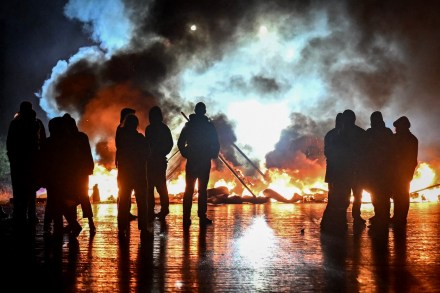
The Holiday Inn Express in Manvers, Rotherham, is opposite an RSPB nature reserve. For months, its 130 rooms have been fully booked, rented by the Home Office to house migrants. Last weekend, the hotel was surrounded by a mob who broke in and tried to burn it down. Most of the ground-floor windows are now covered with chipboard. The migrants, I was told, have been moved to another hotel. ‘Violent disorder isn’t right, but people from down south don’t know what it’s like up here’ ‘It used to be migrant families that were housed here,’ says a woman in the Aldi carpark next door. ‘Now it’s just young men.’ The only other journalists here are from Chinese state TV, keen to show Britain descending into anarchy.