Gus Carter

Gus Carter

Gus Carter is the deputy editor of The Spectator’s US edition.

Trump falls back on ‘you’re fired!’ as midterms loom

From our US edition

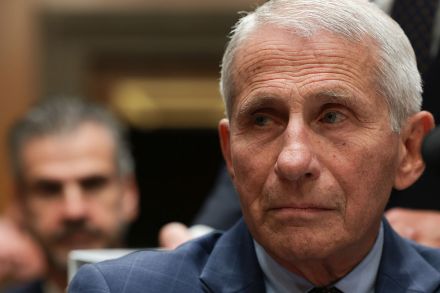
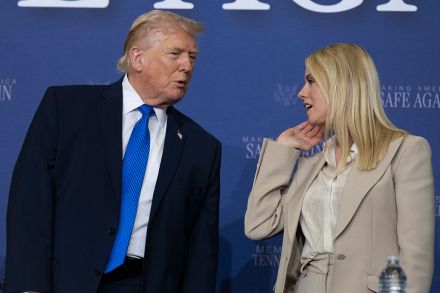
Pam Bondi’s departure as attorney general has prompted the usual Kremlinologist speculation. One theory has it that Donald Trump was furious that she may have warned Democrat Eric Swalwell about a planned FBI release of documents detailing his past relationship with a Chinese spy. Bondi’s replacement, Todd Blanche, dismissed these claims as false. Another theory is that the President had finally had enough of her errors over the handling of the Epstein files, given Bondi was recently subpoenaed in a bipartisan effort by the House. And Trump is widely reported to be frustrated at her failure to indict his archenemies, former FBI director James Comey and New York Attorney General Letitia James. Those who are sympathetic to MAGA will have their own reasons for being unhappy with Bondi.

fired

The Boring Twenties: good British fun is being strangled

A century ago, Britain had reason to despair. A generation had been lost to war, influenza was killing those who survived and revolution was sweeping across Europe. A strange new movement called the Blackshirts was marching on Rome just as Russia’s civil war was ending in Soviet victory. Yet Britons were out having fun. The original Bright Young People cavorted across the country, holding scandalous parties. ‘Please wear a bathing suit and bring a bath towel and a bottle,’ read one invitation. The Metropolitan Police filled Bow Street’s cells with hundreds of nightclub revellers, mainly girls in fancy dress. Dancing, according to one clergyman, was a ‘very grave disease which is infecting the country’.

Inside the world of Reform’s mystery money man

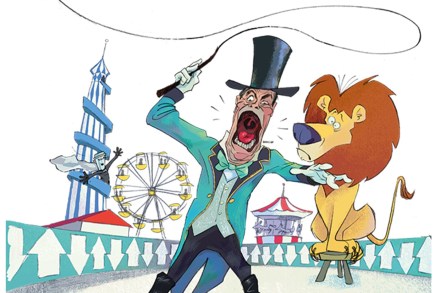
Nigel Farage keeps eclectic company. Reform is not a party of slick spin doctors or career politicians. Instead, it is staffed by people like George Cottrell, the minor aristocrat and former convict, who acts as Farage’s fixer. He is, according to Farage, ‘like a son to me’. I’m told that Cottrell is often seen in the Reform offices in Millbank helping the party, although he is still described by party staff as a simple ‘unpaid volunteer’.  Cottrell, 32, has always had an air of dodginess about him. In 2016 he spent eight months in an American maximum security prison for wire fraud relating to an international money laundering conspiracy. He plans to publish a book called How to Launder Money early next year (the man has a sense of humour).

I’m the heir to Manhattan

I’m owed around $680 billion. Some 77 acres of downtown Manhattan belong to the Carter family, according to a letter written in 1894. Wall Street, Broadway and One World Trade Center – they all sit on a plot that is, by rights, mine. Yet here I am, grumbling about what ought to be in the pages of The Spectator. What went wrong? The story goes something like this. Shortly before independence, a pirate called Robert Edwards was licensed by the British to hunt down Spanish ships. He was so successful that the Crown gave him a slice of Manhattan as a reward. Edwards leased the land for 99 years to two brothers and subsequently died, lost at sea. That lease expired in 1877 and was supposed to be apportioned off to Edwards’s heirs. But that never happened.

John Power, Madeline Grant, Ysenda Maxtone-Graham, Calvin Po & Gus Carter

33 min listen

On this week’s Spectator Out Loud: John Power examines the rise in drug abuse and homelessness on British streets; Madeline Grant explains the allure of Hollywood radical Sydney Sweeney; Ysenda Maxtone Graham laments the rise of the on-the-day party flake; Calvin Po warns of a war on Britain’s historic architecture; and Gus Carter reads his Notes on the brasserie chain Browns.

How Browns lost the battle of the brasseries

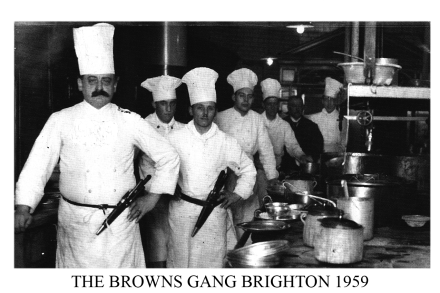
Last month, the founder of the Browns restaurant chain was charged with killing his mother. Shocking news, but it feels somehow appropriate. Browns is the traditional lunch spot for families looking to feed their student child, the place where 2.2s are revealed and doomed university girlfriends introduced. Many parents have found themselves spending hundreds on lunch only to be told their far greater investment has been wasted on dreams of becoming a club promoter. Steak frites, please, with a side order of murderous intent. Browns began in Brighton, but only really got going when it spread to Oxford and Cambridge in the 1980s. Bristol got one in the early 1990s, decking out a neo-Byzantine library next to the Wills Memorial Building.

The tragedy of Starmer’s breakfast

Sometimes a small detail in a news story tells you more than a months-long investigation splashed across the front page. ‘Starmer appears to realise that he needs to do more to connect with his party and has begun a new charm offensive,’ the Sunday Times reported. Some MPs have been invited for breakfast and ‘No. 10 has apparently purchased a new toaster to cater for the demand.’ There we have it, ladies and gentlemen. Keir Starmer’s secret weapon in his war against British decline: a few slices of Hovis and an awkward offer of jam. ‘Aerrr, are you planning to, um, support our Borders Bill? Oh, so sorry, we’ve got some Utterly Butterly somewhere. Morgan, would you mind looking in the kitchen?

Very pretty and pretty gruesome: Ballad of a Small Player reviewed

Ballad of a Small Player opens with Lord Doyle, played by Colin Farrell, hiding from security in his trashed casino suite in Macau. After they’re gone, he slips into the corridor and sees a trolley holding a bouquet of flowers and a knife. I kept my eyes on the knife, expecting the jittery, paranoid gambling addict to grab the weapon. Instead he places a white rose in his green velvet lapel. Director Edward Berger (All Quiet on the Western Front, Conclave) enjoys playing these games of misdirection. It feels appropriate. Casinos – with their chandeliers, gaudy frescoes and croupiers in black tie – are contradictory places. Opulence in these temples of luck is both a way of hiding the brutality of emptying bank accounts, and a show of deference to the gods of fortune.

Meet Britain’s new RoboCops

‘Small but mighty,’ is how Baroness Casey described Bedfordshire Police when she released her report on grooming gangs over the summer. She told MPs that most forces had failed to properly record child abuse. ‘A bloody disaster, frankly’. But Bedfordshire is different. They’re using artificial intelligence so police can spend more time hunting criminals.  ‘I didn’t know about Louise Casey’s comments until you contacted us,’ says Trevor Rodenhurst, the chief constable of the county. That’s unsurprising. Rodenhurst is a busy man. We meet in his office on the outskirts of Bedford, under an official portrait of the King; behind his computer is his ceremonial tipstaff and photographs of his children.

Welcome to the age of reluctant socialism

There are no revolutionaries in Europe’s streets. No communists marching on parliament buildings. If anything, the continent has seen a rightward shift over the past decade. And yet Europe is becoming the home of a reluctant, greying socialism.  In France, the new Sébastien Lecornu regime is considering a wealth tax on entrepreneurs and the rich rather than slash its gargantuan social security bill. ‘France has not known a balanced budget for 51 years,’ said the former prime minister François Bayrou last week as he was voted into political oblivion. He, like many of his predecessors, had failed to reform the pension system. ‘You can get rid of the government, but you can’t get rid of reality.’ France’s MPs disagreed.

The false economy of cutting the Combined Cadet Force

What could be more fun for a 14-year-old boy than messing about in the woods with a gun? My school’s Combined Cadet Force offered precisely that, marching us through the Brecon Beacons and organising mock skirmishes with SA80 rifles (albeit using blanks). When we weren’t trying to shoot each other, we were fighting over OS maps and compasses, trying to find which bit of woodland we were supposed to be sleeping in. One group found a dead body on the side of a Welsh mountain. Another spent an evening drinking vodka and smoking cigarettes with a strange man in a caravan. At some point in the small hours, he got a little too handsy and they all ran back to their bivvies. I was hugely envious when they told us this as we ate powdered eggs, cooked in a mess tin over burning hexamine tablets.

Border lands, 200 years of British railways & who are the GOATs?

38 min listen

First: how Merkel killed the European dream ‘Ten years ago,’ Lisa Haseldine says, ‘Angela Merkel told the German press what she was going to do about the swell of Syrian refugees heading to Europe’: ‘Wir schaffen das’ – we can handle it. With these words, ‘she ushered in a new era of uncontrolled mass migration’. ‘In retrospect,’ explains one senior British diplomat, ‘it was pretty much the most disastrous government policy of this century anywhere in Europe.’ The surge of immigrants helped swing Brexit, ‘emboldened’ people-traffickers and ‘destabilised politics’ across Europe. Ten years on, a third of the EU’s member states within the Schengen area have now imposed border controls. Can freedom of movement survive in its current form?

I flew to Florence to find my father’s shoes

Just before my father died, he visited Mannina in Florence to have his feet measured for a pair of shoes. I’d found the handwritten receipt in his desk on thin yellow paper, stapled with samples of leather. Online pictures of Mannina showed a glass-fronted shop of lacquered wood and brass, the name in beveled gold across the door. So after months without a holiday, I booked a cheap short haul flight from London to Italy, determined to track down these missing shoes.  My father had been a tailor for much of his life, the third man in Pakeman Catto & Carter, an established men’s clothing shop in the Gloucestershire town of Cirencester. ‘At one point he’d dressed half the gentlemen of England,’ my uncle said at his funeral, which is probably not far from the truth.

Soul suckers of private equity, Douglas Murray on Epstein & are literary sequels ‘lazy’?

44 min listen

First up: how private equity is ruining Britain Gus Carter writes in the magazine this week about how foreign private equity (PE) is hollowing out Britain – PE now owns everything from a Pret a Manger to a Dorset village, and even the number of children’s homes owned by PE has doubled in the last five years. This ‘gives capitalism a bad name’, he writes. Perhaps the most symbolic example is in the water industry, with water firms now squeezed for money and saddled with debt. British water firms now have a debt-to-equity ratio of 70%, compared to just 4% in 1991. Britain’s desperation for foreign money has, quite literally, left Britain ‘in the shit’.

How private equity ruined Britain

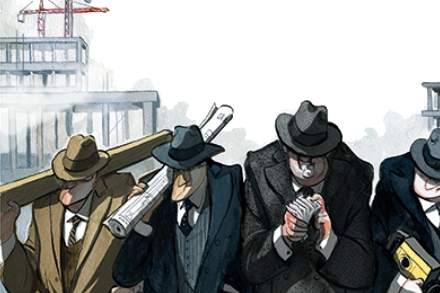
What has happened to Britain’s rivers isn’t a mistake. The fact that serious pollution is up 60 per cent on the year, or that only one in seven rivers can be called ecologically healthy, is the result of corporate tactics. It is effluent from the murky world of private equity. Some 2.5 million people in the UK now work for a business that is ultimately owned by private equity. Since the 2008 financial crisis, Britain has become a prime target for takeovers, driven by low company valuations, favourable exchange rates and a pliable regulatory environment. Everything from Bella Italia to the Blackpool Tower, Travelodge to Legoland, the AA to Zizzi, has been owned by private equity. Today, it claims to make around £7 in every £100 generated for the British economy.

How the Bank broke Britain, Zelensky’s choice & the joys of mudlarking

49 min listen

First up: how the Bank of England wrecked the economy Britain’s economy is teetering on the brink of a deep fiscal hole, created by billions of pounds of unfunded spending – never-ending health promises, a spiralling welfare bill and a triple lock on the state pension, which will cost three times as much as originally estimated. Although politicians ‘deserve much of the blame for the economic state we’re in’, it’s Andrew Bailey – Michael Simmons argues in the magazine this week – who ‘has enabled their recklessness’. He joined the podcast to discuss who really broke Britain with Kate Andrews, Deputy Editor of The Spectator’s world edition and former Economics Editor. (01:15) Next: has Ukraine lost faith in Zelensky?

Keir’s peer purge, how to pick an archbishop & is AI ruining sport?

44 min listen

This week: Peerless – the purge of the hereditary peers For this week’s cover, Charles Moore declares that the hereditary principle in Parliament is dead. Even though he lacks ‘a New Model Army’ to enforce the chamber’s full abolition, Keir Starmer is removing the hereditary peers. In doing so, he creates more room, reduces the Conservatives’ numerical advantage, and improves ‘the sex and ethnic balance’. But 86 hard-working and dutiful peers ‘lacking worldly ambition or partisan passions’ will be lost. Also in the magazine, Sophia Falkner, researcher at The Spectator, sets out exactly what we stand to lose by profiling some of the most capable hereditary peers in the House. She warns that Labour’s purge is ripping the heart out of the Lords.

Claws out for Keir, Mamdani’s poisoned apple & are most wedding toasts awful?

46 min listen

This week: one year of Labour – the verdict In the magazine this week Tim Shipman declares his verdict on Keir Starmer’s Labour government as we approach the first anniversary of their election victory. One year on, some of Labour’s most notable policies have been completely changed – from the u-turn over winter fuel allowance to the embarrassing climb-down over welfare this week. Starmer has appeared more confident on the world stage but, for domestic audiences, this is small consolation when the public has perceived little change on the problems that have faced Britain for years. Can Starmer turn it around? Tim joined the podcast alongside the Spectator’s editor Michael Gove.

How deepfake fraud is rewiring our minds

From our US edition

We’re led to believe that America was once Mister Rogers’ Neighborhood, a place of cardigans and kindness where everyone got along just swell. Then it all went wrong. MSNBC hosts talk of a “crisis in authority” while New York Times columnists blame corrupt Republicans for a “lost faith in liberal governance.” Right-leaning commentators point to mass migration as the great trust killer. Illegal aliens, we’re told, have a “fragmenting effect on shared cultural norms” and are “importing distrust.” No doubt these arguments contain an element of truth: America is a less trusting society than it was a few decades ago. But soon such arguments are going to appear as quaint as Mister Rogers’s model Pennsylvanian town.

fraud

End of the rainbow, rising illiteracy & swimming pool etiquette

50 min listen

End of the rainbow: Pride’s fall What ‘started half a century ago as an afternoon’s little march for lesbians and gay men’, argues Gareth Roberts, became ‘a jamboree not only of boring homosexuality’ but ‘anything else that its purveyors consider unconventional’. Yet now Reform-led councils are taking down Pride flags, Pride events are being cancelled due to lack of funds, and corporate sponsors are ‘withdrawing their cold tootsies from the rainbow sock’. Has Pride suffered from conflation with ‘genderism’? Gareth joined the podcast to discuss, alongside diversity consultant Simon Fanshawe, one of the six original co-founders of Stonewall.