Gavin Mortimer

Gavin Mortimer

Gavin Mortimer is a British author who lives in Burgundy after many years in Paris. He writes about French politics, terrorism and sport.

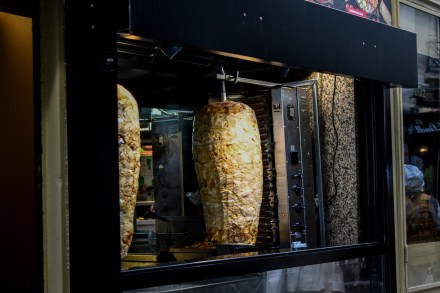
How the kebab mafia took over the French high street

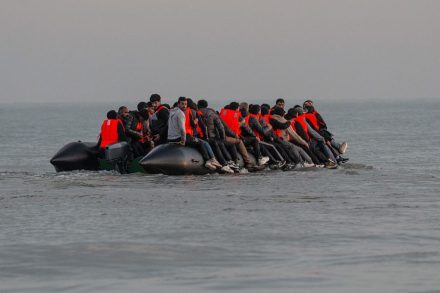
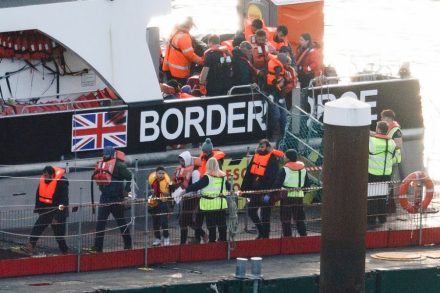
Last week, the police in Britain launched a three-week operation codenamed ‘Machinize’. It began with nearly 300 raids on nail salons, vape shops and barbershops, which in recent years have become a common sight on British high streets Thirty-five arrests were made and 97 people suspected of being victims of modern slavery were placed under police protection. More than £1 million was frozen, money the police believe is ‘dirty’, generated by Albanian and Kurdish gangs that control much of Britan’s organised crime such as drugs and prostitution. They also are heavily involved in the people smuggling business, a fact noted in 2022 by Dan O’Mahoney, then the Clandestine Channel Threat Commander.

Why do the French hate J.D. Vance so much?

At the start of the month, J.D. Vance delivered the address at the Heritage Foundation in Washington for the premiere of a documentary. ‘Live Not By Lies’ is based on the book by Rod Dreher, who is a friend of the American Vice President’s. Vance informed his audience that backstage Dreher told him of a recent interview he had given to a French newspaper. Broadcast on Le Figaro’s online channel, Dreher was described in the tagline as an ‘American intellectual and friend of J.D. Vance’. As Vance joked, maybe that 'was meant to tarnish [him] in that country'. It may have been. France does appear to have an axe to grind with Vance, even a centre-right newspaper like Le Figaro. The left-leaning media is more blatant in their hostility. 'J.D.

Will the EU crumble under Trump’s tariffs?

In the escalating trade war between America and China, the European Union risks being stranded in no man’s land. Donald Trump has raised tariffs on Chinese imports to 145 per cent with Beijing imposing their own tariffs of 84 per cent. The American President remains bullish that America and China can thrash out a deal, saying: 'I'm sure that we'll be able to get along very well…I think that we'll end up working out something that's very good for both countries.' The EU will hope so because the trade war threatens to create dangerous fault lines within the bloc of 27 nations. On Thursday, Ursula von der Leyen postponed the EU’s retaliatory tariffs after Trump’s decision to suspend American tariffs for ninety days.

Marine le Pen is far from finished

The right rarely take to the streets in France, but thousands gathered in Paris on Sunday to hear Marine Le Pen pledge to continue the fight. The leader of the National Rally was convicted of embezzlement last week, and among her punishments was a five-year political disqualification. She told her supporters she was a victim of a ‘witch-hunt’ and they roared their agreement. Le Pen had assembled her MPs and supporters in the Place Vauban, in the shadow of the Hôtel des Invalides, built by Louis XIV as a retirement home for old soldiers. In the days leading up to the rally, some of Le Pen’s political adversaries had warned she was leading the country towards insurrection. Jean-Luc Melenchon, the far-left firebrand, talked of ‘sedition’.

Gavin Mortimer, Colin Freeman, Lawrence Osborne, Lionel Shriver and Anthony Cummins

34 min listen

On this week’s Spectator Out Loud: Gavin Mortimer looks at how the French right can still win (1:48); Colin Freeman interviews Americans who have fought in Ukraine and feel betrayed by Trump (11:01); Lawrence Osborne details his experience of last week’s earthquake, as he reads his diary from Bangkok (18:38); Lionel Shriver defends traditional, monogamous marriage (24:07); and, Anthony Cummins examines media satire and settled scores as he reviews Natasha Brown’s Universality (31:13).  Produced and presented by Patrick Gibbons.

Trump has finally ditched Macron for Marine Le Pen

It’s official, the bromance between Donald Trump and Emmanuel Macron is over. It had always been a rocky relationship but on Thursday it ended in a spectacular fashion. The French president, reacting to Trump’s decision to impose 20 per cent tariffs on all EU products, announced: ‘Investments to come or investments announced in recent weeks should be suspended until things are clarified with the United States.’ A few hours later the American president posted a message on social media in which he reflected on the sentence handed down to Marine Le Pen on Monday. Trump had commented little on her four-year suspended prison sentence and five-year political ineligibility for  misusing EU funds, but riled by Macron remarks he gave France both barrels.

How the French right can still win

Dixmont, Yonne It has been a terrible year for the Le Pen family. Jean-Marie died in the first week of January. He was the patriarch who in 1972 co-founded the National Front and grew it into a formidable political machine before handing over to his daughter. Marine took command in 2011 and, through a strategy of ‘de-demonisation’, transformed the rebranded National Rally into the biggest single party in the National Assembly with 125 seats. She has reached the second round of the last two presidential elections, but it won’t be third time lucky for Marine Le Pen. On Monday, a judge disqualified her from politics for five years for misusing EU funds between 2004 and 2016. Le Pen was also given a four-year suspended prison sentence and fined €100,000.

Marine Le Pen’s downfall is a gift to the National Rally

Marine Le Pen’s political career ended this morning when a Paris judge found her guilty of misusing EU funds. She was sentenced to four years' imprisonment, two of which are suspended and two will be served under an ankle bracelet. She was also fined €100,000 (£84,000) and disbarred from politics for five years. Few anticipated such a severe sentence – it is one that will send shockwaves not just through France but across Europe. Also convicted alongside the leader of the National Rally were 24 other party members – including eight MEPs – all found guilty of channelling €2.9 million (£2.4 million) of EU money to their own party’s coffers.

Macron wants to be France’s protector-in-chief

It has long been said by some of Emmanuel Macron’s opponents that he is a president who ‘governs by fear’. It began with his management of Covid five years, when he imposed on France one of the most stringent lockdowns in the world. ‘We are at war’, he declared in a televised address to the nation on 16 March. Now he is at it again, issuing dire warnings about the possibility of war just as America, Russia and Ukraine have started talking about peace. There is still a long way to go before the conflict in Ukraine ends, but the President of France appears pessimistic about the chances of peace.

Could a headscarf row bring down France’s government?

Might a headscarf bring down France’s coalition government? The question of whether the Islamic garment should be permitted on the sports field has revealed the ideological differences within Prime Minister Francois Bayrou’s fragile government. On the one hand, there are left-leaning ministers such as Elisabeth Borne (Education) and Marie Barsacq (Sport and youth) who see nothing wrong with the headscarf. Others, principally, Gérald Darmanin (Justice) and Bruno Retailleau (Interior), are fiercely opposed. Retailleau recently took Barsacq to task over her stance, saying the headscarf 'is not a form of freedom, but a form of submission for women'.

Emmanuel Macron has Trump déjà vu

Emmanuel Macron hosted Mark Carney at the Elysee on Monday as both France and Canada work out how best to deal with Donald Trump. Carney, who replaced Justin Trudeau as Prime Minister last week, is in Europe to garner support for Canada amid growing tensions with the USA. In a joint press conference, Carney spoke of Canada’s desire to ‘reinforce its ties with reliable allies like France’. He added that it was necessary to ensure that ‘France and the whole of Europe works enthusiastically with Canada, the most European of non-European countries, determined like you to maintain the most positive possible relations with the United States.

Romania’s democracy has descended into farce

From our US edition

Violence broke out in Bucharest on Sunday evening after Romania’s Central Electoral Bureau disqualified Cǎlin Georgescu from running in May’s re-run presidential election. In a statement, the bureau justified its decision to exclude Georgescu on the grounds that his candidacy “doesn’t meet the conditions of legality” because he “violated the very obligation to defend democracy.” Supporters of Georgescu, whom the BBC has described as a “far-right, pro-Russia candidate,” gathered outside the Central Electoral Bureau to express their outrage and soon clashed with police. Until six months ago, Georgescu’s name was virtually unknown outside Romania.

Calin Georgescu is a victim of illiberal Europe

Violence erupted in Bucharest on Sunday evening after Romania’s Central Electoral Bureau disbarred Calin Georgescu from standing in May’s re-run presidential election. In a statement, the bureau justified its decision to exclude Georgescu on the grounds his candidature ‘doesn't meet the conditions of legality’ because he ‘violated the very obligation to defend democracy’. Supporters of Georgescu, who has been described by the BBC as a ‘far-right, pro-Russia candidate’, gathered outside the Central Electoral Bureau to vent their fury, and they soon clashed with police. Until six months ago the name Georgescu was unknown outside Romania.

What Reform can learn from France’s National Rally

The crisis currently ripping apart Reform is nothing new to Marine Le Pen’s National Rally party. Indeed, the reason her party is called the ‘National Rally’ is a result of her ‘dédiabolisation’ strategy, which aimed to soften the party’s image. Le Pen ditched its original moniker, the National Front, in early 2018, a few months after her comprehensive defeat to Emmanuel Macron in the presidential election run-off. Her father, Jean-Marie, who had co-founded the National Front in 1972, was furious, saying it was ‘totally absurd… a betrayal of the movement’s history’. It wasn’t the first time that father and daughter had fallen out over the party’s direction; in 2015 she had expelled him from the party because of inflammatory comments.

‘Low-cost’ jihadists are Europe’s new danger

There is a new Islamist terror threat in Europe that the French describe as ‘low-cost terrorism’. The expression was deployed in a television interview at the start of this week by Bruno Retailleau, the Minister of the Interior. Warning France that Islamic State is ‘reconstituting themselves in Africa and elsewhere’, Retailleau said that the other menace was the individual extremist acting on his own initiative. Unskilled in bomb-making and with no access to firearms, these ‘low-cost’ Islamists kill with knives or behind the wheel of a car. One of these ‘low-cost’ extremists was last week jailed for life by a French court. In October 2020, Tunisian Brahim Aouissaoui murdered three Christians with a knife outside a church in Nice.

Macron’s late-night address will infuriate Trump and Vance

Emmanuel Macron spoke to his people last night in a television address and told them that the future of Ukraine cannot be decided by America and Russia alone. It can, and it probably will, after Ukraine's leader Volodymyr Zelensky signalled his intention to sign Donald Trump’s minerals deal, the first step in the peace plan drawn up by the USA. One of the curiosities of Macron’s speech was that he spent most of it warning about war, as America, Russia and Ukraine talk about peace. Putin’s bellicosity ‘knows no borders’, declared the French president, adding: ‘Who can believe today that Russia would stop at Ukraine?’.

Is Macron a ‘danger for peace’ in Ukraine?

Keir Starmer and Emmanuel Macron are in competition to be the de facto leader of the European response to the diplomatic crisis between Donald Trump and Ukraine's president Zelensky. The cynic might wonder if Macron isn’t perhaps making the most of the fallout to boost his standing after a calamitous few months. The French president’s reputation has not recovered from his decision last June to call a snap election; the result was political chaos and three prime ministers in six months. Few French have confidence in their president to handle the situation Ukraine effectively Domestically, France is a disaster zone. Lawlessness, immigration and an ailing economy are just three reasons why last month a poll found that Macron’s approval rating had sunk to 25 per cent.

The Imperial War Museum’s betrayal of history

The news that the Imperial War Museum is closing Lord Ashcroft’s Victoria Cross and George Cross gallery is sadly not a great surprise. It’s the latest act in the ‘wokeification’ of this once outstanding museum. Writing in the Daily Telegraph last week, Lord Ashcroft said that the IWM didn’t even have the ‘courtesy to inform’ him of the closure. Rather, it issued a statement in which it thanked him for his generous 15-year loan but said the exhibition will shut permanently on 1 June. The reason, explained the IWM, is to create new space ‘to allow us to share more stories of conflicts that are within many of our visitors’ living memory’.

Europe can’t silence its working class forever

Last December the European Commission published its ‘priorities’ for the next five years. All the bases were covered, from defence to sustainable prosperity to social fairness. And of course, the most important priority of all, democracy. ‘Europe’s future in a fractured world will depend on having a strong democracy and on defending the values that give Europeans the freedoms and rights that they cherish,’ proclaimed the Commission, which pledged it was committed to ‘putting citizens at the heart of our democracy’. December was the same month that a Romanian court cancelled the presidential election, after the surprise first round victory of the Eurosceptic and anti-progressive Călin Georgescu.

Trump and Macron’s backslapping masks a rocky relationship

It would be a stretch to describe Emmanuel Macron’s meeting with Donald Trump as a ‘bromance’, but there were plenty of warm handshakes and even warmer words, with the French president at one moment addressing his host as ‘Dear Donald’. Macron had flown to Washington on Monday to press the case for Europe in the upcoming negotiations between the USA and Russia over the war in Ukraine. The two presidents had a two-hour virtual meeting with leaders from the G7 along with President Volodymyr Zelensky of Ukraine. Macron and Trump then held a press conference during which the President of France declared that ‘after speaking with President Trump, I fully believe there is a path forward.’ In public, the pair were in broad agreement.