Gavin Mortimer

Gavin Mortimer

Gavin Mortimer is a British author who lives in Burgundy after many years in Paris. He writes about French politics, terrorism and sport.

Christoph Heusgen is just another arrogant boomer

Historians will look back on the tears of Christoph Heusgen as a defining moment of the early 21st century. When the German began blubbing as he wrapped up the Munich Security Conference last Sunday, he wasn’t just crying for himself but for all his generation who believed that the collapse of Communism had marked the ‘end of history’. The phrase was coined by the American political scientist, Francis Fukuyama, in his 1992 book of that name. He claimed that the end of the Cold War was the ‘end-point of mankind's ideological evolution and the universalisation of western liberal democracy as the final form of human government’. Fukuyama is a Baby Boomer, as is Christoph Heusgen. They were both born in the early 1950s.

The Nigerian drug mafia is heading for Britain

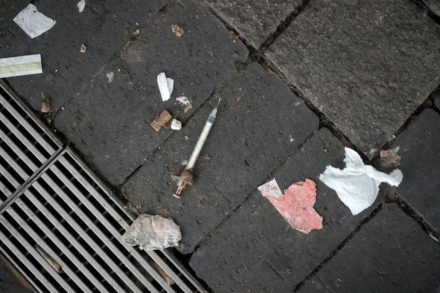
It’s an established fact that most of Britain’s drug trade is controlled by Albanians. There is some competition from Turks and Pakistanis but Albanians dominate the industry with their ‘business-like’ methods. They may soon have another partner in crime. Nigerian gangs are increasingly making their presence felt in Europe: this week they were among 27 people arrested in coordinated police raids in Italy, Spain and Albania. According to Italy's Carabinieri, the arrests encompassed two drug trafficking gangs, one of which was a Nigerian operation in which they used their young compatriots seeking a new life in Europe to traffic marijuana across the continent.

Europe has much to learn from Georgia Meloni

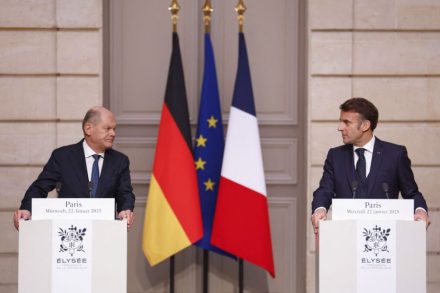
Giorgia Meloni was nearly an hour late for Monday’s European crisis summit at the Elysee Palace in Paris. According to the French press, Italy’s prime minister made her appearance ‘in the middle of the meeting, 50 minutes later than the agreed time’. Perhaps her Maserati got caught in the Paris traffic, or perhaps Meloni made her late entrance intentionally; a way of underlining to her host, Emmanuel Macron, and the other European leaders present, that she alone has a warm relationship with Donald Trump. Meloni visited Trump’s Mar-a-Lago club for what both parties called an 'informal meeting' at the start of the year. The then President-elect described the Italian as a ‘fantastic woman’ and told reporters that ‘she’s really taken Europe by storm’.

Can Europe stand on its own two feet against Russia?

The United States is no longer an 'ally' of Europe, according to a former high-ranking figure in Nato. In an interview with Times Radio, Stefanie Babst, erstwhile deputy assistant secretary general of the alliance, said President Trump has 'switched sides' and aligned the US with Russia, led by the ‘war criminal’ Vladimir Putin. 'I don’t think that the Trump administration is prepared to really commit any longer to Nato, to the trans-Atlantic alliance as such,' said Babst, 'and he couldn’t care really less for European security.' Babst’s remarks appear to contradict what she said in an interview exactly twelve months ago with a Washington think-tank.

Europe should listen to America’s uncomfortable truths

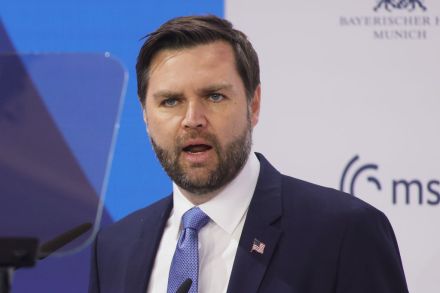
The response in Europe to J.D Vance’s speech at the Munich Security Conference last Friday was one of predictable outrage. Media outlets described it as a ‘rant’ or a ‘sermon’, and politicians and diplomats queued up to criticise the vice-president of America. Kaja Kallas, the EU's High Representative for Foreign Affairs and Security Policy, accused the Trump administration of ‘try[ing] to pick a fight with us, and we don't want to a pick a fight with our friends’. Apparently, there were ‘dry laughs’ from some of the audience when Vance talked about ‘shared’ values.

JD Vance is right. Europe is in peril

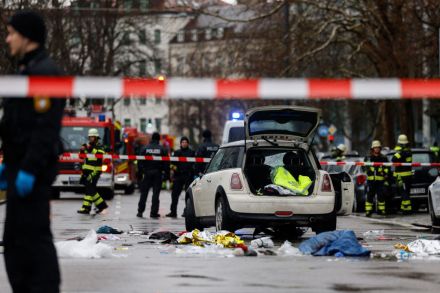
On Wednesday evening, a man threw a fragmentation grenade into a café in Grenoble, leaving 15 people injured. The following day, an Afghan shouting ‘Allahu Akbar’ drove his car into a crowd in Munich and injured more than two dozen. The previous week in Brussels, two men strolled through a metro station firing bursts from Kalashnikovs – one of several shootings that day in the Belgian capital, which wounded three people. It is believed that Wednesday’s attack in Grenoble was the latest in the drugs war being fought across the country by rival cartels from North Africa. Last year, I described Grenoble as ‘one of the most dangerous places in France’, although there are other contenders.

How the judiciary fuel Europe’s migrant crisis

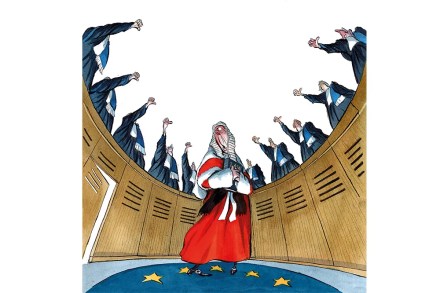
If Europeans wanted evidence that it is judges and not politicians who run their countries this month has proved it. At the start of February, the Rome court of appeal ordered that 49 migrants who had been rescued at sea and transferred to Albania – under the terms of an agreement struck between the two countries – be returned to Italy. It is the third time in four months that a court has intervened to thwart Prime Minister Giorgia Meloni’s attempt to combat illegal immigration. According to the judges, sending migrants to Albania is a contravention of an EU court ruling that member states must assess the safety of a country to which it sends migrants. Albania is an official candidate for accession to the EU.

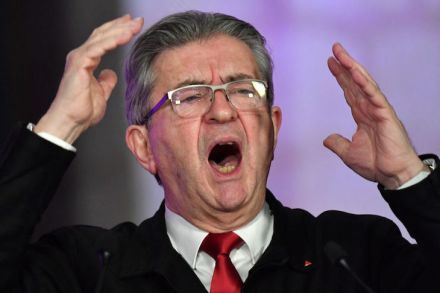
Why is Jean-Luc Melenchon talking about the ‘Great Replacement’ theory?

Jean-Luc Melenchon has broken a taboo in French, and Western, politics. The de facto leader of the French left, whose La France Insoumise party is the driving force of the coalition that won most seats in last July’s legislative elections, told students in Toulouse: ‘Yes, Mr (Eric) Zemmour, there is a Great Replacement! This replacement is that of a generation coming after the other and which will never resemble the previous one’. Melenchon was aiming his remarks at Eric Zemmour. The controversial journalist turned incendiary politician has came under relentless attack after he promoted the Great Replacement as a central plank of his election manifesto during his run for the French presidency in 2022.

A ‘Trump tornado’ is about to hit Europe

From our US edition

There is a wind of change blowing through the West. It emanates from Washington DC, where President Donald Trump continues to dash off executive orders; more than fifty by the end of last week, the highest number in a president’s first 100 days in four decades. The liberal mainstream media is rattled. The New York Times magazine ran a piece at the weekend in which it described Trump as "the leading light of a spate of illiberal leaders and parties flourishing in democracies around the world." The paper namechecked some of them: Poland, Holland, India, France, Germany, Italy, Brazil, Hungary and Russia. What unites and motivates these "illiberal" parties is their opposition to what the NYT called "liberal creep," which they regard as a civilizational threat.

Trump

Is a ‘Trump tornado’ about to tear through Europe?

There is a wind of change blowing through the West. It emanates from Washington DC, where Donald Trump continues to dash off executive orders; more than fifty by the end of last week, the highest number in a president’s first 100 days in four decades. The liberal mainstream media is rattled. The New York Times magazine ran a piece at the weekend in which it described Trump as ‘the leading light of a spate of illiberal leaders and parties flourishing in democracies around the world’. The paper namechecked some of them: Poland, Holland, India, France, Germany, Italy, Brazil, Hungary and Russia. What unites and motivates these ‘illiberal’ parties is their opposition to what the NYT called ‘liberal creep’, which they regard as a civilisational threat.

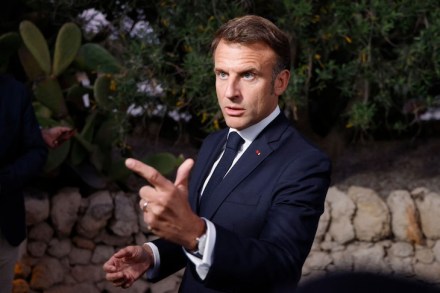
Macron needs to find his inner Trump

If a week is a long time in politics then eight years is an eternity. Just ask Donald Trump and Emmanuel Macron. Back in 2017 the two newly-elected presidents met for the first time in Brussels. They shook hands for the cameras, and kept shaking for several seconds, a game of machismo that tickled the commentariat. ‘That’s how you ensure you are respected,’ declared Macron. ‘You have to show you won’t make small concessions.’ https://www.youtube.com/watch?v=1DwijJfVbBg The French president believed he was the future. Little did he know he would be the last of the progressive poster boys. The Guardian reported in 2017 how in Brussels Macron ‘pointedly swerved past Trump to embrace German chancellor Angela Merkel’.

Why is Spain so anti-Trump?

Spain has been receiving some lavish praise of late in the British press. ‘Booming Spain is on track to a new age of prosperity’ was the headline in the Times last week, a response to the news that its GDP is forecast to grow by 2.5 per cent this year. The Financial Times was similarly effusive about Spain’s economy in a piece last October, in which it quoted the country’s prime minister, Pedro Sánchez. ‘I can say that Spain is living an extraordinary moment. Our country is experiencing great success.’ The Times explained that Spain is growing at three times the rate of the Eurozone for three reasons: immigration, tourism and lower energy prices.

Europe is feeling the strain of mass immigration

Britain can’t cope, that was the response of Nigel Farage to last week’s disclosure by the Office for National Statistics that the population will hit 72.5 million in 2032. The leader of Reform said that Britain has already reached saturation point at 67.6 million, adding: ‘Our quality of life for all of us is diminishing directly as a result of the population explosion.’ The French feel the same, and examples abound of the strain being placed on the country as a result of mass immigration. The Friday before last a class of schoolchildren in Paris were having a PE lesson when it came to an abrupt halt. City Council officials arrived and ordered the children to collect their belongings and vacate the sports hall because it was needed to house 200 migrants.

How many more knife attacks can France take?

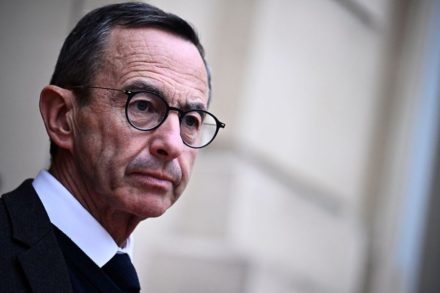
Each day in France there are 120 knife attacks. On Saturday, one such incident resulted in the death of 14-year-old Elias as he left his football training in central Paris. He was stabbed after refusing to surrender his mobile phone. A 17-year-old has admitted the killing to police. France’s Interior Minister, Bruno Retailleau, expressed his horror at the death of Elias, and reiterated his determination to make France ‘a country where parents no longer have to fear seeing their child murdered for nothing’. He added that it ‘will be a long and difficult road’ and will require an end to the culture of excuses which ‘has plunged some of our young people into a deep sense of impunity’.

Like the Louvre, Macron’s presidency is falling apart

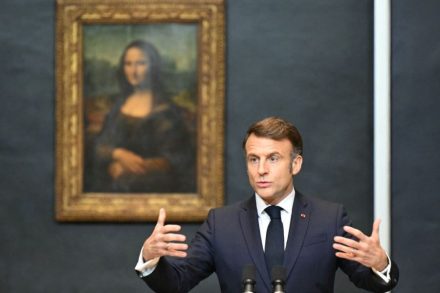
Emmanuel Macron has promised to return the Louvre to its former glory in an ambitious renovation project that is forecast to cost between €700 and €800 million (£586 and £670 million). The French president outlined details of what he called his 'New Renaissance' project on Tuesday as he stood in front of the Mona Lisa. As part of the revamp, Leonardo da Vinci's masterpiece will have its own room and visitors will pay for the privilege of seeing the enigmatic smile. Other initiatives include a second entrance – to ease the current congestion of 30,000 visitors a day – and a new entrance fee from next January that will require non-EU visitors to pay more. There will also be a comprehensive overhaul of the museum’s infrastructure, from galleries to bathrooms.

Europe has no idea how to stop the spread of Islamism

Last week was surely one of the grimmest in Europe in years. The day after an Afghan migrant allegedly stabbed a two-year-old boy in Germany to death, Axel Rudakubana was sentenced to 52 years in prison for murdering Alice, Bebe and Elsie, three little English girls with a combined age of 22, in Southport. The court heard that Rudakubana told police in the immediate aftermath of the killing: ‘It’s a good thing those children are dead…I’m so glad…so happy’. What we didn’t hear enough about was the exact nature of his extremism.

A British Puy du Fou will upset all the right people

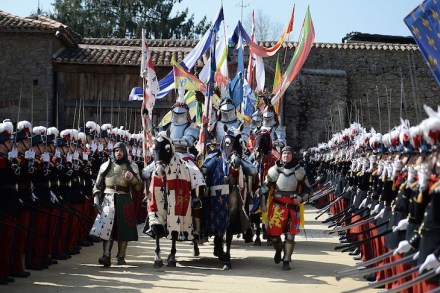
There is a new theme park coming to Britain – though without big dippers and ghost trains. It will be an historical attraction with Vikings, knights and Tommy Atkins in the trenches. It will be Britain’s equivalent of the wildly popular Puy du Fou, a historical theme park in western France which opened in 1989 and now pulls in nearly three million visitors a year. The Sunday Times reported this week that the French company behind Puy du Fou has plans to open a £300 million British version in Oxfordshire. The paper spoke to Olivier Strebelle, Puy du Fou’s chief executive, who said: ‘We have our guests travel through time, out of [the] Roman period and into the 20th century period of the great wars.

Calin Georgescu has exposed the rotten European Union

To the great surprise of very few the European Court of Human Rights this week rejected an appeal by Calin Georgescu to overturn last month’s annulment of Romania’s presidential election. The Eurosceptic Georgescu had won the first round of November’s election, but days before the second round Romania’s Constitutional Court cancelled the result because of alleged Russian interference on social media. In its decision, the ECHR said that Georgescu’s appeal fell outside its jurisdiction. That was the bad news for Georgescu. The good news was the publication of a poll this week that puts him firmly in front to win the election when it is re-run in May.

Why we’ll probably learn nothing from the Southport murders

The PM's warm words will count for little. Starmer's pledge is reminiscent of the one made by Theresa May in June 2017 Keir Starmer has pledged to act in light of the revelations about Southport killer Axel Rudakubana. The 17-year-old murdered three young girls at a Taylor Swift-themed dance class last year, and it has since emerged that Rudakubana – who also pleaded guilty to owning an online version of an al-Qaeda training manual – had been flagged for his radicalism on three occasions between 2019 and 2021. As the Prime Minister explained: ‘On each of these occasions, a judgment was made that he did not meet the threshold for intervention, a judgment that was clearly wrong and which failed those families.

Is it too late to Make Europe Great Again?

A poll published last week by the European Council on Foreign Relations (ECFR) found that much of the world is relishing the return of Donald Trump to the White House. Eighty-four per cent of Indians think Trump will be good for their country as do 61 per cent of Saudis. In Russia, South Africa, China and Brazil, more citizens have faith in The Donald than don’t. It is in Europe where pessimism reigns. Only 15 per cent of Britons believe Trump will benefit them, a figure that rises to 22 per cent in the EU.