Gavin Mortimer

Gavin Mortimer

Gavin Mortimer is a British author who lives in Burgundy after many years in Paris. He writes about French politics, terrorism and sport.

How one grieving French mother is fighting back against the Islamist ideology

The paths of two French mothers, Madame Ibn Ziaten and Madame Merah, converged in a Paris court this week, at the start of the trial of one of their sons, Abdelkader Merah. In March 2012, another of Madame Merah's sons, Mohammed, shot dead seven people in southern France in the first of the Islamist attacks that are now a routine feature of European life. Even in France, which has suffered more than most countries from this wave of terror, Merah's rampage continues to haunt people. It wasn't just that he singled out three Jewish children for cold-blooded execution in their school playground but that he also filmed his murders before he was killed in a police shootout. The first to die was Imad Ibn Ziaten, selected for execution because he was a Muslim in the French army.

The West is delusional about de-radicalising jihadists

The error of Emma Kelty, the one that cost the British adventurer her brave life on the banks of the Amazon, was a failing all too common in Europeans: she had too much good faith. Raised in comfort and educated in compassion, Kelty had little concept of the savagery that lurks in some souls. Displaying a mix of naivety and conceit, she ignored warnings from villagers and went on her way, even posting a joke on social media mocking the locals' concern for her welfare. Two days later she was murdered by a gang of 'water rats', young men with no regard for human life. What happened to Kelty is little different from what has been happening to Europe in recent years.

Marine Le Pen has no future so what next for the French right?

There have been few debates in recent political history as disastrous as the one that unfolded in May when Marine Le Pen faced Emmanuel Macron on live TV. This was the big chance for the leader of the National Front to demonstrate to her people she was presidential material four days before the second round of voting. Boy, did Le Pen blow it. Snarly and sarky, she was the spitting image of her odious father. All Macron had to do was sit tight, correcting her when she got her facts wrong, and voilà, he won the second round by a landslide. Since then Le Pen has rarely been seen and in her absence the far-left leader Jean-Luc Mélenchon, has positioned himself as the symbol of resistance to all things Macron.

It’s time Europe got serious about Islamic supremacists

In January this year, Germany's vice-chancellor Sigmar Gabriel gave an uncharacteristically candid interview for a European politician. 'Salafist mosques must be banned, communities dissolved, and the preachers should be expelled as soon as possible', he told Der Spiegel. 'If we are serious about the fight against Islamism and terrorism, then it must also be a cultural fight.' Gabriel made his declaration two weeks after a lorry had been driven through a Christmas market in Berlin, killing twelve people. The perpetrator, Anis Amri, was revealed to have links to a radical Salafist preacher in the town of Hildesheim.

Why western women are now the Islamists’ target of choice

There has been an unprecedented development this year in the Islamists' war on the West. For the first time their foot soldiers are singling out women to kill. Women have been the victims of terrorism before, murdered by paramilitary organisations such as ETA, the Ulster Volunteer Force and the IRA, because of their uniform or their beliefs, or simply because they were in the wrong place at the wrong time, but never solely because of their sex. In the era when Islamic terror groups hijacked aircraft it was rare that women were harmed. When a Trans World Airlines jet was hijacked in 1985, for example, the terrorists released all the women and children, including the Americans.

The historical backdrop to Spain’s terror troubles

Why was Spain targeted by terrorists? asked the Guardian on Friday, a question that is also being posed by other media outlets. After all, Spain has not participated in the Allied bombing campaign in Syria, which according to the Daily Telegraph 'was seen as lowering the risk that the country would be targeted by Islamic State'. So if foreign policy isn't to blame, could it be social deprivation, the other favourite excuse trotted out by apologists whenever there's an Islamist attack in Europe? The identity of the bombers hasn't been revealed but initial reports indicate that one of the ringleaders was an 18-year-old with an older brother who, judging by his social media presence, seems well-integrated into European society.

France’s terror threat hasn’t gone away

The latest attack in France couldn't have come at a worse time for the government. On Tuesday night, Prime Minister Édouard Philippe and his ministers dined at the Élysée Palace as the guests of their president, a "moment of conviviality" before they all head off on holidays today. It's been a trying few weeks for them, what with Emmanuel Macron's plummeting popularity amid a series of PR disasters for his inexperienced En Marche! party and a spot of R&R is just what everyone needs. Instead, this morning brought news of yet another outrage in the French capital. Fortunately, casualties were light. Of the six soldiers struck by a BMW outside their barracks in the western suburb of Levallois-Perret, two are reportedly in a serious condition.

France is getting fed up with Brigitte Macron

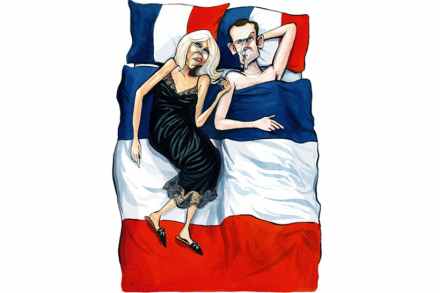
Having recently hosted Bono and Rihanna and taken centre stage during Donald Trump's visit to France, Brigitte Macron now has a new role to keep herself busy. The French President's wife was named last week as the godmother of the first baby panda born in a French zoo. Macron said she was 'very happy' to be asked. But, increasingly, France is not feeling her joy and there is growing resentment at her presence in the Élysée Palace. An online petition launched two weeks ago by the artist Thierry Paul Valette opposing the creation of a formal role for Brigitte Macron as First Lady has been signed by nearly 200,000 people.

Last summer, feminists defended the burkini. Will they now defend the bikini?

If there was a buzzword from last summer then it was surely 'burkini'. The media got its swimsuit in a twist over France's decision to ban the Islamic garment from its beaches. Slow-witted Anglophone columnists – many of whom have a curious predilection for insulting the French – lapped it up and enthusiastically portrayed Islam as the victim of Gallic oppression. Those trusty custodians of liberal values, the Guardian and the New York Times, got particularly worked up, the former declaring in an editorial that 'women's right to dress as they feel comfortable and fitting should be defended against those coercing them into either covering or uncovering.

How cool is Macron?

For a man with a reputation as a bit of an egghead, Emmanuel Macron has acquired a sudden passion for sport. In recent weeks, he’s been seen at rugby matches and football internationals, invited the Lyon women’s football team to the Élysée Palace to celebrate their Champions League win, and found time to chat with Chris Froome during the cyclist’s ride to a fourth Tour de France title. He’s even donned boxing gloves and sparred with a young pugilist as a means of promoting Paris’s bid to host the 2024 Olympics.

The migrant crisis could prove to be Macron’s undoing

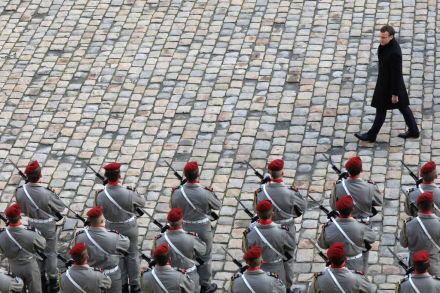
What a forty eight hours it has been for Emmanuel Macron. On Monday, he gave his regal address to the National Assembly at the Palace of Versailles, a grandiose occasion during which the French president rivalled Tony Blair and Barack Obama for swaggering self-confidence. As Jonathan Miller said in the Spectator, it's hard not to be 'cowed by the absolute bravado of the young president'. Then, on Tuesday, Macron's prime minister, Édouard Philippe, presented to the Assembly his government's programme for the next five years. As is the tradition, the MPs were asked at the end of the general policy speech to give the PM their backing.

France is finally looking forward to some Brit-bashing

Was that a touch of gloating I detected last night as I watched the news on French television? The lead item was Donald Trump's acceptance of President Macron's invitation to attend the Bastille Day commemoration in Paris next month. It's always a prestigious occasion and this year marks the centenary of America's entry into WW1. Hence the invitation to the American president which came in a telephone conversation where the pair also agreed on a joint military response against the Syrian regime should Bashar al-Assad launch another chemical attack.

Islamists have failed to divide France. Will they succeed in Britain?

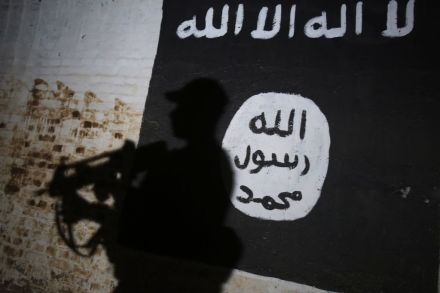
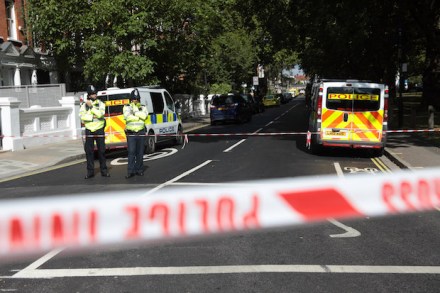
Islamic State will be delighted by what happened outside Finsbury Park mosque in the early hours of Monday morning. In the space of three months they've achieved in Britain what they failed to pull off in France during five years, and provoked a retaliatory act. This is what they want. When the Syrian intellectual, Abu Moussab al-Souri, published his 1600-page manifesto in 2005, 'The Global Islamic Resistance Call', his stated goal was to plunge Europe into a war of religion.

How long can Macron’s message of hope survive?

It says much about the extraordinary rise of Emmanuel Macron that some commentators are describing the outcome of Sunday's second round of voting in the parliamentary elections as something of a disappointment for the new president. His La République en Marche [LREM] party won an estimated 359 of the 577 seats in the National Assembly, some way short of predictions last week that forecast his fledging party could finish with as many as 450. Then again, it's the biggest majority in the Assembly since the 1968 elections and the result also confirms the destruction of the Socialist party and the disarray of the Republicians. The former picked up only 46 seats - down from 295 in the 2012 elections - while the centre-right party and their coalition partners finished with 126.

Macron’s landslide

En Marche, a party created 14 months ago by Emmanuel Macron, is on course for a clear majority in the French elections - after the collapse of the socialist party. His party looks on course to win 70pc of the seats in the National Assembly - an astonishing outcome, one of the many election results that would have been dismissed out of hand by political experts a few months before it happened. It offers further proof that ‘Macronmania’ is taking hold of the French. https://twitter.

Macron mania is still sweeping across France

It's in the little gestures one learns much about a man, and such is the case with Emmanuel Macron. Since his anointment as president of France last month, the 39-year-old has held talks with Angela Merkel, Recep Erdogan, Donald Trump and Vladimir Putin. Those tête-à-têtes have made the headlines but it's what happened in Paris at the end of last month that demonstrated the steeliness of the youngest French president since Napoleon. As is customary for the head of state, Macron attended the final of the French Cup at the national stadium in Paris. There once was a time when the president of France was introduced to the two teams on the pitch before kick-off, but Nicolas Sarkozy dispensed with that tradition when he came to power a decade ago.

France has woken up to the danger of Islamism. Has Britain?

If there's one country that knows how Britain feels in the wake of last week's suicide bombing in Manchester, it's France. Similar horror has been visited on the French several times in the past five years with nearly 250 slaughtered at the hands of Islamic extremists, so the French are all too familiar with the grief, the rage and the shock still being felt across the Channel. But not Britain's incomprehension. At first, maybe, when Mohammed Merah shot dead three Jewish schoolchildren in a Toulouse playground five years ago, but since the Charlie Hebdo cartoonists were slaughtered in January 2015 the French have understood what is going on.

Emmanuel Macron’s new third way

Édouard Philippe is the perfect fit to be Emmanuel Macron's Premier Minister. A one-time Socialist who then switched to the centre-right Les Républicains, the 46-year-old mirrors the ambiguity of his president. Philippe has been the mayor of the northern port town of Le Havre since 2010 and the region's MP for the last five years. Since his accession to the presidency last week, Macron has rechristened his party, La République en Marche [LRM], and in nominating Philippe as his PM he's hoping to send a message to the country that he really is a centrist president who 'is neither left, nor right'.

The National Front loses its golden girl

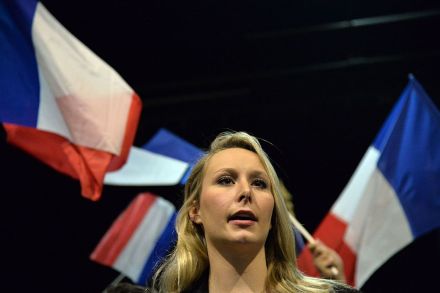
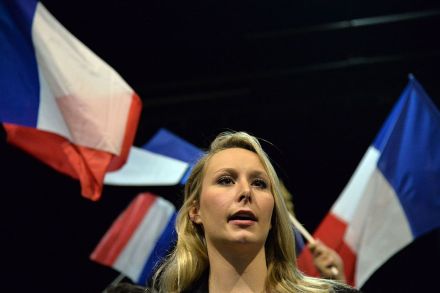
The golden girl of the National Front has gone and with her go the grassroot hopes for an alternative to Marine Le Pen. The decision of Marion Maréchal-Le Pen to withdraw from political life wasn't entirely unexpected, rumours first emerged earlier in the year, but it is nonetheless a heavy blow for the party rank and file just days after their disappointing presidential election result. And it was a disappointment, no matter how Marine Le Pen tries to dress up her 34 per cent share of the vote in Sunday's second round against Emmanuel Macron. The truth is that she was trounced by a political novice with a manifesto that is worryingly vague in certain key areas.

After Le Pen’s defeat, is the Front National heading for a split?

So what now for Marine Le Pen and the National Front? On an evening when the party polled a record number of votes in a French election, twice as many as when they reached the second round in 2002, there was little sense of triumph away from the cameras. 'There's obviously a bit of disappointment, it would be dishonest to say otherwise', said Marion Maréchal-Le Pen, niece of Marine. She had said last week that 40 per cent of the vote would represent a significant victory for the National Front but their final share of 34 per cent fell some way short of that figure.