
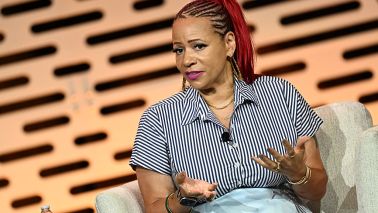
Nadiya Hussain, winner of The Great British Bake Off in 2015, has it seems reached the end of the road with the BBC. Ten years in prime time is an incredible run; most TV careers are far shorter, and reality show breakouts usually flash by. The Alison Hammonds of the TV world are rare. It’s hard to believe, but even Gemma Collins has lost some of her sparkle.
But Nadiya isn’t happy. In a video on Instagram last June, she spoke about ‘gaslighting’ in the TV industry, and said she felt that ‘as a Muslim woman’, she had not always been supported or allowed to fulfil her potential. Considering how fervently the BBC plugged her, this takes quite some chutzpah. Now she has spoken to the Guardian about how her career dropped off when she released a recipe book aimed at Muslims.
‘It was really interesting, because I felt like people had just twigged, “Oh, she’s a Muslim”, and suddenly I wasn’t palatable any more.’
She goes on, talking of the TV biz:
‘People always ask me: “Are we doing better? Has it changed?” It’s broken. This last year has been really important for me to realise – to really accept – that, actually, I can’t fix a broken industry.’
The hauteur of that statement – coming from a TV sauce stirrer – perhaps correlates with whispers to the Mail from ‘insiders’ that Hussain might have become difficult to work with. For their part, the BBC has issued a bland corporate statement which included those dreaded words: ‘there are no plans at the moment’. This is TV speak for ‘do not ever even contemplate the remotest possibility of darkening our door again.’
Nadiya has had a damn good run. But unfortunately, her career has coincided almost exactly with the age of ideological grievance. Add that ingredient to the television recipe, and you have a confection that wrong-foots everybody involved. We are so conscious of each other’s ‘protected characteristics’, it puts nerves on edge all round.
We were doing so well in Britain until about 2010. I was born in 1968, and I grew up with TV people like Floella Benjamin, Derek Griffiths, Lenny Henry, Andi Peters, Gary Wilmot, Craig Charles and Madhur Jaffrey. I never gave their race or religion a second thought; in fact, never even a first thought. It took me about a decade to notice that Red Dwarf was unusually ‘diverse’, for example. These people were an unquestioned, accepted part of the cultural weave. They were just there.
Oh, those lost days. Because in the 2010s, in waltzed critical social justice, AKA ‘woke’, AKA ‘intersectionality’ with its sweaty palms, furrowed brows, and ‘am I saying the wrong thing’ suspicion. The occasional stupid or clumsy things people say which you can navigate, and which are an essential part of the process of different types of people getting along, were rebadged as crimes of problematic ‘privilege’ that needed to be ‘called out’. This merely licensed the worst kind of troublemakers, and made the chips on their shoulders into epaulettes.
The uncanny influence of American academia, and the entirely different history of the American racial mix, was dumped on Britain and much of the rest of the world. None of this, needless to say, was exactly helped by Blair and company suddenly flinging open the borders.
The use of people as poster boys and girls for ‘inclusion’ is unfair – the first female this, the first gay that, the first Muslim whatever. It means there will always be doubts about why this person got the job. Nadiya, significantly, was seized on instantly by jubilant high-status progressive whites as their client and pawn. This puts an unfair, and intolerable, strain on an individual. Added to which you end up symbolising and representing whatever label has been stuck on you. You may well start to imagine you are terribly significant.
Nadiya, indeed, has bigger ideas. ‘Cooking aside, I would love to do documentaries and travelogues about issues that matter to people’ she says. This causes a ringing of alarm bells. It is an example of a phenomenon familiar to everyone dealing in the TV industry with actors and presenters, which we might call ‘give them a couple of half hours on a Tuesday evening and suddenly they think they’re Mother bloody Teresa’ syndrome. Nadiya – an oven knob twiddler – had started to opine on Gaza. We never expected to hear Fanny Cradock’s take on the Lebanon. Keith Floyd or the Galloping Gourmet were not consulted for their thoughts on Kashmir.
What a mess. This is what you get when you mix identity politics with popular culture: a rather sickening concoction.




Comments