Fraser Nelson

Fraser Nelson

Fraser Nelson is a Times columnist and a former editor of The Spectator.

Ministers need to start bracing Britain for the third wave

The third wave of Covid-19 may now be no more deadly than a typical wave of influenza (thanks to vaccines) but be in no doubt: the rise in cases is real, likely to continue for some time and may dwarf the second wave. It may still be safe to unlock against this backdrop, but this (very different) scenario would need properly explained, with self-isolation rules rewritten. The facts have changed, but the argument has not (yet) changed. We've been tracking the emergence of the India/Delta variant on The Spectator's data hub. The below is a summary of the likely direction of travel. It has taken the UK from having the lowest Covid case levels in Europe to having the highest in just a few weeks - with much more still to come.

Is Matt Hancock hopeless?

13 min listen

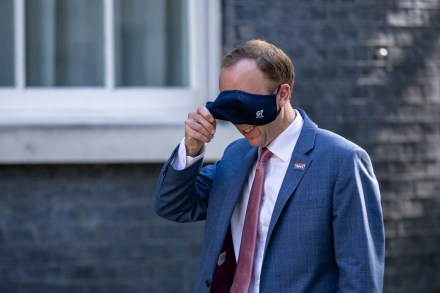
Another day, another Dom bomb. In Cummings's latest release, a number of WhatsApp messages reveal communications between himself and the Prime Minister, with the latter describing the health secretary Matt Hancock's performance as effing 'hopeless'.  Is this damaging to Hancock? Or is this the sentiment that you can expect from senior people who work at close quarters with each other during a crisis? To discuss the new revelations and its potential fallout Katy Balls is joined by James Forsyth, Isabel Hardman with a surprise appearance by Fraser Nelson.

Will the Australia trade deal really make a difference?

17 min listen

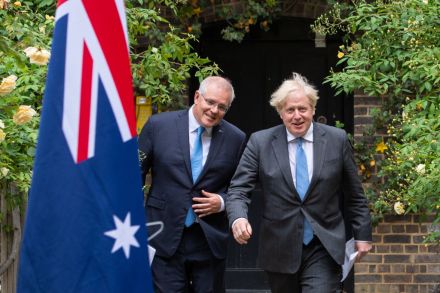
The government has agreed its first post-Brexit bespoke trade deal. But the agreement with Australia has already caused consternation among Conservative MPs about the potential competition from Australian farmers. Are these fears overstated? James Forsyth argues yes: 'Both its proponents and its critics exaggerate its importance. Meat prices in Asia are roughly twice what they are in the UK. I think that is where Australian farmers are going to continue to focus their export energy.' And the team discuss the fallout from the extension to July 19 of the lockdown easing day. Fraser Nelson points out that not only has freedom been delayed, but that even the thresholds for freedom are not clearly set out: 'It seems to be a complete mess of communications though.

Should we delay 21 June?

29 min listen

On Monday, the Prime Minister will announce whether the 21 June unlocking is to go ahead. Because of the increased transmissibility of the Delta Covid variant, cases in the UK are continuing to rise. Does it make sense to wait for data to confirm that the link between cases, hospitalisations and deaths has been broken, or should we confidently reopen? Fraser Nelson, Katy Balls, Kate Andrews and Cindy Yu discuss.

The case for delaying 21 June

Word is that Boris Johnson will delay the 21 June re-opening by two weeks, possibly even a month — an announcement that has caused some division of opinion in the offices of The Spectator. In the circumstances (the Indian variant growing exponentially) I can see the case for waiting another week or so until we have more data. That's not say that I want delay, just that the rise of the Indian variant in the UK has made me see the abolition of remaining restrictions as a finely-balanced argument. Whereas, a few weeks ago, I thought the facts heavily favoured going ahead with a full reopening.  I discuss this with Kate Andrews, Katy Balls and Cindy Yu in today's Coffee House Shots podcast.

What happens next? Gauging the fallout from the pandemic

What just happened? Some 15 months after the pandemic first struck, it’s still horribly unclear, which is perhaps why there have been no decent books making sense of Covid-19. This is not just about a virus but a collision of politics, panic, digital media, human behaviour and incompetence. Niall Ferguson’s Doom looks at each of these aspects, putting them into historical perspective in a book of dazzling range and rigour. He offers several answers — and none of them is comforting. For most of human history, viruses were unexceptional — hard to research, because no one thought them remarkable. When plagues struck in the Middle Ages, we’d rush into quarantine, which acquired its name in 1383 when Marseilles asked sailors to self-isolate for 40 days.

Did NHS discharges ‘seed’ Covid into care homes? A look at the data

Did Matt Hancock’s negligence lead to Covid seeding into care homes because patients were not tested before being discharged? This was one of Dominic Cummings’s more potent charges  and it brings back memories for me because I spent a chunk of last summer looking into this. In my line of work, the success rate for stories is quite low: investigate five avenues and you’re likely to find four dead ends. So you end up with a lot of data and research that’s never used, because the original premise doesn’t hold up. I was (and remain) critical of much of government policy on Covid response: it seemed horribly plausible to me that panicked NHS discharges were behind the staggering care home death count.

The Spectator’s internship scheme for 2021 is now open

The Spectator’s internship scheme for 2021 is now open. It’s CV-blind and name-blind: we don’t ask about where (or whether) you went to university. We don’t ask about your age, nationality or immunological status. We don’t even ask your name: we anonymise all entries. In journalism, all that matters is whether you can do the job. The Spectator is growing and we’re looking for talent: when vacancies arise, we normally think back to recent interns. Our internship scheme pays (but not very much) and we even provide help with accommodation for those who need it. Internships are normally the first casualties of lockdowns and social distancing orders. We pressed ahead with our scheme last year and will do so again if the law allows.

Politics or neglect? Why the UK came last at Eurovision

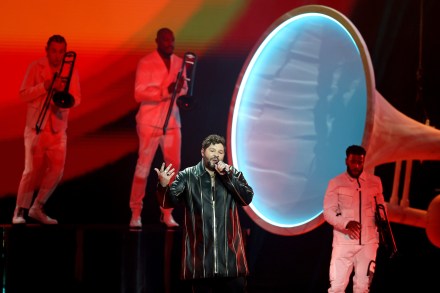
Yet again, Britain’s Eurovision entry has come last getting nul points from tout le monde. Yet again, politics is being blamed – but wrongly. The UK was simply outsung and outclassed by smaller countries who made more effort. Eurovision has always been a collision between politics, music and culture. Winners game that system, coming up with an act that crosses dozens of linguistic and national boundaries. It’s tricky. But Britain stopped trying some time ago. The BBC chooses our entry and doesn’t bother with a contest. It also struggles to pick (and prep) Eurovision winners. As a result, every year, Britain sends some unprepared soul to perish on the world stage. A strange, outraged jingoism usually follows Britain's Eurovision flops.

Why is Boris optimistic about 21 June?

9 min listen

Boris Johnson is increasingly confident that Britain will drop the majority of Covid restrictions on 21 June. But with the Indian variant forcing case rates in Bolton to more than ten times the national average, and in Blackburn to more than six, why is he optimistic? Katy Balls speaks to Fraser Nelson and James Forsyth.

Sweden, Covid and lockdown – a look at the data

Over the last year, the debate about lockdown has been driven to extremes – everyone has, by now, made up their mind. Sweden has been used as an example of either a liberal heaven or Covid hell. To the outside world, Sweden is a country that defied lockdown, carried on regardless and ended up with what is (now) the highest case-rate in Europe. In reality, Sweden shows that you don't need lockdown to significantly reduce mobility: it forced down two waves. It failed to protect care homes, leading to a scandal of thousands of avoidable deaths. But the question is whether, by avoiding lockdown, it managed Covid while minimising damage to the economy, society, healthcare and schools. I looked at this in my Daily Telegraph column a few weeks ago.

The great pretender: Nicola Sturgeon’s independence bluff

31 min listen

In this week’s podcast, we talk to The Spectator's editor Fraser Nelson and associate editor Douglas Murray about the challenges facing a freshly re-elected SNP. What next for Nicola Sturgeon - full steam ahead for IndyRef2? Or have neither Scotland or Number 10 the bottle for an all-out battle for independence? [01:02] ‘When you look at the practicalities, the case for independence really does fall. Nicola Sturgeon is selling it in the abstract: “Do you feel Scottish”?’ - Fraser Nelson Meanwhile in matters of social etiquette, the new post-pandemic era looms, complete with new modes of social interactions and conversational topics.

The great pretender: Nicola Sturgeon’s independence bluff

During the Scottish leaders’ debate, Nicola Sturgeon was asked a rather awkward question: what would she say to voters who want her as First Minister, but who certainly do not want another referendum, especially at such a delicate stage for the country? ‘What are they meant to do if they want you, but don’t want independence?’ she was asked. ‘They should vote for me,’ she replied, ‘safe in the knowledge that getting through this crisis is my priority.’ It’s amazing how quickly priorities can change.

What could surface from a Covid inquiry?

13 min listen

Boris Johnson has announced that an inquiry into the government's Covid response will be launched next year. Katy Balls talks to James Forsyth and Fraser Nelson about what could surface and whether it will shed any light.

Leading article, Fiona Mountford, Laurie Graham and Isabel Hardman

24 min listen

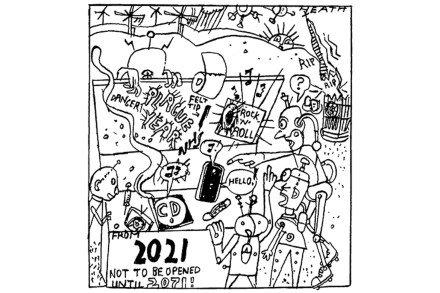
On this week's episode, Fraser Nelson starts by reading our leading article: the Prime Minister promised 'data, not dates', so should we reopen before 21 June? (01:15) Fiona Mountford is on next, saying she's had enough of corporate faux-friendliness. (07:20) Laurie Graham reads her piece afterwards, wondering what to put in her Covid time capsule. (13:00) Isabel Hardman finishes the podcast by reading her notes on Dandelions - perhaps the 'cheeriest of wild flowers'.

How serious would Labour losing Hartlepool be?

12 min listen

A poll last night gave the Tories a 17-point lead in Hartlepool. Tomorrow's by-election in the red wall seat is to be one of the first barometers of Keir Starmer's leadership so far. How serious would a Labour loss be? Isabel Hardman speaks to Fraser Nelson and James Forsyth.

Where will the Downing Street psychodrama end?

21 min listen

The Downing Street psychodrama continues today, with the Daily Mail reporting that Boris Johnson said he would rather see the 'bodies pile high in their thousands' than order a third lockdown. Where will the war between the PM and his former adviser Dominic Cummings end? Katy Balls speaks to Fraser Nelson and James Forsyth.

What’s Putin up to?

12 min listen

Russian troops had been building up on the Ukrainian border for weeks now, only for Putin to announce their pullback this week. Moscow claims it was only ever a military exercise, but the troop presence was enough to fuel speculation of further annexation of parts of Ukraine. Fraser Nelson speaks to James Forsyth and Owen Matthews about Putin's geopolitical game.

A new blitz of Dom-bombs

10 min listen

After damning accusations in the papers that Dominic Cummings leaked a series of the Prime Minister's texts, the former No 10 aide has wasted little time in hitting back. In a blog this afternoon, he attacks the Prime Minister and those closest to him. Gus Carter speaks to Katy Balls and Fraser Nelson.