Fraser Nelson

Fraser Nelson

Fraser Nelson is a Times columnist and a former editor of The Spectator.

Is Rishi just too rich for politics?

The obvious and perhaps only way out of this mess for Rishi Sunak was for his wife to pay double taxation: that is to say, to be taxed in India for any income on her 0.9 per cent stake in Infosys, the $100 billion company set up by her dad, and then taxed in the UK too. She doesn’t make this point in her statement. To talk about double taxation would sound like complaining - and already the idea of the Sunaks being irritated by questions about their tax affairs is being used against them. The Chancellor might be privately annoyed, arguing this double tax has never been required of anyone before. Is this to be the new test for the spouse of anyone in public life? But, as I say in my Daily Telegraph column, there has never been a Westminster Wag like Akshata Murthy.

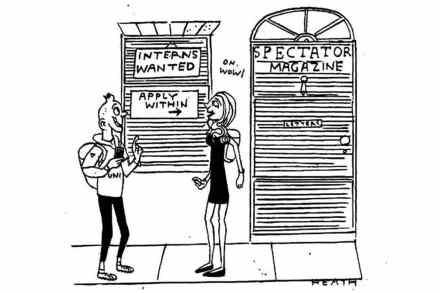
The Spectator’s 2022 internship scheme is now open: no CVs, please

2023 scheme is now live, click here The Spectator’s internship scheme for 2022 is now open. We don’t ask for your CV and anonymise all entries – making our scheme the most genuinely open (and competitive) in national journalism. In our game, all that matters is talent – and we put a lot of work into finding that talent. Our internship scheme pays (but not very much) and we even provide help with accommodation for those who need it. Our scheme is famously tough, so those who get a place often get job offers elsewhere. The Spectator will only ever be as good as the people we hire – and we find this method of hiring interns casts a net wide.

The politics of war crimes

42 min listen

In this week’s episode: Is Putin guilty of war crimes?For this week’s cover piece, The Spectator’s Editor Fraser Nelson looks at the risks and rewards of labelling Vladimir Putin and Russian soldiers war criminals. He joins the podcast, followed by Michael Bryant, the author of A World History of War Crimes, who writes in the Spectator this week about what the limits put on acts of war in the past can teach us about atrocities committed today. (00:52)Also this week: Is Europe facing a political stand-off between progressives and populists? This week Hungarian Prime Minister Viktor Orban was elected for a fourth term in office with a large majority. While in France, Emmanuel Macron faces a much harder fight from Marine Le Pen than many expected.

Putin’s terror: the politics of war crimes

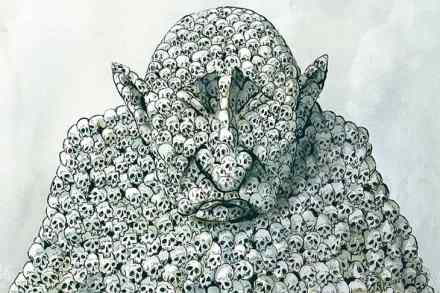
In early February, when Vladimir Putin’s troops were on the Ukrainian border and much of the world thought he was bluffing, the Russian military’s guidance on mass graves was changed. Bodies should be covered with chemicals, diagrams showed, and then rolled over by a bulldozer to flatten the ground. The advice seemed so grotesque as to be a decoy: surely a brutal invasion would not be so clearly signalled? The story of the mass grave found in Bucha shocked the world because it represents how fast things have deteriorated and that we are now seeing the kind of barbarism Europe thought it had left behind.

Could Boris ditch net zero?

13 min listen

The government will publish its long-awaited energy security strategy this Thursday. The plan, which has been repurposed since Putin's invasion of Ukraine, is expected to include commitments to reduce the 6 per cent of energy Britain currently gets from Russia, and pledges to increase the use of nuclear energy. But could net zero, a priority for the Prime Minister when he went into No. 10, also be quietly shelved? Cindy Yu speaks to Fraser Nelson, Katy Balls and Isabel Hardman.To get a weekly summary of The Spectator's podcasts, subscribe to our Podcast Highlights email – https://spectator.

What does victory for Ukraine look like?

24 min listen

This week it looks like the war in Ukraine is turning. The Ukrainian resistance has moved from the defensive to the offensive against their invaders and American intelligence has reported that the Russian forces are struggling by almost every metric. Though for the Western world this is a very encouraging sign what does a true victory look like and what should our attitude to Russia be if this conflict ends in a fully free Ukraine?Cindy Yu is joined by Fraser Nelson, James Forsyth and Paul Mason to discuss.

Are Rishi’s No. 10 dreams dashed?

24 min listen

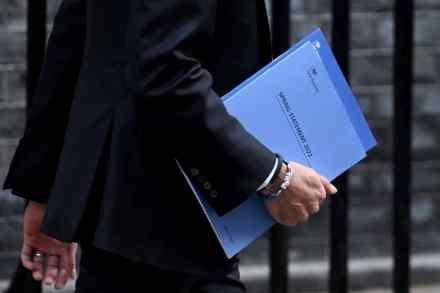
For the last two years, Rishi Sunak has appeared the frontrunner in any future Tory leadership election. But has his spring statement and damaged his standing within his party and among the public? Katy Balls speaks to Fraser Nelson and James Forsyth about Rishi Sunak's future and Britain's economic forecast.

Is there a stealth tax hidden in the spring statement?

17 min listen

While on the surface there might seem like a lot to like in Rishi Sunak's spring statement. Yes, the NI tax increase is still there, but the tax threshold to pay it is being raised. And there is even a promise of an income tax cut coming in 2024. But does the spectre of inflation mean that many of these supposed benefits won't be felt tangibly for the average taxpayer and may even see the amount they give to the government go up?Katy Balls is joined by James Forsyth, Kate Andrews and Fraser Nelson to discuss.

Boris’s Brexit-Ukraine comparison was a mistake

After years of post-Brexit rancour, the last few weeks have been a striking display of European (not just EU) unity. Britain was the first to send arms to Ukraine, now the EU is (for the first time) buying weapons so it can follow suit. No one forced Norway’s strategic wealth fund to disinvest all Russian assets, but it chose to. Even Switzerland is marching in lockstep with the sanctions. Putin had counted on European divisions, which had certainly been on display when Germany was still going ahead with the Nord Stream 2 pipeline, in defiance of protests and pleas from Eastern Europe and the European parliament.

Was Boris’s Ukraine/Brexit comparison a mistake?

16 min listen

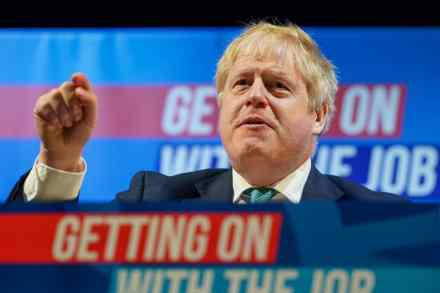
Over the weekend, Boris Johnson sparked a wave of criticism after he linked the Ukraine crisis to Brexit. During his speech at the Conservative Party's Spring Conference, the PM suggested that Ukraine's decision to 'choose freedom' was reminiscent of Brexit. 'I think it was up there with the Jimmy Saville joke which he made about Keir Stamer in things which should not have been said.' - Fraser Nelson.Also on the podcast, will Rishi Sunak be forced to u-turn on his commitment to low taxes? In the week of the Chancellor's Spring Statement, Russia's full-scale invasion of Ukraine means that the goalposts have moved. All to be discussed as Isabel Hardman is joined by Katy Balls, James Forsyth and Fraser Nelson.
Why it was a mistake for Ofcom to remove Russia Today

In conflicts, there is always a temptation to mirror the tactics of one’s opponents – which is why it’s depressing to see Ofcom do so by taking Russia Today (RT) off air. The fight is not just between Russia and Ukraine but a democratic view of life and authoritarian rule. In our system, we believe that truth is arrived at through open competition of argument. In Putin’s system, opposition is stymied and censored. Britain’s experiments of TV censorship in the past have been ineffective as well as illiberal It’s not as if Britain has to worry about the contagious power of Putin’s ideas undermining our social or political fabric – so why pull the plug on his state-run TV?

Why has Iran finally released Zaghari-Ratcliffe from prison?

10 min listen

After 6 years in jail in Iran, Nazanin Zaghari-Ratcliffe has been released and will return home to her husband and their seven-year-old daughter. The UK has paid a debt of £400 million as part of this negotiation which has been an ongoing diplomatic dispute between Britain and the Iranian government. Who were the key players in her release negotiations? And is this a win for Boris Johnson?Also on the podcast, Boris Johnson's Saudi Arabia trip continues as he aims to encourage Mohammed bin Salman to increase oil exports to the UK.'Now we see a sort of Boris of Arabia heading off into Riyadh. He's always had a good relationship with bin Salman ever since he was Foreign Secretary, they are on texting terms' - Fraser Nelson.

Michael Gove’s new deal for Ukrainian refugees

After last week's shambles over the handling of Ukrainian refugees, Michael Gove has announced a big shift in UK policy with his version of the so-called 'Air-Refugee' schemes that have sprung up on the continent. It's an Airbnb-style set up where hosts register online saying they're willing to sponsor guests. Germany's version (website here) has so far led to 350,000 offers.  But the UK system is designed with more friction. Hosts will not be paired with refugees but will have to name someone - when they do, both parties will then have to be vetted by the government.

Why isn’t the UK doing more to help Ukrainian refugees?

18 min listen

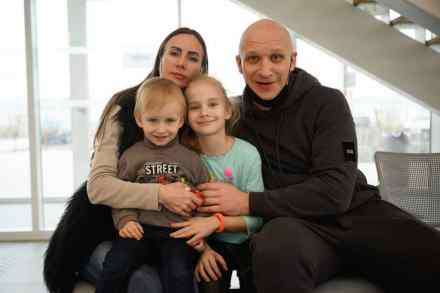
‘Watch this space,’ the armed force minister James Heappey said when asked whether Britain would make it easier for Ukrainian refugees to come to the country. Still, though, refugees – even those with family connections to the UK – are stuck in Calais and Paris trying to make to our shores. What more should we be doing? Would a Polish model, where refugees are welcomed first and registered later, work? The Spectator’s editor Fraser Nelson speaks to our economics editor Kate Andrews.

Boris Johnson rejects Europe’s open approach to Ukrainian refugees

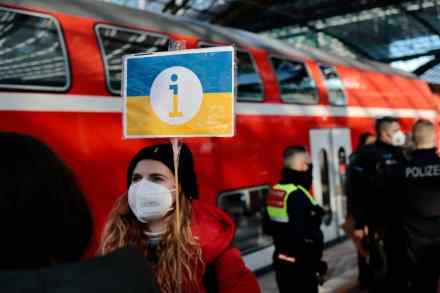
One of the most extraordinary (and moving) videos to have emerged since the invasion of Ukraine shows scenes at Berlin Central Station where refugees are paired upon arrival with locals offering accommodation. An unprecedented crisis has been met with an unprecedented public response – some 350,000 beds have been offered in Germany now. Over a million in Poland. People’s generosity has risen to the challenge – without government getting in the way to slow things down. Could it happen here? https://www.youtube.com/watch?v=7DHi92_xBLs We risk ending up doing more than any European country to arm the Ukrainians but less than any other to help refugees Michael Gove is set to launch a British equivalent – but with a difference.

What’s the point of the latest sanctions?

11 min listen

While the world is hearing mummers that Vladimir Putin is considering using chemical weapons in Ukraine, the UK government has imposed sanctions on hundreds of Russian Parliamentarians. But will this latest move make the Kremlin pause or is it a largely symbolic gesture? Katy Balls talks with Fraser Nelson and James Forsyth.

What is the significance of the sanctioning of Roman Abramovich?

13 min listen

After seemingly dragging its heels for weeks, the government is ramping up its individual sanction measures against those close to the Kremlin. When Roman Abramovich bought Chelsea football club it was seen as a symbol of closer Russian and British ties, we will now see what signal him losing it creates. Kate Andrews hosts Fraser Nelson and James Forsyth to talk through sanctions, peace talks and Eurovision.

Ukraine: how bad will UK energy prices get?

15 min listen

As the Russian invasion enters its twelfth day, fuel prices hit new records in the UK. Global leaders are preparing for the worst, is the UK braced for this too?Also on the podcast, what's behind Boris Johnson's six-point plan?'I would far rather Boris Johnson wasn't turning away Ukrainian refugees at the border in Calais than coming up with the six-point plan and expecting world leaders to follow' - Fraser Nelson.All to be discussed as Kay Balls speaks to Fraser Nelson and James Forsyth. For more information on Ukraine, The Spectator has the latest data on our Datahub.

Russia’s invasion: one week on

12 min listen

It's been just over a week since Vladimir Putin began his invasion of Ukraine and in that time we have seen some truly unprecedented events: A former comedian leading an extremely effective homeland resistance against one of the world's largest armies, an estimated million people fleeing over the borders and a more unified Western response than we have seen in decades. Kate Andrews talks with The Spectator's Editor Fraser Nelson and its Deputy Editor Freddy Gray to assess the shocking events we have seen this week.

Has Putin underestimated the West?

12 min listen

Over the weekend, the West unveiled further measures to punish Russia for invading Ukraine. The European Union said it would put limits on the Russian central bank's ability to access its reserve of foreign currency, Finland blocked Russia from its airspace, and Germany pledged that it would increase its defence spending to 2 per cent. Has Putin underestimated western resolve? Katy Balls speaks to Fraser Nelson, James Forsyth and Isabel Hardman.