Fraser Nelson

Fraser Nelson

Fraser Nelson is a Times columnist and a former editor of The Spectator.

What happened at Boris’s Covid Cabinet meeting?

15 min listen

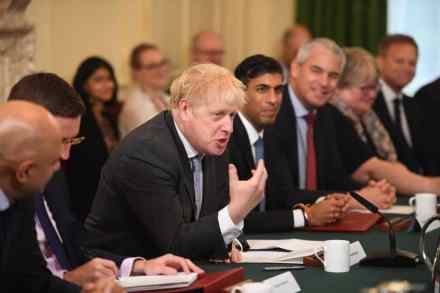
Boris Johnson chaired a Cabinet meeting yesterday to discuss the imposition of new Covid restrictions over Christmas. After three hours, the Prime Minister emerged to announce that no new restrictions had been decided on. These meetings are usually called for the Cabinet to rubber-stamp a decision made by Boris and his advisers, so what's changed? Reports today suggest that the Prime Minister was actively encouraging opposing voices, and that a majority of the Cabinet was against bringing in new rules. After the resignation of David Frost, has Boris been forced to accept a new way of decision-making? Katy Balls speaks to Fraser Nelson and Kate Andrews.On the podcast, Fraser says: 'This was the first taste of the new Cabinet.

Why David Frost resigned

19 min listen

Boris Johnson once boasted that you couldn't hold a cigarette paper between him and David Frost, the man he brought on to take Brexit over the line. Yet this key ally has resigned when the Prime Minister is at his most vulnerable. In his resignation letter, Lord Frost cites his concerns on whether the country is making the most of Brexit to cut taxes and red tape, and the direction of travel when it comes to dealing with the pandemic. On the podcast, Katy Balls talks to Fraser Nelson and James Forsyth about the significance of this moment – which Fraser says is 'a bigger blow to the Prime Minister than the by-election'.

My Twitter conversation with the chairman of the Sage Covid modelling committee

The latest Sage papers have been published, envisaging anything from 200 to 6,000 deaths a day from Omicron depending on how many more restrictions we’ll get — up to and very much including another lockdown. Earlier today I had an unexpected chance to ask questions of Graham Medley, the chair of the Sage modelling committee.  He's a professor at London School of Hygiene & Tropical Medicine (LSHTM) which last weekend published a study on Omicron with very gloomy scenarios and making the case for more restrictions. But JP Morgan had a close look at this study and spotted something big: all the way through, LSHTM assumes that the Omicron variant is just as deadly as Delta.

Is Omicron really no less severe? A look at South Africa’s data

It’s an open secret that ministers are nervous about advice from Sage, given its track record in exaggerating the risk posed by Covid. But where else to look? One answer is to the financial markets, who have only one question: is Omicron going to be genuinely more severe? If so then it’s time to sell. If not, it’s time to buy. The problem is that market research is seldom made public and that gloomy news gets the most clicks – which, of course, creates a media bias. The FT, for example, has access to all of these market reports on Omicron (including JP Morgan’s sense-check of Sage) but it will certainly get the most interest in a story like its lead today: ‘Omicron no less severe, experts say.’  But what does the data say?

Can Boris really blame the press for his defeat?

When asked what went wrong in North Shropshire, Boris Johnson gave a fascinating answer: journalists. Apparently, they have been reporting the wrong kind of stuff. He told Sam Coates of Sky News: Basically, what’s been going wrong, Sam, is that in the last few weeks some things have been going well. But what the people have been hearing is just a constant litany of stuff about politics and politicians. Stuff that isn’t about them. And isn’t about the things that we can do to make life better. The job of the government is to make people like you, Sam, interested in the booster rollout. And in skills. And in housing. And in everything else that we’re doing. And unfortunately we haven’t been able to get the focus on those issues.

Boris Johnson is now in political purgatory

We have just witnessed one of the most dramatic defeats in the history of British by-elections. A 38 per cent swing against the governing party has happened only a handful of times in postwar politics and tends to be a sign of bad things to come. The last time the Tories lost a safe seat to the Lib Dems was Christchurch 1993, presaging the great Conservative collapse of 1997. So losing North Shropshire is devastating for the Conservatives: they haven’t just lost a stronghold but have seen the all-but-dead Liberal Democrats take it with a huge majority. This happened because so many of voters there — one of the most pro-Brexit, pro-Tory parts of the world — wanted to make this into a referendum on the shortcomings of Boris Johnson’s government.

How did the Tories lose North Shropshire?

11 min listen

The Conservative majority of 23,000 was wiped out overnight in North Shropshire, with Liberal Democrat Helen Morgan winning the by-election by nearly 6,000 votes. Tory MPs are already making their frustrations known, with Roger Gale saying Boris Johnson has 'one more strike and he's out', and John Redwood saying it's 'Time to listen to Conservatives.' Is Boris Johnson's leadership in danger? Isabel Hardman speaks to Fraser Nelson and Katy Balls.On the podcast, Isabel asks: 'You can change your staff, you can change your policies, but if the common denominator in all of these crises is Boris Johnson, what are you going to do?

Christmas Special

90 min listen

Welcome to the special Christmas episode of The Edition! In this episode, we look at five major topics that dominated the news this year and the pages of The Spectator. First up a review of the year in politics with our resident Coffee House Shots' team James Forsyth, Katy Balls and Isabel Hardman. We discuss how Boris seemed to make such a strong start to the year through the vaccine rollout, but squandered this goodwill with several own goals. We also touch on some of the big political moments of the year: Partygate, the Owen Paterson affair and of course Matt Hancock. (00:39) Next, we go global and look at three of the major powerhouses that took headlines this year. The EU, who ends the year in a panic over Russia, extreme Covid measures, and upcoming elections.

Can Boris take back control?

21 min listen

Last night Boris Johnson suffered the biggest rebellion of his Tory premiership. But, unlike his predecessor, he still managed to get his vote through with Labour's support. Nearly 100 Conservative MPs voted against the government's plans for vaccine passports.Their reasons for rebelling varied. For some, they want to send a message to the PM that he cannot take his majority for granted. For others, it is about the principle of vaccine passports.'Boris Johnson is proving to be a deeply illiberal Prime Minister. He’s turning into the sort of Prime Minister he used to warn us against when he was writing’ - Fraser NelsonKaty Balls is joined by Isabel Hardman, Fraser Nelson and James Forsyth to discuss last night's rebellion and the booster vaccine program.

Vaccine passports may prove a pointless distraction from Omicron

Sajid Javid ditched vaccine passports when he became Health Secretary but he now has to bring them in again, albeit in an updated form where a lateral flow negative test will also be accepted. But how to get this past the Commons where 65 MPs have now decided to rebel? How to do this now given that the argument - that vaccine passports restrict transmissibility - has now collapsed? The big news is that the AstraZeneca vaccine has ‘zero’ effect on people catching Omicron. The vaccine still offers protection from getting seriously ill, but the premise of vaccine passports – that the double-jabbed are less likely to be infectious than the unjabbed – has just collapsed.

Deaths of despair: how Britain became Europe’s drugs capital

37 min listen

In this week’s episode: Is there any substance to the government’s new drugs agenda?In The Spectator this week Fraser Nelson writes the cover story on the government’s new 10 years drugs plan and finds that while on the surface this seems like a new war on drugs, it might actually have some thoughtful and effective policies buried within it. Fraser is joined on the podcast by Christopher Snowden, the head of lifestyle economics at the Institute of Economic Affairs. (00:52)Also this week: Can Islam save Britain’s churches?Britain has for a long time now has been becoming a more and more secular nation. This has meant that many churches that used to have full pews are at risk of turning into luxury flats or another Tesco Express.

Deaths of despair: how Britain became Europe’s drugs capital

If progress is ever made in the ‘war on drugs’, it will be thanks to people like Lorna Hughes. She runs a community centre in the Bell Foundry council estate in Loughborough. It was set up by residents appalled at how their neighbourhood had sunk into an underworld of drugs and crime. They wanted someone there keeping an eye out and helping those who needed it. One of the disused flats, a burnt-out drugs den, was converted into an office and the Marios Tinenti Centre was born. I went to visit a few weeks ago and Lorna talked me through her job. If she sees anyone doing drugs, she calls the police. If thugs are menacing people on the estate, she helps the residents lodge antisocial behaviour orders. If an addict wants help, she liaises with charities.

Partygate: how much trouble is Boris in?

20 min listen

It is all kicking off in Westminster. A leaked video has emerged where the former Prime Minister's spokesperson is seen laughing when questioned about a Christmas party at 10 Downing Street last year. In yet another blow, many Conservatives shared their dismay at the leaked footage. At PMQs, Boris Johnson said that he is furious about the video but remains adamant that no lockdown rules were broken last Christmas. Also on the podcast, more talk of vaccine passports are spreading through Westminster with a press conference expected later today. Should Boris be pushed into boosting restrictions, could he face another rebellion in the Commons? Possibly not, whilst Keir Stamer is around.

Should you snog a stranger this Christmas?

15 min listen

With the Omicron variant putting everyone on edge, there has been quite a bit of mixed messaging from the government about how we should all be conducting ourselves this festive period. With a bizarre emphasis placed on snogging - some preaching caution, others saying snog away.'I don't think I've ever heard people say the word snogging this much in my entire life.' - Isabel HardmanKaty Balls talks to Fraser Nelson, Isabel Hardman, and James Forsyth about the cabinet's conflicting advice and the politics of public displays of affection.Subscribe to The Spectator's Evening Blend email, from Isabel Hardman and Katy Balls, for analysis of the day's political news and a summary of the best pieces from our website. Go to spectator.com/blend to sign up.

What is the Nu variant?

10 min listen

A new Covid variant dubbed 'Nu' has been discovered in South Africa and the UK has already put travel restrictions in place. Though early tests have shown that Nu is more transmissible, we don't know conclusively if it is any more deadly or can evade vaccines. 'We don't know yet, whether this variant is more severe or not.' - James Forsyth With people already worrying if this, if handled poorly, could lead to another Christmas lockdown, Isabel Hardman talks with Fraser Nelson and James Forsyth about their Nu perspectives. Subscribe to The Spectator's Evening Blend email, from Isabel Hardman and Katy Balls, for analysis of the day's political news and a summary of the best pieces from our website. Go to spectator.com/blend to sign up.

Was COP a flop?

15 min listen

COP26 is now over, but was it a flop? Even Alok Sharma, the President of COP26, apologised on the last day for 'the way this process has unfolded', as he teared up when announcing the final agreement to phase down, rather than phase out, coal. On this episode, Cindy Yu talks to Fraser Nelson and Isabel Hardman about the lasting legacy of COP26. For Fraser, the summit was a mixed bag: 'I don't think that anybody is going to talk, in future years, about the "Glasgow declaration". But there are... some moves forward'. And Isabel points out the disappointment to Boris Johnson, for his own personal legacy: 'He then got to the end of the summit saying, well we've made a start, which is not something you're going to have on your legacy.

Covid statistics and the era of hyper-scrutiny

Amanda Pritchard, the new NHS England chief executive, has had quite a week. She wrote an article for the Health Service Journal about the pressures on the NHS and followed up with a Sky News interview where she had this to say: Where did she get that 14 times figure from? By using statistics in a strange way, highlighted by Kate Andrews fairly shortly afterwards. By ‘have had’ she was technically correct insofar as this was the peak ratio. But comparing a wave to a non-wave, and presenting a peak value as somehow representing the current situation is fundamentally misleading. The actual picture for Covid hospitalisations is here. I won’t republish the graphs as this blog is about a broader point.