Fraser Nelson

Fraser Nelson

Fraser Nelson is a Times columnist and a former editor of The Spectator.

Who wants to replace Boris?

11 min listen

The Tory leadership race has begun. Some candidates, like Steve Baker and Suella Braverman, have already declared that they will be running. Others, like Nadhim Zahawi, Rishi Sunak and Liz Truss, are expected to announce their candidacy in the coming days. What are their platforms? How many MPs will hopefuls need to have supporting them to make it onto the ballot? What should the party look for in a new leader? Katy Balls speaks to Fraser Nelson and James Forsyth. Produced by Max Jeffery.

The problem with Tom Tugendhat’s ‘clean start’ manifesto

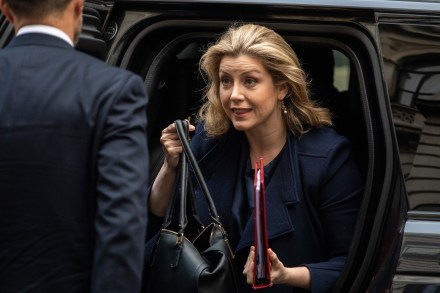
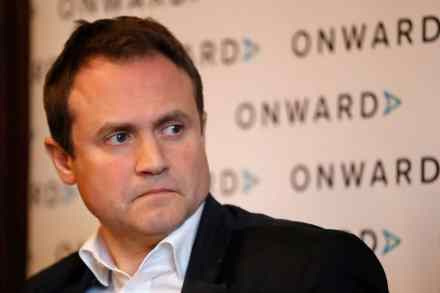
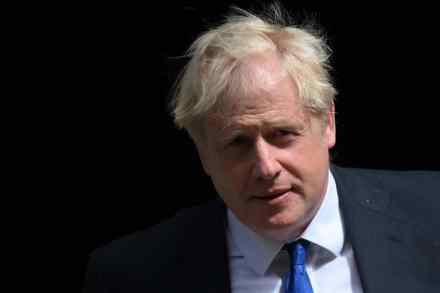
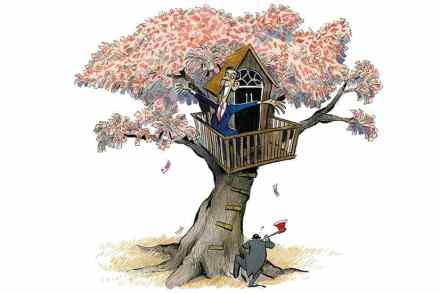
Tom Tugendhat has become the first of the Tory MPs depicted on our cover this week to confirm that he is running for Prime Minister. His strength: his military record and his consistency in opposing Boris Johnson which saw him left out in the cold for the last two years. His weakness: that he has never served in government in any role and critics say that he is therefore unfamiliar with the tough choices of government. Also, that prime minister is not an entry-level government job. But at this stage the candidates ought to be judged more in what they have to say in whether they’d be better than Johnson in running a government. His manifesto has some interesting claims but they'd need expanded upon before they can be seen as an agenda.

Boris resigns. What next?

15 min listen

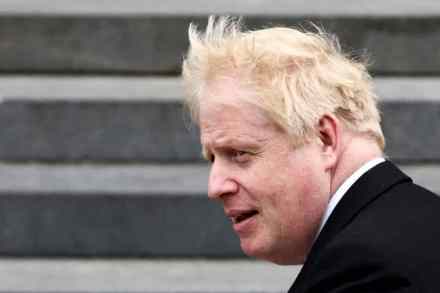
After fighting words briefed out to the papers overnight, this morning, the Prime Minister has finally decided to resign. A statement is expected today. On the episode, Katy Balls discusses with Isabel Hardman and Fraser Nelson whether he should have gone sooner (and the implications for the post-politics speaking circuit) and the leadership race that is about to start.Produced by Cindy Yu.

A double cabinet resignation is a blow Boris is unlikely to survive

So it has started. The joint resignation of Rishi Sunak and Sajid Javid marks a cabinet coup against Boris Johnson, seeking to remove him without the need for a parliamentary revolt. 'This will be a cabinet thing, not a party thing,' one minister told me earlier: 'Someone will have to resign, then others will be faced with a choice.' That someone turned out to be Javid, who quit as Health Secretary this evening with Sunak following 20 minutes later. Johnson is in survival mode, telling Tory MPs that ‘cutting taxes now somewhat easier" now that debt-averse Sunak has gone. Within hours, Nadhim Zahawi - who has a more elastic view about borrowing limits - was named the new Chancellor.

Will Nicola Sturgeon get her way?

11 min listen

Isabel Hardman speaks to James Forsyth and Fraser Nelson about Nicola Sturgeon’s latest plans to hold a referendum on Scottish independence on 19th October 2023, and whether they will even get off the ground.

The Blob is back with a vengeance – and the Tories aren’t ready for it

In what I supposed we should see as a sign of progress, the government has decided not to destroy its own school reforms, by revoking the first 18 clauses of the recently-published Schools Bill. I disclosed two weeks ago in the Daily Telegraph that many ex-ministers were up in arms at what they saw as the revenge of ‘The Blob’, the bureaucratic forces that have been against school reform.

Where is the Boris agenda?

It's a common trap: a Prime Minister is asked whether he or she will fight the next election as leader. To which there are only two answers: to say 'yes,' or announce your resignation. But - here's the trap - saying 'yes' can be easily translated into Thatcher-style declaration that you want to "go on and on" - in Boris Johnson's case, the papers say he wants to last to the 2030s. Not a timescale he mentioned. But he did talk about a "third term" and is blaming his by-election defeats on voters not thinking enough about the future. ‘If you look at the by-elections, people were absolutely fed up about hearing about things that I had had stuffed up,’ he said. ‘An endless churn of stuff. What they wanted to hear was: what is this guy doing?

Is it time to call Sturgeon’s Bluff?

8 min listen

The calls for Indyref2 are coming thick and fast from the SNP leader this week with a plan for a monthly speech to express the benefits of Scotland leaving the UK. But would allowing a referendum now be better than resisting one? Newer generations of Scots tend to be more nationalist than their elders. Should unionists push for Indyref2 now before more young people reach voting age?Katy Balls talks to Fraser Nelson and James Forsyth.

Is the row over Rwanda good for the government?

11 min listen

The government is fighting on two fronts today. Firstly defending is Rwandan immigration plan from a unified front of Bishops as the first flight is set to take off tonight. Secondly, the Northern Ireland protocol bill which was announced yesterday afternoon faces scrutiny on many fronts.Katy Balls talks with Fraser Nelson and James Forsyth.

What will the Tory rebels do next?

13 min listen

It is the day after the night before when Boris Johnson narrowly survived a confidence vote. Today he held a meeting with the Cabinet to tell his colleagues it is time to ‘move on’.  ‘This looks like a slow Tory suicide to me’ - Fraser Nelson Some critics have pointed to the fact that shortly after winning a confidence vote with similar margins, John Major, Margaret Thatcher and Theresa May ended up resigning. What will be Boris Johnson's fate as the Tory rebels plot out their next moves? Isabel Hardman is joined by Katy Balls, James Forsyth and Fraser Nelson.

The attempt to depose Boris may be premature

As Tory MPs vote this evening, Jesse Norman’s letter stands as the most recent case for the deposing of the Prime Minister. But the letter itself may well end up helping Boris Johnson, given its oddly weak arguments from one of the Conservative party’s big thinkers. I’m one of those who has been disappointed with the Boris project: his lockdowns (with all of the immense social damage), a tax burden at a 70-year high, a spending-splurge instinct, lack of any idea what to do with Brexit and allowing another welfare crisis to incubate due to lack of attention. But Norman mentions none of these things. And it raises questions as to what the alternative plan is. In his letter, Norman talks about the No.

How are five million Brits without work?

Last week, I came across a figure so staggering that I was convinced it was wrong: 5.3 million Brits (almost the population of Scotland) are on out-of-work benefits. How could this be, with ministers so regularly boasting that unemployment stands at a 40-year low? How could it be, when a national shortage of workers has been declared – and the aviation industry has been begging the government to relax immigration rules, saying that we’re out of workers? I’ve spent this week looking into it, with the help of my brilliant colleagues in The Spectator data team, and look at this in my Daily Telegraph column today. What is an "out-of-work" benefit, and why is the total more that twice the official unemployment count? How big a factor is Brexit?

Is the SNP more conservative than the Conservatives?

16 min listen

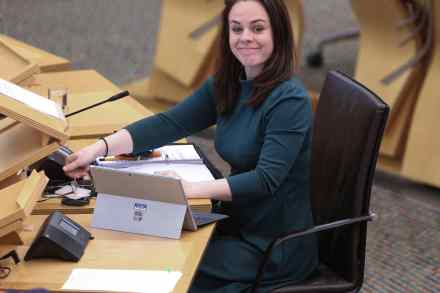
There is a lot of news to cover on Coffee House Shots before the celebrations for the Jubilee begin. First in Westminster with Lord Geidt threatening to resign over Boris Johnson's handling of partygate. Then more internationally to the fraying of the alliance to defend Ukraine. And finally, has Scotland found its Margret Thatcher in Kate Forbes? Cindy Yu talks with James Forsyth and Fraser Nelson.

Why is Boris cutting the civil service?

16 min listen

The government wants to cut the civil service by over 90,000 people to 2016 levels. Part of the plan is to suspend the Fast Stream recruitment scheme, which hires high-achieving graduates out of university. Why is the government so set on the cut, and is this really the best way to do it? Cindy Yu speaks to Fraser Nelson and James Forsyth.James Forsyth: ‘If these graduates go and work in the private sector instead, frankly the civil service won't be able to afford them in three, five or seven years time.’Subscribe to The Spectator’s Evening Blend, Britain’s most-read politics email, to get an update on the day’s politics every weeknight: https://spectator.com/blendAnd subscribe to The Spectator magazine too.

Could Boris be toppled by accident?

11 min listen

The Sue Gray report came in last week, but we haven't seen a coordinated effort to either stand behind the Prime Minister, or kick him out. Instead, there has reportedly been a drip of letters of no confidence letters coming in from individual Tories, rather than an organised group. Could we finally see the 54 letters needed to trigger a vote on Johnson's leadership?Cindy Yu, Fraser Nelson and James Forsyth discuss.

Have the Tories lost their way?

19 min listen

Katy Balls speaks to Fraser Nelson, James Forsyth, and Kate Andrews about Rishi Sunak's latest support package to aid with the cost of living, including the windfall tax on energy companies.

Rishi Sunak’s slippery slope

There are two ways to see Rishi Sunak’s rescue package. One is an obviously needed and politically unavoidable boost to the economy and a relief for the cost-of-living crisis. The other is worrying jump towards the tax and spend policies that he once promised to avoid – and a sobering note for those who expected anything different from him. James Forsyth is inclined to the former, Kate Andrews and I are inclined to the latter. We all discuss in today’s Coffee House Shots podcast. There are many ways a Tory government could have helped households this week. Fuel costs are soaring but about 25 per cent of all electricity bills are green taxes: why not cut them? What about making things better by not making things worse in the first place?

Inside Taiwan’s plan to thwart Beijing

37 min listen

In this week’s episode:Ian Williams, author of The Fire of the Dragon: China’s New Cold war, and Alessio Patalano, Professor of War and Strategy in East Asia at King’s College London, talk about how the war in Ukraine has changed the thinking in Taiwan. (00:37) Also this week: Was Sue Gray’s report on Downing Street parties a game-changer or a damp squib? The Spectator’s editor, Fraser Nelson, and our political editor, James Forsyth, join the podcast to discuss the fallout from partygate. (15:39) And finally:If rising restaurant prices are causing you grief, you're not alone. Writer Yesenda Maxtone Graham and The Spectator’s Wikiman columnist, Rory Sutherland, join the podcast.

Biden’s vow to defend Taiwan marks the end of Obama-era neutrality

Joe Biden will be flying back from his trip to Asia having made a big promise: that the US will defend Taiwan if it is ever invaded by China. 'It would dislocate the entire region,' he said, 'and be another action similar to what happened in Ukraine.'  Until now, America’s policy has been one of strategic ambiguity: this meant not saying whether or not it would come to Taiwan’s aid. Biden’s remarks go further than that policy and suggest a new dividing line: that the democracies punishing Russia for Ukraine also stand ready to confront China over Taiwan. https://www.youtube.com/watch?

The Met’s partygate investigation was worth the cost

In many ways, it has been absurd to have police spend months (and £460,000) investigating birthday cakes, glasses of wine and garden parties. Lord Finkelstein, the Tory peer and commentator at the Times, has come out against it (‘Playing politics is no business of the police’) and the front page of yesterday’s Daily Mail lambasts the cost. I respectfully disagree. If partygate focuses political minds on the wisdom of lockdown rules, it’s well worth it. Keir Starmer and Danny Finkelstein both voted for Boris Johnson’s lockdown laws. If they now find the laws objectionable if used to investigate past offences by politicians: good.