Fraser Nelson

Fraser Nelson

Fraser Nelson is a Times columnist and a former editor of The Spectator.

What would you cut?

It was in the 1996 Budget that the Conservatives made a mistake they have yet to recover from, they began to say “investment” rather than “spending”. With that rhetorical shift  they accepted Brown’s logic that the more money spent by the state, the better. Now that Brown’s spendthrift, debt-concealing policies have led Britain into recession it is the perfect time for the Tories to think again – and start saying what they would cut. I lay out a few proposals in my cover piece for this week’s magazine, arguing that freezing the health and education budgets would free up £6bn and £4bn a year respectively.

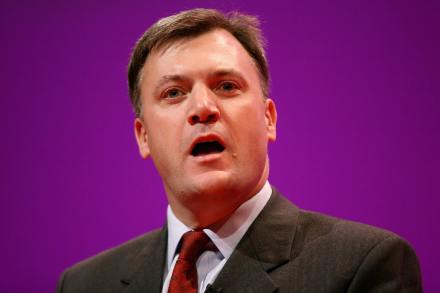
Balls plays politics

“Cameron anger at Baby P” read the Evening Standard billboards in Westminster, setting the tone of the news coverage until about now. Now, all of a sudden, a full independent review has been announced by Ed Balls – rather rapid response, seeing as Mr Brown wasn’t able to announce or even hint at this at PMQs earlier. “That wouldn’t have been the right thing to do” Balls said – I mean, heaven forbid such announcements are made to Parliament. Balls continued: “We received the summary document [on the Baby P case] at 10am this morning. We studied this, and over the course of today we concluded this afternoon that over a proper reading we should now act.” Bunkum. Baby P died on 3 August 2006.

Westminster at its worst

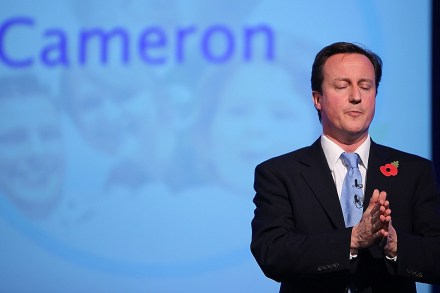
Anyone who thinks the House of Commons behaves badly at the best of times would have been sickened today. David Cameron went on the appalling case of Baby P, and twice the Speaker had to remind baying MPs that they are discussing the gruesome death of a 17-month-old toddler. His first intervention should have been enough to silence them (“It will not do, shouting across the chamber when this terrible news has come to us”) and after it, David Cameron switched. Whether deliberately or not he lost his cool, sweeping his notes to the floor. His question did deserve an answer: why should this baby’s death be investigated by the same council supposed to be looking after him?

Want to cut taxes? First cut spending. Here’s how

There is something plainly suspect about Gordon Brown challenging David Cameron to a duel over tax cuts. The Prime Minister has never believed in the inherent worth of tax cuts, and has spent much of the last decade gradually persuading the Conservatives not to believe in them either: it has been an article of Cameroon faith that ‘upfront tax-cut proposals’ were a low priority. Yet now the old battle manual has been torn up, and the PM is fighting an unprincipled guerrilla war of stunning opportunism. As if reading out from a document he has found in the street, he is reciting some of the key arguments for tax cuts — and then waiting. If there is no Tory response, he will have the field to himself.

Dreaming of job creation

Much as I applaud the sentiment behind David Cameron’s plan to help employment by cutting taxes, did he have to claim he’d “create 350,000 jobs” that way? He may answer: yes, the media want such a figure, and just you see they’ll put it high up the story tomorrow. Plus we’re not in power, so we’ll never have to prove it. But to my nerdy eye, this figure spoils it. I mean, there are 940,000 on Jobseekers’ Allowance – is Cameron really proposing to reduce that that by a third? In a downturn? But my more serious objection is that cutting payroll tax at the margin has a heavy deadweight cost: would these employers take on staff anyway?

Always honest?

“I’m always honest with the British public” said Gordon Brown at his monthly press conference. Then, this: “There can be no argument about where we’ve been over the last few years on debt. Debt was reduced from 44% of national income to 37% at the latest count. And that is a fact.” No, Prime Minister, that is a lie. The latest count was in September, when the ONS said net national debt is 43.4% of GDP. “Whatever else we want to argue about, let us be clear that we start from a low base in public debt. The question is what you do as a result of that... I just hope that the argument about the economy and where we’re heading can get to a sensible level here.

The Gordfather’s hatred sets him up for a fall

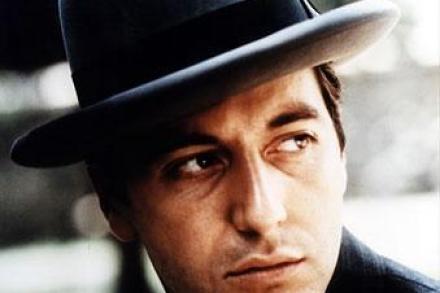
“Never hate your enemies – it affects your judgement”. This advice from Michael Corleone is very relevant to Gordon Brown, who makes his worst  mistakes when he thinks he’d destabilising Tories. He loved how scared they were about talk of an October election last year, but didn’t realise how stupid he’d look when he didn’t call one. The speculation rebounded on him. Same, I suspect, with his tax cut. Still no news today, but people are expecting £15 billion. This figure is actually a guesstimate from Robert Chote of the IFS,  who told the FT last week that he wouldn’t be surprised if Brown were to cut taxes by the tune of 1% of GDP.

Responsibility, responsibility, responsibility

You have to give David Cameron marks for trying. He’s still trying to breathe life into the word “responsibility” in hope that it can become some kind of a political battle cry. Steve Hilton literally built a business making “corporate social responsibility” into something that companies buy into – but it’s harder to do the same with politics. Every politician claims what they do is responsible, it’s not a distinguishing feature. The more Cameron uses the r-word, the more it reminds me if Brown starting every sentence “it is right that we...” Yet no new Tory idea is complete without the r-word, whether it’s the Debt Responsibility Mechanism or the Office for Budget Responsibility.

Will the Tories avoid making McCain’s tax error?

I say in my political column this week that Cameron must “offer tax cuts before Brown does” – and seems I may not have to wait long before David Cameron repays my faith in him. Patrick Hennessy says in the Sunday Telegraph today that the Tories are planning an employment-orientated tax cut financed by spending cuts. As the FT said on Saturday that Darling could be mulling some £15bn of tax cuts, there was a danger that the Tories could be the only party in Britain not proposing to let people keep more of their money. Cameron was in danger of falling into the trap which ensnared John McCain. McCain didn’t think for a moment that the tax-cutting agenda could ever be stolen from the conservatives. He was wrong.

Politics | 8 November 2008

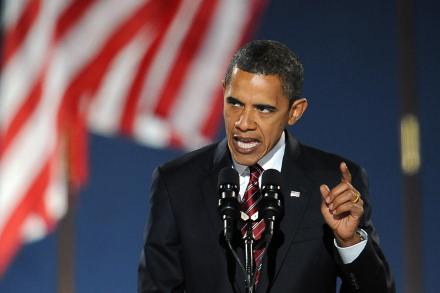
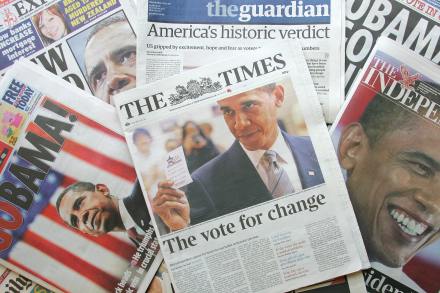
There was something almost comic about Gordon Brown and David Cameron’s rush to associate themselves with Barack Obama’s victory, each offering their own quite different interpretation. The Prime Minister declared that people are looking to government to help them during the economic downturn. The Conservative leader, with no less confidence, asserted that people are obviously hungry for change. But neither British party leader will have felt comfortable with the slogan which the Democrats were pushing in every swing state until the last possible minute: ‘Obama-Biden for tax cuts’. The Conservative leadership persuaded itself some time ago that elections are not won with such a message.

Jim Murphy, take a bow

Jim Murphy deserves some credit for last night’s win. The new Scotland Secretary has become Labour’s patron saint of lost causes, tasked with selling the EU Constitution to Britain, Blairism to Labour, and Labour to his formerly-Tory constituents. Now he’s selling Brown to Glenrothes, and yesterday they bit with an increased share of the vote – a staggering achievement given the SNP backdrop. There is something humble about Murphy, a trait he has acquired since I first saw him in the early 1990s where he was a self-aggrandising leader of NUS Scotland. His new demeanour gives him a hearing, which the average voter would not give to the more arrogant and condescending Labour ministers.

Labour win in Glenrothes

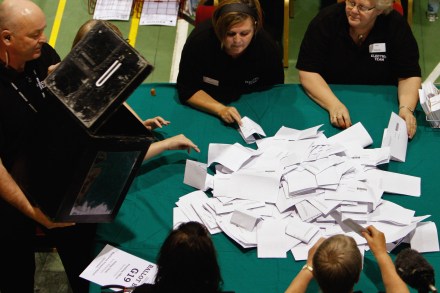
The SNP should have walked Glenrothes – yet Labour came out on top. Sure, the 6,737 majority is lower than the 10,644 with which they won it three years ago – but the SNP since took the Holyrood seat and the council. After Salmond’s win in Glasgow East, winning Glenrothes should have been a formality. So why did Labour triumph? For starters, their candidate, Lindsay Roy, is excellent – a local head teacher (my mum used to teach at his school!) and seen as being a non-partisan figure. So this diluted the rather less-than-popular Labour brand. The bailout of the two Scottish banks undermined the SNP’s message, reminding Scots of the benefits of the union. It put a spring in Brown’s step, and he campaigned twice there – he is a Fifer, after all.

Look to the inflation forecasts

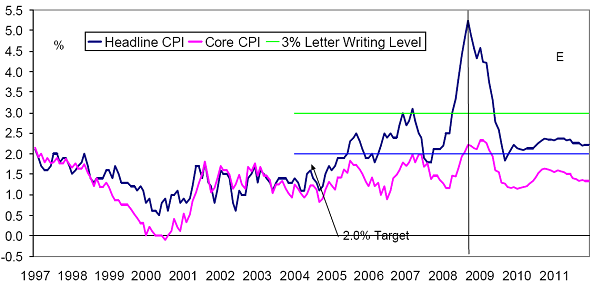
Is inflation really falling? I am understandably taken to task by some CoffeeHousers for claiming that it is. When Brown claimed it was in PMQs yesterday, it was submitted to me as a possible Brownie. But what he says is perfectly true, and it's worth looking at in more detail - for this not only explains today's rate cut, but much about the nature of the deep recession we have now entered. It also underlines what I regard as a flaw in business reporting. You can pick up the papers and find the price of shares, bonds, wheat etc. But nowehere can you read forecasts – ie, where the markets think inflation, bank rates, forex etc will be in 6 or 12 months time. If the bank knows more than you, it can sting you for an expensive fixed-rate mortgage.

Bank cuts rates by 1.5 percent

The dramatic and urgently-needed cut in base rates – by 1.5 points to 3 percent – is a comment on the extent of the deep recession that Britain is sliding into. It has been made possible by the collapse in inflation expectations. Because fewer Brits will have salaries - and most of those who have are coping with real-terms pay cuts - shoppers’ wallets are empty of earned and borrowed cash. Shops will have to slash prices to move goods – it will be murder on the high street. Ergo the collapsing inflation expectations allow the MPC to drop rates. In fact the recession will be so bad that we can probably expect BoE base rates to keep going until they reach 2%.

Reasons to have faith in Cameron and Osborne

I have been pretty hard on Cameron and Osborne during the financial crisis for three reasons: their failure to shoot down Brown’s fake narrative, the sheer size of the open goal in front of them, but most of all because of their ability. Both can do far better than this, neither suffer from the politicians’ greatest weakness – being wedded to past mistakes. Some CoffeeHousers ask why I have such faith. The reason lies in Cameron and Osborne’s accomplishments so far: 1) Radical welfare reform, with an agenda so solid that Labour has copied rather than fought it.

The example that Obama sets for Cameron

It’s strange hearing US pundits solemnly explain that the banking turmoil of the last month was always going to hurt the incumbent government, because it hasn’t hurt Brown. Yet the UK and the US both went through the same reign of error: profligate spending, huge deficits, a housing bubble created by underpriced debt. The Bush-Brown economic policy has led both countries into a painful recession, but leaders do not self-destruct. It takes an Opposition politician to hold them to account. Since Lehman's collapse, which put the economy at the centre of politics, Obama has succeeded - brilliantly. The Tories have so far failed, abjectly. Obama had both a critique, and a powerful alternative plan in his “tax cut” message. It became his answer for everything.

Initial thoughts

Some early thoughts on the American election results: 1) What Bradley effect? Obama won white men 57-41– that’s five points higher than Bush managed in 04. So much for the idea that this election would expose America’s racist underbelly. I wonder if those who have been banging on about it for the last few weeks will now ask if Obama’s “improbable journey” would have been possible in any European democracy? 2) No conservative wipeout. McCain looks like ending up on 47% of the national vote – a huge figure, given this has perhaps been the Republicans’ worst year for a generation. So we have almost half of America voting conservative - yet there will be a Obama-Biden White House and a Reid-Pelosi Congress.

The Right joins the celebration – for now

Rather than stay up very late, I got up very early and have been watching the American networks. Any leftie tuning in to Fox looking for a dose of schadenfreude will be sorely disappointed. There is no sense of the anger that the left had when George W Bush won. Bill O’Reilly describes Obama as “brilliant and personable”. The commentators on the right are saluting Obama’s campaign, and sharing a sense of patriotic pride that America is so capable of renewal that it has elected a black man to be president. Here are a few quotes that have jumped out at me. “He fought a brilliant campaign, beginning with his total befuddlement of the supposed sharpest operators in the country, the Clintons.

Varley’s rationale

The below is the memo sent to Barclays staff yesterday from John Varley, chief executive, explaining why he didn’t go for a taxpayer bailout. Remember, Barclays badly need British shareholders to approve this deal – so it will have been written with that in mind. This email is itself a comment on the times we are living – should a CEO of Barclays really need to explain why he preferred a private refinancing to part-nationalisation? It is evidently a response to the kicking he took mainly in the weekend press. We at Coffee House are right behind him. P.S. I love the understatement: “our ability to do what our shareholders would expect of us would be compromised if Barclays was nationalised.

Learning to love President Obama

Only two days to go before we find out which candidate for the American presidential campaign will be suing the other for voter fraud. Or, more likely, Barack Obama will carried home by an historic turnout – and, I have to confess, I will be quite pleased by that result. Not because I’ve succumbed to his charm, but because anyone on the centre-right who argues that America is a force for good in the world will have their task made a lot easier by President Obama. I’ve long regarded anti-Americanism as a belief system all in itself – and one of the most underrated and menacing forces in the world today.