Fraser Nelson

Fraser Nelson

Fraser Nelson is a Times columnist and a former editor of The Spectator.

Telling tales of his mother and father

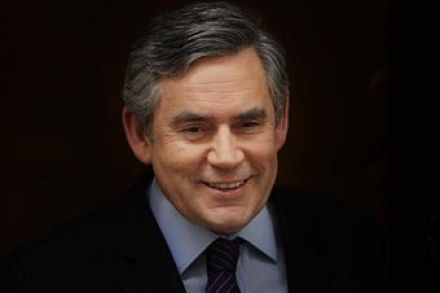
Gordon Brown does not have much of a personal “backstory” but he does talk about his family. When he’s feeling guilty about something, he mentions his father. But today, speaking to the Welsh Labour Party, he again talks about a figure we heard about a few days ago: his grandfather. “Like so many here I come from a family whose grandfather went without work during much of the 1930s. A grandfather whose small savings gave his son, my father, the chance of an education, the first in our family to go to university. And the lesson of those days is that even in the worst of times families helped each other, supported each other, came to the aid of each other through thousands of acts of friendship caring and support.

The Tories need to hammer home that tax cuts will stimulate growth

George Osborne saved the 2007 Tory conference with a tax cut. He’s recalling that mood today, elaborating on the plans to cut corporation tax which – as James detailed a while ago – will be the backbone of his first budget. Now, you may think: we know all this. Osborne has said he’d cut corporation tax from 28p to 25p and cutting the small companies rate to 20p. He had promised to go lower still, telling the CBI  last April that Britain “will need to go further if we are to keep pace with an increasingly competitive global economy” - and we have heard no more of this since. But the difference is emphasis. They are saying this will happen early (unlike inheritance cut, which has been pushed back to the end of the first parliament).

An interview packed with Brownies

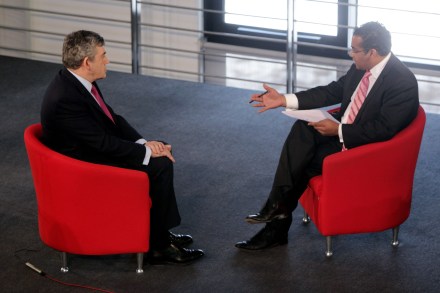
Brownies galore in our PM’s interview with the Economist. So many, in fact, that I thought I do a quick Fisk:   The Economist: The big worry seems to be the deficit—the deficit. What should the message should be? Gordon Brown: I actually think that the first thing that we’ve got to do as a global community—and I said it this morning and I’ll say it again—is that the reforms of the global financial system are not complete. As far as Britain is concerned, we are dealing with a one-off hit as a result of globalisation. FN: Let us pause, here, to consider the brazenness. Brown’s policies pumped the UK economy up with the steroids of debt. The banking collapse hit us harder than any country because he took the wildest risks.

Some reasons to be cheerful about Cameron and the Tories

By way of a response to the comments on my post yesterday, here are some reasons to be cheerful about Cameron and the Tories. The poll lead dropping to six points is indeed a wake-up call, and Cameron probably worked out a while ago that things were going a bit Pete Tong. Indeed (Short the UK), there are signs that he has already started to act. Look at last Monday: three strong election videos, without a politician in sight. The perfect remedy to the Tragedy of Cameron's Head poster. The policy of allowing management buy-outs of government departments is bold, radical and entirely in keeping with Cameron's general policy of empowering the many, not the few.

Time for Cameron’s Lazarus act

Two seriously worrying polls for the Conservatives today. One is a Sunday Times/YouGov poll, showing a Labour recovery reducing the Tory lead to six points  well into hung parliament territory and the lowest since December 2008. The other is a PoliticsHome poll in the News of the World, according to which: Cameron’s approval rate has been steadily falling, and Brown’s similtaneously rising – the difference between them has halved, in recent months, from 90 points to 45 points. If the election is a 39-33 split, then the Tories end up with just ten more seats than Labour and are dependent on coalition with the LibDems.

In the name of the father | 20 February 2010

“I’m not perfect” Gordon Brown said in his speech today – knowing that, in a couple of hours, we’ll hear details of the many ways he is not perfect, when the first extracts of Andrew Rawnsley’s book are published. He has got his defence in early on Channel Four news. Here is a transcript: Q: You know tomorrow there are going to be a whole slew of new allegations being made by Andrew Rawnsley, so let's hear about you at work. Do you get angry at your staff? Do you swear at them? Do you throw things? GORDON BROWN: If I get angry, I get angry with myself. Q: Do you throw things? GORDON BROWN: No, I throw the newspapers on the floor or something like that, but please… Q: Have you ever hit anyone? GORDON BROWN: I have never hit anybody in my life.

Highlights from the latest Spectator

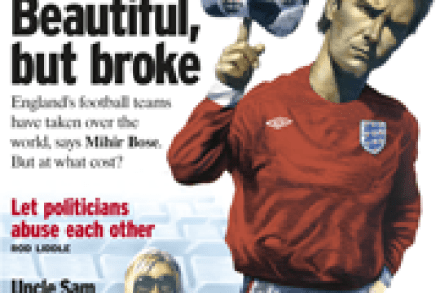
The new issue of The Spectator is out today, and here are a few highlights. We've led on football, for once, with cover image by Mark Summers of David Beckham in the England away strip. Here are my top five features: 1. The very strange death of English Football. Mihir Bose, former BBC Sports Editor, has written about the weird paradox gripping the game: the Premiership is a global business, but half its clubs are insolvent. The cash is not only driving many of them (like Portsmouth) to the wall, but driving out English players. Just 17 percent of players who have appeared in this year's Premiership are British under-25s. When the Premership started in 1992, it was 44 percent. We also looked up the accounts for every single premiership club to find around £3bn of debt.

Cutting it with the Fink

I couldn't let today pass without a response to Danny Finkelstein. We do agree on the ends, but not the means. And, as he says, this debate mirrors one about the methods of reform. So, let¹s go through his points. 1. 'I am afraid I think Fraser overestimates (a lot) how politically difficult this is all going to be. And how personally painful for a lot of people. And how technically difficult.' Painful, yes, but necessary ­ and it will be resented if Cameron is not straight about the cuts he will have to make. But how painful? Gordon Brown¹s great intellectual victory is to persuade the Tories that 'cuts' can only mean frontline services cut ­ so (as Brown once said) 10% cuts 'mean schools close and hospitals close.

The best publicity Brown is ever likely to get

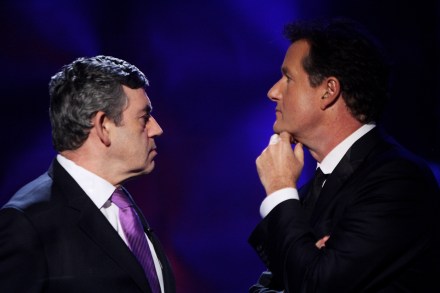
Brown is very lucky to have a friend in Piers Morgan. He did him a great service in the ITV interview tonight - and while it would have made CoffeeHousers nauseous (if they watched it), it will be the best television the PM will get this year and probably ever. Mark my words: the Labour Party will not produce anything that shows Brown in such a sympathetic light. It was powerful, I'd say, because it was not party political propaganda: Morgan genuinely likes Brown and did his utmost to project the human side of him. Those hours of coaching from Alastair Campbell paid off. He kept smiling in a credible way - telling anecdotes in exactly the way that he does, in private, when he's trying to charm people.

Cameron steps up his game

There’s something about a trip to Scotland that brings out the best in Tories giving speeches, and David Cameron lived up to the occasion the other evening. He reprised his social justice passage – easily the best part of his 2009 conference speech. Listing how Labour has made the rich richer and poor poorer, and how the Tories are the party of Wilberforce etc. Promising a “radical zeal” Conservative party – Amen to that. “Some people will say 'you can't do things like that.  You can't afford to take those risks.' I say with so little money and so much failure we can't afford not to.” That’s the spirit.  “Those cuts are coming: make no mistake they are Gordon Brown’s cuts,” he added.

Tim Montgomerie’s broad church

The FT Magazine has a cover boy today: Tim Montgomerie. It’s about how “a small group of Christian Conservatives are rewriting party doctrine,” and has positioned Tim in such a way that there appears to be a halo behind his head with his eyes heavenwards. Something tells me this was not the picture Tim was expecting. The front cover tease sounds like one of these conspiracy theories you get in America: the capture of a political party by a small band of idealogues etc etc. Read on, and the piece is fair and instructive: it tells the important – but hardly controversial – part of a key aspect of Conservative development. It starts in 1990, when Tim founded Conservative Christian Fellowship, on principles which went on to guide his career.

The social, moral, and economic case for smaller government

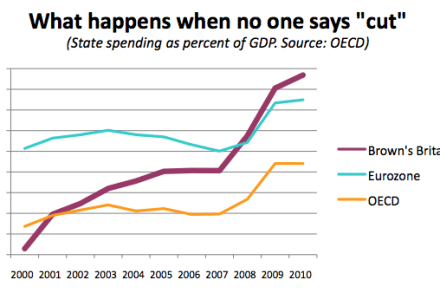
Ten days on and Danny Finkelstein still seems to be upset with me for my Keith Joseph lecture, where I said the Tories risked being ensnared by Brown's 'investment v cuts' rhetoric. For reasons that I'm still not quite sure of, Danny hates the idea of cuts. He may have (and I hope he didn't) take it personally when I said it was precisely this attitude amongst the Conservatives that created the climate for the fiscal crisis Britain is now facing. Over the last decade, Brown increased spending by 16 percent of GDP (see graph below)- not only faster than any developed country, but faster than any major country of the postwar period. Why? What was the rush? Germany and Japan in the 30s jacked up their state spending to a similar degree, but they had their reasons.

The rebirth of history

We have Francis Fukuyama writing a cover piece for us this week, revisiting his 'End of History' thesis. When he first published it, in 1989, he anticipated what was to become a consensus shared by many, including myself: that autocracy was on the way out. Communism had failed, and was being supplanted by the free society (aka the free market). Capitalism was creating wealth and liberty, and from Minsk to Gdansk people wanted it. Eastern Europe was managing a transition brilliantly. Fukuyama¹s thesis seemed to sum up an incredible spirit of optimism. Perhaps this optimism turned to hubris. After 9/11 Tony Blair and George Bush wanted to accelerate history, and bring democracy to countries which just needed to get rid of their dictatorships.

The cuts consensus

John Rentoul today puts Trevor Kavanagh and myself in the dock for demanding "massive spending cuts" and concludes that if we "had any power" we would be "about as helpful to Cameron as Sarah Palin was to John McCain" but believes Cameron "will hold to his strategic course". I mean: massive cuts. How crazy is that? Surely only swivel-eyed maniacs would be planning cuts - real, hard-core ideologues - would plan that when the deficit is a mere 13 percent of GDP. Surely? It struck me, reading this, that John is unaware of the massive cuts which Labour is planning (understandable, as they were in the small print and have still not been picked up by Fleet St).

What’s needed now is a modern Conservative party with clear, discernible principles

I'd like to do a final round of responses to comments to my Keith Joseph lecture. It’s easy for debates about Conservatism to be caricatured as being for or against Cameron – and my lecture fits into neither category. I’m a big supporter of Cameron’s, but often wish he’d have more faith in himself: I fear he feels he has to make more short-term concessions than he has to – thus blunting his message of ‘change’. For years, any debate about Tory policy is described in the terminology of Tory civil war circa 2002 (which all too many people, from both sides, are still fighting) – ie that you an ‘Thatcherite or a ‘moderniser’. But now, in 2010, there can surely be a truce. Both sides had their points at the time.

Rationalism enters the climate change debate

I have been gripped by The Guardian’s climate change investigation and reporting these last few days. We do like to tease George Monbiot but he was one of the first to denounce spinning of the data and science by the University of East Anglia’s climate unit. It’s a mark of his professionalism and seriousness: global warming is a cause important to him, and he resents attempts to misrepresent things by his own side, or by his enemies. The Guardian seems to take the same view, and has sent David Leigh and others out on the investigation trail, and the final in the four-part series is printed today. It shows how the debate is changing – a topic brilliantly explored by Matt Ridley in his cover piece this week.

Is Cameron a Heath or a Thatcher?

Fraser Nelson says that electoral victory is not enough. To be a great Tory prime minister, David Cameron must be bold enough to abandon Labour’s failed agenda entirely and implement his own Winning office is not the same as winning power. To get the keys to No. 10, a politician needs to be skilled in the arts of electoral combat. But to take power, a prime minister needs an agenda. Without one, he is a slave to his predecessors. The last two Tory leaders who took over from Labour promising change fared differently. Ted Heath, in 1970, was forced into a U-turn and lost power after four years. Lady Thatcher had her own agenda, and transformed the country. The question being raised in Westminster now is which of these two models Mr Cameron is likely to follow.

In response to CoffeeHousers

CoffeeHousers have left some characteristically forthright and thoughtful comments on the blog about my Keith Joseph lecture, and I thought I’d answer them in a post.   Tiberius says that I don’t mention voters very much – I talk only about ideas. The voters have been taught Labour ideas: isn’t this something the Tories have to deal with? First, I firmly believe that the public are open to persuasion, open to new ideas having seen the collapse of Labour’s ideas. But, in my lecture (full text here), I do mention voters quite a lot. As Keith Joseph put it, it is folly to seek the ‘middle ground’ between political parties, and Conservatives should seek the ‘common ground’ which they share with the punters.

Why winning isn’t enough – and a response to The Fink

I delivered the Keith Joseph lecture last night, entitled Winning Is Not Enough. My point: that the Tories have adopted so many Labour policies out of tactical considerations that they are in danger of getting to office only to find they have signed up to continuing Gordon Brown’s agenda. The problem is not so much Gordon Brown himself, but his misunderstanding of government and politics: it’s his ideas that are so dangerous. If those ideas survive with a blue rosette, they are no less dangerous. And if a Tory government adopts these ideas then that’s not change. It’s more of the same.

Number crunching cuts

The debate about cuts so far lacks any numbers, so I thought CoffeeHouses might like some. Contrary to what he claims Darling is planning cuts – but he just didn’t print the spending totals in his Pre-Budget Report (lack of space, one presumes). The Institute for Fiscal Studies, which produces its Green Budget tomorrow, has worked out what will be left for departments after debt interest, dole et. It amounts to a 10 percent cut. Here’s the table. Yet the Tories plan for DFID to be 0.7 percent of GDP by 2013 – ie, rising by 63 percent - and health will not be cut. Cameron has indicated that he will not cut much in 2010-11, so let’s assume that the Labour spending rises for various departments go ahead as planned. Results below. The result?