Fraser Nelson

Fraser Nelson

Fraser Nelson is a Times columnist and a former editor of The Spectator.

No place for porkies in digital politics

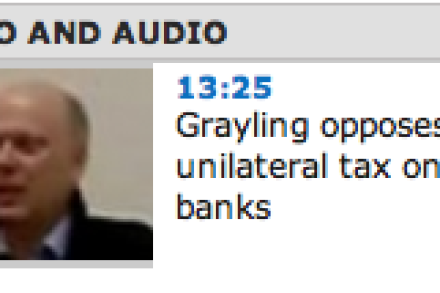
We have just witnessed a fascinating glimpse of the use of the internet in elections. This morning, Cameron proposed a unilateral bank tax - moving, I suspect, ahead of what he believes Darling will announce in next week's budget. Next, at 1.19pm, Will Straw digs up a selectively-edited version of Chris Grayling speaking in his local constituency (put online by the Labour candidate, Craig Montgomery). Straw's headline: "Calamity Grayling opposes Cameron’s unilateral bank tax." Now, this headline - a lie - might have worked on a Labour Party press release. But it's far harder to lie on a blog. Grayling is quoted saying "there is absolutely no point on earth is any one country doing this unilaterally, because otherwise all the banking transactions will simply move to another one".

Why Cameron must never say “deficit”.

Listening to BBC news, it's striking how they are still using Labour's politically-charged vocabulary. When the universities are kicking off about their budgets being cut, the BBC newsreaders are told to talk about "investment" in higher education, rather than spending. Why, though? An "investment" would be to put £1 billion of taxpayers’ money into an Emerging Markets fund, and hope it grows. Giving it to universities - many of which serve neither students nor society - is not an investment. But using the word "investment" is Labour code for "good spending". There is one particularly frequent example if this: the BBC regularly confuse the words "deficit" and "debt" - a bugbear of mine, and something James Forsyth deals with in his column in this week's magazine.

Age doesn’t matter on Coffee House

I've just come back from the Guardian's "changing media" conference, speaking about the future of our industry and The Spectator's intrepid adventures into cyberspace. I had a few gags in my wee speech, but the biggest laugh was when I said that the average reader of Spectator.co.uk is pushing 50 years old. That took me aback - is it so funny? The average age of the magazine reader is higher still, I said - more laughter.     It seemed deeply unfashionable to the trendies who made up (part of) the audience - surely the future lies in twenty-somethings? I have never bought this, for many reasons. First, The Spectator's pitch is to a set of values: quality of writing, elegance of thought, independence of opinion. That appeal cuts across all age groups.

Highlights from the latest Spectator | 18 March 2010

The latest issue of the Spectator is out today, and here are my top five features: Might Cameron face a general strike? Pick up today’s papers, and you read more and more unions planning to strike to protest against utterly necessary and inevitable cuts. Dennis Sewell points out that Greek trade unionists have started to tour Britain, encouraging protests along the lines that the rich caused the mess so they, not the public sector workforce, should pay the price. Underlying this is the belief by the Unions that the Tories lack resolve, and will buckle – as Heath did. The odds are that the unions will get together to test Cameron’s resolve, and the result could well be a general strike. Is there any culture outside London?

The cost of Brown’s propaganda splurge

Gordon Brown has been shameless in using the tools of state to advance his party political objectives – to him, government is electoral war by other means. Anyone who has turned on a commercial radio station recently will have worked out his latest trick: a mass propaganda splurge before an election campaign. Get on a bus, and it can be 100 percent state adverts – advising how Big Brother will help you get a job, buy a car, see off door-to-door salesmen, give you a job in the prison services – anything you want. We at The Spectator have tracked down the figures that show the extent of all this. State advertising was £13 million in December – yet surged to £34 million last month.

Piers for Parliament?

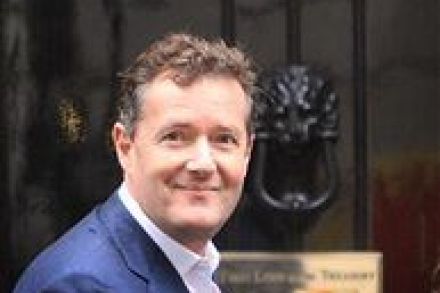
Could you vote for Piers Morgan? In an interview with Freddy Gray in The Spectator tomorrow, he says he's tempted to stand for Parliament - and it's not such a surprise. He has weirdly inserted himself in the political process in recent weeks, defining Nick "no more than 30" Clegg and giving Gordon Brown probably the best piece of television coverage he will receive - ever. Now he is even considering standing for election. 'I am tempted to run on a ticket of openness and frankness about the problems of this country and not being afraid to deal with them,' he says. He doesn't have much time for Cameron, describing him as 'a spivvy snake-oil salesman who has got a load of his Old Etonian mates and they're all on a bit of a jolly to take over the country.' But here's the thing.

Cameron must win outright

Heaven forbid that the Tories and LibDems end up in coalition - but the Guardian asked me to write a piece war-gaming what would happen if they did. The result is here. I really do believe it would be a short-lived calamity because no one would be playing for the long-term. The Westminster system does not handle coalitions, and hung parliaments lead to second elections. From day one of any Lib-Con coalition, everyone would have an eye on that second election. The Tories would want to accuse the LibDems of recklessly pulling the plug, the LibDems would be briefing against the Tories making out that they were the only competent ones in the coalition.

Brown’s latest confidence trick

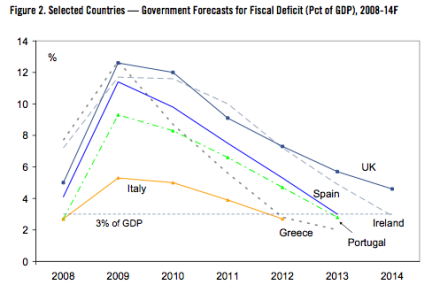
One of the Brownie's we've been hearing recently from the Dear Leader is that it is in some way ambitious to "halve the deficit by 2014". It's a Brownie because it is technically accurate, yet designed to mislead the voter. Two years ago, he forecast no deficit at all by 2014. Now he's projecting one of 5 percent of GDP - simply mammoth - and still makes out that this is something to be proud of. It's a confidence trick: the voter is supposed to think 'I don't know about the figures, but if he's boasting about it then it must be good'.

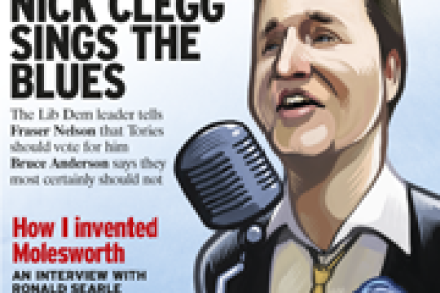
Can Nick Clegg sing the blues?

Nick Clegg’s office already has a Downing Street feel to it. Since becoming leader of the Liberal Democrats, he has had it redecorated so that portraits of old party leaders hang on the staircase up to his room, as portraits of former prime minsters do in No. 10. It starts plausibly enough, with portraits of Palmerston, Gladstone and Asquith. The gravitas is somewhat lost when we get to Charles Kennedy and Ming Campbell. But neither came as close to power as Mr Clegg is now. If the polls are right, then he might be just weeks away from government. The idea of a Lib-Con coalition is not one any Conservative relishes. But there is a limit to how long even the most optimistic Tory can keep ignoring opinion polls.

Highlights from the latest Spectator | 11 March 2010

The latest issue of the Spectator is out today, and here are my top five features: Nick Clegg takes to the stage. With a hung Parliament looking increasingly likely, I thought we should pay a bit of attention to the Lib Dem leader in this week's issue.  Interviewed by me, he does his best to reach out to Tory voters - pointing to his party's tax-cutting agenda and its spending cut-heavy plan to lower the deficit. He even cites Margaret Thatcher as an inspiration - we put up an excerpt on Coffee House yesterday.  Meanwhile, Bruce Anderson warns Tories to avoid Clegg at all costs: the Lib Dem leader's allegiance is, Bruce writes, to a federal Europe. Who'll hold the balance of power in a hung parliament?

Clegg: Heir to Thatcher?

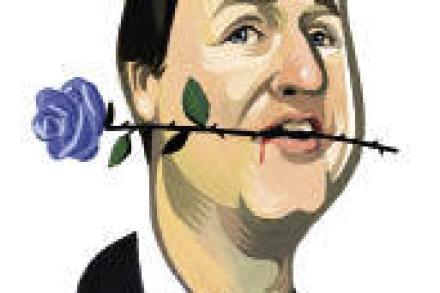
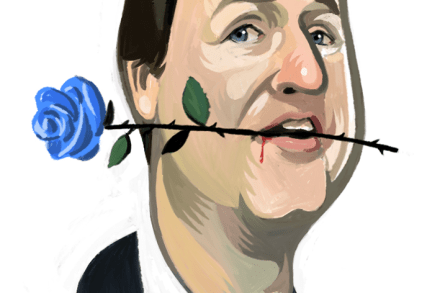
Nick Clegg has a blue rose in his mouth in tomorrow's Spectator, serenading readers - and showing his hidden Tory side. I have to say, he puts his heart into it. Not only does the Lib Dem leader say he'll end the structural deficit with 100 percent spending cuts (not the 20 percent tax rises, 80 percent cuts combo that the Tories advocate), but he even heaps praise in Lady Thatcher. More, he describes her as something of an inspiration: just as she took on vested interests in the 1980s, so he will take on the banks now.   Personally, I can't quite see the equivalence - and Clegg as the Heir to Thatcher is an image that I just can't conjure in my mind. But you can't blame him for trying.

Tough on dangerous dogs, blind to the causes of dangerous dogs

It's 'dangerous dogs' season again - but is there more to the story? The Today programme gave this its main 8.10am slot. The BBC sought to interview some chavs to sneer at - the listener being invited to conclude that the law must be brought to bear on them. But Brendan O'Neill was quite right in this week's magazine, where he describes how government seeks to use this scare for yet another power grab over the citizens. The aim, he says "is not only to bring dog-owners into that very big tent of People Continually Spied On By The Authorities, but to weed out the 'devil dogs that terrorise socially deprived areas' by controlling the kind of people who are allowed to own such dogs.

Bringing Clegg to the table

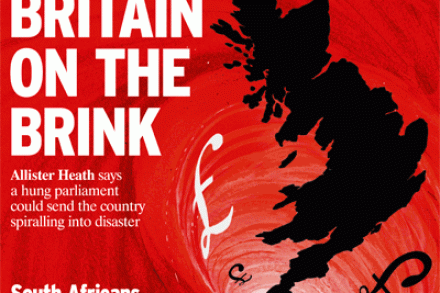
My gut feeling is that Cameron will win with a majority. But I had a gut feeling that Carey Mulligan would get Best Actress at the Oscars. When Scotland play rugby, I have a gut feeling that they will win. My gut, alas, has a pretty poor track record. But if I look at the polls, it suggests that Cameron will not win outright, and that Nick Clegg will be needed to form a majority. Today's daily Sun/YouGov tracker has the Tories with a five-point lead - which suggests that Cameron is 26 seats short of a majority, and that Nick Clegg has just 22 MPs to bring to the party. The chaos scenario, outlined by Allister Heath in this week's Spectator cover story ("Britain on the brink"), comes back into focus. So how afraid should we be? Not very, says Timothy Garton Ash.

What does it matter if Samantha Cameron voted Labour once?

So what if Samantha Cameron has voted Labour in the past? When I saw this story flash up on the wires last night, I wondered what the big deal was. But to splash the Mail on Sunday on it? Everyone knows that she is not the stereotypical Tory wife: she has a tattoo on her ankle, she spent her student years shooting pool and hanging out with musicians. Then she married a politician. It happens. But that the Wife of the Leader come with a pure voting pedigree is not something that even Cameron's fiercest critics would expect. If the wider charge is that Cameron's social circle is not a pure Conservative one, then that is more reason than ever for wanting him to lead the party and country. It is precisely SamCam's independent nature that marks her out.

Brown’s betrayal of Basra is the real issue here

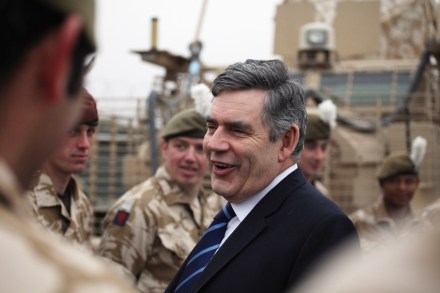
Might Gordon Brown get away with it at the Chilcot Inquiry today? I suspect so. The media seems obsessed with the run-up to war, whereas the real crime was the betrayal of Basra. Brown made false claims to Parliament about the fall of violence in the city which, as he would have known, was being left in the hands of Shiite death squads. He would have known that, as the Chilcot Inquiry established, we had just a couple of hundred soldiers trying to keep peace in a city of millions. He misled Britain out of Basra as knowingly and mendaciously as Blair led Britain into Iraq - leaving the people of Basra at the mercy of the militiamen. That is, until the Iraq army (with US support) invaded the city again, and expelled the murderous regime to whom Britain had, under Brown, handed power.

Highlights from the latest Spectator | 4 March 2010

The latest issue of the Spectator is out today, and here are my top four features: 1. Britain on the brink.  Allister Heath, the editor of City AM, blogged about his cover story earlier. But the full article really is a must-read: it explains just why hung parliaments don’t work in Britain and why the AAA rating is now a red herring. There is a real risk of Britain following Greece into the vortex. 2. Why do we let South Africans play cricket for England? Peter Oborne cares deeply about cricket – and has written an impassioned piece about what he sees as a  South African invasion of our national side.  Sure, players like Craig Kieswetter and Kevin Pietersen may be brilliant, but they are not British. Why are they allowed to play in the first place? 3.

Facing the protesters

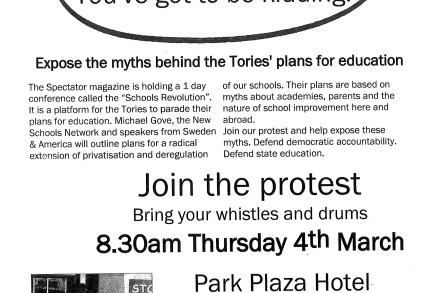
Given that school choice will only benefit those who cannot afford it at present, who could be against it? The answer is the Socialist Educational Alliance, who have decided to stage a protest at The Spectator's conference on school liberalisation on Thursday. They have produced a leaflet (see left, and click to enlarge). "Bring your whistles and drums" it says - 8.30am. I wonder if Ed Balls will join them, as he appears to agree with the thrust of their argument. "Defend democratic accountability," says the flier. This is the language which Labour left use: "democratic accountability" is code, of course, for political/bureaucratic control. Perhaps my friend Polly Toynbee will be there too, with a placard saying "what do parents think they know about schools?

Why the Tories should talk about immigration

Should the Tories talk about immigration? This will bring back a lot of bad memories for the modernisers, who believe that this hurt them in 2005. But, as Tim Montgomerie says over at CiF today, the picture has transformed since then. The total number of immigrant workers has risen 25 per cent, to 3.5 million. And nationally, immigrants now make up a remarkable 15 percent of the workforce (see graph below) – which puts us up there with America. Except our immigration is handled in a haphazard way that creates plenty of bad feeling. Talk to a Tory candidate and they will say there’s only one issue that gets cut-through on the doorsteps. And, so, all parties seem to be adopting a “shout it locally, say nothing nationally” approach to immigration.

Hammer blow or gift from God?

Is the Sunday Times poll a hammer blow to the Tories, or a gift from God? It sounds a weird question, but think of the logic. So far, Cameron’s big mistake was to allow the campaign to become a referendum on him. He was desperate to turn that into a basic question: do you want five more years of Brown? Until now, the voters’ response would be “yeah, right. Brown is going down. The question is whether I’m enthusiastic about you lot, with your fuzzy green tree logo and your lack of any discernable agenda, and the answer is no”. As James said, the message “five more years of Brown” was the main one that the Tories were trying to convey yesterday at the conference. And now the two-point YouGov lead makes this into a realistic prospect.

A tonic to dispel doubt

If any CoffeeHousers have been feeling despondent about the Tores, I have the perfect tonic: Cameron’s YouTube video released today. In my News of the World column last week, I listed five messages I thought he should give. And he ticked all of them off - and then some. It was one of those biannual events: where Cameron gives a speech that he obviously wrote himself, and put a lot of energy into it. And the result is always great. Now, this may be a wavelength thing: some CoffeeHousers may see a whole load of cliches. But I see in here an agenda for change – plus some clever debating tactics. He starts by doing what I’ve longed for the Tories to do: frame the debate.