Fraser Nelson

Fraser Nelson

Fraser Nelson is a Times columnist and a former editor of The Spectator.

China’s spy network

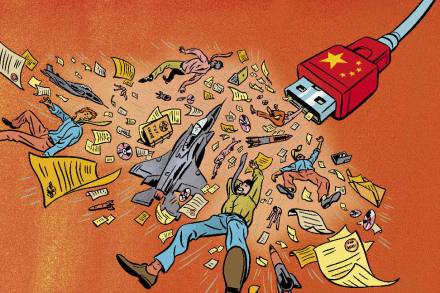
We are at war online – and we are losing Almost exactly two years ago, an American army officer found a memory stick in a car park in the Middle East and, out of curiosity, inserted it into his military laptop. It seemed to be empty, but there are a million ways of disguising a Trojan computer virus. Instantly, a malicious software code uploaded onto the US Central Command military computer network and embedded itself in the system. And there it lay undetected for weeks, able to send back all manner of classified information. In the words of the deputy US defence secretary, William J. Lynn III, it was ‘poised to deliver operational plans into the hands of an unknown adversary’. That unknown adversary was almost certainly China.

Cameron can be proud of his World Cup fight

It’s not often that I disagree with James, but I don’t think that David Cameron returns from Zurich with egg on his face. Of course, we Scots learn to see the upside in sporting defeat, but I really do believe the World Cup bid was a credit to England – and to the Prime Minister. That video which Pete blogged yesterday spoke with incredible elegance: England is already the home of world football. People get up at 4am in Singapore to watch Manchester United and Chelsea play, and I suspect most Man Utd fans have never visited Britain, let alone Old Trafford. It’s an extraordinary national asset, an area where Britain punches above its weight time and time again.

Tax cuts: a Swedish recession remedy

I travelled in from frozen Stockholm this morning. My colleague Mary Wakefield set out from County Durham. No prizes for guessing whose journey took more time due to snow. When my £38 norewgian.com flight arrived at Gatwick, the captain said: “Sorry, we’re going to be delayed. They can’t seem to find people to open the gate, they say they are short staffed.” The Swedes on the flight burst out laughing: welcome to Britain. Mary’s £107 train was two hours late arriving to the station, and spent a further two hours stuck in the snow. That the Swedes do better at us in the snow is no great surprise, but it’s odd to see them do better at supply-side economics.

Ed Miliband: “Yes, I am a socialist”

Ed Miliband was doing the interview rounds today, and CoffeeHouses may be interested in the below – an edited version of his exchange with Nicky Campbell on Five Live. NC: Is the problem union power?  MPs and the constituencies clearly voted for your brother, Alan Johnson’s favourite candidate.  He was a clear winner in those two parts of the party, and many people say union influence has to be limited.  Now this is a real test of your guts, isn’t it?  Is it the right thing to do? EM: I see it a different way, Nicky, to be honest.  I see that politics as a whole, in every party, is massively disconnected from people up and down this country.

Flight’s loose tongue

Has Howard Flight just done a Keith Joseph? The latter’s run for Tory leader ended when he made a speech about poor people breeding.  As David said earlier, plain speaking can have its problems. But Flight’s danger is in being mistranslated. He sought to make a simple point: that many working families can't afford to expand their families, while the state provides a substantial cash incentive for those on benefits to do so. But his use of the word “breeding” sounds like he’s into eugenics, and the language – talking about the poor – sounds dodgier still. Given his struggle with foot-in-mouth disease, it’s surprising that Cameron ennobled him.  But still, his quote is a far cry from what Joseph said in Edgbaston.

Five things the student unions didn’t protest against in the last 13 years…

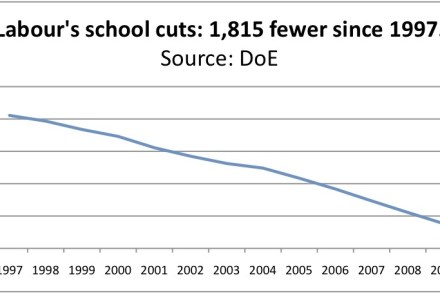
1)    That Labour cut the number of schools each year. 2)    That pupils were shepherded into ever-larger schools. 3)    That, although the budget trebled, class sizes hardly moved. 4)    That the attainment gap between private and public schools grew to become the largest of any country except Brazil (Source: OECD ) 5)    And all at a time when the supposed funding per pupil was soaring… Moral: cash doesn’t help schools. Reform does.

The problem for Gove is that structures beget standards

As you’d expect, Michael Gove’s White Paper is a feast of good sense. His speech in the Commons was powerful analysis, and his rebuttal of Labour MPs fun to watch. He’s all for making kids learn properly in primary school, retaining order in the classroom, making detention easier and better modern language teaching. Amen, amen, amen. But, I fear that the White Paper will not be transformative, for a simple reason: the schools system is broken. It doesn’t respond to instructions. The Education Secretary does not run education - power rests with local authorities and the teaching unions. They’re not too keen on Gove, and have allies in parliament ready to insert the odd amendment into legislation. Top-down instructions won’t work.

The death knell for the Euro?

Are we witnessing the start of a very long death scene for the Euro? Asked if the Euro will survive, William Hague replied simply: “who knows?”. The new president, Herman Von Rompuy, has said that the Euro faces an “existential test”. We are looking at the very real prospect of the Euro’s collapse. And that “if we don't survive with the eurozone, we will not survive with the European Union”. This would, by necessity, require a new treaty - and give Britain an unprecedented opportunity to renegotiate its membership on terms the public regard as acceptable. In my News of the World column today, I say (£) that this presents Cameron with what would be the greatest foreign policy opportunity of his premiership.

The kiss of death | 19 November 2010

Oh dear. On Wednesday night, we at The Spectator saw David Cameron handing Lord Young his Spectator/Threadneedle Parliamentarian of the Year in the category of Peer of the Year. “Over the decades,” said yours truly, “Prime Ministers have come to value his advice. As Thatcher put it: ‘other people bring me problems, David brings me solutions.'” Not any more - David has brought him a problem, followed by a resignation. Less than 48 hours after picking-up our award, his political career appears to be at an end.   It is true that there are some people who have had a “good recession”. That is: faced no danger of losing their job and saw the cost of their mortgage collapse as part of the monetary stimulus.

Cameron on The Spectator

In my last post I did Cameron a disservice by suggesting he had to research his remarks about The Spectator. Like many well-read people, with an interest in life in the round, he's been a reader for years - Steve Hilton buys him a copy for his birthday, I'm told - and we backed him not just when he first entered the leadership contest (the only publication so to do) but with a now-famous article by Bruce Anderson hailing him as the next messiah as early as 2003. Anyway, for the record, this is what Cameron had to say about The Spectator: "In all seriousness, The Spectator is one of this country¹s greatest and most iconic magazines. It has been around for 180 years and I think its great genius lies quite simply in its writing.

Dave v Boris wars: a prequel?

David Cameron was on sparkling form last night, at our Parliamentarian of the Year awards. He joked about his photographer - saying he didn’t arrive for dinner because he saw fish was on the menu and didn’t want to pay for his own snapper. His remarks about the magazine were thoughtful, and well-researched. But what did he mean by the below? It certainly had the guests talking afterwards: some regarded it as the verbal equivalent of a horse’s head thrown into the bed of the Mayor of London. Me: I offer no opinion. But this is what he had to say: “I think the great thing about the Spectator is your extraordinary heritage, the remarkable figures who’ve sat in the editor’s chair.

IDS shows how arguments are won

For years, I have complained that the Conservatives have timidly stayed within Labour’s intellectual parameters, arguing that they need “permission” to make certain arguments and need to stay within the limits of what the public find acceptable. Such intellectual timidity confined them to opposition: they can never win, playing by Labour rules. Iain Duncan Smith is breaking free of this. It may be rash to predict it now, but I believe he is on the brink of a breakthrough in the way that welfare is regarded in Britain. This victory in a battle of ideas could be the greatest single blow against poverty in a generation. The extent of this was crystallised by Polly Toynbee in the Guardian yesterday.

Osborne’s tax exiles

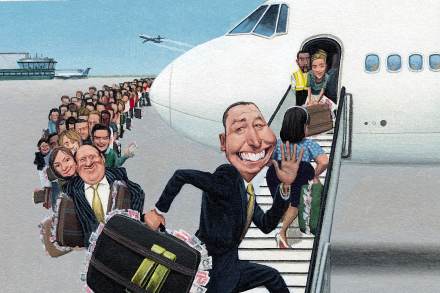
Earlier this year, officials in the Indian driving licence department received an extraordinary application. It was from Lakshmi Mittal, the richest man in Britain, who wanted to know — given the circumstances — if it would possible for him to be posted the documentation rather than sit a driving test. They refused, and the steel magnate duly turned up for his fingerprints a few days later. The Indian press were delighted, and not just to see a billionaire humbled. A driving licence application looked very much like the first step back to residency. India’s richest exile might just be the latest to flee London. If he did, it would be a symptom of what could be a much wider problem.

50p tax: the coalition’s most expensive policy

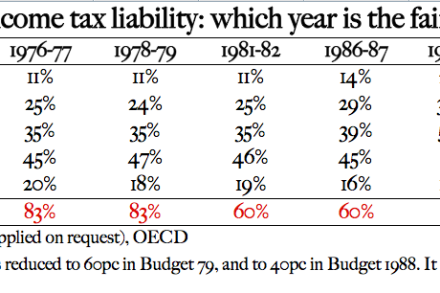
In my cover story for this week’s magazine, I say that the damage of the 50p tax, various bank levies and general banker-bashing is far greater than Osborne realises. Here are the top points I seek to make:   1. We may hate to admit it but the British tax base, and our chances of reducing the deficit, are heavily reliant on a handful of very rich people. The highest-paid 1 percent will generate 23 percent of income tax collected in the UK in the year before the 50p tax (see the table below). And spot the correlation between the top tax rate, and the burden shouldered by the richest and the poorest. Which are the most progressive – the figures on the right, or the figures on the left? 2.

Poppy season

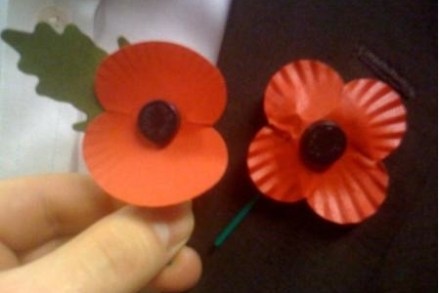
Keen-eyed spectators might have noticed Danny Alexander and Michael Gove wearing a slightly different type of poppy over the last few days: the Scottish Poppy. At the beginning of the poppy-wearing season they are for sale at the Scottish Office in Whitehall and are worn by certain Scots down here – any money that Andrew Marr will be wearing one on Sunday, for example.   What’s the difference? Scots poppies have four petals, and no green leaf.  The English version costs a little more to produce, and – one might argue – looks more sophisticated. But the Scots version can claim to be anatomically correct, because poppies don’t have green leaves. The Scottish poppy is also an early grower: it’s worn a bit earlier north of the border.

Cameron the optimist

Is David Cameron just too nice? There are worse accusations to levy at a politician, but it's one I have heard suggested quite a lot recently - and I have written about it in my News of the World column today. He seems to have adopted the politics of wishful thinking. There is a "zip-a-dee-do-dah strategy" and precious little contingency if things go wrong. He makes defence cuts, because he doesn't intend to go on a massive deployment (neither did Woodrow Wilson). He will make prison cuts, because he thinks - bless him - that it won't increase crime. He signs a deal with French for military co-operation, thinking they will dump the habit of 500-years and actually agree with Britain on the next major foreign policy dispute.

Diversity is the name of the game: different pupils have different needs

The Times has a spread on free schools (p20-p21) today (£), focusing on the model of Kunskapskolan, one of the largest Swedish chains, who are setting up shop in Britain. "Pupils set their own homework, decide their timetables, set themselves targets and work at their own speed - oh, and they clock off at 2pm," says Greg Hurst, the paper's education editor. He visits one of their schools in Twickenham. "At the heart of the personalised learning", he says, lies a "one-on-one tutorial with a teacher for 15 minutes to review progress, weekly and long-term targets and timetables to meet them." A pupil, Lisa, is quoted saying: "You talk to the teacher and you cannot embarrass yourself. If you want to say something personal, you can say it to her.

MUSIC: The unorthodox maestro

It’s pretty unusual for classical pianists to sign a six-album deal with non-classical record labels like Warner Bros  - but James Rhodes is pretty unusual. He is one of Britain’s fastest-emerging musical talents, but is not churned out of an elite music college with years of classical training. His story, which he tells in this week’s magazine (read it here), starts in the psychiatric hospital where he was sent after being sectioned three years ago. Here’s how he starts his piece: "So I’m sitting in what’s laughably called the Serenity Garden at a London psychiatric hospital that shall remain nameless, and one of the patients approaches me quietly and asks me what I do.

In this week’s Spectator

The latest edition of The Spectator is now out on iPad (click here for more info) and the newsagents (or £2, posted direct today). I thought CoffeeHousers may be interested in a small selection of the goodies we have in store.   1.  Andrew Neil on the conservative comeback in America. He spent the summer shadowing the Tea Party, and gives the best analysis you’ll read on what just happened - and what lies ahead. (You can read it here.) The Sunday Times’ Christina Lamb travelled across Nevada and California with the Tea Partiers, and tells tales from the campaign bus (one being that they only serve coffee). And Daniel McCarthy, editor of The American Conservative magazine, profiles yesterday’s big winner Rand Paul (“Mr Tea”) 2.

Free schools: good for all schools

Free schools are all well and good – but what about the schools that remain? Some CoffeeHousers raise this question in response to my earlier blog, and it’s important enough to deserve a post in itself. Because introducing new schools to compete with council schools is the best way of raising standards for all – and studies around the world prove this. The ‘free schools’ agenda is not some Govian brainwave, but a simple reform that is being enacted from Chile to Obama's charter schools. The fullest example of this has been in Sweden, which the Gove system is modelled on, where about 13 percent of upper secondary kids are now in free schools.