Fraser Nelson

Fraser Nelson

Fraser Nelson is a Times columnist and a former editor of The Spectator.

Osborne can go even further on middle-class benefits

George Osborne had been expected to subject child benefits to tax. Instead he is to abolish them entirely for higher-rate taxpayers. I've spent this morning talking to friends, whose judgment I respect, who are furious about Cameron hitting the squeezed middle. I cannot agree, and here's why. We are not talking about the "squeezed middle" here – of the 30.5 million income tax payers in Britain, just 3 million pay the top rate of tax (figures here). They're the best-paid 10 percent – and I have never worked out why the tax of the average worker (who's on £22k) should be higher to afford the payment to those on twice as much money. Osborne reckons he will save £1 billion by this measure. If there are to be cuts, this strikes me as a fair cut.

Don’t mention the Conservatives

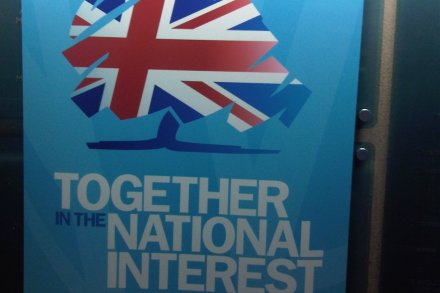
Has somebody stolen the Tory Party? A stranger walking around here would have no idea that its their conference. The word "Conservative" or "Tory" is nowhere to be seen. Just a slogan, "Together in the national interest" – a form of words that Cameron has repeatedly used to describe the coalition. As I say in my News of the World column today, Cameron will this week perform the impossible – to de-Tory the Tory conference and make them love it. There is plenty Tory red meat being served: welfare reform, school reform. It wouldn't susprise me if an announcement on keeping Trident is made this week. So the activists are happy. They also know that there is less than three weeks to the spending review and the battle that accompanies it, so they are in loyalty mode.

How Osborne and IDS reached agreement

I have found out a little more about the Universal Credit – and how the arguments over the summer were resolved. First, the backdrop. Money was always going to be a problem. This policy is about saving lives, not money. Right now, we pave the road to welfare dependency, creating a vacuum in the labour market that sucks in workers from overseas. Under Brown, the Treasury accepted this: cheap workers pay tax too, and as do companies who profit from them. Result: tax receipts up, but never fewer than 5 million on out-of-work benefits throught the boom years. The IDS plan was not sprung on Osborne. As I blogged a while ago, it was Osborne who suggested bringing him back – to implement this very policy.

Society 3, The State 0

Cameron and Osborne may just be about to pull off something incredible. This time last year, The Spectator ran a cover story about a new proposal which we could revolutionise welfare: the Universal Credit. It was an IDS idea: he’d sweep away all 50-odd benefits, and replace it with a system that ran on a simple principle – if someone did extra work, they’d get to keep most of the money they earned. It meant a bureaucratic overhaul, of a system that controls the lives of 5.9 million people. The resistance from HM Treasury, the architect of the tax credit system, was as fierce as it was predictable.

Double deficit

What's at the heart of the row over defence funding? George Osborne hinted at it today when he told the Telegraph that “frankly, of all the budgets I have seen, the defence budget was the one that was the most chaotic, the most disorganised, the most overcommitted”. The problem is that during the Labour years, various accounting scams were deployed to shunt costs further into the future - but this was not matched by resources. So they would, for example, delay an order by two years. There would be a price to pay for this delay, but it would be a cost that came after the election so Labour didn't mind. (One must remember that HM Treasury behaved disgracefully under Brown's instructions, concealing debt and adopting a 'scorched earth' strategy).

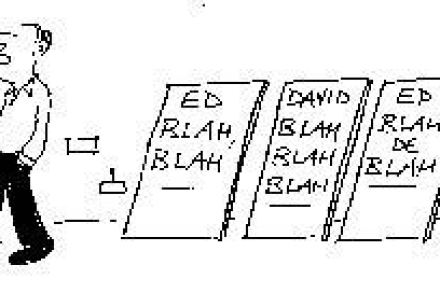
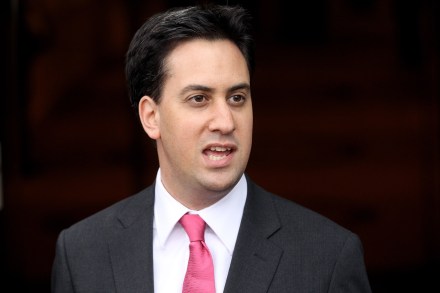
Ed Miliband owes his victory to the unions, and whatever pact he made with them may haunt him

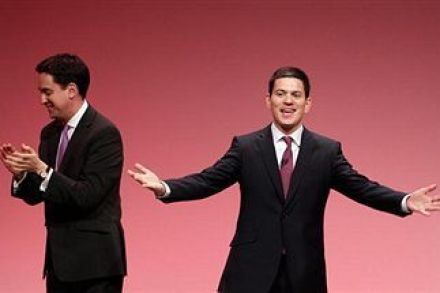
Fraser Nelson reviews the week in politics At Labour party conference in Manchester last week, David Miliband’s supporters could be spotted at 20 paces. They were the ones walking around in a daze, still not quite able to take in what had happened. They felt that their man had not so much lost as been assassinated, by a trade union hit squad which now seems to hold the balance of power in the Labour party. In the bars, some of Miliband’s campaigners were trying to reconcile themselves to the way elections are fought within the party. ‘They stole it fair and square,’ one grumbled. There was no talk of fightback. The defeat is final.

A small step for Labour, not a giant leap

I had expected Ed Miliband to do pretty well in the polls. He's unknown, and voters haven't had a chance to dislike him yet. That's not an insult – familiarity breeds contempt in politics, and the public are normally quite quick to give a new guy the benefit of the doubt. Witness the Clegg bubble. But tomorrow's Guardian shows precious little sign of a conference bounce. The two parties were level before the conferences – a remarkable achievment for a leaderless party. The Tories took three years to do the same. It was one of many reasons that inspired our cover story last week, "Labour leaps forward". The illustration, by Morten Morland, was a horse without a rider. What might Labour achieve with a jockey?

Pastures new for David Miliband?

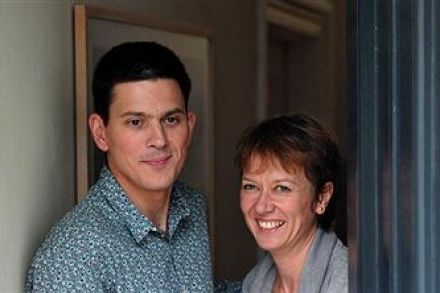
David Miliband's logic is difficult to fault. If he stayed, he would be treated as the torch bearer for those disgruntled Labour members who feel they were robbed. Without him, such people have no one to turn to. New Labour will now dissolve. 'Progress' - supposedly for the next generation of Blairites - held their meeting in a Manchester venue named the Comedy Store and that says it all. Game over: as Neil Kinnock put it last night "I've got my party back".   No matter how loyal he would be, David Miliband could not but be seen as a focal point for the (many) Labour MPs who hate all that. Sure, it is a bit odd his saying on Monday "the fightback starts here" and on Wednesday "well, good luck with it guys - I'm offski". But it's better than the alternative.

Plugging the leak

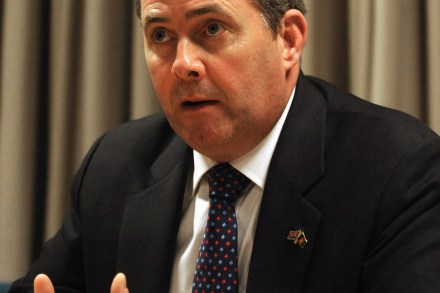
So did Liam Fox leak the letter? Only if he is suicidal. He's been around long enough (having been a frontbencher from the Major years onwards) to know how the game works. Briefing journalists is one thing, leaking a private letter is utterly counterproductive. It will make it harder for him to get the settlement he wants, and it will damage him by making him look as if he were responsible for it. I gather that the MoD is in a state of terror right now, with phone records and emails being trawled to find the guilty party. And whoever did this has such a crude understanding of media spin that they might well have been stupid enough to be caught. But in the history of Whitehall leak inquiries, the guilty party has never been discovered.

The penny drops

David Miliband is a tease. The speech he just gave was one of his best: it was self-deprecating, had gravitas, humour, and he spoke down to the Tories, telling William Hague what statesmanship was about. A monstrous conceit, CoffeeHousers may argue, but a Labour leader needs a bit of that; to make out that he's the real leader-in-waiting, up against lightweights. There was his trademark little bit of grit in the speech: he praised the troops, the Afghan mission and criticised Cameron for reducing British diplomacy to trade missions (Con Coughlin made the same point in a Spectator cover piece recently). My point: that this was a measurably better speech than the one his little brother made on Saturday. And I'll bet it's better than the speech Red Ed will make tomorrow.

Will Ed Miliband face facts?

I knew that David Miliband had lost the moment I saw him walk in the room, smiling like Michael Portillo on election night 1997. And when I saw Ed Balls look of pure murder: his enemy had won. Time to destroy. We saw a tension in this result: the MPs and members leaned towards David, who had a tough message on the deficit, who defended the Iraq war, who basically had an agenda for government. Whereas Ed Miliband's agenda is for opposition: he'll be marching alongside the unions the day before Osborne's spending review. As I say in the News of the World tomorrow, Ed will ooze left wing morals and righteous anger and that will work well in opposition. But as Michael Foot found in 1983, it means you strike the country as being not quite serious about government.

Swedish conservatives bucked the recession by lowering taxes – and won re-election

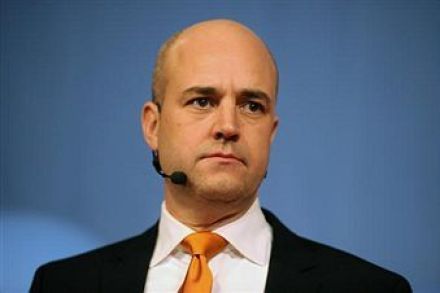
Fraser Nelson reviews the week in politics For decades, conservatives have played an important role in Swedish politics: they are there to be defeated. They advocate lower taxes, and are duly accused of planning savage cuts. So the voters traditionally stick with the Social Democrats who have held power for seven of the last eight decades. Every other decade Swedish conservatives come on for some light entertainment, before being booted out after a term. Never in modern Swedish history has a conservative prime minister been spared this fate. Until now. This week Fredrik Reinfeldt, a bald and deeply dull 45-year-old who communicates with David Cameron by text message, is celebrating the first re-election in history of his party, the Moderaterna.

Another obstacle in the way of free schools

A few weeks ago, I wrote a cover story about how teachers' unions are trying to strangle the Gove schools agenda at birth. But I fear it is facing an even greater, more immediate threat: basic bungling by government departments. The FT today says that the Department of Transport wants to make sure that local authorities keep the right to veto a new school. Armed with such a weapon, it is a sure way of crushing any competition. The DoT's argument is staggeringly banal: that a new school may play havoc with the traffic. If you're a local authority, wanting to use any means possible to stop a new school competing with the ones you run, it's all the excuse you need.

Low taxes work

I ration my writing about Sweden. As CoffeeHousers know, I can extol its virtues with room-emptying conviction. But it's now a few days since its election, and as far as I can tell no English publication has told the extraordinary story of its conservative victory - and the economic turnaround driven by the largest tax cuts in Swedish history. It is now the fastest-growing economy in the West. I tell the story in the political column of this week's magazine (subscribers, click here), but I will summarise it for CoffeeHousers here. Normally, conservatives are elected in Sweden as a kind of light relief, to punctuate decades of leftist rule. They're usually thrown out after one term, and the social democrats get back to taxing the bejesus out of the country.

The trouble with Cable’s posturing

What are we to make of the fact that No.10 gave the thumbs-up to Vince Cable’s bizarre anti-capitalist rhetoric today? “Capitalism takes no prisoners and it kills competition where it can,” he fumed – and you can argue that, technically, he is paraphrasing Adam Smith. But he has been in politics long enough to know what signal his speech sent out (and the reaction it would trigger). Mood music counts for a lot in politics, and in business. And the mood music from this government sounds like a bunch of politicians happy to tax the bejesus out of the high-paid - regarding them as ATM machines to be raided, rather than wealth creators to be welcomed. It's time to ask what harm all this posturing is doing.

Clegg’s little bit of political S&M

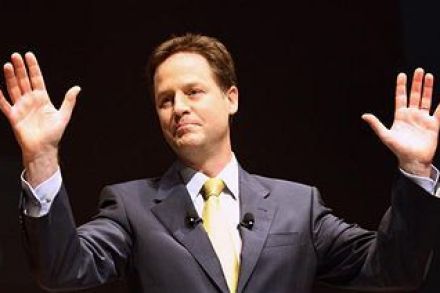
Nick Clegg is making life horribly difficult for those of us on the right who spent the last few things portraying him as a figure of fun. He is now delivering the best speeches of anyone in the Cabinet, characterised by a quiet sense of urgency and direction. He’s in the business of making the case for cuts. He spoke to a party that spent much of the last decade attacking Labour from the left. For those delegates, it was a little bit of political S&M. It must have hurt - but they liked it. “We haven’t changed our liberal values,” he said - and then went on justifying Conservative policies in a classic liberal context. And he did it so much better than many Tories have been able to.

The Lib Dems face the public

The most brutal session the Lib Dems will see is the studio audience currently assembled by Victoria Derbyshire for her Five Live phone-in. It’s a rare event in conference time, where the general public are put into contact with the politicians. The result is normally a bit of a bear pit, and for that reason it’s become one of my favourite conference events - I’m in the audience, in the rather beautiful Liverpool Maritime Museum. And poor Danny Alexander is in the bearpit. “This is toughest job I’ve ever had,” he said at the offset. Erm, yes - the competition being his time as press officer of the Cairngorms National Park and a press officer for the ‘yes to the Euro’ campaign.

Live-blogging from the fringe: “Whose schools are they anyway?”

So where will the tension be at the Lib Dem conference? Easy: the free schools agenda. Clegg backs it, and when David Laws took over the agenda he backed Gove's market-based reform. But the teaching unions are in a fight to the death against it. The Gove agenda would put power in the hands of parents, whereas it currently rests with unions and local authorities. The latter two have beaten everyone who has spoken about reform, from Callaghan to Thatcher to Blair. But Gove represents an existential threat. Luckily he is in coalition with the Lib Dem MPs, with whom both unions and local authorities have massive influence. The NUT and NASUWT have huge stalls here, and plenty staff to canvass Lib Dem members.

How I learned to stop worrying and rate Nick Clegg

If Nick Clegg was a weak-willed, crowd-pleasing charlatan the the front page of yesterday's Independent would not have read “Clegg: there is no future for the Lib Dems as a left party”. Turning up to a Lib Dem conference and saying there's no point in being a party of lefty protesters is like William Shatner telling delegates at a Star Trek convention to "get a life". He wants them to be a mature party of reform – many of them prefer to throw stones. His stance at conference is certainly courageous. And it fits a theme. For weeks now, Clegg has been surprising those (myself included) who did not take him seriously, by emerging as one of the boldest and most articulate advocates of reform.

Introducing the new-look Spectator

You may notice that today’s Spectator looks a little different. We have updated our design, introducing some new features and bringing back some old ones. I suspect that a good number of our readers will not really notice the new design as such - just, I hope, that the magazine looks better. As ConservativeHome says, why tamper with a winning formula? I know that many CoffeeHousers would not dream of paying for dead-tree publications, but for those who are interested in these things I thought I’d run through what we have done, and the thinking behind it. The problem really hit me last Christmas, when a friend of mine bought a subscription for his father. I wrote his father a letter - basically, a user’s guide to The Spectator.