Edward Howell

Edward Howell is a politics lecturer at Oxford. He was involved in launching the BBC World Service in North Korea.

How North Korea is supporting Hamas

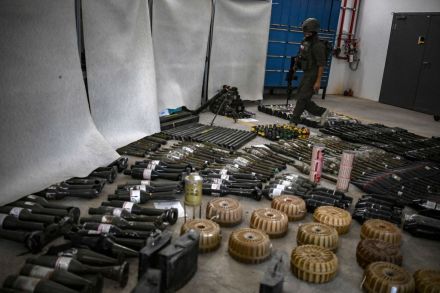
First, it was Russia’s war with Ukraine. Then, it was Hamas’s terrorist attacks against Israel. Both of these events, in gross violation of international law, have certainly not escaped the watchful eyes of that infamous state sponsor of terrorism, North Korea. Earlier this week, a Hamas official said North Korea is ‘part of [Hamas's] alliance’, and he intimidated Israel and the United States with the words that: ‘the day may come when North Korea intervenes’ by unleashing a direct strike against the United States. Recent events have clearly demonstrated that Hamas does not just want to destroy the lives of Israeli civilians, but the very existence of the Israeli state. Similarly, Israel is a state that North Korea does not recognise.

Don’t read too much into North Korea releasing a US soldier

Perhaps he was not so useful after all. Yesterday, North Korea’s decision to expel Private Travis King, just over two months after the US soldier bolted across the inter-Korean border, quashed speculation that he would be held captive for years. A month after admitting that King had been detained, Pyongyang decided to ‘expel’ the man who ‘illegally intruded’ into the country. Once again, he remains in custody, but this time in the hands of the United States, as they decide his fate following not only the border-crossing, but also charges of assault and destruction of public property while stationed in Seoul.  True to form, North Korean state media revealed little about why the government decided to free the US soldier.

The unholy alliance between Kim Jong-un and Putin

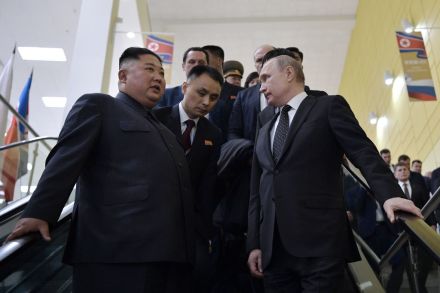
On 27 July, while commemorating the 70th anniversary of what North Korea perversely terms its ‘victory’ in the Korean war, Kim Jong-un proudly gave a guided tour of his intercontinental ballistic missiles, drones and missile engines. The lucky visitor was none other than Russian defence minister, Sergei Shoigu. Later that day, Shoigu stood next to the Supreme Leader as they watched North Korea’s rockets paraded across Kim Il Sung square.   Now it seems that Shoigu’s visit – the first time a Russian defence minister had come to North Korea since the collapse of the Soviet Union – has paid off. Today, it has been reported that Kim Jong-un is preparing to travel to Russia to meet Vladimir Putin to discuss the sale of weapons.

Why North Korea is accusing the US of racism

After nearly a month of silence, North Korea has finally spoken out about Travis King – the US soldier who dashed across the border while on a guided tour from South Korea.  To the dismay of observers, however, the press release by the state-controlled media outlet, the Korean Central News Agency, offered no details as to his current condition or whereabouts.  North Korea’s own narrative portrays its people as the purer of the two Koreas, forced to live in an evil world led by its ultimate adversary, the United States The North Korean announcement did, however, state that King entered the country hoping to seek political asylum, because he was seeking to flee ‘inhumane maltreatment’ and ‘racial discrimination’ in the US army.

What has North Korea done with Travis King?

Silence is not a common feature in the North Korean regime’s playbook, and this year is no exception. Only this past week, North Korea’s flurry of ballistic missile launches has been complemented by a cornucopia of threats from senior officials – including Kim Yo-jong, the sharp-tongued sister of Kim Jong-un – who have upped the ante in their anti-US rhetoric. The ruling regime repeated that dialogue with the United States is off the table. Not only that, the North Korean defence minister also warned that the deployment of a US ballistic missile submarine – the USS Kentucky – to South Korea could ‘fall under the conditions’ for the isolated state to use its nuclear weapons.

Kim Yo-jong is fast becoming North Korea’s propaganda puppeteer

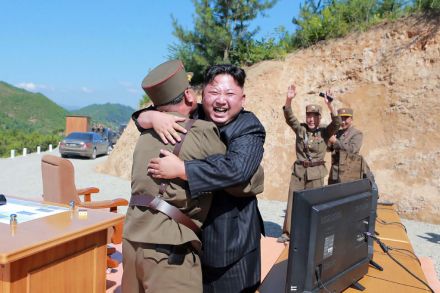
If at first you don’t succeed, try, try again. Such is the axiom underpinning North Korea’s (DPRK) approach towards its nuclear and missile development. The hermit kingdom’s acceleration in its nuclear and missile capabilities demonstrates how Kim Jong-un is working down his wish list of expanding his country’s conventional and unconventional weapons, which he declared in January 2021. Since then, the world has witnessed launches of solid-fuel intercontinental ballistic missiles (ICBMs), combat drones, and, most recently, military reconnaissance satellites. Last Wednesday’s launch of a Chollima-1 rocket was nothing to celebrate. It failed to ignite before hurtling into the Yellow Sea, which separates the Korean Peninsula from mainland China.

Is North Korea about to test another nuke?

North Korea’s spring has started with a bang. The United States and South Korea have staged their largest joint military exercises in five years, and Pyongyang’s rhetoric is becoming more aggressive. Kim Jong Un has warned that the US and South Korea would ‘plunge into despair’ for holding the drills, as he fired two missiles into the sea between the Korean Peninsula and Japan. Kim’s regime has already fired more than 20 missiles this year, launching increasingly ambitious and sophisticated ballistic and cruise missiles. Earlier this week, North Korean state media proudly claimed that the regime had developed tactical nuclear weapons for the first time.

Is Kim Jong Un’s daughter being lined up to lead?

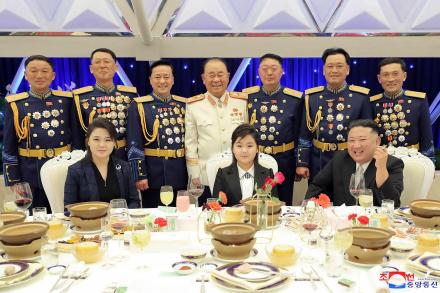
The photograph shows a happy family. After a 35-day public absence, the corpulent Kim Jong Un has been pictured this week with his wife Ri Sol Ju, and sitting between them their daughter, Kim Ju Ae, as they dine in the presence of North Korean military officers weighed down with medals.  Is Kim Jong Un’s daughter being lined up to take over North Korea? The photograph has only heightened speculation that the stage is now being set for her to be leader, as the fourth generation of Kim to rule the country. This week North Korean state media gave Kim Ju Ae the honorific of ‘respected’ when writing about the event, an adjective which had previously been bestowed upon leaders of the DPRK and their spouses.

North Korea’s nuclear ambitions are growing faster than ever

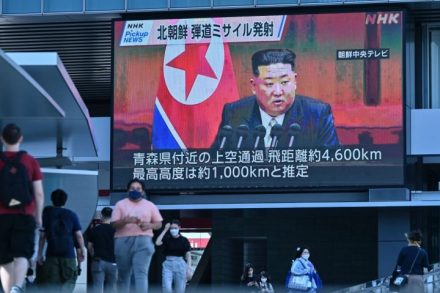
While some people start the day with a bowl of cereal, North Korea chose to greet Thursday with the launch of a ballistic missile. The missile, believed to have intercontinental capabilities, failed mid-flight, but it was nonetheless significant. North Korea fired it on the second consecutive day of weapons testing held by the country this week: on those two days it launched more missiles than it had done in the entirety of 2017, with over 23 missiles and over 100 artillery shells on Wednesday alone. North Korea’s missile test caused international havoc. South Korean news broadcasts were interrupted by air raid sirens urging the population to seek shelter; Japan issued evacuation alerts to residents on Honshū, the country’s largest island.

Why did North Korea fire a missile over Japan?

It was a new dawn, a new day, and a new North Korean missile test. The land of the morning calm – as South Korea is affectionately-nicknamed – awoke to the launch of the fifth North Korean ballistic missile in ten days. Over the past ten months, the international community has become accustomed to a growing number of North Korean missile launches, of an increasingly diverse range of missiles. Kim Jong-un’s determination for North Korea to become a nuclear state, and be recognised as such is only heightening. Russia and China are now more reticent than ever to side with the West and support sanctions on North Korea Last night’s launch was of a Hwasong-12 intermediate-range ballistic missile.

Kim Jong-un declares victory over Covid

Kim Jong-un’s notorious sister is back in the limelight. Not only is Kim Yo Jong reiterating her hostile words against South Korea and the United States, but she is also seeking to reinforce the loyalty of the North Korean people to her brother. How better to combine the two than to infer that the Supreme Leader had, in fact, caught coronavirus. When North Korea first disclosed cases of a ‘fever’ in May this year, the world waited to see how the country’s rudimentary healthcare system and largely unvaccinated population would cope. Nearly three months after that revelation, Kim Jong-un has ‘declared victory’ over coronavirus.

North Korea is in the midst of a Covid catastrophe

As Covid spread throughout the world in 2020, North Korea slammed shut its borders. It was an approach that has paid off, until now. No longer Covid-free, the country's state media has admitted that cases – and deaths – are exploding. Since April, over 1.2 million cases of a 'fever' – a euphemism for coronavirus – have been detected. North Korea's dictator Kim Jong-un has said the arrival of the pandemic is a 'great turmoil'. Hundreds of thousands of cases – and 19 deaths – were reported yesterday alone in North Korea. In a country that prizes secrecy above all else, the true toll is likely to be even higher.

How North Korea’s crypto hackers are funding Kim’s missile habit

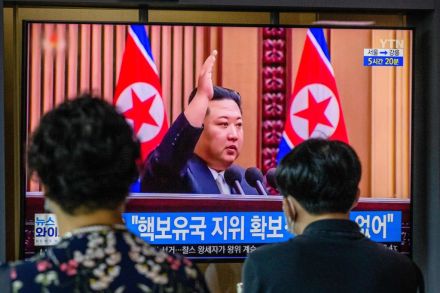
North Korean leader Kim Jong-un vowed last night to ramp up his country's nuclear arsenal. Such weapons don't come cheap, especially for a state targeted by stringent sanctions and with a stagnating economy. So where does the money actually come from? Kim Jong-un appears to be using cyberspace – and stolen cryptocurrency – to pay for his expensive habit. Pyongyang's global army of hackers are often labelled as technologically backward. The reality is rather different. Unfortunately for the country's victims in the West, Kim's cyber crooks are as sophisticated as they come. A UN report earlier this year concluded that the country has used stolen cryptocurrency to fund its weapons programmes.

Can Kim Jong-un survive for another ten years?

Ten years ago today, at noon on 19 December 2011, the veteran newsreader and ‘Pink Lady’ Ri Chun-hee, donned an unusual black hanbok. Struggling to hold back her tears, Ri announced that North Korea’s Dear Leader, Kim Jong-il – a recluse workaholic who had led the country for 17 years – had died. On the same day, his twenty-something second son, Kim Jong-un, was duly anointed as the ‘great successor to the revolutionary cause’. Today’s anniversary does not reflect well on Kim’s legacy as leader of North Korea. He now rules a state crippled by economic problems, beset by factionalism in the ruling party, and which has sour relations with both the US and South Korea. After ten years in power, how did it all go so wrong for Jong-un?

North Korea’s cryptic crisis

For years, the West has tried to cajole the North Korean regime using sanctions, much to the frustration of Kim Jong-un. But now in the era of Covid, Pyongyang has been forced to inflict greater economic harm on itself, entrenching its international isolation and the suffering of its people. The hermit kingdom was one of the first countries to close itself off. The border with South Korea is already one of the most fortified in the world, while the northern Chinese perimeter, a vital point of trade, was sealed in January 2020 before many in the West had even heard of Covid.

The increasing cruelty of the North Korean regime

On a humid summer’s day in Singapore three years ago today, Donald Trump became the first incumbent US president to meet with his North Korean counterpart. For all of the summit’s theatre, Kim Jong-un’s pledge to ‘work toward complete denuclearisation of the Korean peninsula’ seems unlikely to be realised. Three years on, and the country shows little intention of either abandoning its nuclear ambitions or reforming Pyongyang. Instead, the regime has tightened its control over society, not least ideologically, after the failure of the Supreme Leader’s five-year economic plan. In 2018, the leadership assured North Koreans that the country had achieved its primary geopolitical aim of becoming a ‘fully-fledged nuclear state’.

Biden must learn from Trump’s mistakes on North Korea

Anniversaries are usually celebratory occasions, but not this one. It's now been two years since the infamous Hanoi summit between Donald Trump and Kim Jong-un, and there is precious little to show other than an important lesson in how negotiations with North Korea can sour.  Joe Biden is now nearing his first one-hundred days in office. Little has been said about dealing with the North Korea problem. But one thing is for sure: a US-North Korea summit is far from imminent. Following their first encounter in Singapore in June 2018, it suited Trump and Kim to meet again. For both leaders, the theatre and optics of their gathering was too good to resist a second outing. It is then that things appeared to go wrong.

What will Joe Biden do about North Korea?

Kim Jong-un marked the new year by treating North Koreans to several days of lengthy speeches followed by a display of North Korea’s nuclear and missile capabilities. Behind this show of power lies a truth that Jong-un and his country faces a series of unprecedented challenges this year. Sanctions continue to bite and, combined with the coronavirus pandemic, the North Korean economy remains paralysed. Yet this doesn't mean the task for Joe Biden in dealing with a problem like North Korea will be easy: in fact, with domestic problems exacerbating, it will make Biden’s task even harder. In 2018, the North Korean leader set out a ‘new strategic line’.

Does Kim Jong-un want the ‘dotard’ or the ‘snob’ to win?

Donald Trump has made plenty of enemies in his time as president, but as the US president himself has claimed, he also gained an unlikely friend: Kim Jong-un. North Korea will be watching the result of next week's US election closely. But would Pyongyang prefer four more years of an impulsive Trump, or a new Biden administration in its place? Both leaders have not been immune from denigrations from the top of the North Korean regime. Trump may have been decried as a 'dotard', but his Democratic challenger has been degraded as a 'low-IQ snob' and an 'imbecile bereft of elementary quality as a human being'; a 'rabid dog' who 'must be beaten to death with a stick.

Kim Yo Jong’s growing role is bad news for peace in Korea

The halcyon days of 2018 seem very distant. Two years ago, North Korea sent a delegation to the Pyeongchang winter Olympics; three summits took place between the leaders of the two Koreas; president Trump and Kim Jong-un wined, dined, and produced what John Bolton terms – in his latest book – a 'substance-free communiqué' in Singapore. Now the era of newfound warm relations between Pyongyang and Washington seems to be over.  The 'permanent and stable peace regime on the Korean peninsula', to which the two Koreas committed in April 2018, is anything but fulfilled. And if recent events show, relations are in danger of deteriorating rapidly.