Druin Burch

Druin Burch is a consultant physician, a former junior doctor, and the author of books on history and medicine.

Respect thine elders

Before the arrival of strawberries, and not long after the coming of the swifts, the elder salutes the coming of summer after its own fashion: emerging from roadsides and hedgerows, gardens and wasteland, and scenting them with its blooms. Almost a century ago, Maud Grieve, in her 1931 Modern Herbal, said ‘that our English summer is not here until the elder is fully in flower, and that it ends when the berries are ripe’. At this time, when thorn blossom – which made our hedgerows look set for a wedding – has faded, the elder, like cow parsley, offers its own floral exuberance.

NHS ‘spy scales’ won’t tackle childhood obesity

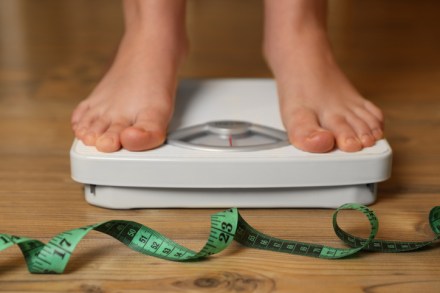
NHS England, ostensibly wishing to respond to the challenge of childhood obesity, announced yesterday the introduction of 'spy scales' to monitor children’s weight remotely. These devices, which conceal the user’s weight, transmit data to an app that praises kids when they lose weight and offers guidance when they don’t. But NHS England is missing the point. Whether the scales are justified depends entirely on how much they work to help kids lose weight, and NHS England appears to neither know nor care. That’s a pity, because knowing and caring about what works is its job.

The trouble with GPs

This week, Wes Streeting – defending Labour’s rise in National Insurance contributions and seeking to fend off the surging Reform party – announced an extra £102 million to improve primary care. The money, the Health Secretary explained, would be given to a thousand surgeries that were prevented from taking on new patients by not having the building space to see them in. General Practice has collapsed. But will Streeting's funds really help fix it? Many readers will be able to recall the GPs of their youths, doctors who knew them and knew their parents.

What’s wrong with national stereotypes?

Saying that national generalisations have fallen out of fashion is an understatement. Stereotypes have become less common and less tolerated. But not all is unblemished improvement, and something of value has been lost. National generalisations – often misnamed racial – now veer close to thought crimes. A pity – national generalisations are a basic tool for making sense of the world, and for understanding how people’s backgrounds shape their values, character and culture. Abusus non tollit usum – that something can be misused does not mean it should not be used. As a man with a very limited range of anecdotes and conversational gambits, I frequently repeat myself. Handily, I work as a hospital doctor, supported by an ever-shifting cast of juniors and students.

Why I’ve given up on bacon

Having long been a man whose spirits wilted if meat was not the centre of his meal, I have become almost vegetarian. It’s routinely predictable for age to lead us astray from our youthful socialism, but I find my dietary change more difficult to explain. My younger self would view my politics with horror and my diet with incredulity. I remain partial to eating flesh, but the conviction that any plate without it must be a side dish has evaporated. For most of my life, meat and two veg was my credo – and if the two vegetables were ketchup and mustard, then all the better. But these days I often cook without remembering to include anything that once had blood – and am bemused to find myself content. The vegetable delivery company Natoora bears some of the blame.

Oxford is right to remember its German war dead

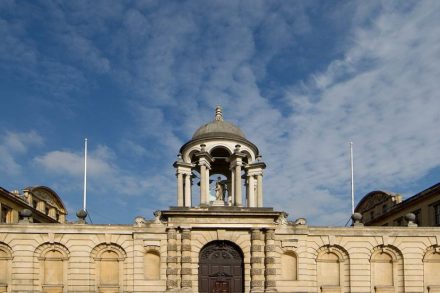
The Queen’s College, Oxford, has put in a planning application to add the names of five alumni who died fighting for the Germans to its first world war memorial. Richard Tice, deputy leader of Reform, expressed his outrage at the plan earlier this week. 'Where will this wokery end?' he told the Telegraph. 'War memorials in the UK should be to remember those who paid the ultimate sacrifice to protect and defend the Allied nations.' The Great War hit Oxford colleges particularly hard. 20 per cent of the 15,000 who enlisted died. Officers led from the front, which was reflected in their mortality rate – almost double the overall average. 'There is some corner of a foreign field' runs in both directions William Spooner, warden of New College, took a stand.

Have we finally developed tastebuds?

We British are not famed for culinary daring. An adventurous meal has traditionally been one that lacks potatoes. Nose-to-tail eating is mostly anathema to a nation that prefers the blandest part of the chicken because it’s the easiest to cut up. Poverty and shortage were not enough to spur our creativity during postwar rationing. The food writer Elizabeth David recounted a Scottish schoolmaster’s wife who recoiled in horror at her freshly gathered chanterelles. A fisherman did the same on spotting her with a crab, both reacting with the same appalled cry: ‘You’re never going to eat those dirty things?’ Few in Britain praise dishes of pig’s ears or chicken knees, but over the past 30 years our culinary character has improved.

MPs deserve more than a £2,500 pay rise

It looks set to be a happy April for MPs who are in line for a 2.8 per cent pay rise, lifting their salaries to £93,904. Your reaction to that figure likely depends on how much you earn. So does mine – and since I’m about to argue that MPs are underpaid, it’s only fair I give a sense of my own finances. I’ll stay schtum about my books and biotech startup, but I’ll admit – no boasting intended – that this piece will net me, after tax, somewhere in the mid to high two figures. Can it be right that we pay our MPs significantly less than hospital consultants? As my byline makes clear, I’m also a consultant physician. Our salaries, like those of MPs, are public information.

No one is immune from a groupchat blunder

On Monday, Jeffrey Goldberg, the editor of the Atlantic, told the entertaining story of being added, alongside Pete Hegseth and J. D. Vance, to America’s group-chat plans to bomb Yemen. Not the most obvious stuff of comedy, perhaps. Yet the affairs of men turn farcical precisely when they’re trying to be most serious. The cast here included the US National Security Advisor, the Secretary of Defence, the Vice President, the White House Chief of Staff, the Director of the CIA, and a handful of others holding Importantly Capitalised roles. Much is already being made of the fact that those involved have previously frothed at the mouth about their opponents’ sloppiness with classified information, but the greater point is not about Republican hypocrisy.

Have we become too reliant on antidepressants?

One in seven British adults – almost nine million people – now take antidepressants. Yet a study attached to the University of California San Francisco suggests we don’t actually know if they should. The paper from the US, led by William Ward and published last month, exposes a glaring flaw: American trials test these drugs for months, while in the real world patients take them for years. In the UK, for example, just over 25 per cent of patients have been taking antidepressants for five years. This gap raises a question medicine has faced before: how do we know our treatments work? Antidepressant usage has soared but happiness has not For centuries, doctors did more harm than good.

Have you got compassion fatigue?

Experts warn that doctors like me risk a condition known as ‘compassion fatigue’ – an emotional numbness that comes from too much caring for too long. But aren’t we all on the edge? Distant hardships are now visible as they happen, and the sense that victims are everywhere becomes vividly real. Newsreaders, documentary makers, editorialists, politicians and campaigners imply we’re shallow unless consumed by the wretchedness they describe. I meet the unfortunate, struggling and afflicted on my ward rounds. And I deal with those who have been made frail by age, bad luck and bad choices. Obstetricians get flowers and wine for helping bring wonder into people’s lives, orthopaedic surgeons for fixing hips and restoring freedom. I tend not to get gifts.

Sydney Smith’s love for life lives on

Why should anyone care about Sydney Smith, who died on this day in 1845? 180 years have diminished the stature of his worldly achievements. He was an Anglican cleric who campaigned for an end to slavery, against the oppression of Catholics, for moral reform in the church and democratic reform in parliament. His political arguments have lost most of their interest in a world where those questions feel settled.  Smith helped found the Edinburgh Review. He suggested the motto 'tenui musam meditamur avena' – ‘we cultivate literature on a little oatmeal’ – but this was 'too near the truth to be admitted, and so we took our present grave motto from Publius Syrus, of whom none of us had, I am sure, ever read a single line', he said.

Why the NHS is failing

The NHS is swallowing more money than ever, yet delivering worse results. Now its failings are not only hurting patients, but also weighing down the economy. Employment in healthcare, said the Bank of England in last week’s Monetary Policy Report, has surged since 2019, while productivity has dropped. The Bank downgraded its 2025 growth forecast for the country from 1.5 per cent to 0.75 per cent, blaming the public sector – which has ballooned in size and shrunk in effectiveness – and healthcare in particular. After thirty years working in medicine, I’m not surprised. I have seen a few genuine improvements, but I have also seen the NHS become far more bloated and less efficient. In hospitals, more doctors – and, in particular, more senior ones – look after fewer patients.

Dinner for one is the best way to spend Valentine’s Day

This Valentine’s Day, as the nation does its duty and celebrates by dining out, often in stilted discomfort, it occurs to me that many of my finest restaurant experiences have been in singular company. No offence is meant to my wife, whose conversation has remained fascinating to me over the 21 years of our relationship. And no snub to my friends, either, especially those – a non-trivial number – with whom friendship has been founded on sharing long lunches and prolonged dinners. But in a life filled with superb restaurant meals, some of the best, I realise, are those I have spent alone. Valentine’s Day triggers these thoughts, with its annual rush for restaurant reservations amongst the nation’s couples.

Doctor Who fans – and its writers – need to grow up

Doctor Who, which started back in 1963, is often spoken about with a curious reverence as though it were something other than trash TV of varying quality. Unhealthy infatuation is not confined to the show’s viewers, as is obvious from the BBC’s recent announcement about the show’s new writers. Pulp television can be joyful, unless it starts believing it’s art “Scripting the best TV show of all time is truly a dream come true,” says Juno Dawson, who has just been announced as one of them. “I started watching when I was ten in Nigeria,” explains Inua Ellams, another new recruit; “The show invited me to dream, to live beyond my reality. Getting to write for the show felt like touching God,” he adds.

The true value of going to Oxford

Difficult, I know, to spend your life dreaming of having gone to Oxford. This year’s offers have just been announced and Cambridge’s are imminent. I feel for those who miss out, but I have some words of comfort. My late mother told me I announced my desire to study at Oxford aged seven, visiting the city on a family day trip. My earliest memories of the university, though, came from books: those whose dust jackets announced the name of the author’s college – especially when they mentioned taking a First. My luck was in coming to understand that the Oxford I longed for was always fictional Books open a world of dreams, and while my undeveloped tastes ran to witches and elves and orcs, I noticed where Tolkien and his friend C S Lewis taught.

When did the A&E winter crisis become the norm?

Not a winter goes past without hospitals overflowing; the situation is so predictable it deserves a better word than 'crisis'. Yet for patients and staff the sense of crisis is real, and connoisseurs of this annual event say that this year’s is especially dire.  Health Secretary Wes Streeting has spoken of his distress and shame, saying the state of A&Es breaks his heart. Hospital and ambulance trusts have been declaring critical incidents – as they do every winter. The real problem is not that this year is merely worse than the last, it’s the trajectory. Something is rotten in the state of our healthcare. The mantra of 'care in the community' has translated into care in the corridor Back in early 2014, 150 people waited more than twelve hours in A&E for a bed.

The addictive joy of cookbooks

New Year's resolutions are famously frail, so pick one that’s achievable. Half of the year’s cookbooks are sold in December: this January, let one shine in use, not simply rust unburnished. As an inveterate buyer of well-chosen recipe books, and a victim of gifting that I’m ungrateful enough to call less discriminate, I have never lost my faith. Each cookbook, I believe, is the one that will change my life – despite being at the stage when I need to smuggle them in so as not to dampen my wife’s belief in the existence of our ‘one in, one out’ rule. Cookery books have the allure of opening up an avenue to a better life The passing years offer their own excuses for buying more. A man loves the meat in his youth that he cannot endure in his age.

Life and death on the hospital ward at Christmas

Most people shudder at the thought of working on Christmas Day. Not me. I've worked as a hospital doctor since 2000 and, most years, come 25 December, I'll be doing the ward round. As a junior doctor, I didn't have much choice about doing the Christmas Day shift. But since becoming a consultant, I have usually volunteered for Christmas, and am used to working when others are tucking into their turkey and opening their presents. How lonely must those souls be to regard staying on the wards as festive? I recall being bad tempered one early start, knowing I was missing my two young kids’ excitement, but otherwise the pattern has been a joy. For all its failings, the NHS has a capacity for camaraderie.

Lucy Letby and the killer nurse I worked with

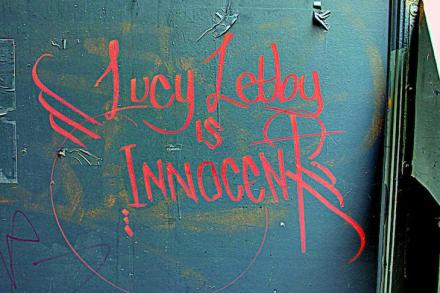
Most of those commenting on the guilt or innocence of Lucy Letby – the nurse who is serving 15 whole-life jail terms for murdering seven babies and attempting to murder seven others – don't know what it's like to work alongside a killer nurse. I do. Benjamin Geen, whom I worked with at Horton General Hospital in Banbury, Oxfordshire, took the lives of at least two patients during his time there. Something in the nature of our interest in murderers has a habit of making us forget logic Geen's case has, like Letby's, become popular with conspiracy theorists. Public fascination has been far greater with Letby. But the two cases share an attraction for those convinced that they have hit upon the 'truth'.