Druin Burch

Druin Burch is a consultant physician, a former junior doctor, and the author of books on history and medicine.

No one is immune from a groupchat blunder

On Monday, Jeffrey Goldberg, the editor of the Atlantic, told the entertaining story of being added, alongside Pete Hegseth and J. D. Vance, to America’s group-chat plans to bomb Yemen. Not the most obvious stuff of comedy, perhaps. Yet the affairs of men turn farcical precisely when they’re trying to be most serious. The cast here included the US National Security Advisor, the Secretary of Defence, the Vice President, the White House Chief of Staff, the Director of the CIA, and a handful of others holding Importantly Capitalised roles. Much is already being made of the fact that those involved have previously frothed at the mouth about their opponents’ sloppiness with classified information, but the greater point is not about Republican hypocrisy.

Have we become too reliant on antidepressants?

One in seven British adults – almost nine million people – now take antidepressants. Yet a study attached to the University of California San Francisco suggests we don’t actually know if they should. The paper from the US, led by William Ward and published last month, exposes a glaring flaw: American trials test these drugs for months, while in the real world patients take them for years. In the UK, for example, just over 25 per cent of patients have been taking antidepressants for five years. This gap raises a question medicine has faced before: how do we know our treatments work? Antidepressant usage has soared but happiness has not For centuries, doctors did more harm than good.

Have you got compassion fatigue?

Experts warn that doctors like me risk a condition known as ‘compassion fatigue’ – an emotional numbness that comes from too much caring for too long. But aren’t we all on the edge? Distant hardships are now visible as they happen, and the sense that victims are everywhere becomes vividly real. Newsreaders, documentary makers, editorialists, politicians and campaigners imply we’re shallow unless consumed by the wretchedness they describe. I meet the unfortunate, struggling and afflicted on my ward rounds. And I deal with those who have been made frail by age, bad luck and bad choices. Obstetricians get flowers and wine for helping bring wonder into people’s lives, orthopaedic surgeons for fixing hips and restoring freedom. I tend not to get gifts.

Sydney Smith’s love for life lives on

Why should anyone care about Sydney Smith, who died on this day in 1845? 180 years have diminished the stature of his worldly achievements. He was an Anglican cleric who campaigned for an end to slavery, against the oppression of Catholics, for moral reform in the church and democratic reform in parliament. His political arguments have lost most of their interest in a world where those questions feel settled.  Smith helped found the Edinburgh Review. He suggested the motto 'tenui musam meditamur avena' – ‘we cultivate literature on a little oatmeal’ – but this was 'too near the truth to be admitted, and so we took our present grave motto from Publius Syrus, of whom none of us had, I am sure, ever read a single line', he said.

Why the NHS is failing

The NHS is swallowing more money than ever, yet delivering worse results. Now its failings are not only hurting patients, but also weighing down the economy. Employment in healthcare, said the Bank of England in last week’s Monetary Policy Report, has surged since 2019, while productivity has dropped. The Bank downgraded its 2025 growth forecast for the country from 1.5 per cent to 0.75 per cent, blaming the public sector – which has ballooned in size and shrunk in effectiveness – and healthcare in particular. After thirty years working in medicine, I’m not surprised. I have seen a few genuine improvements, but I have also seen the NHS become far more bloated and less efficient. In hospitals, more doctors – and, in particular, more senior ones – look after fewer patients.

Dinner for one is the best way to spend Valentine’s Day

This Valentine’s Day, as the nation does its duty and celebrates by dining out, often in stilted discomfort, it occurs to me that many of my finest restaurant experiences have been in singular company. No offence is meant to my wife, whose conversation has remained fascinating to me over the 21 years of our relationship. And no snub to my friends, either, especially those – a non-trivial number – with whom friendship has been founded on sharing long lunches and prolonged dinners. But in a life filled with superb restaurant meals, some of the best, I realise, are those I have spent alone. Valentine’s Day triggers these thoughts, with its annual rush for restaurant reservations amongst the nation’s couples.

Doctor Who fans – and its writers – need to grow up

Doctor Who, which started back in 1963, is often spoken about with a curious reverence as though it were something other than trash TV of varying quality. Unhealthy infatuation is not confined to the show’s viewers, as is obvious from the BBC’s recent announcement about the show’s new writers. Pulp television can be joyful, unless it starts believing it’s art “Scripting the best TV show of all time is truly a dream come true,” says Juno Dawson, who has just been announced as one of them. “I started watching when I was ten in Nigeria,” explains Inua Ellams, another new recruit; “The show invited me to dream, to live beyond my reality. Getting to write for the show felt like touching God,” he adds.

The true value of going to Oxford

Difficult, I know, to spend your life dreaming of having gone to Oxford. This year’s offers have just been announced and Cambridge’s are imminent. I feel for those who miss out, but I have some words of comfort. My late mother told me I announced my desire to study at Oxford aged seven, visiting the city on a family day trip. My earliest memories of the university, though, came from books: those whose dust jackets announced the name of the author’s college – especially when they mentioned taking a First. My luck was in coming to understand that the Oxford I longed for was always fictional Books open a world of dreams, and while my undeveloped tastes ran to witches and elves and orcs, I noticed where Tolkien and his friend C S Lewis taught.

When did the A&E winter crisis become the norm?

Not a winter goes past without hospitals overflowing; the situation is so predictable it deserves a better word than 'crisis'. Yet for patients and staff the sense of crisis is real, and connoisseurs of this annual event say that this year’s is especially dire.  Health Secretary Wes Streeting has spoken of his distress and shame, saying the state of A&Es breaks his heart. Hospital and ambulance trusts have been declaring critical incidents – as they do every winter. The real problem is not that this year is merely worse than the last, it’s the trajectory. Something is rotten in the state of our healthcare. The mantra of 'care in the community' has translated into care in the corridor Back in early 2014, 150 people waited more than twelve hours in A&E for a bed.

The addictive joy of cookbooks

New Year's resolutions are famously frail, so pick one that’s achievable. Half of the year’s cookbooks are sold in December: this January, let one shine in use, not simply rust unburnished. As an inveterate buyer of well-chosen recipe books, and a victim of gifting that I’m ungrateful enough to call less discriminate, I have never lost my faith. Each cookbook, I believe, is the one that will change my life – despite being at the stage when I need to smuggle them in so as not to dampen my wife’s belief in the existence of our ‘one in, one out’ rule. Cookery books have the allure of opening up an avenue to a better life The passing years offer their own excuses for buying more. A man loves the meat in his youth that he cannot endure in his age.

Life and death on the hospital ward at Christmas

Most people shudder at the thought of working on Christmas Day. Not me. I've worked as a hospital doctor since 2000 and, most years, come 25 December, I'll be doing the ward round. As a junior doctor, I didn't have much choice about doing the Christmas Day shift. But since becoming a consultant, I have usually volunteered for Christmas, and am used to working when others are tucking into their turkey and opening their presents. How lonely must those souls be to regard staying on the wards as festive? I recall being bad tempered one early start, knowing I was missing my two young kids’ excitement, but otherwise the pattern has been a joy. For all its failings, the NHS has a capacity for camaraderie.

Lucy Letby and the killer nurse I worked with

Most of those commenting on the guilt or innocence of Lucy Letby – the nurse who is serving 15 whole-life jail terms for murdering seven babies and attempting to murder seven others – don't know what it's like to work alongside a killer nurse. I do. Benjamin Geen, whom I worked with at Horton General Hospital in Banbury, Oxfordshire, took the lives of at least two patients during his time there. Something in the nature of our interest in murderers has a habit of making us forget logic Geen's case has, like Letby's, become popular with conspiracy theorists. Public fascination has been far greater with Letby. But the two cases share an attraction for those convinced that they have hit upon the 'truth'.

Labour’s hospital smoking ban is doomed to fail

I have spent a quarter of a century caring for people dying from smoking. Deaths of this sort are not only premature but often horrible. My mother’s death from lung cancer was both. The puritan nature of my medical heart should, therefore, leap up at the new restrictions of the Tobacco and Vapes Bill, introduced to parliament today. Smoking, Labour have declared, should be banned outside schools and hospitals. How they intend to police the ban, they haven't said. Self-righteous pleasure at seeing other people’s freedoms being reduced – unhealthy freedoms one disapproves of – should come naturally to a practising doctor. Instead, I’m struggling to feel even a frisson of morally superior joy. Something is amiss.

Cooking lessons from the wild

These days, it’s fashionable to get deliveries of vegetable boxes. Some do it through devotion to the dour idol of seasonality; the true worshipper knows they are buying a challenge. Many great recipes are created to deal with gluts and shortages. Digby Anderson, in his wonderful Spectator food column, pointed out that every good kitchen runs on the solera system. Cooking with what one has, rather than going out and getting what one wants, provides some useful lessons. Foraging for mushrooms is the best lesson of all. The result is both a challenge and, if you’re lucky, a glut too. Beneath every fallen leaf or umbral shadow lies possibility; one walks in hope and arrives, occasionally, in a state of grace.

I’ve seen too many deaths to think that assisted dying is a good idea

Over my quarter-of-a-century of being a doctor, I have overseen thousands of deaths. For a busy hospital physician, this is not an unusual number. Helping people die is a core part of our job. In the Commons today, the Assisted Dying Bill gets its first reading. But the debate about this bill is missing a crucial detail: assisted dying is already something of a reality. For those in unsalvageable agony, I like to think it happens almost automatically. Neither people, nor the NHS, being perfect, there will be errors and omissions. But I’m confident that assisted dying, in a sense, happens often already, and I speak from experience.  As junior doctors we were taught that we had the power to kill Hospital is the most common place of death.

Badenoch is right: not all cultures are equally valid

Kemi Badenoch kicked up an almighty stink when she argued at the weekend that not all cultures are ‘equally valid’ when it comes to immigration. The Tory leadership contender was forced to clarify her comments, made in the Sunday Telegraph. ‘I actually think it extraordinary to think that's an unusual or controversial thing to say,’ she told the BBC’s Laura Kuenssberg. The truth is, Badenoch is right – and to pretend otherwise is a mistake. There can be no better reminder that the different qualities of culture matter very much indeed I’m a doctor and the idea that all cultures are equal, at least in the way they practice medicine, is absurd. Some years ago, the historian David Wootton wrote a slim and beautifully argued book called Bad Medicine.

What the NHS and Hezbollah have in common

The NHS uses 130,000 pagers, 10 per cent of the world’s total, and a fraction that slightly increased on 17 September when several thousand of those belonging to Hezbollah exploded. In fact, the NHS, where I work, and Hezbollah share certain problems when it comes to communication infrastructure. A few years ago, I was delighted to see a ward computer with a floppy disk drive – 5.25”, of all things, and be thankful if you’re too young to know the difference between that and 3.5”.

There’s nothing wrong with being a ‘junior’ doctor

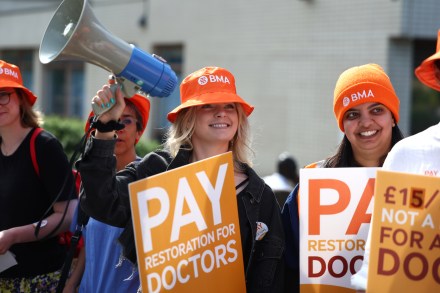
'The wise bustle and laugh as they walk, but fools bustle and are important,' wrote F.L. Lucas a century ago. 'And this, probably is all the difference between them.' The government and the British Medical Association, who yesterday announced that henceforth junior doctors will be called 'resident doctors', are bustling and self-important fools. I was 37 when I ceased being a junior doctor and became a consultant. Not quite the glittering early success of Pitt the Younger, but I had the common comfort of being ordinary and surrounded by peers roughly my age. I search my memory for the awful horrors caused by carrying around the name ‘junior’ all those years, but I search in vain. No mental scars seem apparent.