Douglas Murray

Douglas Murray

Douglas Murray is associate editor of The Spectator and author of The War on the West: How to Prevail in the Age of Unreason, among other books.

Nothing to do with Islam?

Immediately after the 7/7 bombings the then police-chief Brian Paddick told a press conference: 'Islam and terrorism do not go together.' Now, after Woolwich, the Prime Minister has said, ‘There is nothing in Islam that justifies this truly dreadful act.’ Even after all these years our leaders continue to make this terrible mistake. Politicians or police chiefs must not make theological pronouncements. Though undoubtedly guided by good intentions, their line does not help but in fact exacerbates a problem – on all sides. There is a civil war underway in Islam which has gone on in some fashion since the religion’s founding.

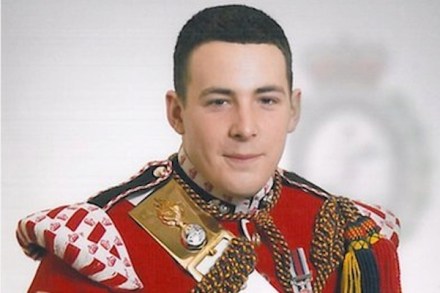
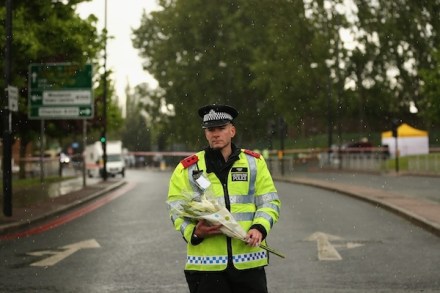
‘Soldier beheaded’ in south London: the Islamists repeatedly said they would do such things

Similar attacks in recent years include the beheading of a Dutch film-maker, Theo van Gogh, on a street in Amsterdam in 2004 and the killing of French soldiers by Mohammed Merah in Toulouse. Over recent years, those who have warned that such attacks would come here have been attacked as 'racists', 'fascists' and — most commonly — 'Islamophobes'. A refusal to recognise the actual threat (a growingly radicalised Islam) has dominated most of our media and nearly all our political class. Watching this roll out has made me — and most other ordinary people — feel sick. It should always have been obvious where such idiocy and denial would lead. It leads to Woolwich. It leads to a British soldier being decapitated in our capital city in broad daylight.

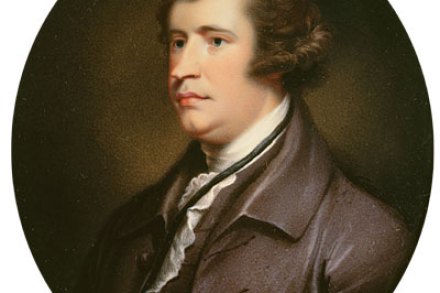
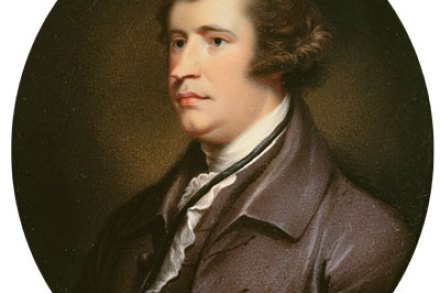
Edmund Burke – a writer one should always read

I thought readers might be interested in this piece in the current print edition of the magazine. It is my review of a very interesting new book on Edmund Burke, Edmund Burke: Philosopher, Politician, Prophet by the MP Jesse Norman. I much recommend it. Those who haven't read Burke before will, I am sure, be spurred to do so. And those who have are certain to head back to him. As I mention in the piece, Burke is one of those writers who give you that wonderful feeling of, 'why don't I just read this all the time?

Some anti-fascists are very fascistic

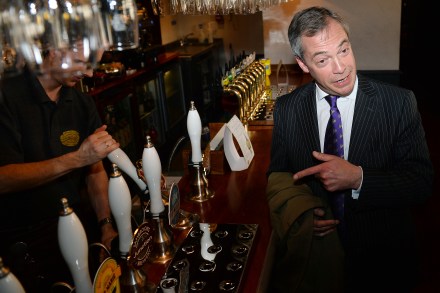
Nigel Farage has just met one of the most fascinating aspects of modern politics. He was surrounded in Edinburgh by left-wing 'anti-fascists' shouting 'Racist scum. Go back to England'. The same mob also screamed 'scum' repeatedly at the top of their voice until they made him leave. This is probably the best demonstration so far of something which has gone un-remarked upon for too long. Among the closest thing we have to fascists in modern Britain are people who call themselves 'anti-fascists'. Not all people who call themselves 'anti-fascist', thank goodness. But a sizable portion.  If you ever see these people in action you will notice that they behave in exactly the way you would expect their alleged opponents to behave.

“The right hero” – Douglas Murray reviews Jesse Norman’s Burke biography.

Edmund Burke is one of the most difficult thinkers to write about. His philosophy defies easy summary. His career, while noble, was not glittering. Many details that he exhausted himself over — such as the impeachment of Warren Hastings — were arcana before he was dead. And hardest of all is that Burke’s prose style is among the best in the language. Writing about Burke’s prose is like singing about Maria Callas’s voice. On each re-acquaintance with it you wonder why you don’t read Burke all the time. There was hardly a subject he tackled which he did not master, and not a register that he did not perfect. In A Letter to a Noble Lord he writes of one detractor: The Duke of Bedford is the Leviathan among all the creatures of the Crown.

What can society learn from the ‘grooming’ scandals?

The verdicts have been delivered in the Operation Bullfinch trial. Seven of the nine men have been found ‘guilty’. The case involved the highly organised sexual and physical abuse of underage girls in the ‘care’ system. This was carried out by a gang of men in Oxfordshire over the course of nearly a decade. As I wrote of one of the most shocking aspects of the case: ‘One of the victims sold into slavery was a girl of 11. She was branded with the initial of her "owner" abuser: "M" for Mohammed. The court heard that Mohammed "branded her to make her his property and to ensure others knew about it".’ There is bound to be considerable debate now around this case.

A reply to certain critics

It was Dean Howells who first said, ‘The problem for a critic is not making enemies but keeping them.’ On this account I have been diligent and fortunate in my life so far. There is Nick Griffin of the BNP, for instance, who attacks me for many things including being ‘a cheer-leader for multi-racialism’ and, like some others, for being gay. In recent days two other critics who I regard as equally insignificant have once again been active. I generally try not to get into this kind of thing because I have a lot of work to do and deadlines to meet. But I thought it might be time to deal, briefly, with both. They are called Marko Attila Hoare (of a publicly-funded body called Kingston University) and Sunny Hundal. Let me take them in order.

The not-so-great Gatsby

You do not need to have read the book or even seen a film adaptation to feel a thrill at the word ‘Gatsby’. More than a novel, a film or a character, ‘Gatsby’ is an aspiration. The golden age of jazz, cocktails and evening dress, F. Scott Fitzgerald’s novel is one of those works which has been subsumed and overtaken by its own myth. Such is The Great Gatsby’s enduring glamour that even the release of trailers for the latest film version (starring Leonardo di Caprio and Carey Mulligan) made news. You can see why. The film promises everything: beautiful people, luxurious locations and great clothes.

In defence of Niall Ferguson

One of the most striking divides in the left/right political debate is this. Those on the right disagree with people on the left. They find left-wing opinions misguided, incorrect or otherwise wrong. But they tend not to assume that their opponents are evil. This favour is rarely reciprocated. The Harvard professor and historian Niall Ferguson is the latest to suffer from this. In a discussion in California last week, he was invited to comment on John Maynard Keynes’ notorious observation, ‘In the long run we are all dead’. Ferguson mentioned somewhat flippantly that Keynes may have been more indifferent to the future because he had no children, because he was gay. For this he is now being denounced as an anti-gay bigot.

Why has Abdul Hakim Murad not been sacked by Cambridge University?

Abdul Hakim Murad is the Islamic name of a convert to Islam called Tim Winters.  He is a lecturer and tutor and director of studies at Wolfson College, Cambridge University.  Over recent years he was the sort of fellow who was forever being produced as a ‘moderate’, enlightened Muslim scholar. I always had doubts about this claim. For instance, a couple of years back, on a BBC radio programme, I pressed him on the fact that all the main schools of Islamic law still mandate the death sentence as penalty for leaving Islam. Abdul tried to pick me up on this. ‘Are you sure of that’ he pressed. I said I was.

In response to Peter Oborne on nuclear Iran

I am pleased that Peter Oborne concedes that his co-author David Morrison was ‘foolish’ and ‘clumsy’ in his statements. Perhaps Morrison was indeed attempting ‘to be as accurate as he could about what he understood to be the facts’. But that is a statement about the understanding of Mr Oborne's co-author, not a statement about the facts. I still cannot see how anybody who accepts that President Ahmadinejad is a Holocaust denier could have said what Mr Oborne’s co-author said last week. To recap, over at the Telegraph last week David Morrison said: ‘I have never come across a statement from Ahmadinejad saying that the Holocaust didn’t happen.

If there was ever a time to intervene in Syria, it has passed

It is more than ten years since I first sat down with members of the Syrian opposition. Back then they included real moderates, but even these didn’t predict a bloodless transition. ‘We will have to unite the country against the Alawites,’ I remember one saying, referring to the minority from which the Assad dynasty comes. ‘Kill them?’ I asked nervously. ‘Or chase them into the mountains,’ he replied. Now, more than two years into the Syrian civil war, there may still be some Alawites but, as Paul Wood points out opposite, there are hardly any moderates. What good opposition elements there were have been killed, have fallen away or otherwise become insignificant since calls for outside help began.

Did MI6 plot against UKIP?

Dirty tricks against UKIP by the establishment are not a new phenomenon. Though in recent days the Conservative party have been found engaging in them, there are far more striking examples from the recent past. On 25 May 2001 the Spectator published a piece by Norman Tebbit that deserves to be far better known.  Tebbit recounts the tale of two serving or former British intelligence agents who infiltrated first Jimmy Goldsmith’s Referendum Party and then UKIP. Tebbit gives examples of how UKIP’s efforts were derailed during the period in which these agents were inside the party. It is important to stress before directing you to the Tebbit piece below that it is not conspiracy theory.

CND cannot rewrite its own history

Last week I recorded an edition of Hardtalk for the BBC which has gone out today.  It is a discussion with Kate Hudson, the General Secretary of the Campaign for Nuclear Disarmament (CND), on the future of nuclear weaponry. The discussion is available on iplayer here. A couple of observations. Firstly, I seem to have been responsible for a rare ‘corpsing’ during a Hardtalk recording. Kate Hudson took a comment by me about the ‘decades’ CND had been fighting a losing battle as an ungallant remark on her age. It was not meant as such, but did lead to a temporary break-down in discussions, for which apologies. On a more substantial matter, I see that the BBC has left on the cutting-room floor what I think was an important point.

Memo to Iran’s apologists: President Ahmadinejad has denied the Holocaust

Has President Ahmadinejad ever denied the Holocaust? David Morrison, co-author with Peter Oborne of a new apologia on the Iranian ‘government’, appears to think that he has not. In a bizarre and disgraceful interview with the Telegraph, alongside his co-author, Morrison recites the main claim of their book – which is that the Iranian regime is not pursuing nuclear weapons. Oborne’s Telegraph colleague Con Coughlin too kindly skewers that claim as ‘delusional’. But even more alarming than that conspiracy theory of theirs is Morrison’s claim (uncorrected by Oborne, the Telegraph’s chief political commentator) that he has ‘never come across a statement from President Ahmadinejad saying that the Holocaust didn’t happen’.

Islamophobia is a government priority. What about Islamism?

According to one of his family members Tamerlan Tsarnaev was, among other things, ‘angry that the world pictures Islam as a violent religion.’ His efforts to refute this charge included planting bombs in the middle of a family sports event in Boston, killing - among others - an eight year old boy. The case brings to mind that of Muzzammil Hassan from western New York. Hassan was the founder of Bridges TV in the US – a station set up to help ‘non-Muslims overcome the negative images they may have of both Muslims and Islam.’ Mr Hassan was subsequently convicted and sent to prison for beheading his wife. Certainly this is not a good week for the ‘nothing to see here’ crowd.

America, like Europe, is dishonest about Islamic extremism

I have been in the US over recent weeks, during the period of the Boston bombings and the hunt for the perpetrators. It may surprise some British readers to know that although American public debate is undoubtedly wider and more robust than in Britain, even America displays denial and deflection when it turns out that the culprits are radical Islamists. I think of this as ‘Toulouse syndrome.’ Much of the reaction to Boston is very reminiscent of what we saw last year after the shooting of seven people in France. From the first attacks on French soldiers until after the third shootings at a Jewish school, both national and international news focussed on the possibility that the lone gunman had been a far-right extremist.

The Philpott case should prompt debate about Britain’s underclass

The Philpott case has already turned into a row about media reporting. You can see why. It is so much easier to argue about a newspaper front-page than to talk about the terrible underclass this country has created. In a nutshell our problem is this. For hard-working couples, having children in 21st century Britain is unbelievably costly. Having been taxed at every turn of their lives they have to think extremely carefully about whether they can afford to have a child. Many will decide they cannot. Others will decide that they can but will spend endless nights worrying over how they are going to support the child they have brought into the world. If they find they can afford that first child they will still think very hard about whether they can afford a second, let alone a third.