Douglas Murray

Douglas Murray

Douglas Murray is associate editor of The Spectator and author of The War on the West: How to Prevail in the Age of Unreason, among other books.

Spectator Syria intervention debate

A terrific debate last night at the Spectator: ‘Assad is a war criminal – the West must intervene in Syria.’ I don’t think there was any disagreement on the first part of the motion. But there certainly was on the second. I spoke in opposition to the motion and much of the argument I made is in a piece I’ve written for this morning’s Wall Street Journal which readers might be interested to read here.

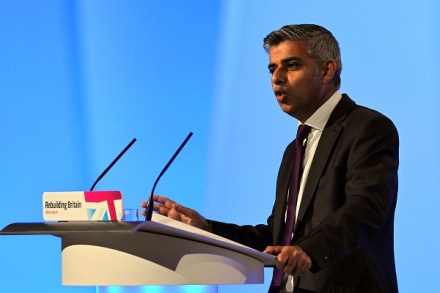
Sadiq Khan has unwittingly highlighted the problem of Islamic extremism

Sadiq Khan MP had a piece in the Telegraph last week attacking an excellent piece by Charles Moore in the same paper the Saturday before. In his piece Sadiq makes a number of claims which are worth rebutting. First is his question, ‘Would we accept the Jewish community being talked about the way the Muslim community are?’ Well, as I have written here before, that would depend, among other things, on whether or not in recent years a bunch of fundamentalist Jews had detonated bombs across the London transport system or beheaded a soldier on the streets of London. It would also depend on whether cells of Jewish extremists had been caught, tried and prosecuted on a fairly regular basis for trying to kill and maim numerous British people.

‘Jihad!’

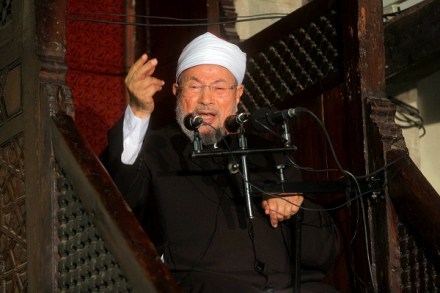
I don’t think, so far as I can remember, that I have ever previously found any sympathy with the sayings of top Islamist cleric Sheikh Yusuf al-Qaradawi. But I do appreciate his recent sentiment that Hezbollah is in fact not the ‘Army of God’ but rather the ‘Army of Satan.’ And I can find only one fault in his recent rallying cry, backed by the Grand Mufti of Saudi Arabia, Abdul Aziz al-Asheik (with whom he has usually disagreed), that ‘every Muslim trained to fight and capable of doing that [must] make himself available’ for Jihad in Syria against Bashar al-Assad and Hezbollah. The powerful downside, of course, is the continuing civilian tragedy in Syria.

It looks like we must hope for the best in Syria

Is there not something odd about a Prime Minister talking of getting involved in the Syrian civil war on the very day that another 4,500 British service personnel had their redundancy notices handed to them? It has always been my belief that you should never even tinker in a conflict unless you are prepared to go all the way should circumstances change (as they tend to). Britain no longer has the capability to get fully involved in Syria. So I suppose that we will all have to hope that Mr Cameron and Mr Hague possess an uncanny ability for identifying moderates, arm them nicely and just hope that everything goes well. We must certainly hope that Cameron and Hague's moderation-sensors are better tuned than Senator McCain's.

Charles Moore has it just right on Woolwich

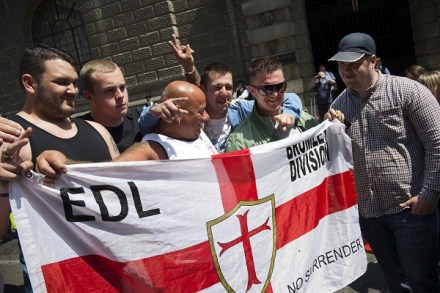
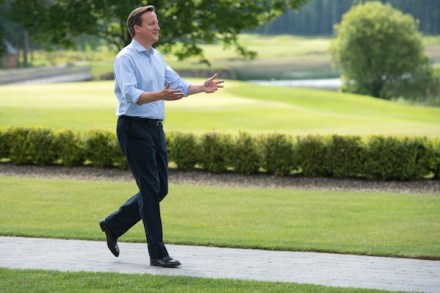
There is a terrific piece in today's Telegraph by Charles Moore which I very much recommend. It is titled 'Woolwich outrage: we are too weak to face up to the extremism in our midst'. In the piece Moore rightly criticises our societal inability to deal with Islamism. In particular he criticises the switch of attention which took place immediately after the murder of Drummer Rigby thanks to bogus claims of an 'anti-Muslim backlash'. Moore also addresses the follow-up fib that a threat equal to the jihadis - or even the primary threat to our society - comes from the English Defence League. Incidentally, I saw that, whilst over for the G8 meeting, last night David Cameron had a joint press conference with the first minister and deputy first minister of Northern Ireland.

Jonathan Sacks is right: the new atheists have only opened a discussion

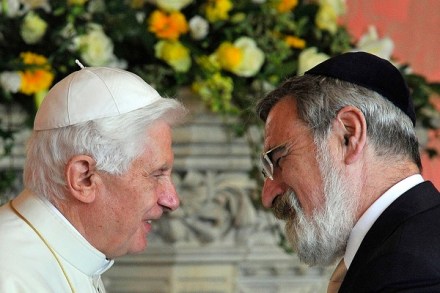
There is a superb piece in the magazine this week by the Chief Rabbi, Jonathan Sacks, titled 'Atheism has failed: only religion can defeat the barbarians.'  Whether you agree with his diagnosis or his preferred remedy, it is a characteristically thought-provoking and vital piece. It is the third piece in the magazine this year to address this theme. In January there was a piece by me, 'Call off the faith wars: atheists vs Dawkins'.  Then in April came Theo Hobson's piece 'Richard Dawkins has lost: meet the new new atheists' I know there are some non-believers in particular who find this debate uncomfortable or frustrating.

Meet Chen Guangcheng – a hero of the Chinese people

The other week I had the honour of spending some time with a great hero. Chen Guangcheng is the blind Chinese human rights activist who made world news last year when he escaped from house arrest and made his way to Beijing where he claimed asylum in the US embassy. Now living in the US with his immediate family, Chen and I had some time to sit down and talk during a brief visit to London. We talked about China, Communism, his extraordinary story and his hopes for his own - and China's - future. He relayed, in unsparing but necessary detail, the gruesome and inhumane reality of the Chinese Communist Party's one-child policy. I also asked him to talk about his opinion of David Cameron and William Hague, who refused to meet with him on this trip. The interview is in this week's magazine.

Chen Guangcheng – the brave Chinese activist who David Cameron refused to meet

How did a blind Chinese dissident scale the walls of his house while under house arrest, evade government surveillance, travel hundreds of miles to Beijing, seek asylum in the American embassy and in the process shine attention on a horror the world has grown used to? The questions for Chen Guangcheng are legion. Last week I met up with him in London. Chen, who is 41, has been blind since childhood and wears smart dark glasses. At our meeting place in central London — the headquarters of a Christian organisation which has helped arrange his visit — he sits upright, suited and tied, occasionally repositioning himself by feeling the corners of the table. He does not share the world’s fascination with his personal story.

Islamophilia – a very metropolitan malady

Readers might like to know that I have a new book out today. It is called ‘Islamophilia: a very metropolitan malady’ and is available on kindle, e-readers and all that sort of thing. It is available from the publishers, emBooks here and from Amazon here. I will have more to say in the coming days, but in the meantime here is what the publisher – Melanie Phillips – has to say: 'This is not a book about Islam, Muslims or terrorism.

To end “Islamophobia”, we must tackle Islamism

I thought readers might be interested in this piece from me in the new issue of Standpoint which is just out. It is titled 'Forget "Islamophobia". Let's tackle Islamism'. In the wake of recent attacks there has been an upsurge in claims of 'Islamophobia'. As I explain in the piece, even if such a thing as 'Islamophobia' did exist it would be a reactionary phenomenon. If we dealt with Islamism, then what is rightly or wrongly called 'Islamophobia' would disappear. The whole piece is here.

A guide to understanding Islamist terror in the UK and US

Readers may like to know that I have a cover piece in this week's magazine titled 'The Enemy Within'.  It is available here for subscribers. (Non-subscribers can subscribe here.) It looks at what - if anything - will change after the killing of Drummer Lee Rigby in Woolwich. It is also an account of just some of the difficulties going on inside the British government in the fight against extremism. On a separate but related note, my colleague at the Henry Jackson Society, Robin Simcox was testifying in front of the US House of Representatives last week. His testimony is here. Robin is one of the authors of our latest report on Al-Qaeda related terrorism in the US.

After Woolwich, what will change?

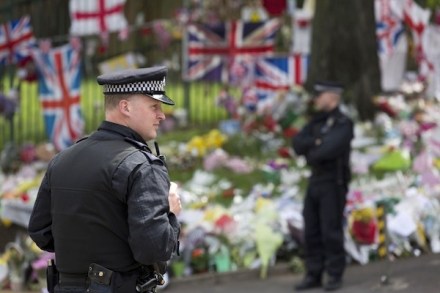
The decapitation of a British soldier on a street in London is the latest disgusting new low in this country’s experience of Islamist terror. But everything else in the aftermath of the killing of Drummer Lee Rigby is hideously familiar. What the country has gone through since last Wednesday is the same endless turning over of clichés about terror which we have now heard for years. But one thing is clear. Nothing will be done. This country simply will not deal with the extremists. Not just because part of our political leadership does not want us to, but because those who do want to do something cannot. As on each occasion before and since 7/7, the debate in recent days has covered the usual familiar terrain.

Drummer Lee Rigby

Might I urge people to watch the following video? In recent days the press has inevitably focussed most attention on the perpetrators of the Woolwich attack. Here is a video from earlier today of the wife and step-father of Drummer Lee Rigby speaking about him and their love for him.

Nothing to do with Islam?

Immediately after the 7/7 bombings the then police-chief Brian Paddick told a press conference: 'Islam and terrorism do not go together.' Now, after Woolwich, the Prime Minister has said, ‘There is nothing in Islam that justifies this truly dreadful act.’ Even after all these years our leaders continue to make this terrible mistake. Politicians or police chiefs must not make theological pronouncements. Though undoubtedly guided by good intentions, their line does not help but in fact exacerbates a problem – on all sides. There is a civil war underway in Islam which has gone on in some fashion since the religion’s founding.

‘Soldier beheaded’ in south London: the Islamists repeatedly said they would do such things

Similar attacks in recent years include the beheading of a Dutch film-maker, Theo van Gogh, on a street in Amsterdam in 2004 and the killing of French soldiers by Mohammed Merah in Toulouse. Over recent years, those who have warned that such attacks would come here have been attacked as 'racists', 'fascists' and — most commonly — 'Islamophobes'. A refusal to recognise the actual threat (a growingly radicalised Islam) has dominated most of our media and nearly all our political class. Watching this roll out has made me — and most other ordinary people — feel sick. It should always have been obvious where such idiocy and denial would lead. It leads to Woolwich. It leads to a British soldier being decapitated in our capital city in broad daylight.

Edmund Burke – a writer one should always read

I thought readers might be interested in this piece in the current print edition of the magazine. It is my review of a very interesting new book on Edmund Burke, Edmund Burke: Philosopher, Politician, Prophet by the MP Jesse Norman. I much recommend it. Those who haven't read Burke before will, I am sure, be spurred to do so. And those who have are certain to head back to him. As I mention in the piece, Burke is one of those writers who give you that wonderful feeling of, 'why don't I just read this all the time?

Some anti-fascists are very fascistic

Nigel Farage has just met one of the most fascinating aspects of modern politics. He was surrounded in Edinburgh by left-wing 'anti-fascists' shouting 'Racist scum. Go back to England'. The same mob also screamed 'scum' repeatedly at the top of their voice until they made him leave. This is probably the best demonstration so far of something which has gone un-remarked upon for too long. Among the closest thing we have to fascists in modern Britain are people who call themselves 'anti-fascists'. Not all people who call themselves 'anti-fascist', thank goodness. But a sizable portion.  If you ever see these people in action you will notice that they behave in exactly the way you would expect their alleged opponents to behave.

“The right hero” – Douglas Murray reviews Jesse Norman’s Burke biography.

Edmund Burke is one of the most difficult thinkers to write about. His philosophy defies easy summary. His career, while noble, was not glittering. Many details that he exhausted himself over — such as the impeachment of Warren Hastings — were arcana before he was dead. And hardest of all is that Burke’s prose style is among the best in the language. Writing about Burke’s prose is like singing about Maria Callas’s voice. On each re-acquaintance with it you wonder why you don’t read Burke all the time. There was hardly a subject he tackled which he did not master, and not a register that he did not perfect. In A Letter to a Noble Lord he writes of one detractor: The Duke of Bedford is the Leviathan among all the creatures of the Crown.

What can society learn from the ‘grooming’ scandals?

The verdicts have been delivered in the Operation Bullfinch trial. Seven of the nine men have been found ‘guilty’. The case involved the highly organised sexual and physical abuse of underage girls in the ‘care’ system. This was carried out by a gang of men in Oxfordshire over the course of nearly a decade. As I wrote of one of the most shocking aspects of the case: ‘One of the victims sold into slavery was a girl of 11. She was branded with the initial of her "owner" abuser: "M" for Mohammed. The court heard that Mohammed "branded her to make her his property and to ensure others knew about it".’ There is bound to be considerable debate now around this case.

A reply to certain critics

It was Dean Howells who first said, ‘The problem for a critic is not making enemies but keeping them.’ On this account I have been diligent and fortunate in my life so far. There is Nick Griffin of the BNP, for instance, who attacks me for many things including being ‘a cheer-leader for multi-racialism’ and, like some others, for being gay. In recent days two other critics who I regard as equally insignificant have once again been active. I generally try not to get into this kind of thing because I have a lot of work to do and deadlines to meet. But I thought it might be time to deal, briefly, with both. They are called Marko Attila Hoare (of a publicly-funded body called Kingston University) and Sunny Hundal. Let me take them in order.