Douglas Murray

Douglas Murray

Douglas Murray is associate editor of The Spectator and author of The War on the West: How to Prevail in the Age of Unreason, among other books.

Douglas Murray, Steve Morris, and Toby Young

19 min listen

On this week's episode, Douglas Murray reads his column on how if everything is racist, then nothing is; Reverend Steve Morris campaigns for the return of the British holiday camp; and Toby Young on his new dating website for lockdown sceptics.

When everything is ‘racist’, nothing is

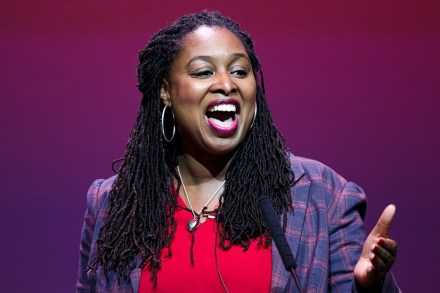
Hearing that Dawn Butler MP had been pulled over by the Metropolitan police, I briefly hoped the taxpayer might get back the whirlpool bath she charged us on her parliamentary expenses. But the officers skipped the boot and went straight to the passenger side, where they found the member for Brent Central recording them with her phone and looking pleased as punch to audition as the new Rosa Parks. As it happens, the footage she released showed the police being deeply polite, and they subsequently explained that the pull-over had been due to a registration-plate mix-up. But Butler claimed it was a case of the dreaded ‘stop-and-search’ and within hours she was on Channel 4 News, being grilled by one of their crack interviewers.

Freddy Gray, Douglas Murray, and Katy Balls

26 min listen

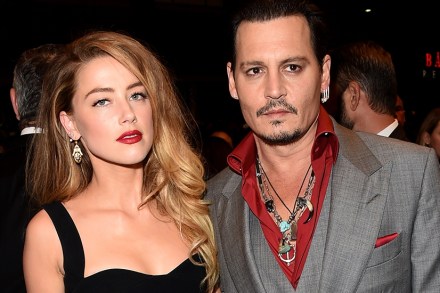
On the episode this week, Freddy Gray, editor of the Spectator's US edition, reads his cover piece on the real Joe Biden. We also hear from Douglas Murray on the trial of Amber Heard and Johnny Depp - and about allegations that can't be proved or disproved. At the end, Katy Balls relays the government's anxiety over a second wave.

No one emerges from a court fight looking clean

The case of Johnny Depp vs the Sun, heard over recent weeks at the High Court in London, certainly gives fresh life to the old warnings about dirty linen and its public laundering. Whatever the results, I would be surprised if it didn’t provoke others to think again about the wisdom of reverting to the law. The influencers formerly known as the Sussexes, for instance, must be wondering whether their forthcoming legal case will result in them solely being showered with praise. Of course one has sympathy for famous people who feel that they have been badly portrayed. It is unpleasant to read nasty things about yourself in the newspapers. Especially if you have spent years reading largely pleasant things, carefully placed there by yourself or your PR team.

Good memoir-writing should also be self-critical

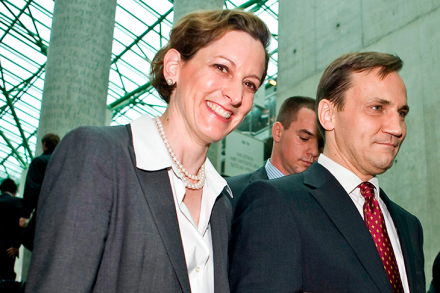
A book about breaking confidences, not to mention friendships, rather begs the same in return. Reading Anne Applebaum’s brief memoir of the world going mad around her sparked a memory of my own. It is a couple of days after the Brexit vote, and several hundred of us have gathered in London for the memorial service of a recently departed friend. The ceremony was hardly over before Applebaum and her husband, the former Polish defence minister Radek Sikorski, started picking political fights with the other guests, including some very old friends. ‘Don’t go near Anne and Radek,’ one mutual friend said to me, signalling to the visibly furious couple: ‘They’re absolutely spitting.

My fears for the future of my church have been realised

The only memorable argument I have ever heard in that tedious debate about whether Shakespeare was a Catholic came from the poet Tom Paulin. I remember him claiming in a lecture that the ‘bare ruin’d choirs’ sonnet must have been written by someone who had seen the despoiled monasteries, desecrated churches and ravaged holy places of a faith of which they were a part. Famously, such an argument only gets you so far, for by this logic Shakespeare was also a king, empress, ex-king, sailor, magician and fool, among many hundreds of others. But part of the rationale stayed with me. Which is that the bitterest truth of all is that loving a thing does not mean you can protect it, and that even the things you consider most sacred can be trampled over.

What is the point of the New York Times?

Earlier today, Bari Weiss resigned from the New York Times and published a devastating letter of resignation on her website (also available here). There will be those who try to pretend that this is no big deal, or that it is just a storm in a journalistic tea-cup: they would be wrong. For several generations now the New York Times has been seen as America’s ‘paper of record’. You might have appreciated some aspects of it more than others, and it may have been a little dull, but it was reliable; even necessary. A sort of journalistic fibre. Then at some stage in recent decades, it started to exemplify a rot which has wormed its way through much of the legacy media. Its reporting became unreliable and its comment pages monotone. The paper became increasingly unreadable.

Trump is taking on the historical revisionists

Ahead of Independence Day last week, CNN went live to its correspondent Leyla Santiago. Here is how she described the upcoming celebrations: ‘Kicking off the Independence Day weekend, President Trump will be at Mount Rushmore, where he’ll be standing in front of a monument of two slave owners and on land wrestled away from Native Americans.’ She went on to report that the President was expected to focus on efforts to ‘tear down our country’s history’. And where might the President have acquired such an idea? Even a few years ago it would have been unthinkable for a major network like CNN to have described Mount Rushmore in such nakedly hostile terms.

What a leaked NHS memo tells us about White Fragility

Of all the people who have made cash in the past month, few can have raked it in like Robin DiAngelo. Since the death of George Floyd, the white American academic and author of White Fragility has been absolutely milking it. A term I probably shouldn’t use, since Peta last week declared milk a symbol of white supremacy. I might say she is absolutely creaming it, though by the time you read this ‘cream’ might be racist too. In which case it will join the British countryside, which was designated as racist by the BBC’s Countryfile last week. A fact that I learned after opening Google’s homepage, where I was educated about the late black American drag queen Marsha Johnson.

What isn’t being said about the Reading attack victims?

Imagine if on Saturday evening a white neo-Nazi had stabbed three men to death. Imagine, furthermore, if in the wake of the killings it had turned out that all three of the victims were gay. Or ‘members of the LGBT community’, to use the lexicon of the time. And then imagine if two days later nobody in the UK or anywhere else was very interested in any of this. So what if the victims were all gay? Why bother sifting around for motives. What are you trying to say? Bigot. Well something that might well be analogous to that happened in Reading on Saturday evening and over the days since. On Saturday evening, Khairi Saadallah went on a stabbing spree in Forbury Gardens, Reading. His victims were three gay men, James Furlong, David Wails and Joe Ritchie-Bennett.

The new inequality

From our US edition

It is a strange habit, the American one of making talk-show hosts into preachers. There is no good reason, after all, why a comedian should be any kind of arbiter of morality or anything much else. Yet in America the court of public opinion accepts the right of the jester to preach the homily too. So it was that, in a period not short on ‘personal takes’ and celebrity messaging, one night in early June on his Late Late Show, James Corden delivered a teary monologue about race relations in America. Lots of people thought he did well, and praised Corden’s talk of ‘white guilt’ and all manner of other sins. But one phrase stood out for being especially bogus. It was a phrase that was widely quoted.

race

A solution to the JK Rowling trans row

Since the whole world is in crisis, a crisis in the world of publishing might seem like a niche issue. But something that has been going on at the publishers Hachette is worth noting. Not least as it may be a portent of worse things to come elsewhere. Earlier this month the publishing house was thrown into turmoil after its most famous author, JK Rowling stirred up the most demented people in our society. Rowling – whose Harry Potter series was all published by Bloomsbury – has written a number of books for Hachette, most recently a scheduled book for children called ‘The Ickabog’. But earlier this month, Rowling objected on Twitter to a headline which used the words ‘people who menstruate’ in order to get around having to say ‘women’.

This could have been a great opportunity for the Church

During these months of inertia, I confess to having on occasion made illicit trips to churches in the English countryside. Enjoying the frisson that surely accompanies all law-breaking, I have often gone so far as the church door, there to examine not only the locks and bolts but also the laminated notices which adorn so many buildings of the Church of England. The other week I visited a 12th-century church whose laminated instructions were an especially fine example of their kind. These signs informed the visitor that the church was closed due to the Covid crisis and that God can of course be worshipped anywhere, but (and this part was underlined) ‘not here’. A little harsh, that wording, I thought.

In defence of liberalism: resisting a new era of intolerance

45 min listen

Are we witnessing the death of the liberal ideal? (01:02) Next, what's behind the government U-turn on primary schools and what effect could it have on the poorest students? (20:14) And finally, Britain's ash trees are facing a pandemic of their own, with so-called ash dieback sweeping the nation. Can Britain's ash trees be saved? (30:12)With Douglas Murray; The Spectator's economics editor Kate Andrews; Coffee House contributor Melanie McDonagh; political editor James Forsyth; associate editor of the Evening Standard Julian Glover; and professor at the Laboratory of Tree-Ring Research at the University of Arizona Valerie Trouet. Presented by Katy Balls.Produced by Gus Carter and Matthew Taylor.

In defence of liberalism: resisting a new era of intolerance

It has become fashionable in recent years to talk of the death of liberalism. But as crowds high on the octane of generational self-righteousness rampage through major cities, the evidence mounts. The growing intolerance of freedom of thought, the inability to talk across divides, the way that most of the British establishment, police included, feels the need to pledge fealty to the cause — as though all terrified of ending up on the wrong side — points to a crisis of more than confidence. It is evidence of an underlying morbidity. Each day the cultural revolution is picking up a pace, with the iconoclasts who attacked the Cenotaph and the statue of Winston Churchill looking for new focuses for their rage.

What the response to London’s young graffiti cleaners reveals

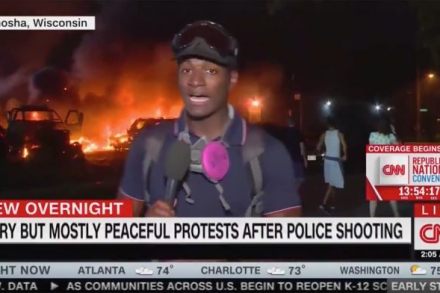
Further Black Lives Matter protests took place yesterday in the UK, in response to the death of a man at the hands of a Minnesota cop a fortnight ago. So far the tally from the London protest includes not only the now traditional mass-breaking of the government’s Covid guidelines, the graffiti-ing of the Cenotaph, the statues of Sir Winston Churchill and Abraham Lincoln, but also the injuring of 27 police officers in what the BBC nevertheless persists in calling 'largely peaceful anti-racism protests'. https://twitter.com/BBCNews/status/1269574979680702470?ref_src=twsrc%5Etfw Which brings to mind something important that has been too little discussed in the days since the last London protests, four days ago.