Douglas Murray

Douglas Murray

Douglas Murray is associate editor of The Spectator and author of The War on the West: How to Prevail in the Age of Unreason, among other books.

At last, the Conservatives are showing some fight in the culture war

From our UK edition

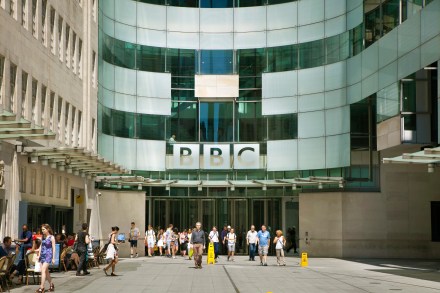
A beautiful noise rang out last week in the wake of the news that the government is considering Charles Moore to become the new chairman of the BBC and Paul Dacre to be the head of the broadcasting watchdog Ofcom. The noise was the sound of the British left wailing that toys they thought were theirs alone might now (under a Conservative government) finally go to identifiable conservatives. The former editor of the Guardian Alan Rusbridger shrieked that ‘this is what an oligarchy looks like’. This and similar tweets were presumably sent from the lodgings of the Oxford college that Rusbridger was made principal of five years ago. Others who screamed themselves sick included BBC employees who briefed that Moore’s appointment ‘would shatter morale. People will leave.

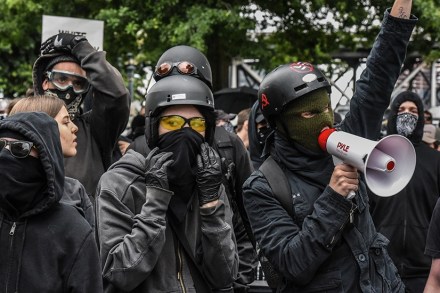
All protests are not equal in the eyes of the police

From our UK edition

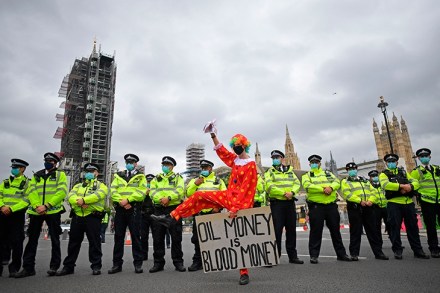
I’ve never been a great fan of public demonstrations. When I was at university, one of the great causes du jour involved a bus company owned by a man accused of not much liking the gays. My generation were short on causes, so intermittently there would be a call for direct action against the bigoted buses. I slipped along once, not sure whether I really wanted to join in. Apart from the sight of a few dozen callow students preventing one of the guilty buses from progressing up the High Street, my main memory is the almost animalistic rage of a number of the bus’s passengers. Unable to be heard above the chants, they looked like flies in a bottle, getting ever more furious about being made to be late for their next appointments.

Douglas Murray, Francis Pike and Philip Hensher

From our UK edition

32 min listen

On this week's episode, Douglas Murray asks - why would anyone want to be a government adviser, given what's happened to Tony Abbott? The historian Francis Pike reads his piece on Thailand's Caligula; and Philip Hensher reviews a new book on Wagner.Spectator Out Loud is a weekly audio collection of three Spectator writers reading their pieces in the latest issue.

Who would risk being a government adviser?

From our UK edition

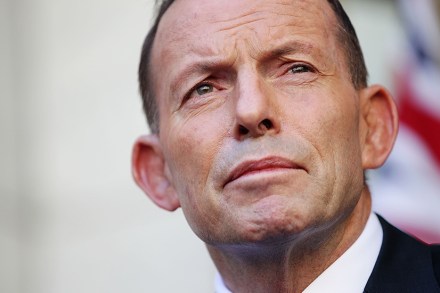
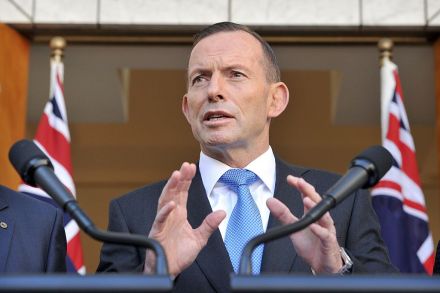
Poor Tony Abbott. It would seem being prime minister of Australia doesn’t bring you to the attention of the British media. To come into its sights you must be put forward for a role as UK trade adviser. Then they will discover your existence and aim to destroy whatever reputation they didn’t know you had with the usual modern British charge-sheet. This time the charge was led by Kay Burley. The latest advertisements for her Sky television show boast that Burley is ‘always formidable, rigorous, fair, honest and searching’, among much else. Perhaps Burley hadn’t seen the advert. Certainly she displayed no such qualities when she discovered the existence of Tony Abbott.

In defence of Tony Abbott

From our UK edition

You sometimes wonder whether we live in an adult country anymore. For the last two days the broadcast media has been obsessing about whether Tony Abbott is a fit and proper person to be a trade envoy for the United Kingdom. Since he is a former Prime Minister of Australia, a distinguished statesman and a great friend of the United Kingdom you might have thought he would be eminently suited for the role. But Kay Burley of the Sky News network, among others, has announced that Abbott is (in her eyes) guilty of wrong-think. You don’t need to see the clips. You could come up with the list yourself. You know the drill. We are told that Abbott is a ‘homophobe’ and ‘misogynist’. He is furthermore a ‘climate change denier’.

Protestors are clearing a path for Trump

From our UK edition

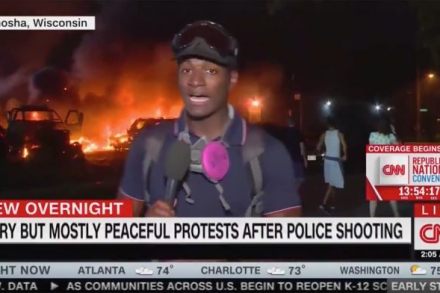
‘This city is not going to stop burning itself down until they [the protestors] know that this officer has been fired.’ Thus spoke Whitney Cabal, a leader of the Kenosha chapter of Black Lives Matter, in response to the latest police shooting in Wisconsin. The use of the passive in that sentence is revealing. As Theodore Dalrymple has pointed out (see ‘The knife went in’) it is common for people to assign motive to inanimate objects when they are loth to admit to being in the wrong. I suspect that the suitably named Ms Cabal knows that the state of Wisconsin did not auto-combust this week, as Krook does at the end of Bleak House. True, there was first a police shooting and arrest. But someone must then have put a match to the place.

Remembering Roger Scruton

From our UK edition

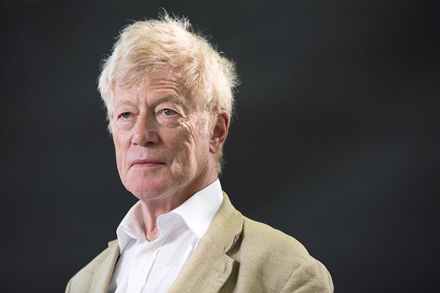
As readers of The Spectator know, Sir Roger Scruton died in January this year at the age of 75. Before his death, he agreed to the setting up of an institution that would bear his name and seek to continue his legacy. The Roger Scruton Legacy Foundation is that institution and it has now launched. As the foundation puts it, ‘The mission of the Roger Scruton Legacy Foundation is to establish the legacy of Sir Roger Scruton through supporting the conservation, care, and continuation of humane wisdom and culture from the Western tradition.’ Lady Scruton sits on the RSLF’s board. Many of Scruton’s numerous friends and former colleagues are also involved and I am honoured to be among the members of the advisory board.

The Foreign Office has lost the plot in the Middle East

From our UK edition

Last Friday the UN Security Council rejected any extension of the arms embargo on Iran. That embargo — imposed in 2007 — began to get phased out after the 2015 Iran nuclear deal. But a ‘snapback’ provision was put in place intended to allow the return of all such sanctions should Iran violate the terms of the deal. Iran has been violating those terms for some time, but on Friday, when the United States hoped that its allies would join it in deploring this fact, only the Dominican Republic voted with it. The UK, like France and Germany, chose to abstain. On the question of whether Russia and China should once again start selling arms to Iran, this country apparently takes no view. It would be nice to be able to say that this was peculiar. But it isn’t.

Douglas Murray, Steve Morris, and Toby Young

From our UK edition

19 min listen

On this week's episode, Douglas Murray reads his column on how if everything is racist, then nothing is; Reverend Steve Morris campaigns for the return of the British holiday camp; and Toby Young on his new dating website for lockdown sceptics.

When everything is ‘racist’, nothing is

From our UK edition

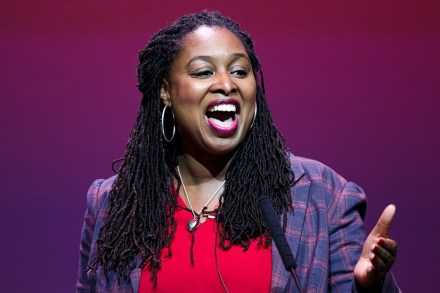
Hearing that Dawn Butler MP had been pulled over by the Metropolitan police, I briefly hoped the taxpayer might get back the whirlpool bath she charged us on her parliamentary expenses. But the officers skipped the boot and went straight to the passenger side, where they found the member for Brent Central recording them with her phone and looking pleased as punch to audition as the new Rosa Parks. As it happens, the footage she released showed the police being deeply polite, and they subsequently explained that the pull-over had been due to a registration-plate mix-up. But Butler claimed it was a case of the dreaded ‘stop-and-search’ and within hours she was on Channel 4 News, being grilled by one of their crack interviewers.

Freddy Gray, Douglas Murray, and Katy Balls

From our UK edition

26 min listen

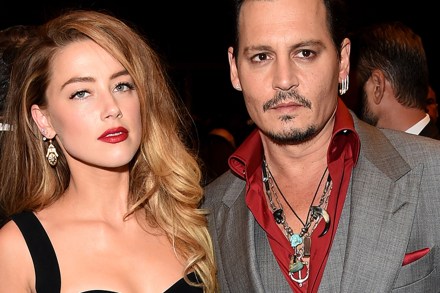
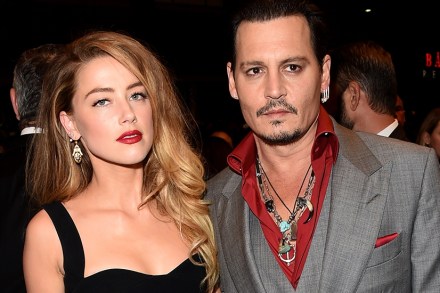
On the episode this week, Freddy Gray, editor of the Spectator's US edition, reads his cover piece on the real Joe Biden. We also hear from Douglas Murray on the trial of Amber Heard and Johnny Depp - and about allegations that can't be proved or disproved. At the end, Katy Balls relays the government's anxiety over a second wave.

No one emerges from a court fight looking clean

From our UK edition

The case of Johnny Depp vs the Sun, heard over recent weeks at the High Court in London, certainly gives fresh life to the old warnings about dirty linen and its public laundering. Whatever the results, I would be surprised if it didn’t provoke others to think again about the wisdom of reverting to the law. The influencers formerly known as the Sussexes, for instance, must be wondering whether their forthcoming legal case will result in them solely being showered with praise. Of course one has sympathy for famous people who feel that they have been badly portrayed. It is unpleasant to read nasty things about yourself in the newspapers. Especially if you have spent years reading largely pleasant things, carefully placed there by yourself or your PR team.

Good memoir-writing should also be self-critical

From our UK edition

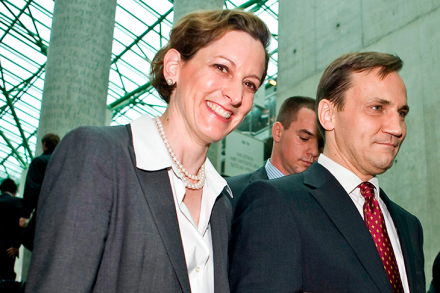
A book about breaking confidences, not to mention friendships, rather begs the same in return. Reading Anne Applebaum’s brief memoir of the world going mad around her sparked a memory of my own. It is a couple of days after the Brexit vote, and several hundred of us have gathered in London for the memorial service of a recently departed friend. The ceremony was hardly over before Applebaum and her husband, the former Polish defence minister Radek Sikorski, started picking political fights with the other guests, including some very old friends. ‘Don’t go near Anne and Radek,’ one mutual friend said to me, signalling to the visibly furious couple: ‘They’re absolutely spitting.

My fears for the future of my church have been realised

From our UK edition

The only memorable argument I have ever heard in that tedious debate about whether Shakespeare was a Catholic came from the poet Tom Paulin. I remember him claiming in a lecture that the ‘bare ruin’d choirs’ sonnet must have been written by someone who had seen the despoiled monasteries, desecrated churches and ravaged holy places of a faith of which they were a part. Famously, such an argument only gets you so far, for by this logic Shakespeare was also a king, empress, ex-king, sailor, magician and fool, among many hundreds of others. But part of the rationale stayed with me. Which is that the bitterest truth of all is that loving a thing does not mean you can protect it, and that even the things you consider most sacred can be trampled over.

What is the point of the New York Times?

From our UK edition

Earlier today, Bari Weiss resigned from the New York Times and published a devastating letter of resignation on her website (also available here). There will be those who try to pretend that this is no big deal, or that it is just a storm in a journalistic tea-cup: they would be wrong. For several generations now the New York Times has been seen as America’s ‘paper of record’. You might have appreciated some aspects of it more than others, and it may have been a little dull, but it was reliable; even necessary. A sort of journalistic fibre. Then at some stage in recent decades, it started to exemplify a rot which has wormed its way through much of the legacy media. Its reporting became unreliable and its comment pages monotone. The paper became increasingly unreadable.

Trump is taking on the historical revisionists

From our UK edition

Ahead of Independence Day last week, CNN went live to its correspondent Leyla Santiago. Here is how she described the upcoming celebrations: ‘Kicking off the Independence Day weekend, President Trump will be at Mount Rushmore, where he’ll be standing in front of a monument of two slave owners and on land wrestled away from Native Americans.’ She went on to report that the President was expected to focus on efforts to ‘tear down our country’s history’. And where might the President have acquired such an idea? Even a few years ago it would have been unthinkable for a major network like CNN to have described Mount Rushmore in such nakedly hostile terms.

What a leaked NHS memo tells us about White Fragility

From our UK edition

Of all the people who have made cash in the past month, few can have raked it in like Robin DiAngelo. Since the death of George Floyd, the white American academic and author of White Fragility has been absolutely milking it. A term I probably shouldn’t use, since Peta last week declared milk a symbol of white supremacy. I might say she is absolutely creaming it, though by the time you read this ‘cream’ might be racist too. In which case it will join the British countryside, which was designated as racist by the BBC’s Countryfile last week. A fact that I learned after opening Google’s homepage, where I was educated about the late black American drag queen Marsha Johnson.

What isn’t being said about the Reading attack victims?

From our UK edition

Imagine if on Saturday evening a white neo-Nazi had stabbed three men to death. Imagine, furthermore, if in the wake of the killings it had turned out that all three of the victims were gay. Or ‘members of the LGBT community’, to use the lexicon of the time. And then imagine if two days later nobody in the UK or anywhere else was very interested in any of this. So what if the victims were all gay? Why bother sifting around for motives. What are you trying to say? Bigot. Well something that might well be analogous to that happened in Reading on Saturday evening and over the days since. On Saturday evening, Khairi Saadallah went on a stabbing spree in Forbury Gardens, Reading. His victims were three gay men, James Furlong, David Wails and Joe Ritchie-Bennett.