Digby Warde-Aldam

Impressionism is 150 years old – this is the anniversary show to see

From our UK edition

The time that elapsed between the fall of the Paris Commune and the opening of the first proper impressionist exhibition amounted to less than three years. Over the course of that period, the city had witnessed the collapse of the Second Empire, suffered a siege at the hands of the Prussian army and seen vicious house-to-house fighting between the troops of the Versailles government and thescrappy citizen-army of Paris proper. All Parisians would recall the rivers of blood running down the city’s ritziest shopping streets, zoo animals being butchered for restaurant fodder, and the mass slaughter of rebel prisoners across the public squares of the city’s eastern faubourgs.
Why art biennales are (mostly) rubbish

From our UK edition

Should you visit Malta this spring, you may notice something decidedly weird is afoot. Across the public squares of its capital, Valletta, performance artists are blocking busy thoroughfares and causing havoc on packed café terraces. The Hospitaller and British military forts that dominate the capital’s famous harbour, meanwhile, are full of dysfunctional installation work, while the curio-filled vitrines of local museums are forced to compete with video art. Even the Grandmaster’s Palace – for centuries the country’s seat of power – has accommodated several dozen mini-exhibitions on the theme of ‘the Matri-archive of the Mediterranean’.

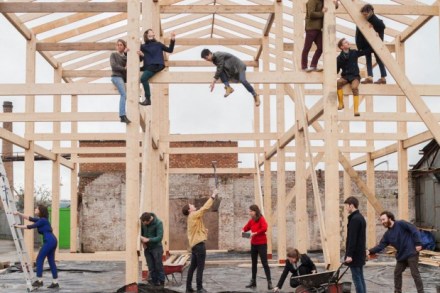
Giving Turner Prize to Assemble is like giving Booker to Thomas Piketty

From our UK edition

Within the first ten minutes of last night’s televised Turner Prize ceremony, someone had twice declared that the award was a ‘concept’. I must say, this was news to me: I’d always believed it was an award for contemporary art that existed to create a buzz around young artists who otherwise couldn’t get arrested. More often than not, one of the nominees is chosen to manufacture a bit of controversy – hardly the most noble objective, but it can make for a good half hour of telly. Kim Gordon forgetting what year we were in aside, what we got instead was in no sense good TV, but then that’s not really the point.

If only they were a bit less cool: Jean-Michel Basquiat and Jeff Koons at the Guggenheim Bilbao

From our UK edition

Jean-Michel Basquiat: Now’s the Time Guggenheim Bilbao, until 1 November Jeff Koons: Retrospective Guggenheim Bilbao, until 27 September Manhattan in the late 1970s early 1980s was, by all accounts, a pretty scary place. It was caked in graffiti, lawless, and in certain areas, almost emptied by the so-called ‘white flight’ to the suburbs. It was, in other words, a perfect stomping ground for artists and musicians. This is the romantic notion, anyway. It’s what someone will tell you when trying to justify Jean-Michel Basquiat’s posthumous superstar status and its accompanying price tag.

Chris Burden created some of the most exciting and utterly deranged art I’ve ever seen

From our UK edition

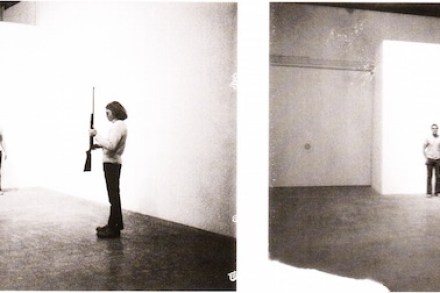
I once went out with a girl who jabbed me in the ribs every time I mouthed the phrase ‘conceptual art’. It hurt, but I got her point. The C-word, you see, is a tricky one. All too often, it conjures up terrifying images of ‘explanatory’ texts that take 5,000 words to communicate precisely zilch. It implies student politics, gnomic utterances and an unhealthy dependence on the word ‘dialectic’. Too much critical dogma dictates that art must be oblique for its own sake, and utterly devoid of humour. But it wasn’t always thus.

Noel Gallagher’s High Flying Birds, Royal Albert Hall, review: who goes to a Noel Gallagher gig?

From our UK edition

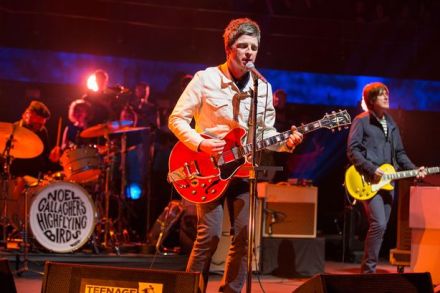
When people say Noel Gallagher is big-headed, they don’t know the half of it. He has what is known as a ‘classic rock-star build’ – that is, a tiny, fragile little body with a ludicrously big bonce on top, like one of those football figurines. I know this because I saw him once. He was standing outside the University of Westminster, looking cross as he jabbed a text message into his phone. It must be heavy, that head. From my seat in the Albert Hall, I watched as Noel stood hunched over his mic, like Quasimodo delivering a TED talk.

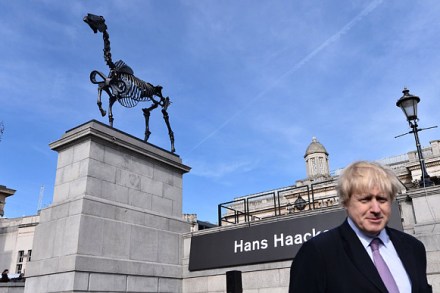
Hans Haacke’s Gift Horse, Fourth Plinth, review: cringe-worthy – but at least it’s not David Shrigley

From our UK edition

There is good art, there is mediocre art and there is bad art. In the same ratio – about 3:65:32 – there is good political art, mediocre political art and bad political art. There is also a slender sub-genre of this last category, known as so-bad-it’s-good political art. And of this, I am a connoisseur. This week I encountered the best example of this I’d seen for quite some time. I’ll spare the numpty who painted it the blushes of a namecheck, but the picture was a faux-naïf (?) riff on the Last Supper, earnest as you like, in which  Jesus and the disciples are throwing up their arms in Nazi salutes. I didn’t think to enquire as to the price, but the grin it’s kept on my face since has been priceless.

Emir Kusturica interview: why Slavoj Žižek is a fraud

From our UK edition

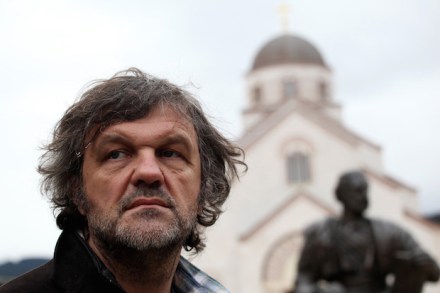
Last month I was invited on a press trip to Serbia. The whole thing sounded great; free accommodation, free food, free travel. I said yes, obviously. But there was a catch; it involved an interview with the film director Emir Kusturica. Now, the first thing you should know about Emir Kusturica is that he’s huge, a proper man-mountain. His hands look like they could do more damage than your average battle tank, and at 6'3", he must be at least a head taller than me. Not that I’m thinking this lucidly when finally the interview moment comes. Before I begin my questions, I’m more than a little scared that, at any moment, he might grab my throat and make himself two heads taller than me.

A stunner of an exhibition at Paris’s flashiest new gallery

From our UK edition

You can tell a lot about an art gallery from its attached eatery. The Tate has the grand but gratuitously naff Rex Whistler restaurant. The Serpentine its globular Zaha Hadid nouvelle cuisine joint. Then there’s the Mess Restaurant at the Saatchi Gallery’s newish space in the old Chelsea Barracks. To be charitable, the name is a bad but unfortunately appropriate pun. Anyway, I report from a children’s park in BCBG west Paris, where Louis Vuitton have just opened a new art gallery. Obviously, a luxury (and erstwhile collaborationist) megabrand were never going to settle for an ordinary white cube. Oh no. Instead they hired virtuoso architect Frank Gehry to build something that would piss off the local nimbys. And piss them off it did, but it still got built.

An art award that actually rewards talent

From our UK edition

Before I was asked to go out and cover it, I’d never heard of the Vincent Award for contemporary art. It’s a big deal in the Dutch art world, apparently, a sort of pan-European answer to the Turner Prize. It was set up by a charitable foundation with some deeply serious intent or other, and takes place around Holland every other year. The deal is that 50,000€ is awarded to – and I’m more or less directly quoting the literature here – a stimulating mid-career artist building a discussion platform. It is also, we are told, ‘Europe’s most prestigious art prize’. Are your bullshit detectors sounding off yet? Sure enough, mine were. ‘Prestigious’ is one of those adjectival free-for alls, isn’t it?

The Turner Prize shortlist is the worst in its history. Who should have won the award? Nobody

From our UK edition

What were you thinking? What? What? What? This is the question I'd ask the people who selected the artists for this year’s Turner Prize. The first time I visited, I thought I must have missed something – perhaps I just wasn’t in the right mood. Surely no arbiter in their right mind could’ve let such hectoring, cultural studies-sanctioned guff slip through the net? So I went again. And nope. I was right the first time – and then some. My first Turner Prize was in 1999, and hyperbolic though it sounds, what I saw there changed the way I thought about nearly everything. Yes, it was showy, sensationalist, in-yer-face. But it was pretty clear that the excitement it stirred up was far from empty.

Damon Albarn at the Royal Albert Hall: I’m sorry to say he killed it

From our UK edition

You can’t help but want to hate Damon Albarn. While he may not be the most irritating of the Britpop survivors, (as long as fellow Blur-ite Alex James is still droning on about cheese, there’s no competition) he’s a convincing candidate for second place. He spent the 90s as a pop idol, singing chirpy Small Faces rip-offs and gnomic industrial rock. There were some great songs, but most of it sounds dated, lost to a cutesy strain of that most meaningless catchall – quintessential Englishness. Then around the turn of the century he decided to become a sort of proto-hipster renaissance man, a Jonathan Miller figure for fortysomething men who think it’s OK to go to work on a skateboard.

Our verdict on the North Korean embassy’s art exhibition: ‘I’ve seen worse’

From our UK edition

What’s your favourite of Kim Jong Un’s photo opportunities? I like the pictures of the cuddly psychopath inspecting a lubricant factory. One of them has Kim rubbing his hands with glee as pipes squeeze lube into an oil drum. Classic stuff. As one who keeps a close eye on the Dear Leader’s state visits, I was a bit put out when the Dear Leader of the very, very Democratic Peoples Republic of Korea disappeared for six weeks. There were reports of regime change, gout and epic cheese binges. It was a relief, then, when business returned to usual. This week, Kim appeared in his most impressive propaganda shots to date, walking round an orphanage smoking a fag. The Mail’s coverage identified a Thick of It-style balls up in the official images.

Are bowls of pasta Blairite?

From our UK edition

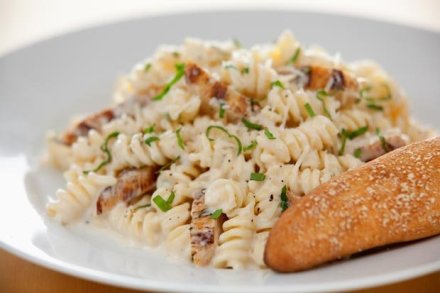
If Thatcher was Britain’s Bonaparte, then Blair was most certainly our Louis-Philippe. It was during the reign of the latter that the bourgeoisie came to dominate the status quo in France, and they needed somewhere to gather. Not for them the salons of the aristocracy – instead, they invented the destination restaurant, imitations of which sprung up all over Paris to cater for the wannabes. Blair was undoubtedly our most haut-bourgeois leader. But what of his gastronomic legacy? Does it survive, or does it, like some ruined Empire man in a Balzac novel, limp around dressed in the tattered remains of its pomp? What, more to the point, is a Blairite restaurant? The answer is: ASK Italian.

Frieze Week Diary: Will my marbles be the first to go, or my liver?

From our UK edition

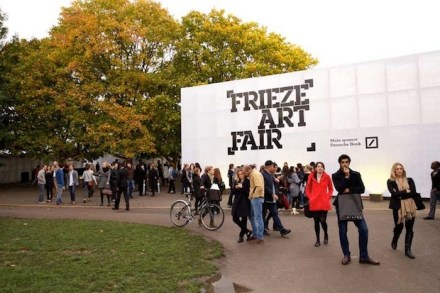
This diary first appeared on Apollo Magazine's website. Monday, 13 October There was something weird in the London air, and it wasn't the rain. E-mails from PRs were hitting my inbox like the salvo from a battery of Gatling guns, and I'd already bumped into one art critic on the point of nervous collapse. ‘Just. Don’t,’ she shot at me when I asked her about all the launch parties I wasn’t invited to. So here we were: on the verge of Frieze, waiting for the ice to break. By the end of tomorrow, art dealers, PRs and journalists would be running screaming through the streets of central London, from Regent’s Park to the river. Gossip would become stronger currency than the Swiss franc.

Ukip’s logo is quite successful – in communicating a spirit of gung-ho crapness

From our UK edition

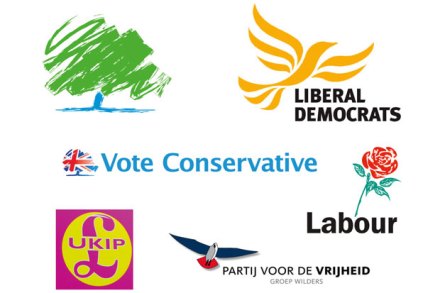
Now that the conference season is over, we can compare not just the party policies, but their logos too. Last week’s Tory conference taught us the patriotic adaptation of their tree — now draped in the Union Flag — doesn’t work any better than the original green-tree symbol. The old symbol demonstrated Conservative values as imagined by the Innocent smoothie design team. It said ‘Tradition’. It said ‘the Environment’. It said, ‘Look what I can do with my crayons, Mummy.’ Stephen Bayley, design expert and Spectator colleague, was one of the hapless advisers tasked with picking the old logo. ‘Not so great,’ he told me, ‘but you should have seen the alternatives.

If the idea of disturbing kraut-punk sung by a troll appeals, you’ll love The Fall

From our UK edition

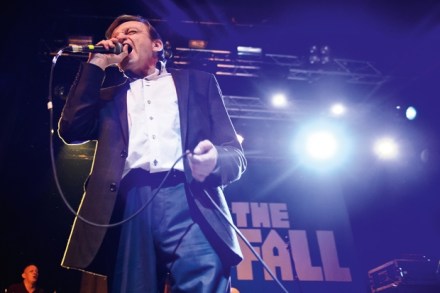
I had a fair idea of what I was in for when I went to see The Fall at Brixton’s Electric last Friday. They’re a middle-aged band from Manchester, just like the Stone Roses, or the various incarnations of New Order. In journalese, this almost makes them ‘Heritage Rock’. I can’t remember when people started using this term, but it’s gone from the repertoire of niche music writing to being A Thing. You can’t go a week without some old beat combo or other announcing their re-formation, and in return they get a sort of protected status. Old rock music has become to the British what films about unfaithful middle-class couples are to the French. That is, culturally important but not very interesting. Consummately psychotic: Mark E.

Artists’ houses

From our UK edition

I’m not sure what took me to Salvador Dalí’s house in Port Lligat, but it sure as hell wasn’t admiration. As a public figure, I hold him alone responsible for the look-at-me culture that gives contemporary art a bad name. And as a painter… don’t get me started. Sceptics slag off conceptual art as a load of navel-gazing nonsense, made by people with no interest in anything other than themselves. But to be fair to Dalí, he did at least have something to say. That is: ‘I’m mad, me!’ No, if I’m honest the only reason I’d slogged up the hill from the nearest town was nosiness. Artists’ houses that have been preserved as museums are always a thrill. They appeal to the busybody in me, but have the same high culture pull as a major art gallery.

The Disappearance of Michel Houellebecq: French chin-stroking at its very best

From our UK edition

Just when you thought Bernard-Henri Lévy had taken a chin-stroking national stereotype as far as it could possibly go, you open Le Monde‘s business pages and see this. Bernard Maris, one of France’s most respected financial correspondents, has written a 160-page book entitled Houellebecq Économiste. Maris’s book sets out its stall as an economic reading of the writer’s oeuvre, promising amongst other delights, a Malthusian interpretation of his 2005 novel The Possibility of an Island and an analysis of the division of labour in The Map and the Territory. Imagine Robert Peston writing a Hobbesian study of Irvine Welsh and you’re halfway there. I like Houellebecq’s novels.

Ever wondered what goes on in those green sheds you see around London?

From our UK edition

You know, those mysterious huts that allow entry only to cab drivers? I used to fancy they were cover for a network of underground bunkers where cackling taxi drivers plotted world domination and new ways to fuck up traffic at the Nag’s Head. One day, I vowed, the truth would be outed. This was how I ended up attending a mass sing-along at the cabbies’ hut in Russell Square. It was part of something called the ‘Cabbies’ Shelter Project’, organised by some very nice people who’d obviously been wondering the same thing. No subterranean tunnels were in evidence. Just a kitchenette, the all-pervasive stench of bacon fat and a cabbie called Mark Bird hammering out a knees-up on a keyboard. Joe le Taxi he wasn’t, let alone Travis Bickle.