Digby Warde-Aldam

Paul McCartney telling me to vote No makes me want to vote Yes

From our UK edition

‘Scotland, stay with us!’ David Bowie declared back in February. And what Bowie says (or doesn’t, quite – attentive readers will remember that he got Kate Moss to say it for him) others parrot. A few days ago, Sir Paul ‘Macca’ McCartney added his name to an open letter urging the people of Scotland to join the Bowie bandwagon. He was late to the party - the other signatories make up a bizarre (and almost entirely English) cross-section of the British entertainment establishment, from Simon Cowell to David Starkey to Cliff Richard. An impressive love-in, then. But it begs the question: will it actually swing any votes? As a young-ish Anglo-Scot living in London, I am completely unqualified to tell you.


I’d like to share my favourite violent pop video with you

From our UK edition

This week has seen the Prime Minister playing Mary Whitehouse again. On Monday he announced that, as of October, music videos on sites like YouTube and Vevo are to carry age classifications similar to those already in place for feature films. You can read the subtext on his ‘deeply concerned’ brow: 'if this is what it takes to get a majority…' In principle, it’s hard to object too much. CDs (if anyone still buys them) carry parental guidance stickers, and a lot of comic books have a ratings system. Video games and DVDs follow the same British film classification board traffic-light system as cinema releases. Unless you take particular issue with any of this, you can’t really do much but shrug. But then you clock how ineffectual the whole thing is.

Roland Barthes was a fan of Sister Sledge – and I can see why

From our UK edition

Disco, the tackiest of music subcultures, is the nostalgia choice de nos jours. The sudden revival is a sort of pop gentrification. You want proof? They play Baccara’s 'Yes Sir, I Can Boogie' in Pret A Manger. Sister Sledge, too. Sledge were never the naffest of the movement’s megastars, but that’s not saying much. Roland Barthes was a fan, whatever that implies. 'How many people do you think are here as an ironic statement?' a friend asked as we stood in Camden’s Jazz Cafe waiting for the Sledge to take the stage. It was a good question. Who actually comes to a disco revival gig? And can such a thing exist outside of inverted commas? The first answer was: hipsters, Peter Stringfellow lookalikes and - wow - normal people.

Has Morrissey finally recorded a decent album?

From our UK edition

Time was when the former Smiths singer surfaced only once every five years or so to do the Carry On Morrissey routine. But the more you ignore him, the closer he gets. Barely half a year after he colonised the books pages, he’s back. Is that a collective groan I hear? The release of a new Morrissey record really shouldn’t be a big deal. Since the mid-90s, his albums have worked to a formula that bolted sanctimonious, self-pitying lyrics to sub-Oasis guitar fluff. In his Autobiography, he repeatedly blames conspiratorial suits for keeping him from the top of the charts. This is sweet, but just not true. The problem, alas, was that the songs stunk. But hang about.

Kanye West is a sanctimonious prat – which is exactly why he’s so great

From our UK edition

What’s the difference between Kanye West and the space cadets of Speakers’ Corner? Without having access to their bank statements, the biggest distinction between the two parties is that when Mr West (‘Yeezus’ to his friends) played a gig in London on Friday, he was standing on a state-of-the-art stage set rather than a stolen classroom chair. Otherwise, it’s pretty hard to make a distinction. You won’t find many differences in their public speech, that’s for sure. ‘I am Shakespeare in the flesh!’ he once declared, before dropping the false humility and admitting that he was in fact ‘God’s vessel.

Crusties, trustafarians, Chris Martin and mud: the deadly predictability of Glastonbury

From our UK edition

Glastonbury weekend is upon us, and the bores are out in force. West London buzzes to the sound of hoorays buying drugs, and the army surplus stalls of Portobello Market are making a killing. Conversation in these parts has been reduced to a long in-joke. Ask what’s so funny and you’ll get the same response: ‘Yah, sorry darl – it’s a Glasto thing.’ The same is probably true in every posh postcode in Britain. I’ve never been to Glastonbury and probably never will – but God have I heard enough about it. ‘Veteran’ friends look at me as one would an idiot child, explaining the life-changing wonder that I’m missing.

Happy birthday, spam! Do you mind if we don’t celebrate?

From our UK edition

The other day, I got an email advertising ‘miracle’ weight loss. You know the sort: English as defined by Boggle and no way on earth that anyone would ever buy the product in question. I opened it without thinking, and was redirected to a blank page. Within minutes, my Hotmail, Twitter and Wordpress accounts had gone haywire; I stared at my computer screen as the original message replicated itself and fired off to every single one of my contacts. My groan lasted about 20 minutes: why, I asked myself, would anyone bother doing this to me? It turned out I’d been hacked on a convenient anniversary. In April 1994, two American lawyers called Laurence Canter and Martha Siegel sent out the first ever commercial spam message.

Michael Jackson’s back from the dead. Again.

From our UK edition

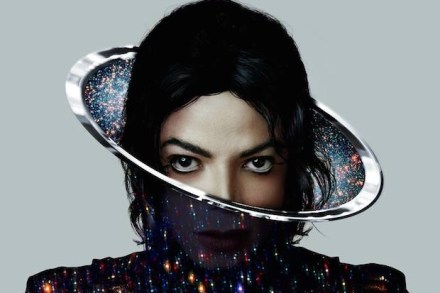
Pop humpty-dumpty Michael Jackson has a new album out today. If that statement seems odd, you don’t know the half of it; five years after his death, Jackson is only on album number two. Compared to a trooper like Tupac – who still manages a couple of albums per year, despite having copped it in 1996 – his posthumous output is actually pretty sluggish. Record labels have always had a talent for cashing in on their dead charges. The zombie discs that result are generally made up of songs the 'artist' was too embarrassed to release when he recorded them. Michael Jackson's new one, Xscape goes one further. It’s a cut 'n' paste job of unused demos and vocal off-cuts remixed by some producers who were quite cool circa 2002.

We watched Eurovision – so you didn’t have to

From our UK edition

I like Europe, even if this may not be the place to admit it, and I like this moment, when our brothers are forced to make fools of themselves in a language none bar the Irish can speak convincingly. Sauf les Français, obviously. ‘Ukraine will win. Europe has solidarity. You’ll see,' says my European flatmate. But after the first batch of votes, it becomes clear that either Ukraine’s entry wasn’t very good, or Putin actually takes the competition seriously. Having missed both Maria Yaremchuk’s Tick-Tock and the inner machinations of the Kremlin’s ministry of culture, my guess is one or both of those things. Many horrors were committed in the process of the panels’ announcements. Azerbaijan begging approval from mother Russia.

Martin Amis may be a pompous arse, but he’s our pompous arse

From our UK edition

Was it Tibor Fischer’s hatchet job on Yellow Dog? Was it the fallout from the  Islamophobia row? Was it getting his teeth fixed? Who knows, but at some point in the last decade or so, Martin Amis fell out of fashion - hard. It’s closer to croquet than football, I grant you, but slagging him off is now a national sport. Reading his books in public has become a bourgeois taboo. Flicking through one of his essay collections on the bus the other day, it didn’t take me long to figure out why my neighbour was eyeing me like I was a sex offender. The insults that get thrown his way, meanwhile, range from ‘not as good as his dad’ to the sort of stuff normally reserved for Holocaust deniers.

House music is great music – or can be

From our UK edition

When Chicago DJ Frankie Knuckles died last week, a novelty number by a Brylcreemed Aussie pop punk group had just reached number one. It displaced Duke Dumont & Jax Jones’s I Got U and ended a three week-run of house singles at the top of the charts. I suspect the following statement may piss off dance nerds, but it’s fair to say that Knuckles had as much claim as anyone to having ‘invented’ house music thirty odd years ago. Essentially, he took the kitsch out of disco and turned it into a synthesiser-heavy global brand. Was it worth the effort, though? Frankie Knuckles and the other Chicago house pioneers made some genuinely great music.

Disposable dance-pop at its best and a Lennon-lite yawnfest. Kylie and George Michael’s new albums reviewed

From our UK edition

George Michael and Kylie Minogue have albums out this week. And while they might both be distinctly second-division these days, they’re both still rather remarkable. George Michael got famous for not being Andrew Ridgeley, and has since redefined the status of adult-oriented pop. He has also written the only Christmas song in history worth playing all year round and made the Hampstead branch of Snappy Snaps a tourist destination. I like him a lot. Minogue, meanwhile, is cheesy, knowing and resolutely budget in the international diva stakes. As Aldi is to Waitrose, so Kylie is to Beyoncé. But she’s made some terrific records – have you given up pretending you don’t like Can’t Get You Out of My Head yet?

Derek Jarman: no characterisation, no narrative, no poetry – no good

From our UK edition

A week or two ago, author Philip Hoare wrote an article for the Independent, describing Derek Jarman as ‘a modern-day John Dee, the Elizabethan alchemist’, ‘an Edwardian Andy Warhol, a Victorian Jean Cocteau’ (huh?), and, inevitably, ‘a national treasure’. It’s symptomatic of the way that artists, writers and celebrities of a certain age haven’t been able to stop themselves gushing over his vision, his garden in Dungeness and how absolutely lovely he was. They don’t ever talk about his films, though – and with good reason. Maybe I’m missing something marvellous, but I’ve just suffered Blue, Jarman’s self-conscious Definitive Artistic Statement, for the third time in five years.

Carry On El Comandante. Does the world need a Hugo Chavez exhibition?

From our UK edition

The other day I got an invitation to a do called ‘For Now and Forever – a reception and photo exhibition celebrating the life of Hugo Chávez’, with speeches by various left-wing notables, including the one and only Len McCluskey. It’s been a year since Venezuela’s cuddly comandante passed away, and supporters of his Bolivarian revolution want you to know it. Attracted by the prospect of a free glass of wine and the comedy value of hearing somebody say ‘¡Hasta la Victoria Siempre!’ unironically, it was a no-brainer. And so I found myself in Fitzrovia’s Bolívar Hall, surrounded by the most 70s crowd this side of a Van der Graaf Generator revival.

Review: John Harle/Marc Almond, Barbican Hall. Ignore the prog-rock pretension. Almond is a joy.

From our UK edition

Funny how quickly you forget the makeup of the average highbrow pop concert. It’s 96 per cent male, obviously, and very partial to a receding hairline-ponytail combo; last night’s performance by saxophonist and composer John Harle and former Soft Cell singer Marc Almond brought these types out to the Barbican in force. They were here to see The Tyburn Tree, a psychogeographical song cycle (!) based around  London folklore and mysticism. Thus, whatever the evening promised, a degree of mass chin-stroking was inevitable. The audience sat down to complain about the quality of the craft beer on offer to their imaginary girlfriends, and the band began to tune up. This went on for a very, very long time. Finally, though, the overture to the performance began.

Is Pussy Riot’s music actually any good?

From our UK edition

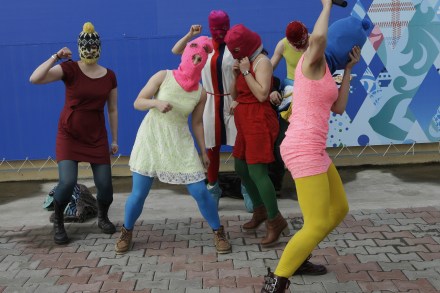
Victims of state persecution, ambassadors for day-glo knitwear and wank fodder for beardy liberals the world over, the members of Pussy Riot have been filling both prison cells and column inches since 2012. In the process, they’ve also become one of the most famous bands on the planet. But let me ask you this – have you ever actually heard any of their music? And crucially, is it any good? Was it purely their politics that led the Cossacks to attack them with horsewhips last week, or is that just the way they do pop criticism in the Caucasus? We took to the internet to get some balanced and entirely un-facetious critical perspective.

We watched the Brits so you didn’t have to…

From our UK edition

It goes without saying that the Brits are not the draw they once were. But I was sick of being cynical about them. I sunk into my chair with the reservoir of alcohol I had bought and waited to witness something other than James Corden and mediocre musical performances. And did I? The fact that Ellie Goulding was named best British female solo artist should tell you everything. Of course I bloody didn’t. Unless you count David Bowie’s unionist shout out, delivered by a Kate Moss-shaped proxy, as inflammatory (it wasn’t), this junket was as boring and self-congratulatory as last year’s. And the year before. And the year before that. Compère James Corden did some things he thought people would find amusing. Which they didn’t.

The 10 most annoying phrases of 2013

From our UK edition

Sifting through the heaps of discarded language and redundant memes expended in the last twelve months, it’s clear that they don’t make ‘em like they used to. Ah, for the days when clichés were built to last! Twitter now rolls out disposable buzz phrases like a chopstick factory, and all we can do is get a bit angry and forget about them. This is not to say that Neology is dead. This year gave us ‘Twerking’, which I rather like - provided it remains confined to inverted commas rather than let loose in my kitchen. Another 2013 winner is ‘Chumley’ – shorthand for laddish berks with aristocratic pretentions and red trousers. It’s useful, it’s funny and it genuinely identifies something previously unformulated as a word.

Stuck for Christmas presents? Hit the museums

From our UK edition

The plan to do last year’s Christmas shop at Peter Jones on 23 December was doomed from its sorry inception. I was soaked by the time I got there, my plimsolls waterlogged, kept going only by my expectation of a quiet and civilised department store, rammed to the skylights with perfect presents. Instead, I found myself spearing a path through the seething, teeming, hostile masses with my sodden umbrella, and, worse — finding its  stock all but decimated. The claustrophobia that ripped through me was so violent that I was forced to run to the toilets to hide — and even then I had to queue. I shivered in the stairwell and contemplated defeat. What do you do about all those uncles? In-laws?

Are you a Yuffie? 

From our UK edition

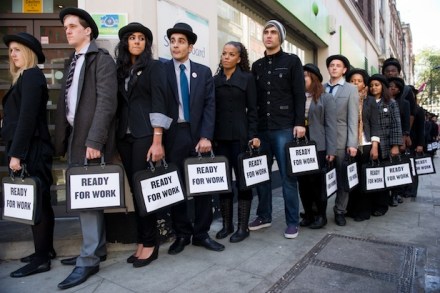
I remember, during one of my last classes at UCL, the topic of conversation turned from the cultural implications of Algerian independence to the subject of life after university. Our lecturer, a grumpy ‘progressive Hoxhaist’, told us that things had never been worse, and out of the 20 or so students in the room, only one or two would have found any kind of full-time employment by the time the year was out. ‘But it’s not fair!’ cried one girl, ‘we’ve all worked so hard over the last four years, we’re all clever [speak for yourself, I thought], we all have debts and we’re just going to be ignored!’ ‘Who are you going to blame, then?’ responded the lecturer. The question was a pertinent one: who were we to blame?