David Shipley

David Shipley is a former prisoner who writes, speaks and researches on prison and justice issues.

Police are in a muddle over transgender strip searches

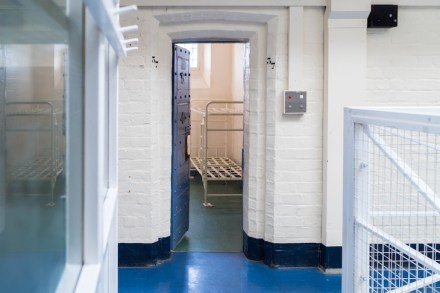
Have you ever been strip searched? I have. The date it happened – 7 September 2020 – is etched on my mind. That morning, as part of a security sweep on HMP Wandsworth’s H Wing, a group of male and female officers ‘span’ my cell. With the door closed, the women left, and one of the officers asked me to remove my vest, then shorts, then boxers. Next, they asked me to squat, while one of the men bent down and shone a torch at my anus. I felt vulnerable. My knees shook. When he said: 'Sorry mate, I promise you this is worse for me than it is for you', I felt a little better. I think I even laughed. But if a woman had been present I would have felt far more humiliated. Fortunately the law is clear about how such searches should take place.

How I found the true meaning of Christmas in prison

What do prisoners eat on Christmas Day? Some tabloid reports might lead you to think ‘lags’ are ‘gorging’ themselves on turkey with all the trimmings. Even the official prison menus from the Ministry of Justice make lunch on 25 December sound appetising: inmates at HMP Manchester, a high-security jail, get ‘Traditional Turkey Dinner with stuffing, roast potatoes, boiled potatoes, vegetables (and) sausage wrapped in bacon & gravy’ served up with ‘Christmas pudding & white sauce and Christmas cake’. As you would imagine the reality is very different.

What will fix Britain’s prisons?

19 min listen

HMP Bedford was issued with an urgent notification yesterday, meaning it must immediately make reforms to improve. It’s the fifth prison to receive such a notification this year. What’s going wrong in Britain’s prisons, and what will fix them? Max Jeffery speaks to former prison governor Ian Acheson and former prisoner David Shipley.

Alex Chalk has bought the prison service a little time – that’s all

In his House of Commons speech yesterday, Justice Secretary and Lord Chancellor Alex Chalk shifted the blame for problems with our prison system, announced liberalising reforms and promised a bright future. Ultimately though he’s only bought a little time.  Chalk began by reaffirming the government’s commitment to public protection. In a significant shift rapists will now spend their entire sentence in prison, as opposed to half of it or two-thirds. While this headline will probably prove popular, it does carry some risk: under this arrangement they will be released without any supervision from probation. There’s a chance they will be more likely to reoffend as a result, but that problem is many years away when someone else will be Justice Secretary.

No wonder Britain’s prisons are almost full

It’s finally happened. Our prisons are almost full. Last night the Times reported that ‘Lord Justice Edis, the senior presiding judge for England and Wales, has ordered that sentencing of convicted criminals who are currently on bail should be delayed from Monday’. Prisons in England and Wales are now unable to find cell space for every criminal that judges believe should be jailed. This means that next week people convicted of very serious crimes, including historic sex offences, may be found guilty then sent home on bail. Beyond the obvious public protection concerns this delay to justice will further traumatise victims, and reduce confidence in the whole system.           Anyone could have predicted this crisis.

Overseas prisons will be disastrous for British inmates

Our prisons are overcrowded, dangerous and out of control. The prison population is rising faster than we can build new cells. Prisoners spend far too much time in their cells, developing mental health problems instead of skills. On Tuesday, the Ministry of Justice announced that it has the answer. Perhaps surprisingly they didn’t announce more new prisons, or a recruitment drive or to a new scheme to release non-violent prisoners earlier on home detention curfew or ‘tag’. In fact, the new policy is to send prisoners overseas. No, I didn’t have ‘bringing back Transportation’ on my Conference bingo card either. The press release states that the government will look to partner with other European countries in order to rent their prison space.

The toxic prison attitude that can cost inmates their lives

David Morgan, a 35 year-old man, told staff he’d taken an overdose. A nurse decided the man seemed drunk and needed to ‘sober up’. No proper medical assessment was conducted, and staff locked him in a holding cell. Over the next two and a half hours David became ‘increasingly distressed and unwell’, ‘incapable of coherent speech’ and ‘was unable to prevent himself from repeatedly falling on the floor’. Meanwhile the nurse, and prison staff looked on. As a result of these multiple falls, David broke his nose, fractured both legs and sustained significant bruising to his head and face. Eventually he lost consciousness, was taken to hospital and died eight days later.

Bombshell: Why aren’t we giving Ukraine what it needs?

36 min listen

On the podcast this week: Boris Johnson writes The Spectator’s cover piece, urging the West to supply more military assistance to Ukraine, in order to bring a swift end to the war. Former commander of the joint forces Sir Richard Barrons and The Spectator’s Svitlana Morenets join the podcast to ask why aren't we giving Ukraine what it needs? (01:21) Also on the podcast:  Charlie Taylor, His Majesty’s chief prisons inspector, writes in the magazine about the state of crisis in British prisons. This is in light of Daniel Khalife's escape from Wandsworth prison last week. Charlie is joined by David Shipley, commentator and former inmate at Wandsworth to discuss the state of crisis in British prisons.

Don’t condemn McDonald’s for giving prisoners a day job

In the aftermath of Daniel Khalife’s escape and recapture, prisons are in the headlines. Even the most commonplace events, like a prison stabbing, are being widely reported. So, too, is the revelation that 'prisoners are working in McDonald's': that was the gist of an article in the Daily Mail which revealed that a female prisoner was flipping burger and serving customers. But rather than condemn this initiative, we should praise McDonald's for taking on inmates and giving them another chance. The female McDonald's worker, who returned to Askham Grange in Yorkshire after her shift, is far from alone in being let out for the day: approximately 100,000 Releases on Temporary Licence (ROTLs) occur every three months. These releases mostly take place from Category D or ‘open’ prisons.

HMP Wandsworth isn’t the only prison in crisis

Daniel Khalife has been on the run for three days. There’s a £20,000 reward for information leading to his capture and police have spent a night disturbing Richmond Park’s deer. As of Saturday morning reported sightings suggest he fled the lorry and has made his way to the Chiswick area. Rightly, many questions have been asked about HMP Wandsworth’s failures. Why was Khalife allowed to work in a high security risk role in the prison’s kitchens, providing him with easy access to an escape route? Why didn’t Wandsworth’s gate staff check the underside of the delivery lorry with mirrors, as is policy? No doubt the independent inquiry announced by Alex Chalk, the Secretary of State for Justice, will answer these questions in time.

A Wandsworth prison jailbreak was waiting to happen

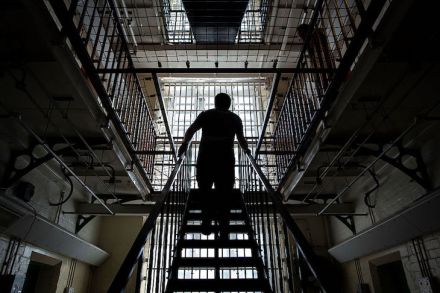
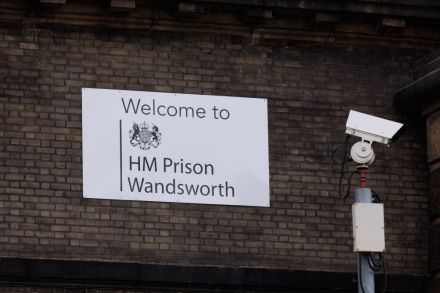
As a former inmate of HMP Wandsworth, I can’t say I’m surprised that a prisoner, Daniel Khalife, has escaped. When I was jailed there in 2020, I saw for myself that Wandsworth is understaffed, poorly-managed and often so badly organised that it loses track of prisoners for extended periods of time. Last year’s report by HM Inspector of Prisons shows that the situation has only deteriorated since.  ​The inspectors describe a prison with 'not enough staff to make sure prisoners received even the most basic regime'. When this inspection took place, Wandsworth’s population was 1,364. The report warned against increasing the prison’s population but according to the Ministry of Justice’s last published figures, Wandsworth’s population has risen to 1,550.

Why Britain’s prisons will only get more violent

Prison and probation staffing is approaching dangerously low levels’ said the Ministry of Justice in a document they published by mistake this week. It’s hardly surprising to those of us who know about our failing prison system. In June, the Justice Select Committee published the results of a detailed survey of prison staff showing that half of frontline staff don’t feel safe at work. Frontline staff are ‘band 3-5’; the officers, senior officers and custodial managers who spend their days working with prisoners. Their responses make grim reading. Over 80 per cent said morale was poor in their prison. More than 60 per cent of those officers said their mental health wasn’t taken seriously at work.

The hopeless cycle of addiction – and drug running – behind bars

It’s my seventh night in HMP Wandsworth at the start of my 45-month sentence for fraud. I live on A Wing now, with a new cellmate, John, a heroin addict. He’s an older guy, short, very slight, sores all over his face, neck and hands. Prison is full of men like John: addicts who get sentenced to a few weeks, or months, in prison. Some are regulars, welcomed back by guards and prisoners. One man completes three sentences while I am imprisoned there. What good does it do banging men like this up? John is 52 and the best part of his life – which he has spent mostly in and out of prison – is behind him. The first of his many short sentences was in 1982, when he was just 14. In the years since, John has been in and our of prison, fighting his addiction to drugs and committing crimes.

My battle with bureaucracy behind bars

On my first night in prison, I slept well. Perhaps the previous day’s stress and exhaustion played a part. Neither the thin rubber mattress, scratchy orange nylon blanket nor my feet hanging off the end of the bed stopped me falling into a deep sleep. Banging and shouting from other cells woke me a couple of times, but I soon slept again. When I woke, I felt surprisingly calm. My cellmate in HMP Wandsworth, Peter, seemed fine: stable, calm, not on drugs. And the bad thing I’d dreaded for years had finally happened. Here, imprisoned – sentenced to 45 months for fraud – I no longer had to torture myself with those fears. I looked about the cell. No kettle or TV. Two pieces of paper on the floor, just by the door. I climbed down and picked them up.

What’s it really like on your first night in prison?

Before I went to prison I thought a lot about what it would be like. Almost a year passed after I pleaded guilty to fraud and my sentencing, in February 2020. Informed by TV and film, I expected prison would be violent, dangerous and drug-filled. I was terrified. On 6 February 2020, I arrived at Southwark Crown Court with a suitcase full of clothes, books, pens and paper. After the judge sentenced me to 45 months, a guard took me down into the holding area beneath the court. I handed over my property and had a brief meeting with my barrister. Then the guards locked me in a cell. The only objects in the cell were two small plastic benches, neither quite long enough to stretch out on. I sat. I wrote. I waited. Eventually the door opened.

How prisons teach inmates that crime pays

John Major is wrong when he suggests only violent offenders should be automatically locked up – and as a non-violent ex-offender I should know. But focusing on the number of prisoners in Britain is a distraction from the real issue: reoffending. British prisons churn out prisoners who simply go on to commit more crime. Given what goes on behind bars, it's little surprise. A functioning, effective prison system should teach inmates to respect rules and behave in a proper manner so that they are more likely to be productive and law-abiding members of society on release. Many prisoners, however, learn a different lesson in jail: that breaking rules pays off.

Why the Channel smuggling business will never end

‘Have you got a light mate?’ The shout came from the top of the slipway on Deal beach. Bill, who had just arrived on the shore with a boat of migrants, looked up. Between him and the car park, two men were walking towards him. It was 1am, but the bright full moon lit them up like daylight. As Bill passed, worried what the men wanted, he went to pull his fist out of his pocket.  ‘ARMED POLICE!’ the man yelled and sprang forward, rugby tackling him. Bill’s face and chest smashed into the pebble-strewn beach and his knees slammed into the hard concrete slipway. All around him crowded black-clad armed men. Bill lay there, too shocked to struggle. ‘I am arresting you for conspiracy to facilitate unlawful immigration…’.