David Shipley

David Shipley is a former prisoner who writes, speaks and researches on prison and justice issues.

Starmer’s plan to ‘smash the gangs’ isn’t serious

Keir Starmer has repeatedly promised to smash the gangs to secure our borders. But the reality is rather different. Yesterday, the Prime Minister tweeted a short clip once again attempting to reassure British voters that the government is ‘going to the source to smash the people smuggling gangs'. The video is an odd, cheap thing. Set to possibly the most generic soundtrack available and voiced over by an utterly bored-sounding young man, it shows images of small boats full of migrants, foreign police, and open water. Eye-catchingly, it promises to reveal just 'how we’re controlling our borders’. Unfortunately, almost every single claim it makes is misleading or laughable.

England now has a blasphemy law

Officially, blasphemy was abolished by New Labour in the 2008 Criminal Justice Act. But today, with the conviction of Hamit Coskun, blasphemy laws now exist in England.  This law has been created by the Crown Prosecution Service (CPS) and District Judge John McGarva. Between them they have prosecuted and found a man guilty of a ‘religiously aggravated public order offence’ because he burned a Quran outside the Turkish consulate. The CPS mounted a prosecution conflating the religious institution of Islam, with Muslims as people, and a British judge has accepted this. Islamic blasphemy codes are now being enforced by arms of the British state, via what the National Secular Society describes as ‘a troubling repurposing of public order laws as a proxy for blasphemy laws’.

Tommy Robinson and the truth about jail beards

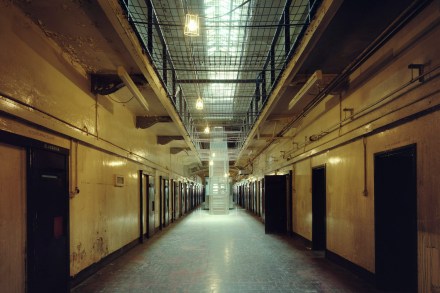
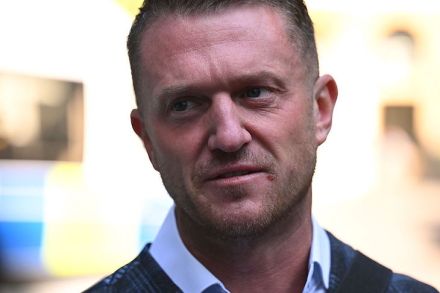
When Tommy Robinson walked out of prison this week, he was unrecognisable. The far-right activist, who was jailed for contempt of court, was sporting a huge bushy beard as he emerged from HMP Woodhill. Robinson looked more like a man who had been marooned on a desert island, or lost in the mountains, than someone who had spent a few months in a Category B prison in Milton Keynes. Robinson’s prison beard made me think of my own. When I was locked up at HMP Wandsworth, I grew a beard even wilder than Robinson’s. For the first six months in prison, I didn’t touch my facial hair, letting it grow and grow as the fat fell off me, until I looked nothing like my prison ID photo. Eventually I looked so different that I had to ask the prison officers for a new ID card.

Why do police accept criminal drug use?

Another day, another sign of the British state’s acceptance of criminality. This time it’s the news that almost half of people caught in possession of Class A drugs avoid criminal sanction, with the police either issuing a ‘community resolution’, which does not create a criminal record, or avoid any action at all ‘in the public interest’. This represents a dramatic change since 2016, when only 7.5 per cent of those caught in possession of hard drugs avoided prosecution. Why has this happened? And what does it mean for the drugs trade in Britain?

Robert Jenrick is right to confront tube fare evaders

Robert Jenrick tweeted a 60 second video this morning, showing him confronting suspected fare dodgers at Stratford London Underground station. He watches people reportedly forcing their way through the barriers while TfL staff seemingly do nothing to stop them. Jenrick then follows the suspected freeloaders down escalators, challenging them on why they haven’t paid. They’re not apologetic of course and none seem to show the slightest shame. One seems to threaten the shadow justice secretary, with Jenrick responding ‘you're carrying a knife, did you say?’. In his narration, Jenrick says 4 per cent of travellers on the London Underground haven’t paid for their fare – I checked with TfL and the number they quote is 3.5 per cent across the whole TfL network.

Decriminalising cannabis would be bad for black Londoners

Sadiq Khan, London’s mayor, has called for the possession of cannabis to be decriminalised, because he believes that the police disproportionately target black Londoners when policing drug possession. This announcement by Khan is in response to a report by the ‘London Drugs Commission’ (LDC), a body set-up by City Hall, chaired by Tony Blair’s old flatmate, Lord Charlie Falconer, and with an ‘Expert Reference Group’ including David Gauke, whose Sentencing Review reported just last week. Amongst other topics, the lengthy report reviews cannabis policies across the world, and identifies that black people in London are more likely to be searched for cannabis, although those searches are no more likely to find cannabis than when white people are searched.

My friend the people smuggler

Usually when I start listening to a true-life podcast, I don’t know how it ends. That’s not the case with The Smuggler, BBC Radio 4’s new investigation into people smuggling. Across ten episodes, its Orwell Prize-winning presenter, Annabel Deas, tells the story of ‘Nick’, on the face of it an unlikely protagonist. Nick is white, English and a former soldier in the British Army. He’s also a friend of mine. We met in jail in 2021 and have stayed in contact ever since. So I know Nick’s story. I even know how it ends. Despite all this, I found myself absolutely gripped by The Smuggler. This is partly because it’s such a fascinating, and timely, topic. Migration is rarely out of the news. Keir Starmer keeps promising to ‘smash the gangs’ and ‘stop the boats’.

Can Labour prevent the justice system from collapsing?

David Gauke’s long-awaited Sentencing Review is here. If its recommendations are accepted, we will see thousands of people spared jail and thousands of inmates released as early as a third of the way through their sentence. The government is relying on the review to save the justice system from collapse. As the Lord Chancellor explained just last week, despite plans to build another 14,000 prison places, the system simply can not keep pace with the growth in our prison population. For months now, ministers and officials have been focused on keeping just enough space in the prison system until the Sentencing Review can be implemented. So now it has arrived, will it avert disaster? Probation will need every penny In some ways, Gauke’s recommendations are radical.

Banning pointed kitchen knives won’t make us safer

Anarcho-tyranny is a term used to describe societies which obsessively regulate and punish law abiding citizens, while being unwilling or unable to protect them from crime, violence and abuses of their good nature. These societies are terrible places to live.  Many people believe that the UK is either already an anarcho-tyranny or close to becoming one. That argument is strengthened by today’s report that the, ‘heroic yoga teacher stabbed in Southport attacks calls for ban on pointed kitchen knives’. I do not wish to diminish Leanne Lucas’s suffering, or her bravery. Axel Rudakubana stabbed her five times as she fought him off, and managed to save several young girls from him. Leanne is a hero and deserves all the honour and support we can offer her.

Lucy Connolly is the victim of a great injustice

Lucy Connolly has lost her appeal against her 31-month sentence for inciting racial hatred following the following the horrific murders committed by Axel Rudakubana in Southport. But having attended the hearing l believe she is the victim of a great injustice. I believe the evidence I heard at the Royal Courts of Justice showed that Lucy Connolly did not understand the effect of pleading guilty after she was advised by her original lawyer. I believe that Lucy Connolly is a victim of the state’s desire to crush the spontaneous rioting which took place last August. And I believe that comments like Lucy Connolly’s, however unpleasant, should not be illegal in a civilised country.

The problem with Shabana Mahmood’s electronic tag roll-out

David Gauke’s sentencing review, which will report this week, is going to be far bolder than anyone expected. Today it has been reported that the Lord Chancellor Shabana Mahmood has secured £700 million of funding from the Treasury to buy 30,000 more electronic ‘tags’ which will be used to curfew people at home, track their alcohol and drug usage, and log where they have been. This will be a huge expansion of the tagging system, which currently oversees about 20,000 people. Given that the system is already struggling, it's hard not to be sceptical about this announcement. At present, about 11,000 tag-wearers are people on bail, or immigration offenders, while the other 9,000 are wearing a tag as part of their sentence for a crime.

The legal aid hack is very worrying

If you are ever unfortunate enough to need legal advice after being charged with a crime, and you can’t afford to pay for a lawyer, you will probably end up turning to the Legal Aid Agency (LAA). I’m familiar with the system. When I was charged with fraud in 2018 I applied for legal aid. When you apply, the LAA asks you for a great deal of information, including your national ID numbers, criminal record, employment status, financial information and even any debts you have and regular payments you make. In the wrong hands this data could be used for identity theft and potentially blackmail.

We are losing control of our prisons

After the horrific attacks at Frankland, after last week’s attack at Belmarsh, and after countless warnings, today’s news of three separate assaults on prison staff is grim, but unsurprising. According to the Prison Officers Association (POA), two assaults occurred at HMP Woodhill, the jail near Milton Keynes which holds Tommy Robinson and a high number of Muslim prisoners. In one assault an inmate allegedly attacked an officer. In the other, believed to have taken place on a specialist unit within the jail, a prisoner was told to return to his cell, and is reported to have responded by slashing at the officer with an improvised weapon. That officer is said to have sustained serious injuries to their neck and ear, requiring stitches and surgical glue.

Peter Sullivan should never have been in prison

Peter Sullivan, a man of ‘limited intellectual capacity’ and ‘suggestibility’, has been exonerated after spending 38 years in jail for a murder he didn’t commit. Now aged 68, Sullivan has spent most of his life in high-security jails. DNA evidence has demonstrated that another man was responsible for the brutal assault and murder of 21-year-old Diane Sindall in Birkenhead, Merseyside, in 1986 . How could such a horrific miscarriage of justice happen, and what has Peter endured these past four decades? Peter has lost the best years of his life After being arrested, Peter was interviewed without any lawyer present, with the police saying that legal advice would have been ‘a hindrance to the enquiry’.

Why was Axel Rudakubana given a kettle?

Late last night, news broke of another attack by a high-profile prisoner at what should be one of our most secure jails. This time it seems that Axel Rudakubana, the Southport killer, has thrown boiling water in the face of an officer at HMP Belmarsh, the London jail which Hashem Abedi was moved to after his brutal attack on staff at HMP Frankland last month. Rudakubana is reported to have committed this attack on Thursday afternoon. Thankfully the member of staff has already been released from hospital and is expected to make a full recovery. The Ministry of Justice have insisted that ‘violence in prison will not be tolerated and we will always push for the strongest possible punishment for attacks on our hardworking staff’. Frankly, it isn’t good enough.

Why are violent prisoners continuing to offend in jail?

Even for our broken prison service it’s been a terrible few days. On Saturday the jihadi terrorist Hashem Abedi used boiling oil and ‘homemade weapons’ in an assault at HMP Frankland which hospitalised three prison officers, the Prison Officers' Association has said. Given the severity of the injuries, with one man suffering a severed artery in his neck and the other being stabbed at least five times in the chest, it’s only thanks to luck that no staff were killed. Then, this morning, it emerged that John Mansfield, a convicted murderer serving his sentence at HMP Whitemoor, was killed by another inmate on Sunday. While few will shed tears for Mansfield, who killed his elderly neighbour in 2006, this killing raises serious concerns about the security and safety of our jails.

How could the HMP Frankland attack happen?

On Saturday, an awful assault took place at HMP Frankland. According to a statement from the Prison Officers’ Association (the union for frontline jail staff), Hashem Abedi, brother of the Manchester Arena bomber, allegedly committed an unprovoked attack on three prison officers. It seems he  ‘threw hot cooking oil’ over them, and then used ‘home made weapons’ to stab them. According to the union, the officers ‘received life threatening injuries, including burns, scalds and stab wounds’. All three officers were rushed to hospital. As of 6 p.m. yesterday evening the Ministry of Justice confirmed that one officer, a woman, has been discharged, and two are still being treated.

Who will crack down on Britain’s corrupt prison governors?

It’s a story so wild as to be almost unbelievable. Kerri Pegg was a ‘rising star’ of the prison service, promoted to governor at the open jail HMP Kirkham just six years after joining as a graduate trainee. And yet she was also in a relationship with a prisoner, Anthony Saunderson, serving ten years for drug offences. Saunderson was an inmate at Kirkham, and Pegg was ‘known to spend a lot of time in her office’ with him. Then, in October 2018, she broke prison rules to approve Saunderson’s release on temporary licence (ROTL). It seems that Saunderson was very grateful, gifting Pegg a Mercedes car. Despite Pegg claiming she had done nothing wrong, when police searched the governor’s home, they found a toothbrush and flip-flops with Saunderson’s DNA on it.

What is Labour doing to fix the grooming gangs scandal?

Thank God for Katie Lam. Yesterday the government tried to conduct a grubby betrayal of thousands of young girls groomed and raped in towns and cities across the country. On the last day parliament sat before the Easter recess, Jess Phillips, the junior minister for safeguarding and violence against women and girls spoke to an almost empty Commons to update MPs on the government’s plans to deal with ‘grooming gangs’. Few MPs were present. Phillips assured her colleagues that Labour are developing ‘a new best practice framework to support local authorities that want to undertake… local inquiries’. A meagre £5 million will be available for local authorities should they wish to investigate organised child rape clans in their areas. Everything is to be ‘locally-led’.

What the Southport Inquiry needs to do

The Southport killings were horrific, but should they have happened at all? We already know that the government’s counter-extremism programme, Prevent, failed to identify the risk Axel Rudakubana posed. That’s a key question which the Southport Inquiry, the first stage of which began on Monday, aims to answer. The Home Office has said that the inquiry will ‘leave no stone unturned in uncovering how this attack happened and to not let any institution of the state deflect from their failure’. To that end the Southport Inquiry is to be ‘statutory’, meaning it will be able to compel witnesses to attend and give evidence under oath, require the production of documents and other evidence and hold its hearings in public.