David Blackburn

Nuclear weapons, Scotland and the future of the United Kingdom

From our UK edition

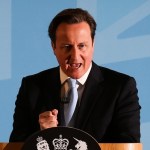
David Cameron – who, in case you’d forgotten, leads the Conservative and Unionist Party – made a rare visit to Scotland yesterday. He spoke about defence. His message was clear: an independent Scotland could not expect to win defence contracts from what remains of the United Kingdom. Jobs and expertise, therefore, would be lost. Vote no. This is, as Iain Martin notes, smart politics. The Nationalists are weakest on those briefs which are the central functions of a nation state: defence, foreign policy and welfare. Cameron, as the British Prime Minister, should make more of this natural advantage. (Incidentally, Alex Massie has an excellent account of the referendum battle. It’s by far and away the best guide to the subject.

The Philpotts – what happened to Labour’s view that we should be tough on the causes of crime?

From our UK edition

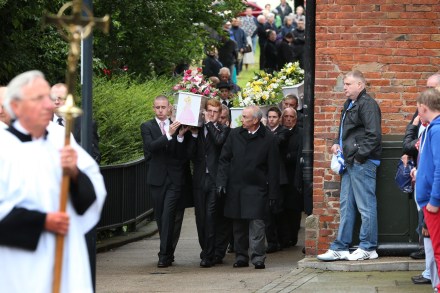
Several Labour MPs have expressed their disapproval of George Osborne’s comments about the taxpayer funding Mick Philpott's lifestyle. For example, Andy McDonald, MP for Middlesbrough, said that welfare is a ‘completely separate discussion, it should not be had in the context of the most appalling crime of a father killing his six children. It just demonstrates how out of touch George Osborne is. He may as well make adverse comments about the entire population of a town or a religion, it’s absolute nonsense.’ The obvious problem with this is that Osborne acknowledged that they were separate issues.

George Osborne dips Mick Philpott into the welfare debate

From our UK edition

The Chancellor of the Exchequer has just made a statement about Mick Philpott; the man convicted of the manslaughter of 6 of his children; the man who also lived off enormous benefit hand outs, banking the equivalent of £100,000 salary in benefits from various sources if reports are to be believed. George Osborne said: ‘There’s a question about the welfare state, and taxpayers who pay, subsidising lifestyles like that’ This is a careful statement. Osborne avoids the mistake of saying that the system created Philpott’s evil. In fact, he says nothing. He merely raises the question about a system that allowed Philpott to live as he did for so long at your expense. Asking the question, of course, invites his opponents to answer.

The renewal of the class system

From our UK edition

Fun can be had by playing with the BBC’s new class calculator. The calculator, which was designed with the help of several eminent sociologists, replaces the 3 classes with seven stratifications, drawing on social criteria (such as taste, accent and hobbies) as well as more tradition measurements (such income group and upbringing) to determine membership. Toby Young writes about the demise of the three classes in tomorrow’s magazine. Here is a preview of what he has to say: ‘One advantage of moving beyond the socio-economic definition of class is that you end up with a less inflammatory portrait of modern Britain.

The world should see that North Korea is no laughing matter

From our UK edition

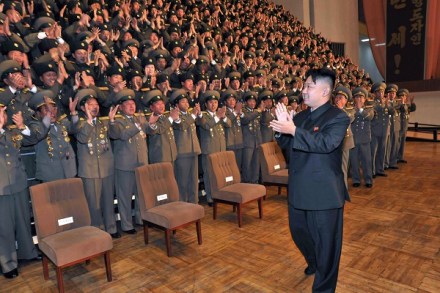
I found myself snorting with derision last night while watching a news bulletin about the Korean situation. The sight of a Gummy Bear like Kim Jong Un vowing to obliterate the United States was too much after a long day. But then I checked myself: what if, this time, the madmen are serious? It is, of course, a leap to say that a regime of such longevity is mad. There is cunning in Kim Jong Un’s apparent lunacy, which has been heightened yet again by news that he has closed the border to South Korean workers in a jointly-run industrial zone. Such actions are not created ex nihilo.

George Osborne’s benefits speech – full text

From our UK edition

George Osborne’s speech is below. As you will see, it is a bold defence of the government’s policies on tax and welfare, including the 50p rate cut. There was a clear moral tone to Osborne’s words, which may go some way to challenging the notion that he is an insubstantial political figure. It was, he implied, wrong to delay deficit reduction, wrong to penalise work, wrong to condemn people to poverty. There was bald politics too as he sought the votes of ‘hard-working families'. He attacked the ‘vested interests’ which were on the wrong side of the debate, goading them to carry on complaining and alienate themselves.

Mixed messages on the minimum wage

From our UK edition

The government has managed to upset its own apple cart while trying to walk in a straight line. The indefatigable Paul Waugh inquired about rumours that the government was considering cutting or freezing the minimum wage. The spokesman replied: 'It's something we are looking at. We need to make sure that it's working.' This caused something of a stir. Then there was a clarification, which Waugh reported as: ‘No.10 stresses: It's for Low Pay Commission to report back to ministers before decisions taken.’ The clarification did not dispel my confusion. Last week, business minister Matt Hancock said that Conservatives should ‘strengthen’ the minimum wage.

George Osborne launches welfare counter-attack

From our UK edition

The petition to get Iain Duncan Smith to live on £53/week has amassed more than 122,000 signatures. And counting, quickly. The petition was inspired by IDS remarking, on yesterday’s Today programme, that he could live on such a welfare settlement. The secretary of state could not have said anything else; yet these incidents always create media firestorms. The IDS blaze still burns this morning; but that may not unnerve the government: from its perspective, news bulletins devoted to IDS’ gait are preferable to those devoted to the vulnerable. After a gruelling, though not unsuccessful, 24 hours warring over welfare cuts, the government is mounting a flanking counter-attack.

Council tax increases, but might councils spend more wisely?

From our UK edition

One development that IDS and George Osborne did not dwell upon in their Telegraph piece mentioned earlier was council tax, which, according to the Joseph Rowntree Foundation, is due to increase by £140 for the average poor family. The government has defended its spending settlement by donning its localist garb, for a moment, to argue that councils should marshal their resources with more care to protect rate payers. The government’s aim is to shift responsibility from Whitehall to town halls in the hope of also shifting blame for unpopular policies. Local government resists.

Osborne and IDS promise a ‘better deal’ for working families. But a better deal is not necessarily a good deal

From our UK edition

As Fraser says, the welfare changes, cuts to legal aid and so forth, which have come into force today, have got a universal thumbs-down in the left-wing press. I expect that the barrage of negative headlines will please No.10 (you cannot make an omelette etc.). It also has the comfort of knowing that the public is broadly in favour of reform. But the government might be disgruntled at the comparatively muted reaction of the right-wing press. The Telegraph’s coverage is intriguing. It concentrates on the Tories’ clash with the church over benefit cuts, which was mentioned by Christian Guy in a post yesterday.

Sir Andrew Motion, there’s much more to rural life than housing

From our UK edition

Five years of living in squalid parts of London has made me appreciate my rural upbringing. I grew up on a small farm on the borders of West Sussex, Surrey and Hampshire. It’s an area of outstanding natural beauty, a stretch of wooded undulations pocketed between the North and South Downs. The house is perched on one of these small hills, facing south east with a view across the flat expanse of East Sussex. On a clear day such as this, you can see the shadow of the Low Weald, the hills which divide Sussex and Kent, through the haze. There’s nowhere I’d rather be. It is a quiet corner of England; but it has much more to offer than beauty.

What to do about Syria? Easter edition

From our UK edition

This morning’s Times reports (£) of the arrest of a former US serviceman, Eric Harroun, suspected of assisting Jabat al-Nusra, a jihadist insurgent group in Syria. He has been charged with conspiring to use destructive devices outside the United States. That the alleged offences were made against the Assad regime is immaterial. The West looks at Syria through very dark glass. Basic cultural preconceptions about conflict demand a struggle of Good versus Bad. War is rarely so simple; but Syria is even more complicated: various shades of bad fight each other and whatever good may exist. If you haven’t read Mary Wakefield’s piece about the murder of Christians by some anti-Assad groups, then I urge to do so – particularly as it is Holy Week.

William Hague works on the government’s women problem

From our UK edition

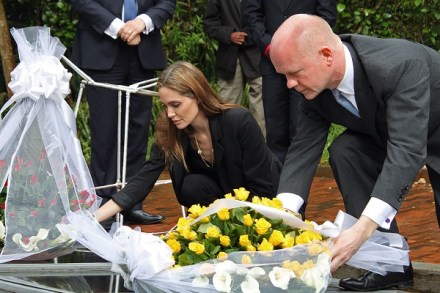
It beat the baseball cap. William Hague’s trip to the DRC and Rwanda created several wonderful photo opportunities with no less a figure than Angelina Jolie. It would be wrong to say that Hague’s interest in the victims of rape in Africa is mere PR: Hague is convinced that action must be taken to eradicate these crimes; and, at next month's G8 summit, he will use Britain’s diplomatic clout on human rights to encourage international authorities to pursue and prosecute men who contravene the Geneva Convention and the Statute of the International Criminal Court by using rape as a weapon in conflict. Yet it would also be naive to say that there is no direct political benefit to his public concerns.

John Hayes: Muslims are right about Britain

From our UK edition

John Hayes, the prime minister’s latest tribune, achieved some fame or infamy, depending on your view, when he wrote the following article for the Spectator on 6 August 2005, a month after the 7/7 bombings. I wonder if he still holds these views, and, if he does, whether the prime minister agrees with him? Muslims are right about Britain Many moderate Muslims believe that much of Britain is decadent. They are right. Mr Blair says that the fanatics who want to blow us up despise us, but he won’t admit that their decent co-religionists who are the best hope of undermining the extremists at source — despair of us. They despair of the moral decline and the ugly brutishness that characterise much of urban Britain.

Mini reshuffle shows Cameron trying to get a grip

From our UK edition

The mini reshuffle earlier this morning is significant. David Cameron has moved Tory ‘greybeards’ to address problem areas. Cameron’s twitter feed has announced: ‘Delighted John Hayes joining me as a Senior Parliamentary adviser - and Michael Fallon adding a key energy role to his brief.’ Benedict Brogan and Tim Montgomerie have good analyses of what this means. In summary it appears that Hayes, a self-confessed ‘blue collar’ Tory and popular MP, is going briefless to the Cabinet Office to help the PM communicate government policy to the backbenches and the working classes. Hayes speaks in plain language. He has been pushing the energy bill through parliament, and has clashed openly with Ed Davey, the Lib Dem energy secretary.

Allegations of cunning play over final passage of Justice and Security bill

From our UK edition

There have been angry mutterings from the backbenches today about the passage of the Justice and Security Bill last night, with allegations of cunning play by the whips. It appears that the start of yesterday evening’s discussions was mysteriously delayed until 6.15pm and Closed Material Proceedings (secret courts) were debated at around 7pm. The first vote took place at 9.20, several hours after it was originally expected and very late in the day. The whips were enormously active in the face of last minute amendments to derail ‘secret couts’: several peers were bussed in to bolster the government and at least one ermine-clad creature was plucked from abroad to answer the division bell. And that is not all.

Matt Hancock vows to fight low pay, but fails to emphasise the importance of low inflation

From our UK edition

Matt Hancock, the business and skills minister, addressed the Resolution Foundation’s low pay debate this morning, an indication of how seriously the Tories are taking the rising cost of living. He delivered a resounding defence of the minimum wage. He said that the evidence was overwhelming: the minimum wage did not harm employment levels: and declared that the Conservatives should ‘strengthen’ the minimum wage. He said that the minimum wage should be enforced, and hinted that the Low Pay Commission might be reinforced. He said that working more hours was not necessarily the right answer, contrary to those who hold that Britain needs to harder and longer.

David Miliband resignation: political and press reaction

From our UK edition

Here is a selection of what various Labour big wigs, political commentators and media figures have made of Miliband’s decision and his parliamentary career. And we're interested to hear your thoughts on Miliband's career and departure. Please leave a comment in the box below. Ed Miliband: Having spoken to him a lot over the past few months, I know how long and hard he thought about this before deciding to take up the offer. I also know how enthusiastic he is about the potential this job provides... As for us, we went through a difficult leadership contest but time has helped to heal that. I will miss him. But although he is moving to America, I know he will always be there to offer support and advice when I need it... British politics will be a poorer place without David.

David Miliband’s careful resignation letter reveals some of his frustration

From our UK edition

David Miliband has confirmed that he is resigning as an MP to become President and Chief Executive of the International Rescue Committee in New York. A copy of his resignation letter can be read here. Those expecting a Geoffrey Howe-style confession will be disappointed; Miliband is restrained, except when describing his enthusiasm for his new job and his pride in having served South Shields, the Labour Party and the country. He does, however, say that he is leaving politics to give ‘full vent to my ideas and ideals’, which reveals a degree of frustration hitherto only assumed to exist. He believes that a Labour victory in 2015 is ‘achievable’.

Jeremy Hunt responds to the Francis Inquiry into Mid Staffs

From our UK edition

‘The quality of patient care will be put at the heart of the NHS in an overhaul of the health and care system in response to the Francis Inquiry.’ This is how the Department of Health opens its press release about Jeremy Hunt’s response to the Francis Inquiry, delivered in the Commons this afternoon. The government plans to create a ‘culture of compassion’. It will do this by introducing: 1). An 'Ofsted-style ratings for hospitals and care homes'. The new chief inspector of hospitals will be the NHS’s ‘whistle-blower-in-chief’. He will also assess complaints procedures and ensure that recruitment is adequate. The chief inspector of care will ensure that the same standards are applied across the system.