David Blackburn

New working peers announced

From our UK edition

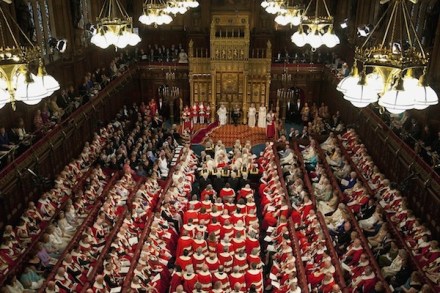
Here is the list of new working peers. It features a number of donors and cronies, which is not remotely surprisingly. And yesterday's party hacks get gifted a tomorrow - Annabel Goldie being the most conspicuous example. There are one or two interesting names, though - Doreen Lawrence and Daniel Finkelstein, for instance. No UKIP peerages, you'll note.
Free schools become deeper entrenched in the education system

From our UK edition

Michael Gove’s team is cock-a-hoop about the performance of free schools in the latest round of Oftsed reports. Of the 24 schools tested, 4 were judged outstanding, 14 were rated good, 5 have room for improvement and 1 was declared inadequate. A quick turnaround is required of the 6 substandard schools. The Department of Education emphasises that the tests were vigorous, carried out under Ofsted’s ‘tougher new inspection framework’ introduced last September. Michael Gove is making some political hay from this admittedly small sample. He said, 'Too often the best schools are only available to the rich who can afford to go private or pay for an expensive house in the catchment area of a good school.

Bradley Manning awaits sentence. Would the real Julian Assange please stand up?

From our UK edition

Bradley Manning’s relationship with Wikileaks has, inevitably, brought Julian Assange back into the papers. Viewed on the frontpage, Assange is egimatic. We know what he’s done; but we know little of him. Alex Gibney’s compelling new documentary film We Steal Secrets: The Story of Wikileaks presents an extensive and revealing biography of Assange — and much more besides. Gibney’s camera is impartial. We hear from Assange cultists, former collaborators and alleged rape victims. No two people will react in the same way to what they see. A white-haired Icarus formed before my eyes; a charismatic brought down by his own narcissism and hubris.

David Goodhart tells David Cameron how to tackle immigration by reforming the EU

From our UK edition

Much, if not all, of the discussion about immigration in recent days has barely mentioned migration from the European Union, which, given the scale of such migration, was an oversight. Freedom of movement is sacred in Brussels – and indeed elsewhere on the continent. But the times they are a changing. The accession of Bulgaria and Romania has alarmed leaders on the frontier between old and new Europe, in capitals like Berlin, Stockholm and Copenhagen, where there is concern about the effect of a further wave of immigration on employment and public services. The think tank Demos says, in its response to the EU Balance of Competencies Review, that David Cameron should conspire with these nations to twist the European Commission’s arm.

Tory activists are feeling more confident. What about the Lib Dems?

From our UK edition

A Conservative Home poll, which found that a majority of activists believe that the coalition is good for Britain, is the latest little boost for David Cameron, so says Paul Goodman. The Tories are having a good the summer; confidence is building. Yet there is, as numerous commentators and MPs are keen to stress, some way to go before the party can think of a majority. This means that the Lib Dems, who are likely to hold the balance of power in any future hung parliament, deserve some attention. There is not much meaty polling about the attitudes of Lib Dem activists; but, what there is, is quite telling:   Clegg and Co (or whoever it is in 2015) will be governed by the electoral maths: if David Cameron has the numbers; he will form a government.

The “bedroom tax” judgment has implications far beyond bedrooms

From our UK edition

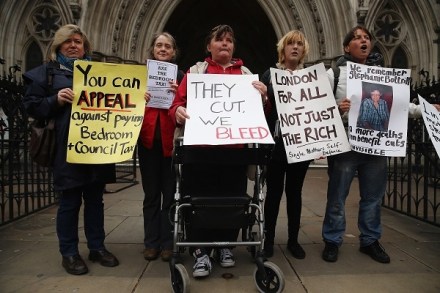
The High Court has rejected the "bedroom tax" claimants' case. In a ruling issued earlier this morning, Lord Justice Laws said that ‘the PSED [Public Sector Equality Duty on the benefit reforms] was fulfilled; and the effects of the HB [Housing Benefit] cap were properly considered in terms of the discipline imposed by the requirement of proportionality.’ On the point of the government providing additional help for disabled people affected by the cap, the judge wrote: ‘provision of extra funding for DHPs ['discretionary housing payments'] and advice and guidance on its use cannot be said to be a disproportionate approach to the difficulties which those persons faced.

Pope Francis: who am I to judge?

From our UK edition

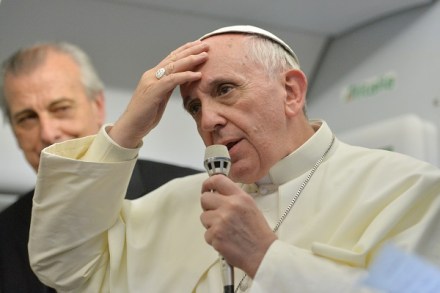
Pope Francis I’s statement about homosexual clergymen remains extraordinary; no matter how often one reads it. ‘If a person is gay and seeks God and has good will, who am I to judge him?’ He also said: ‘The Catechism of the Catholic Church explains this very well. It says they should not be marginalised because of this (orientation) but that they must be integrated into society...’ And there was more, perhaps a little less extraordinary in tone and content: ‘The problem is not having this orientation. We must be brothers. The problem is lobbying by this orientation, or lobbies of greedy people, political lobbies, Masonic lobbies, so many lobbies. This is the worse problem.

The judicial review row should not be about lawyers – it is about democracy

From our UK edition

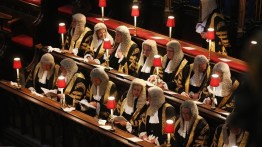
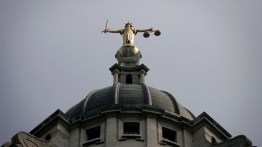
The stooshie over judicial review is not about lawyers, although one should be forgiven for thinking otherwise given much of today’s coverage and reaction. Really, it is about the rule of law and representative democracy. So much of the debate around legal reform (not just judicial review) has been skewed by familiar obsessions with ‘human rights’, ‘lefty lawyers’ and ‘right-wing bastards’. Such media tropes are not created ex nihilo. Public administration has become highly politicised, and all sides play the game. I’ve heard government-types talk about the need to break 'lefty lawyers’' perceived monopoly over legal aid and some corners of the judiciary.

Boris the ironist treads a careful path through immigration row

From our UK edition

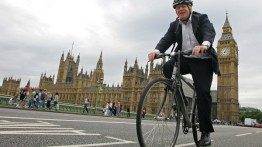
Boris Johnson’s Telegraph columns are often works of mischief, but today’s is a carefully constructed piece of politics. His subject is immigration – about which the political nation has been warring over the weekend. Boris is, famously, pro-immigration – as one would have to be to win elections in London, irrespective of whether one was a Conservative. And his attitude to illegal immigration is pragmatic: illegals need to be brought into the fold or deported. Boris treads this line again today. First, he writes a paean to the runner Mo Farah – who personifies a ‘sermon as to what immigrants can achieve if they work hard’. Then he says that illegal immigrants cannot run for their country, for they live beyond society and outside the law.

Employment tribunal changes a prelude of what’s to come over legal aid

From our UK edition

Changes to the legal system come into force today, with workers being charged for bringing cases against their bosses to employment tribunals. Employees will pay £150-£260 initially, and then there will be a further charge of between £230 and £950 for the hearing. You can read all of the guidance here. The politics of this are relatively clear: business groups, especially those representing small businesses, welcome the effort to tackle ‘vexatious claims’, which impede their operation and confidence. Trade unions say that there are no reliable figures on the number of vexatious claims; and they point out that the number of cases being brought is declining. The government talks of the need to protect business and the public purse.

Commons committee worsens the Tories’ immigration headache

From our UK edition

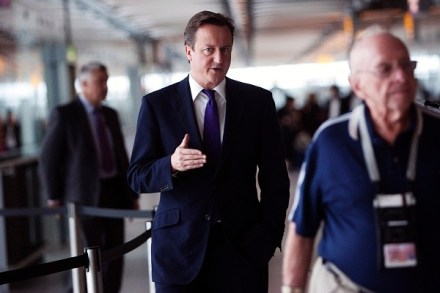
Yesterday saw a spate of articles about the government’s immigration van pilot scheme. And today the Public Administration Select Committee (PASC) damns immigration figures as a ‘blunt instrument’ and not ‘fit for purpose’. The nub of the problem is that the methodology is outdated, having been designed in a time when migration was in the 10,000s a year rather than the 100,000s. A sample size of 5,000 identified through the International Passenger Survey, which is drawn from UK ports and airports, is not sufficiently broad to construct accurate estimates. New methodology is required, PASC says. You can read the whole thing here.

Pope Francis gets evangelical on World Youth Day

From our UK edition

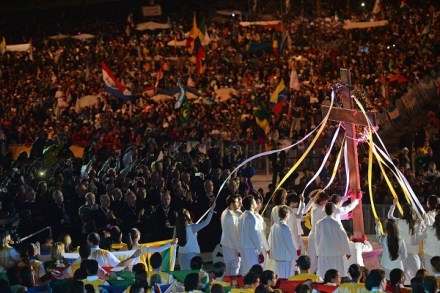
Copacabana Beach dazzled last night as many, many thousands of worshippers (perhaps as many as 3 million according) celebrated mass and a vigil with Pope Francis on World Youth Day, the final day of his tour to South America, the first such trip of his pontificate. His Holiness certainly has the common touch. Watch here for him donning a sombrero while on the way to say mass. The faithful were treated to a blast of this Pope’s muscular message. He is trying to renew the Church after its recent travails, which many believe to have led to the reported revival of protestant churches around the world and particularly in South America. Pope Francis speaks plainly.

The immigration van – success or failure?

From our UK edition

Everyone in SW1, it seems, has an opinion on this controversial scheme. Most people hate it. The general assumption is that this is a Tory stunt clothed as a government policy. The question is, though, has the van campaign been a successful policy pilot from a presentational point of view? Here are some thoughts: 1). The right-wing press. The Mail is utterly contemptuous. A leading column claims that only one illegal immigrant has stepped forward. The leader goes on to say that voters punish cheap stunts; what people want is action. And if that wasn’t enough, the paper’s front page (below) is uncompromising. All of this will have gone down badly in the Home Office, which has a good story to tell about reducing net migration. 2). Disaffected voters.

A secret gallery at Hyde Park Corner

From our UK edition

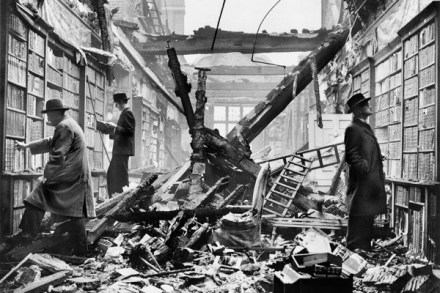
A rare jewel sits in the middle of the Hyde Park Corner roundabout. The Quadrant Gallery, run by English Heritage, occupies the Wellington Arch. The gallery is showing a series of exhibitions to mark the centenary of the 1913 Ancient Monuments Act, a landmark in conservation. The present show (until 15 September) examines efforts to protect Georgian Britain during the early 20th century. The Luftwaffe (see Holland House library after an air raid, 1940, above) was nothing compared to rapacious British developers. Photographs show sledgehammers being taken to Adelphi Terrace, from which Robert Adams’s striking doorframe was salvaged.

Two riveting journeys to the heart of India and Pakistan

From our UK edition

50 summers have passed since C.L.R. James asked, ‘What do they know of cricket who only cricket know?’ James’s belief, that this quaint game reveals profound truths of those who play and love it, is alive and well: evident in The Great Tamasha by James Astill, which describes India, and Cricket Cauldron by Shaharyar M. Khan, which fumigates Pakistan. Astill, who is a Raja at The Economist, tells the story of India’s turbulent rise with reference to the history of cricket in India, where the sport is a form of entertainment – or tamasha, as numerous sub-continental languages have it. Astill is a self-confessed ‘cricket tragic’ but he is good company nonetheless, with an eye for an anecdote and an ear for a joke.

Booker Prize longlist announced

From our UK edition

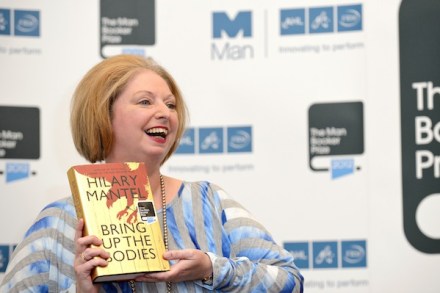
The longlist for the 2013 Booker Prize has been announced (it is below). Most of the commentary surrounding the announcement is about the length of chosen books. Robert Macfarlane, who led the judging panel, has spoken of the thrill of including Colm Tóibín's The Testament of Mary (112 pages), Richard House’s The Kills (912-pages) and 28-year-old Eleanor Catton’s The Luminaries (832 pages) on the same list. Jim Crace's Harvest has made the cut, which will please his fans because he has said that Harvest is his last novel. Macfarlane's panel - Martha Kearney, Stuart Kelly, Natalie Haynes and Robert Douglas-Fairhurst -  will deliberate over the summer. The shortlist will be announced on 10th September 2013.

Sussex versus shale – a tale of anti-politics and middle class anxiety

From our UK edition

George Osborne believes in shale; this week's tax cut announcement was another clear profession of his faith. But plenty of people and some powerful groups stand in his way. Least among all of these are residents’ organisations in rural England. I’ve written about one such campaign in this week’s edition of the Spectator. I found a perfect storm of predominantly middle class anxiety and anti-politics. What might concern Osborne and the proponents of shale is that their project is seen as being highly political, even elite. This is an age of profound anti-political sentiment, which gives the campaigners an appeal that spreads far beyond the standard environmental concerns about shale and fracking; and it can unite disparate groups across the country.

Sussex vs shale

From our UK edition

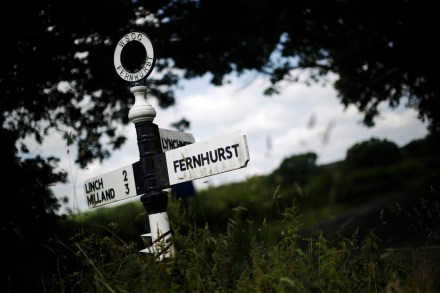
Darkness was gathering as the villagers trooped down Church Road to the Red Lion, ducking their heads under the doorframe. Trade was brisk for a Monday. The landlady was busy: pulling pints, cracking jokes and assigning tables. Excitement was in the air. Most customers had come from a packed meeting at the village hall, called to organise opposition to a proposed shale exploration a mile beyond the village. A campaign was afoot, and Fernhurst,West Sussex, was exhilarated by the novelty of defiance. Fernhurst is a prosperous district in the newly created South Downs National Park, an area of outstanding natural beauty with an important cultural heritage. Alfred Lord Tennyson lived on Black Down Hill above the valley in which Fernhurst rests.

Clive James – laughing and loving

From our UK edition

Clive James was a recurring presence in last weekend’s literary press. There was, I regret to say, a valedictory feel to the coverage. Robert McCrum, of the Guardian, was not so much suggestive as openly morbid: ‘If word of his death has been exaggerated, there's no question, on meeting him, that he's into injury time, with a nagging cough that punctuates our conversation.’ If those words and others like them made little impact on the reader, then the photograph of James that illustrates McCrum’s interview might. Old age looks no fun; serious illness even less so. But, James’ spirit does not seem to have been shaken by the indignities visited upon his flesh.

What about airports, Danny?

From our UK edition

Danny Alexander has delivered his eagerly anticipated infrastructure statement to the Commons. He described the package as 'the most comprehensive, ambitious and long-lasting capital investment plans this country has ever known.' That's quite a claim, Danny. To judge the truth of it, the public can examine the speech below, the Treasury's interactive guides and the full document here. Major upgrades are planned to the road and rail networks in certain places. And substantial investment has been earmarked for schools, high-speed broadband and scientific research. This is all well and good. There are, however, a couple of notable gaps.