David Blackburn

George Osborne’s big idea

From our UK edition

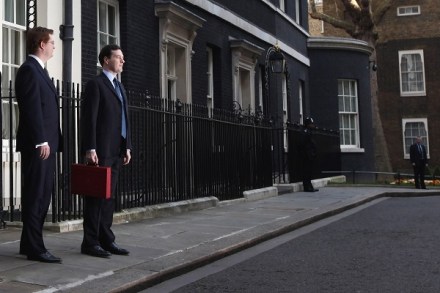
What are the Ashes? This question was put to former England cricket captain Ted Dexter, the guest of honour at the launch last night of the writer and broadcaster Simon Hughes’s latest book. Dexter replied that the Ashes is an idea; the terms of engagement that had united two sporting nations in rivalry for nearly 150 years. Few things in life are more durable than a simple idea. The idea of ‘austerity’ drives our political debate and yesterday's spending review has extended the life of the idea deep into the next parliament. It is a political concept rather than a purely economic issue.

Jane Austen and Winston Churchill are practically the only credible banknote candidates

From our UK edition

Silly season is here. A minor row has broken out over which long-dead figures should appear on the reverse side of Bank of England notes. I can’t be bothered to relate the details because you’ve all got better things to do like water the garden, fix lunch or watch Loose Women. Basically, Sir Mervyn King’s got it in the neck from the Continuity Bien Pensants by seeming to back Winston Churchill and Jane Austen for this dubious accolade. So far, so ludicrous. But there’s one more point worth making. The criteria for this banknote business are that the subject must be enduringly famous and recognisable. This does rather limit the field, particularly where ‘politically correct’ candidates are concerned.

Timothy Beardson interview: It’s urgent that China reforms

From our UK edition

Recent convulsions in China’s banks will not, I suspect, have surprised Timothy Beardson, a sinophile, veteran Hong Kong financier and author of Stumbling Giant: The Threats to China’s Future. He argues that China’s extraordinary growth over the last 30 years has come in spite of its banking system. A dinner party might speculate where China would be if not for Mao; but a more immediate question is: where would China be if its banking system supported the private sector? “If the economy has grown by 10 per cent for 30 years, as is reported (and I think that the data in China is very frail – it probably hasn’t grown at 10 per cent a year – but it’s clearly grown at a very high rate and that’s all that matters).

Bring on the drones – the Supreme Court has changed the way we fight wars

From our UK edition

On the face of it, the Supreme Court’s decision to allow three suits to be brought against the Ministry of Defence is surprising, almost shocking. My colleague Alex Massie has castigated the judgment; but, while I don’t necessarily disagree with Alex’s sentiments, the judgment merits very close attention. It is a politically far-reaching decision. The Court was asked to consider whether British military personnel on active duty overseas are under the jurisdiction of the European Convention of Human Rights. If they are, then the British state has a duty to secure the human rights of its overseas personnel (specifically their right to life under article 2 of the Convention) as if they were at home. In short, is there some corner of a foreign field that is forever Europe?

The 10 “best” historical novels, sort of…

From our UK edition

The BBC adaptation of Philippa Gregory’s The White Queen, which began last Sunday, has led numerous books editors to pick their 10 best historical novels. I played this silly dinner party game last year (although I forget the inspiration). And, while admitting that it was nigh on impossible to pick 10, I came up with: J.G. Farrell’s Empire Trilogy Paul Scott’s The Raj Quartet Charles Dickens’ A Tale of Two Cities Evelyn Waugh’s Sword of Honour Patrick O’Brian’s Master and Commander Robert Graves’s I Claudius JM Coetzee’s Disgrace Alexander Solzhenitsyn’s A Day in the Life of Ivan Denisovich Pat Barker’s Regeneration Guiseppe Tomasi di Lampedusa's The Leopard There were some frankly lamentable omissions from my list.

Ken Clarke the pragmatist suspends his pugilism over EU

From our UK edition

It’s said that Ken Clarke would cross a motorway to pick a fight with a political opponent. His aggression is one reason why he thrived (eventually) under Mrs Thatcher: ambulance drivers, teaching unions and local government were all given a bunch of fives when Clarke reached Cabinet in the late ‘80s. Chris Patten (in the course of saying that he would go into the jungle with Clarke) told the late Hugo Young that ‘the key to Clarke is that he is anti-establishment – any establishment’. Yet pugilism is but one side of Clarke. He is not, by temperament or conviction, an ideologue. What matters is what works. And it worked for him.

Fathers, sons and the beauty of a “borrowed” book

From our UK edition

I spent the weekend in Dublin; consequently, I am suffering from what Apthorpe would have called ‘Bechuana tummy’. For the uninitiated, Apthorpe is the premier fool in Men at Arms, the first book in Evelyn Waugh’s Sword of Honour trilogy. I was reading it in bed last night and was wryly amused by this joke, which hangs over two chapters: ‘The two lame men climbed into the car and returned to Kut-al-Amara in alcoholic gloom.  Chapter 7 Next day Apthorpe had a touch of Bechuana tummy, but he rose none the less.’ I return to Men at Arms often, but never without reason. I did so this time because Father’s Day fell yesterday. My father is of a generation and I am of a temperament: we don’t do Father’s Day.

The fatuousness of a scientist. Steve Jones edition

From our UK edition

It’s refreshing to hear an eminent scientist like Professor Steve Jones concede that their discipline has delivered less than it promised, and to hear him voice scepticism about the pace of technological development. Society’s reverence for the digital, the technological or the scientific often reaches unnerving degrees; so it’s instructive to hear someone at the vanguard of progress caution that it is ‘always a big mistake’ for technology to run ahead of human understanding. I’d be interested to know what he thinks should be done about this problem. But, what is it about certain people’s attitude to religious faith?

Tom Sharpe nearly killed me

From our UK edition

I was on a train when it happened. I was bent double with my head between my knees, gasping for air and unable to speak. The Surrey matriarch sitting opposite leant forward to ask me if she could help. I imagine she thought that I was choking, or perhaps suffering cardiac arrest. In fact, I was laughing. Laughing so hard I couldn’t stop. And the more I wanted to stop, the worse it got. It was painful. My lungs rasped and the muscles in my sides contracted of their own free will. I was no longer master of myself, so you might say that I was in ecstasy. It was certainly exhilarating. I regained composure and explained myself to this kind woman. She looked stern; her immaculate curls bristling slightly at my wildness.

AM Homes’ May We Be Forgiven wins the Women’s Fiction Prize

From our UK edition

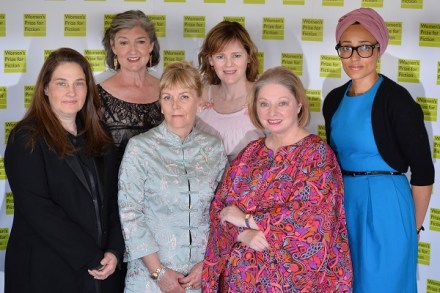
AM Homes’ May We Be Forgiven has won the Women’s Fiction Prize, beating a strong field that included Hilary Mantel, Zadie Smith, Barbara Kingsolver and Kate Atkinson. Homes, who is an American writer, is something of an unknown in this country (certainly compared to Smith and Mantel). On receiving the prize, she said, 'it's my nature to think about big ideas and my gender shouldn't prevent me from doing that.' Her work concerns modern America. Sleepy academic types are disturbed. The normal vanishes. Homes has been compared to Jonathan Franzen, among others. Click here to find out if the comparison is an insult to Homes, an insult to Franzen, or simply a fair observation.

Amateur fantasies and professional realities

From our UK edition

As was to be expected, it rained. Drizzle was in the air at times yesterday when the Authors XI turned out to mark 150 years of The Wisden Cricketers’ Almanack (the latest edition of which the Spectator reviewed here). Sebastian Faulks, Ed Smith and Kamila Shamsie were among the players, all of whom were dressed in Victorian garb and wore joyous grins. The Author’s XI has a book out; an account of their tour recent of England. It is a gently beguiling book, revealing something of life, the writers and, of course, cricket. It’s a perfect match. As Sebastian Faulks puts it in the foreword: ‘Amateur cricketers tend to be vain, anecdotal, passionate, knowledgeable, neurotic and given to fantasy. So do writers.

Edmund Burke and post-modern conservatism

From our UK edition

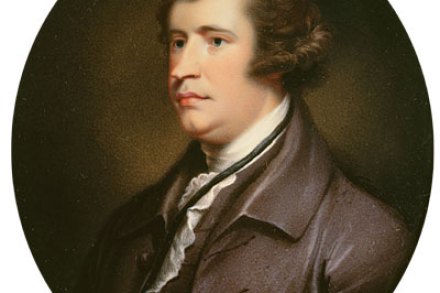
There has been a lot of talk about Jesse Norman’s book on Edmund Burke, and deservedly so for it’s a good book – accessible, learned and relevant. Burke is, I suspect, one of the great unread authors; but he’s worth studying because he's influenced so many of our past and present concerns. The place of tradition is one example; Burke sometimes defended traditions for their own sake, and one wonders what he might have made of gay marriage, the ‘snooper’s charter’ or the European Union. And his conception of the individual’s relationship with society (which one might broadly define as the institutions and 'little platoons' that make the nation state) is another example.

Revive the Snooper’s Charter? It’s already obsolete

From our UK edition

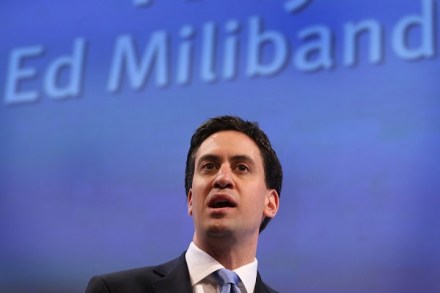
The political response to the Woolwich murder is following two broad patterns. On the one hand, the party leaders make dignified, calm statements, tending almost to the banal. There was, for example, very little difference between the comments of Ed Miliband and those of Nigel Farage. Both condemned the murder, offered support to Drummer Rigby’s family and urged calm from all. Unity is not surprising: there is not much one can reasonably say about such events without jerking a knee and making oneself hostage to fortune. The beheading of an off-duty soldier is no more representative of Islam than the reaction of the English Defence League is representative of patriotism.

Benedict Cumberbatch is brilliant in Star Trek Into Darkness

From our UK edition

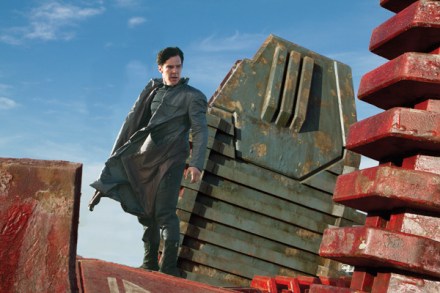
P.D. James is a figure of fun in my household. She used to be a regular pundit on Newsnight Review, the old BBC arts programme, and her film criticism was guided by her hearing. Every new film, she complained, was ‘terribly loud’. Why didn’t projectionists reduce the volume? We wondered if it had ever been thus with James. We replaced the baroness’s soft tones with the austere squawk of Dame Edith Evans and declared that Buster Keaton was ‘terribly loud’. But the great lady is on to something: an overbearing sound system can harm a film. Star Trek Into Darkness began and it was as if a choir of Hell’s Angels, on their way to the seaside to biff some unsuspecting day-trippers, had taken a detour via the Leicester Square Empire.

Cricket is more than a game

From our UK edition

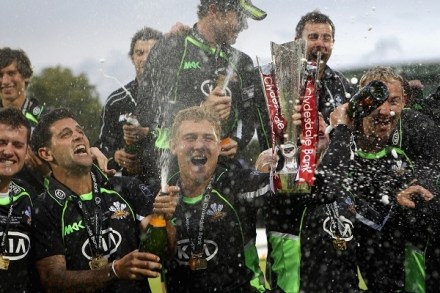
Does this advert ring a bell? It showed a handsome young man hitting a cricket ball far into the distance. It appeared on the Tube last spring. The tagline read: ‘How far can you hit it, Rory?’ The advert said that the young man was Rory Hamilton-Brown, captain of Surrey County Cricket Club. It urged commuters to watch his team play. It suggested glamour and clamour; neither of which is associated with stolid county cricket. Something was afoot. Hamilton-Brown had been appointed three years earlier, aged 22, to rejuvenate Surrey, a once great club wandering in the wilderness. He was the youngest captain in the country, and one of the most famous, despite not having played for England – the traditional mark of success.

Interview with a writer: Evgeny Morozov

From our UK edition

Evgeny Morozov is an iconoclast. He believes that technology, if abused or misused, has the potential to make society less free. His latest book, To Save Everything , Click Here, builds on his acclaimed polemic The Net Delusion (about which he spoke to the Spectator last year) to challenge those who suggest that technology is the solution to all of life’s problems. Morozov describes how the technology of perfection is not necessarily compatible with democratic institutions and processes that are imperfect by definition. He reveals how ‘technological fixes’, particularly when coupled with market forces, threaten to close public debate and curtail personal choice; thereby moulding individuals into an efficient, homogenised society.

The power of Granta’s gift to British writers

From our UK edition

Philip Hensher was one of Granta’s 20 under forty in 2003, so what does he make of the new list? Writing in this week’s Spectator, he says that there are a dozen competent to superb writers on the list but you can keep the rest. ‘When you look at the seven truly regrettable inclusions it is hard to know what the judges were thinking of.’ Philip’s view is that the list ‘seems to have sprung from a list-making corporate machine’ in favour of bland orthodoxy.

Wisden finally merits the epithet ‘Cricket Bible’

From our UK edition

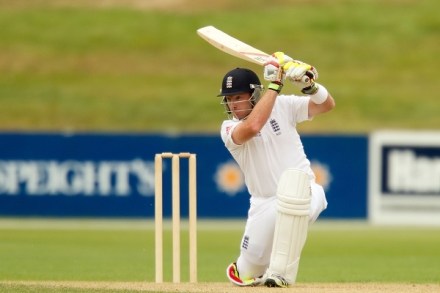
The man who christened Wisden ‘The Cricket Bible’ had little religion. Wisden is an unprepossessing sight: a 1,500 page tome surrounded by a flame-yellow dust jacket covered in mud brown lettering. The book’s content often matches its artless appearance; thousands of statistics and scorecards that read like the turgid genealogical passages of Genesis. Abraham begat Isaac; Jack Hobbs scored 61,760 runs. A record of the chosen people is important; but it does not inspire belief. The record tells you nothing of how Abraham raised Isaac; neither do Hobbs’ stats tell you how he scored his runs. Bald facts contain little mystery, and what do those know of God who know nothing of mystery? The 150th edition of Wisden defers to its forbears, at least in appearance.

Why don’t Labour talk about welfare reform?

From our UK edition

Philip Collins is shackled by the epithet 'Tony Blair’s former speechwriter'; shackled because his columns prove him to be his own man. His latest (£) is a carefully argued critique of the Labour Party’s total lack of a welfare policy, titled 'Labour Can't Win If It's On Mick Philpott's side' . The most arresting section is: ‘There is no better illustration of the self-harm of Labour’s position than that it is driving me into the arms of the Tory backbencher Bernard Jenkin. I usually regard Mr Jenkin as the prime specimen of perspective-free hyperbole on Europe and tax cuts. But Mr Jenkin was one of a number of Tories who suggested that child benefit be limited to the first two children; this would save £3.

The Tories steal the Lib Dems’ best clothes with new poster

From our UK edition

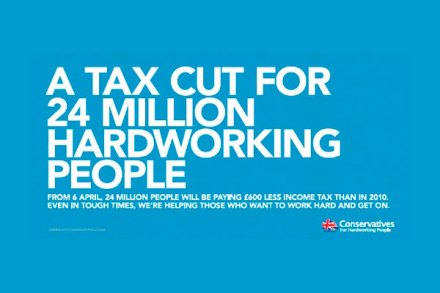
This poster will, I am sure, have the Lib Dems hopping about with fury. The Tories have hi-jacked a key Liberal Democrat policy: raising the personal allowance. Perhaps this is what lies in wait for the Lib Dems as 2015 approaches: the Tories steal all of their good ideas. If that happens, perhaps a merger of the two parties (or at least elements of the Lib Dems) will become more likely. Who knows? Anyway, the blurb that accompanies the poster shows that an attempt is being made to fashion the Conservative Party into the party of work. The poster reflects that positive aim; a dramatic improvement on the divisive and crude rhetoric of ‘strivers’ and ‘shirkers’, which the Spectator’s latest leading column denigrates.