David Blackburn

Do we need George Orwell Day?

From our UK edition

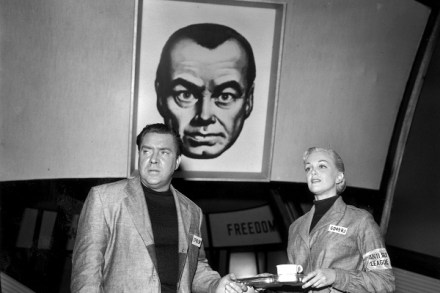
I doubt that George Orwell needs ‘George Orwell Day’. Aldous Huxley, Henry Green, J.G. Ballard, each of those dead writers might benefit from a bit of sponsorship, and so might we. But Orwell? His spirit pervades our times, and with good reason. Orwell may have recognised some of the ill that our politics and era are producing, a point that Fraser reiterated in a Coffee House post earlier today. The ‘snooping bill’, CCTV, politically correct language – one might see fictional antecedents of those unpleasant realities in the pages of 1984. And perhaps social division caused by polarised wealth and the privations brought by economic decline can be seen in the pages of Down and Out in Paris and London and The Road to Wigan Pier.
Do political correctness and the culture wars make us less tolerant?

From our UK edition

I have a confession. I saw a report on the Suzanne Moore row, and fled immediately for the safety of the sports pages. A lot of self-important people making a lot of noise, I thought to myself, as a glib heterosexual, while gawping at the latest act in the life and times of Mario Balotelli. But, as time passed, the fury of the Moore row made me revisit Culture of Complaint, the late Robert Hughes’ analysis of the culture wars. It’s sometimes said that we Brits don’t do culture wars; that we are much too sensible to be provoked into believing that trivialities are serious. This view appears to be a hangover from the over-egged claims Victorians made about ‘English exceptionalism’.

Sharon Olds wins the TS Eliot Prize

From our UK edition

Sharon Olds won the TS Eliot Prize last night for Stag’s Leap, which is an account of her divorce from her husband of thirty-two years, who left her for another woman. Chairman of the judging panel, the poet laureate Carol Ann Duffy, said: ‘This was the book of her career. There is a grace and chivalry in her grief that marks her out as being a world-class poet. I always say that poetry is the music of being human, and in this book she is really singing. Her journey from grief to healing is so beautifully executed.’ Stag’s Leap is written in Olds’ unique style, which mixes blunt honesty and touching intimacy. Olds takes the reader on a journey of loss and isolation as she comes to terms with her husband's leap for freedom.

Life of Pi asks questions of man, not God

From our UK edition

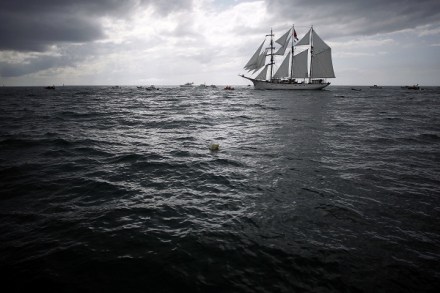
I'm conducting an experiment: Life of Pi concerns a basic metaphor about faith, how is that metaphor rendered in print and on screen? I’ve re-read the book. I’ve deliberately (at this stage) not watched Ang Lee’s film; rather, I’ve found a reviewer of the film (Jonathan Kim of the Huffington Post) who has not read the book, and then I've compared notes. Jonathan Kim has derided what he saw, at least from the perspective of the metaphor: 'Life of Pi is more about the nuts and bolts of a teenager surviving at sea and bonding with a tiger than a spiritual quest that asks hard questions about the wisdom, will, and existence of God and why he seems to enjoy inflicting so much suffering and death on unoffending humans.

The more Shane Warne practised, the more magical he got

From our UK edition

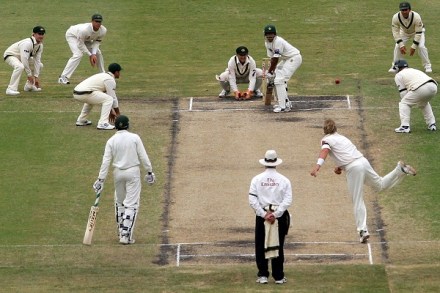
It was a placid start. A tubby kid with peroxide blond hair approached the crease in 6 easy steps. He skipped into the air and pulled his arms backwards to build forward momentum. His left leg hit the ground and he began to rotate his shoulders from right to left. This motion brought his right arm up through the air in a wide arc. He had to hold his left arm out in front of him for balance as the shoulder-turn accelerated. His hips began to follow in the direction of his shoulders, bringing his right flank around to the left. His right arm extended above his head and neared the top of its ascent. At that moment, Shane Warne snapped his right wrist anti-clockwise and released what would become known as the ‘Ball of the Century’.

Which words would you ban?

From our UK edition

Which words in current use would you ban? Lake Superior State University answers this question each year, with its famous ‘List of Words to be Banished from the Queen’s English for Misuse, Overuse and General Uselessness’. Words are recommended by members of the English speaking world, and then selected by the university. Top of the list is ‘fiscal cliff’: the catchall phrase for the various political (and cultural) difficulties that have arisen from America’s fiscal and economic crises. Opinion is split on which of ‘fiscal’ or ‘cliff’ is the greater offence. Other irate correspondents object to the vague metaphor: is America trying to scale the cliff or trying not to fall off it?

The Costa Book Awards make history

From our UK edition

The Costa Book Awards has made its own history tonight by selecting, according to its press release, an all women shortlist* for the first time. Here are the category winners, each of whom bags £5,000: 1). Mary and Bryan Talbot win the Costa Biography Award for Dotter of Her Father’s Eyes, a book that examines two father-daughter relationships: James Joyce and his daughter Lucia, and Mary Talbot's relationship with her father, who was a James Joyce scholar. 2). Hilary Mantel takes the Costa Novel Award for Bring up the Bodies, the brilliant and demanding Booker winner about which quite enough has been written. 3). Francesca Segal’s The Innocents snaps up the Costa First Novel Award.

Thank you, Christopher Martin-Jenkins

From our UK edition

The children who grew up when Christopher Martin-Jenkins began to commentate on cricket (both in print and on the air) have got old. CMJ’s 40-odd year career has been brought to a premature end by cancer; and the cricket writing world has paid tribute to its companion. The pieces by Mike Selvey, Jonathan Agnew and Michael Atherton are very touching, and very, very funny. CMJ’s innate unpunctuality and disorganisation conspired to make episodes of glorious farce. He arrived at Lords to commentate on a Test Match that was being played at the Oval. He stopped a car journey to make an urgent phone call, only to discover that he had mistaken the TV remote control in his hotel room for his mobile phone.

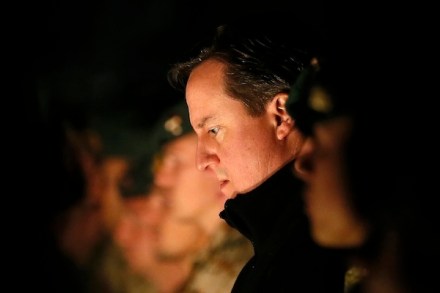
David Cameron should explain why Europe isn’t working

From our UK edition

Philip Collins knows a thing or two about speech writing; but I can’t help thinking that his assessment of what David Cameron should say about Britain and the EU is misguided. Perhaps it’s his Labour blood, but he is fascinated with ‘those in Mr Cameron’s party who are obsessed with Europe in general or frightened of UKIP in particular’. Collins’ analysis seems to suggest (or hopes?) that Cameron’s speech will be primarily for Bill Cash et al. But the speech is the first step to a referendum renegotiating Britain’s position in the EU. The primary audience must be the public – Mrs Bone rather than Peter Bone. Therefore, its content should be about people rather than politics. What might David Cameron say?

‘Turboparalysis’ Revisited

From our UK edition

The word ‘turboparalysis’, coined by Michael Lind (who has a brilliant piece on the subject in the Spectator Christmas double issue), is paradoxical, even illogical. And yet it is clear, perfect for our times. Lind defines his term as: ‘a prolonged condition of furious motion without movement in any particular direction, a situation in which the engine roars and the wheels spin but the vehicle refuses to move.’ Turboparalysis is a new word; but its sense is familiar. We are often warned that we ‘risk repeating the mistakes of the 1930s’. Comparison between eras is always awkward.

Mo Yan’s malignant apology for ‘necessary’ censorship

From our UK edition

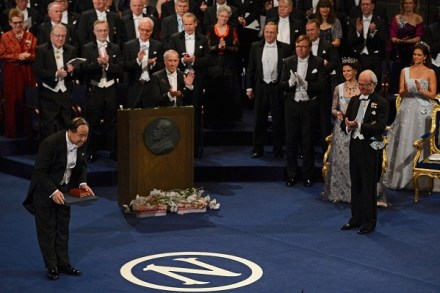
The Chinese writer Mo Yan collected the Nobel Prize for Literature last night. In his acceptance lecture, he reiterated his view that a degree of censorship is ‘necessary’ in the world, and compared it to airport security. The comparison is utterly base. Airport security is a fleeting restriction on personal liberty; a social contract entered into freely by making the decision to travel by air. Censorship is a legal mechanism imposed on entire societies by a self-appointed oligarchy that maintains itself by persecuting and prosecuting individual transgressors. Mo Yan's logic is as flawed as his apology is malignant.

Zoe Heller versus Salman Rushdie and Joseph Anton

From our UK edition

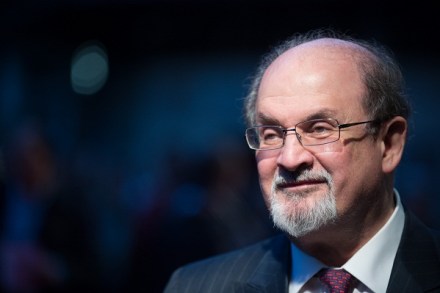
The literary world anticipates Salman Rushdie’s response to Zoe Heller’s cauterisation of his memoir, Joseph Anton, in the New York Review of Books. Heller’s pointed review is deeply considered. It is a delight to read, even though some of its arguments are uneven and some of its conclusions are trivial next to the themes of Rushdie’s unlovely yet important book. Heller is, in my view, right to slam the grandiloquence of Rushdie’s ‘de Gaulle-like third person’ narration.

Mike Newell’s Great Expectations will leave you with great questions

From our UK edition

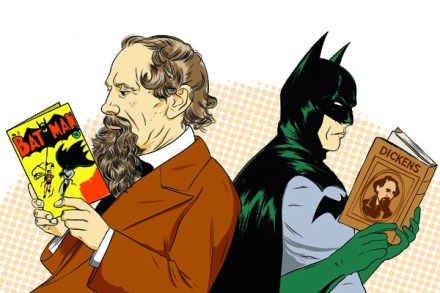
You cannot have failed to learn that a new film adaptation of Great Expectations has been released today. Publicity for the film is ubiquitous: posters of Ralph Fiennes as Magwitch and Helena Bonham Carter as Miss Havisham adorn the billboards of train stations and the hoardings that overlook thoroughfares. The stars have been interviewed on television and the radio. Even the press has found time to divert its manic attention from Sir Brian Leveson’s clever, clever musings to review the film. The coverage asks the question, do we need another adaptation of Dickens’ well-studied classic? There are plenty of views but few of them bother to consider the novelty of this adaptation (perhaps because the book has not been as closely studied as we assume).

Leveson Report – your guide to the regulatory recommendations

From our UK edition

Here is a six-point guide to the regulatory system proposed by Lord Justice Leveson: 1) The creation of a genuinely independent regulator Leveson agrees with the view, expressed by Baroness O’Neill and others, that ‘independent regulation’ does not mean ‘self-regulation’. The existing system of self-regulation should be wound up. In its place should emerge a regulator that is both independent of the government, parliament and the industry. It should be ‘established and organised by the industry’ in order to provide ‘effective regulation of its members’. Leveson does not rule out the emergence of multiple regulatory bodies, and indeed allows for it, but he does not advocate such an outcome. 2) How will it actually be independent?

Leveson report recommends statutory underpinning of press regulation

From our UK edition

'This is not, and cannot be characterised as, statutory regulation of the press.' This is the headline from the Leveson report. That said, Lord Justice Leveson recommends substantial changes to the current self-regulatory system, including changes that empower the civil courts. The changes will be underpinned by legislation to validate the new regulator, to guarantee independence from the industry, parliament and government, and to ensure compliance with certain guidelines. These changes are the consequence of the failure of the existing regulatory system and widespread press malpractice. Indeed, the report damns Fleet Street.

A new short story prize, courtesy of The White Review

From our UK edition

Where to publish my fiction? The question will have occupied all aspiring writers. It is famously hard to publish fiction in Britain, which is why each of the few prizes for unpublished fiction attracts vast attention. There is a new prize in this sparse field: The White Review, the thriving independent quarterly arts journal, has inaugurated a short story prize for unpublished writers. The competition, which is limited to residents of Great Britain and Ireland, opens on 1 December 2012 and closes on 1 March 2013. Submissions should be made at thewhitereview.org. The prize will be judged by the writer Deborah Levy, Karolina Sutton and Alex Bowler, editorial director at Jonathan Cape.

Rotherham’s ‘political commissars’ reinforce the need for a free press

From our UK edition

'Clearly she has morphed somewhere in her career from social worker to political commissar.' These are the words of Minette Marrin, writing of the social worker at the centre of the fostering scandal at Rotherham Council in the Sunday Times. Marrin’s article unpicks Rotherham Council’s position, turns it over and concludes that: ‘[The] thoughtless, obstinate political correctness of the Joyce Thacker (Rotherham’s senior social worker) variety is rampant throughout social services. Many of them are highly politicised in plain party-political terms as well. It’s a national disgrace and a national disaster. In adoption, for instance, it is such misguided attitudes that make it so very difficult for a child in need to find adoptive parents.

EU budget talks end

From our UK edition

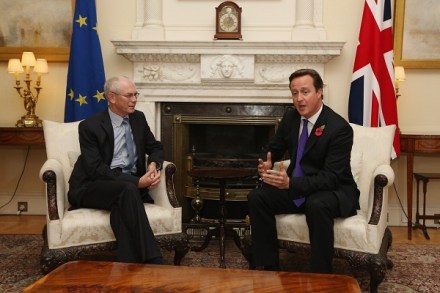
The EU Budget discussions have ended with no agreement, as seemed inevitable after yesterday’s struggles and rows. David Cameron has been copping a lot of flak for his intransigence, particularly from Francois Hollande, who has spent much of the time talking of the need for 'solidarity' with Europe - by which he means the Common Agricultural Policy. Despite these headlines, it's worth remembering that plenty of other countries objected to Van Rompuy's proposals, and for many different reasons. Indeed, far from being isolated, Britain may have forged closer relations with those countries thanks to the experience of these talks.

Tata Steel’s job cuts, a tale of 2 press releases

From our UK edition

Today brings bad news that Tata Steel is to cut 900 jobs in the UK (at plants in South Wales, North Yorkshire, Teesside and the West Midlands). This is catastrophic news for a government that has announced its intention to rebalance the economy away from financial and professional services in the south-east (and therefore get an hearing electoral hearing in Britain’s former industrial heartlands); but that is only one aspect of the politics at play here. Tata's statement says: ‘Today's proposals are part of a strategy to transform ourselves into an all-weather steel producer, capable of succeeding in difficult economic conditions. These restructuring proposals will help make our business more successful and sustainable.

Europe’s new iron curtain

From our UK edition

The last 24 hours have yielded no agreement in Europe, and they have seen David Cameron’s ambitions decline (he appears resigned to the fact that EU spending will not be limited to 886bn euros, his original objective); but they have also demonstrated that Britain is far from alone at the diplomatic table. David Cameron has been able to forge pragmatic alliances and exert diplomatic pressure precisely. For example, his latest tactic at the budget discussions is to appeal to the downtrodden nations of southern Europe by insisting that the EU’s bureaucracy take its own medicine by raising retirement age and cutting jobs and reducing the final salary pension cap.