David Blackburn

Theresa May’s abolition of UKBA shows how the immigration consensus favours the Tories, and her

From our UK edition

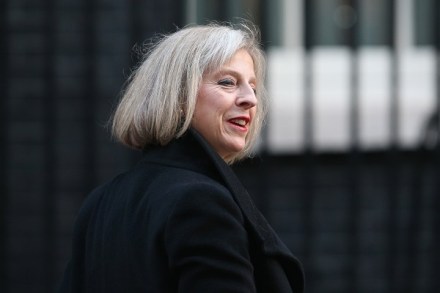
Theresa May has announced that the UK Border Agency is to be abolished.  In an unscheduled statement to the House of Commons, she described UKBA as ‘a troubled organisation’ with a ‘closed, secretive and defensive culture’. She said that the agency’s size, lack of transparency, IT systems, policy remit and legal framework ensured that its ‘performance was not good enough’. May declared that the agency will be split in two. One arm will deal with immigration and visa services, while the other tackles enforcement. May will also bring both arms back directly under the control of ministers, reversing the arms-length policy established by Labour in 2008.
The life and opinions of Boris Johnson

From our UK edition

It was inevitable, after the Mair interview and the Cockerell profile, that Boris would dominate the news this morning. Steve Richards and Hugo Rifkind (£) have written about him in their columns, and there are numerous reviews of Cockerell’s programme to read – Paul Goodman at ConHome will make for a thoughtful and entertaining lunchtime break. I don’t think that Cockerell’s programme told eagle-eyed political observers anything new; but that was not its intention, at least from Boris’ perspective. Eddie Mair wondered if Boris is nasty piece of work; most viewers of Cockerell’s programme would have emerged with the view that Boris is at worst a naughty piece of work.

Tories who say that Cameron is making ‘no difference’ underline the coalition’s communications failure

From our UK edition

You should take note when Benedict Brogan, an influential and widely sourced journalist who has been very close to the Cameron and Osborne operation over the years, writes of the fire-sale of Cameron shares. He says in today’s Telegraph that Cameron’s party view him as a ‘lame duck’ who makes ‘no difference’. This is an extraordinary claim for disaffected Tories to make. True: the economy is mired and the government has tied itself to only one course of action. There have also been disasters at the department of health; and energy policy ought to be giving Number 10 an enormous headache. But Cameron’s coalition is changing the landscape of education and welfare, both of which are enormous undertakings.

David Cameron’s immigration speech fails to capture the imagination

From our UK edition

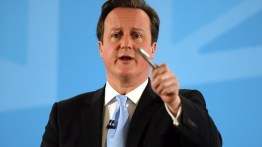
This morning’s papers have followed the lead of yesterday’s TV news bulletins: the prime minister’s immigration speech was not the success it might have been. The Times is lukewarm (£). The Guardian is suspicious. The Mail is derisive. And our own Douglas Murray is contemptuous of a speech which merely stated the ‘utterly obvious’. Yet again, the government has failed to convince the media. Part of the problem is that the numbers are inconclusive. The Guardian has built on yesterday evening’s BBC news reports, which claimed that only 13,000 migrants from that part of the EU have claimed JSA since 2009. This contrasts with Mr Cameron’s concerns about a widespread ‘something for nothing’ culture.

Budget Day: should our times really be called ‘the age of austerity’?

From our UK edition

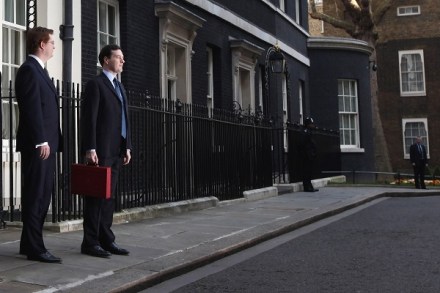
It is Budget Day. Prepare for another barrage of “messages” about the virtues or perils, depending on your point of view, of ‘austerity’. From where has this ubiquitous term come? And should it apply to our times? Dot Wordsworth, our language columnist, has some answers: ‘If we are invited to think we are experiencing austerity, despite the heaps of cheap clothes in Primark or expensive food in Waitrose, then it is Mr Cameron’s doing. In April 2009, not so long ago, at the Conservative spring conference (that needless enterprise) he promised an ‘age of austerity’.

Douglas Adams’s big idea

From our UK edition

Had he not died 12 years ago, Douglas Adams would have been 61 yesterday. Google produced a doodle in his memory, and the Guardian published an interesting piece which declared that Adams remains the king of comedy SF, before going on to argue that he was unique, pretty much the only writer in that genre. Take a bow Mr Adams; you’re top of a league of one. But, in a way, Adams was, or very nearly was, unique. The Hitchhiker’s Guide to the Galaxy and its sequels are comedies of ideas flavoured with lashings of silliness: the restaurant at the end of the universe and Marvin the Paranoid Android, a robot beset by depression because he never uses his planet-sized brain – how gloriously silly and how very clever. How unique, almost.

Help! What is ‘lurching’?

From our UK edition

David Cameron is not for lurching. No lurch to the right, he says. The word ‘lurch’ underscores commentary on the government’s difficulties; but what does it actually mean? As so often in these matters, Dot Wordsworth, our language correspondent, has a few erudite suggestions, one of which is this: ‘Lurching is a nicely pejorative word. A lurch could only be welcome accidentally. The word suddenly popped up in the 19th century. No one is known to have used it earlier than Byron in 1819, in Don Juan, where he contrives a Byronic rhyme: ‘A mind diseased no remedy can physic/ (Here the ship gave a lurch, and he grew sea-sick.’)’ The quotation is apt because the word’s origins are believed to be nautical.

The battle for credibility: David Cameron, Ed Miliband, Hilary Mantel edition

From our UK edition

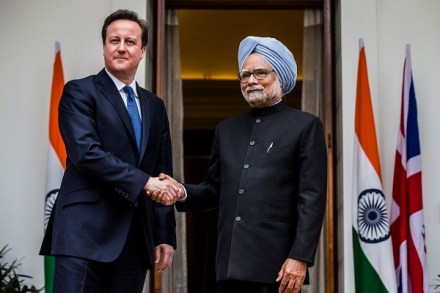
Why can’t politicians resist the temptation to comment? Hilary Mantel’s piece in the LRB is about as political as the pasta I was eating when David Cameron stopped darkening Indian doors for a moment to make what political strategists and pundits term “an intervention” on the matter. What possessed him (and Ed Miliband, who followed him into the mad breach)? The question is best answered, I think, by Peter Oborne in The Rise of Political Lying and much of his other writing. Oborne describes how political reality has changed. There was a time, at least in theory, when politics was determined by arguments over a verifiable truth; but this has been replaced by a competition of narratives. The era of ‘truth’ might be defined simply as: which ideas work.

Hilary Mantel’s sympathy for the royals

From our UK edition

Hilary Mantel has got into hot-water over a piece she has written about monarchy for the London Review of Books. There has been consternation over Mantel’s statement that the Duchess of Cambridge: 'appeared to have been designed by a committee and built by craftsmen, with a perfect plastic smile... [who] seems to have been selected for her role of princess because she was irreproachable: as painfully thin as anyone could wish, without quirks, without oddities, without the risk of the emergence of character.' She went on to say that Kate used to be ‘a jointed doll on which certain rags are hung. In those days she was a shop-window mannequin, with no personality of her own, entirely defined by what she wore.

Government will appeal controversial immigration decision

From our UK edition

Further to the row that has erupted between Theresa May and some judges over the deportation of foreign criminals, the government is understood to be applying to appeal the case of MF. The Home Secretary is plainly confident that her arguments will be well received in the Court of Appeal, having been found wanting in the Upper Tribunal (Immigration and Asylum Chamber). The issue of deporting foreign criminals has been cast by some as a disagreement between senior judges and their more activist juniors, and not merely a clash between different arms of government. Theresa May’s team have been at pains to point out that the majority of senior judges support her case.

Stop blaming judges, Ms May, and repeal the Human Rights Act

From our UK edition

The latest session in May versus Judges over foreign criminals’ right to family life (Article 8 of the European Convention) is running as prescribed. Theresa May used the Sunday papers to demand that judges follow the wishes of parliament and deport more foreign criminals. A gaggle of retired judges and eminent lawyers told (£) her where to get off. In terms of the PR and the politics, it is game, set and match to Ms May. As Trevor Kavanagh notes in The Sun, the Eastleigh by-election, where immigration may play as an issue, is an important backdrop for the Home Secretary, particularly given the imminent arrival of Romanian and Bulgarian migrants.

Cricket’s the loser

From our UK edition

Cricket glorifies some cheats. W.G. Grace often batted on after being clean bowled; such was the public demand to watch him. Douglas Jardine’s bodyline tactics revolutionised fast bowling: eventually making it acceptable to target the batsman rather than the wicket. Fielders “work” the ball. Batsmen stand their ground when convention asks them to walk. Cheating is part of cricket. But match fixing? The culprits live forever in infamy, and deservedly so. The cricketing authorities (the ICC) believed that match fixing had died ten years ago; but the News of the World’s sting on the Pakistan team in 2010 demolished those hopes. The sting suggested that the problem was deep. Rumours abounded around the globe.

In praise of Plum

From our UK edition

This blog post is not going to say anything original. You’ll have read it all before. Its sole purpose is to convince you that P.G. Wodehouse is the master so everyone else should give up, particularly the people who’ve tried to adapt Blandings for the telly. Blandings on TV is not all that bad. I’ve laughed at the gentler moments of farce. Some of the dialogue sparkles. The performances are good-ish. The setting has some charm. But I’m inclined to agree with everyone else who has spent brain power on it: the screen can't do Wodehouse. My father once told me that he kept copies of The Code of the Woosters and Right Ho, Jeeves in his desk at work. He referred to them, he said, whenever he suspected that his prose had grown pallid.

Argentina’s Foreign Minister compares the Falklanders to Israeli settlers

From our UK edition

Argentina’s foreign minister, Hector Timerman, is in town. He spoke to all the All Party Parliamentary Group on Argentina earlier this afternoon. There are close economic and social links between Britain and Argentina, extending far back into the nineteenth century; but the meeting was dominated by what was euphemistically termed ‘the islands’. Timerman began diplomatically. ‘You can speak to this Argentina,’ he assured the assembled honourable members and lords. ‘This Argentina is ready to talk.’ This sounded encouraging, a welcome contrast to President Kirchner’s bellicosity. Timerman spoke about the need for ‘frank and open’ discussions that did not obsess about ‘the past’. The future is what counts.

Reading Richard III

From our UK edition

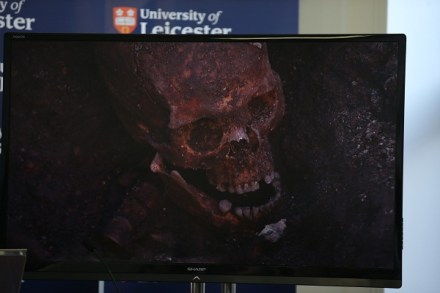
The confirmation that bones found beneath a Leicester car park are ‘beyond reasonable doubt’ those of Richard III has launched a deluge of familiar puns. ‘A hearse! A hearse! My kingdom for a hearse!’ say numerous wags on Twitter. I wonder if Richard III would be remembered so widely today were it not for Shakespeare. The character of the play, who speaks some of the most famous lines in English, is descended from the portrait drawn by Sir Thomas More in an uncompleted history written at various points throughout the 1510s. Many historians argue that More wrote the book to please the Tudors.

Hilary Mantel’s Bring Up The Bodies wins Costa Book of the Year

From our UK edition

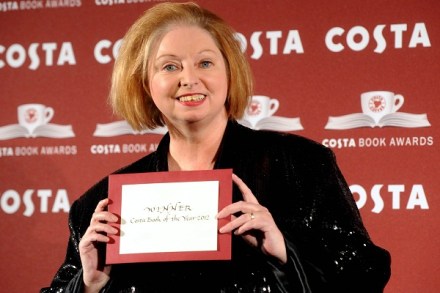
Hilary Mantel has won the Costa Book Award of the Year for Bring up the Bodies. It saw off contenders: Maggot Moon by Sally Gardner (the children’s book winner), The Innocents by Francesca Segal (the first novel award), The Overhaul by Kathleen Jamie (the poetry prize) and Dotter of Her Father’s Eyes by Mary and Bryan Talbot (winner of the best biography award, and the first graphic work to win a Costa prize). Mantel collected the prize fund of £30,000. Mantel’s win means that she has also secured a ‘literary treble’: Bring Up the Bodies has won the Booker Prize, the Costa Novel Award and Costa Book of the Year. This achievement is worthy of this extraordinary book.

Google maps North Korea

From our UK edition

Google has mapped North Korea. The Washington Post has useful selection of before and after images. Compare the images for North Korea with a map of the county in which you live and you will get a sense of North Korea's poverty. Britain is debating the merits of cutting the rail journey time between London and Brum by 10 minutes; North Korea has only the most basic road infrastructure. Small wonder, then, that the North Korean economy is so parlous that the Kims have accommodated a nascent form of capitalism in order to stave off mass starvation; an important point among many made by Victor Cha in The Impossible State, published last year.

Abraham Lincoln ‘somehow’ became the great redeemer

From our UK edition

Abraham Lincoln, in Walt Whitman’s celebrated phrase, contained multitudes. M.E. Synon showed yesterday quite how many there might have been. There is evidence of prejudice, callousness and corruption. Yet there is also the 13th amendment (1865): the basis, whatever the wider context of its adoption, of Lincoln’s right to be called the Great Emancipator. Steven Spielberg’s Lincoln is a film of a book: Team of Rivals: The Political Genius of Abraham Lincoln by Doris Kearns Goodwin, a blockbuster that paints a little more of the good Lincoln than the bad, but which accepts Lincoln's complexity freely by describing a determined politician at work. Daniel Day-Lewis’s often mesmerising, twinkling Lincoln is not wholly angelic.

Mali is a British concern because it is a European concern

From our UK edition

Aaron Ellis makes a good point: the comparison between Mali and Afghanistan is flawed. But I disagree with him as to why. Afghanistan was a failed state long before al-Qaeda settled there (as a last resort). The pattern is slightly different in Mali: Islamists have further destabilised an already weak country in a strategically sensitive area. Mali has been wracked by unrest, both ethnic and religious, for some time. The country is so poor (as a glance at the CIA World Fact Book’s approximations demonstrates) that is precarious politically; so precarious that it threatened to undermine some of its delicate neighbours along the Sahel (the massive and growing strip where desert meets savannah): Niger, Mauritania and Chad.

Murder at the British Library

From our UK edition

If you happen to be passing through King’s Cross and can spare 10 minutes, drop by the British Library to see Murder in the Library: An A-Z of Crime Fiction, a small but perfectly formed exhibition about crime writing.