David Blackburn

Ed Balls opens a new front in the same old way

From our UK edition

There are plenty of pressing issues at the moment, but two in particular stand out: the cost of living and youth unemployment. Ed Balls lost no time in latching onto the first issue. On becoming shadow chancellor, he immediately attacked the government’s VAT rise and benefits changes, which he judged to be the main contributors to rising inflation. It has been a  successful tactic, sustained by rising inflation and determined political pressure. Now Balls seems to be turning his full gaze at youth unemployment. In article for the News of the World, Balls launches his campaign to save "Britain Lost Talent". At the root of this is a plan to create 100,000 new jobs funded by a £2bn tax on bankers’ bonuses.


Glasman sings the blues

From our UK edition

Maurice Glasman, a favoured thinker of Ed Miliband’s, has given an interview to someone called Filippo Sensi who writes for an Italian magazine called Europa. I sound a firm note of caution here because there is a distinct possibility that it's a spoof. Take Glasman on the etymology of Blue Labour: "There is a sense of bravery and tragedy in our position and that is one meaning of the word blue, that links Miles Davis with Picasso and Aristotle. It is not mentally ill or depressed to feel triste and out of that understanding can flow a deeper understanding of the world and a more durable courage in resisting it than a superficial optimism that is the definition of Berlusconi and the progressive left.

Why wasn’t Mladic arrested earlier?

From our UK edition

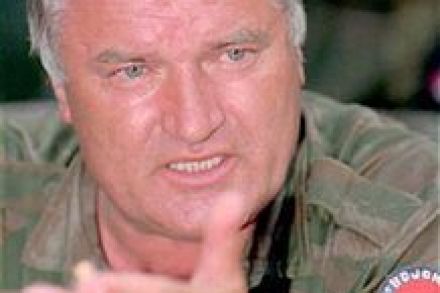
How did Ratko Mladic escape arrest for so long? Writing in this week’s issue of the Spectator (buy it here), Charlotte Eager remembers her nervous summers with the azure-eyed butcher, in the course of which she writes: "Why wasn’t Mladic arrested before? After all, British, French and US special forces wandered Bosnia freely for many years after the end of the war and he used to be spotted in restaurants, boils and all. The problem, according to some ex-SAS chums, was that our governments wanted Mladic to be taken alive. ‘That would not have been possible then,’ said one: back then, his thugs were still pumped up enough to die for him. Sixteen years after the war, the adrenalin has ebbed.

Flying into a known unknown

From our UK edition

British Apache and French Tigre attack helicopters flew into action over Libya yesterday, the Ministry of Defence confirmed last night. As when news of the deployment first broke, parliamentarians and military talking heads have warned that this is an escalation of the conflict. Some MPs have called for parliament to debate the issue when it returns from recess on Monday. NATO commanders are at pains to stress that the scope of the operation has not changed. Lieutenant General Charles Bouchard, commander-in-chief of Operation United Protection, told reporters at his headquarters in Naples. “It’s an additional capability to pinpoint these [military] vehicles that are much more difficult to see from aircraft at high altitude.

From the archives – the Butcher of Belgrade

From our UK edition

As Ratko Mladic faces his accusers at the Hague, it’s instructive to revisit the fallout from one of the atrocities he is alleged to have committed. The Srebrenica massacre was both a horrendous tragedy and a horrendous failure of internationalism – a point the Spectator made cautiously as news of the war crime emerged. No End of a Lesson, The Spectator, 22 July 1995 The tragedy in Bosnia is so harrowing, the United Nations’ failure so all-embracing, the West’s humiliation so total that it is difficult as yet to see beyond them. But for the Bosnians themselves, the worst may now be passed. Whether the defeated international powers stage some dramatic military feat before their departure is largely irrelevant to those they were sent to protect.

The green consensus in action

From our UK edition

A couple of days ago, I wrote about the deleterious effects of political consensus on energy policy. A good example of this has emerged today. According to Politics Home, Luciana Berger and Caroline Lucas are seeking an amendment to the Green Deal to impose a target for domestic carbon reduction. A number of salient points emerge from this. First, it’s a fine instance of the obsession with targets; itself an indication that this area of policy is largely a top down initiative – driven by targets, taxes and penalties. The Green Deal, as it currently stands, is one of the few areas that put incentive before directive. The idea was to ‘nudge’ consumers into improving domestic energy efficiency.

Not just a wily Fox, but a watchful hawk with time on his side

From our UK edition

Liam Fox is fond of reminding us that he didn’t come into politics to cut the armed forces. A wistful look falls across his face when he says it – an indication of frustration as much as sincerity, a sense deepened by his letter of concern about the government spending so much more on international development. Opponents of Fox might characterise this as hypocrisy: he would reduce the size of the state without touching the armed forces, they say. His enemies in the Conservative party say that it’s typical of this “clever fool’s” intellectual indiscipline. Fox the military and fiscal hawk wants to “have it both ways”.

A show trial with a difference

From our UK edition

It’s a sleepy morning in Westminster. Fleet Street is exercised by the arrival of a new strain of e-coli in Britain and there’s also the promise of a sweltering day’s Test cricket at Lords. The Hague, by contrast, woke to the prospect of seeing Ratko Mladic, the Butcher of Belgrade, arraigned before the international court. Mladic was in hospital over night, being treated for his cancer. In view of Mladic’s ailing health, the chief prosecutor, Serge Brammertz, shortened the list of charges to ensure that the trial is shortened. In other words, those charges that might not easily stick are to be dropped so that sentence can be passed quickly. The same expeditious ruse was used during the trial of Radovan Karadzic.

Labour’s malfunctioning front bench

From our UK edition

The old adage that it's hard to make an impact in Opposition is ringing true. Dan Hodges has denigrated Labour's opposition thus far in the New Statesman's political column today. He charts the party's competing interests to create the sense that Miliband's lack of direction, which is marketed as consensual politics, is the prime cause for Labour's passivity. A listening exercise and numerous policy reviews are under way, but Labour is still stuck at Robert Frost's fork in the road. Sooner or later, Miliband will have to act. Without firm leadership, shadow ministers are being left to their own devices; which perhaps allows the coalition to escape misfortune because often inexperienced shadow ministers don't do much opposing. The left-wing press is becoming frustrated.

The Tory euro-wars make a brief return

From our UK edition

The Europhilic ghost of Ted Heath is stalking the House of Lords, upsetting the passage of the European Union Bill, the bill containing the coalition’s EU referendum lock. Lord Armstrong of Illminster, who was PPS to Edward Heath between 1970 and 1975, is trying to introduce a ‘sunset clause’ to ensure that the bill lapses at the end of this parliament. (He is working with Labour whip Lord Liddle, although Labour insists that this is not party policy.) Another amendment has been tabled to guarantee that referenda are binding only if turnout exceeds 40 per cent. This could mean that Britain succumbs to legislative creep from Brussels because only major issues (such as joining the Euro) are likely to attract sufficient turnout.

Across the literary pages | 31 May 2011

From our UK edition

The Telegraph is live at the Telegraph Hay Festival. The Salon reports on ‘Stephen from Baltimore’s’ attempt to re-write James Joyce's Ulysees on Twitter: ‘All volunteers need to do is choose a section, or several, from the 18 episodes, structured loosely on Homer’s epic, "then thoughtfully, soulfully, fancifully compose a series of 4-6 tweets to represent that section."' The Guardian's Digested Read, by John Crace, turns its cutting eye on Jeffery Deaver’s new Bond book, Carte Blanche. ‘On his way out of M's office, Bond noticed an attractive young agent chatting to Moneypenny. Ding-dong! Stockings or tights? "The name is Bond, James Bond," he said. "Ophelia Maidenstone," she replied. "I've split up with my fiancee.

Gaddafi’s position weakens

From our UK edition

As Noman Benotman predicted, Colonel Gaddafi’s relations with his military are disintegrating. Reuters is reporting that 120 loyalist officers have defected and arrived in Rome. Details are scant, but this is a major success for Britain and France’s attempt to effect regime change without intensifying their military deployment. There will be doubts as to how long the resilient dictator can survive without loyal military leadership. Gaddafi now has to choose how to respond to this treachery – rough justice may be tempting, but that might deepen the rebelliousness of his officers, increasing the likelihood of a coup. NATO will be trying to exploit this stroke of luck, encouraging further defections.

In England’s green and pleasant land

From our UK edition

What do the TUC, heavy industry and the European Commission have in common? This is not the start of a bad joke; the answer is that they all oppose the government’s energy policy. Ten days ago, Tata (formerly British Steel) announced that it was to cut more than 1,500 jobs at plants in Scunthorpe and on Teeside. The directors later confirmed that their decision was influenced, in part, by the introduction of a costly carbon floor price at the last Budget. The floor price, which exists on top of levies imposed by the EU, has increased the burden of taxation on energy consumption to subsidise renewable energy research. In last week’s issue of the Spectator, Matt Ridley predicted how this policy will likely be an expensive fiasco.

The spectre of jihad in Libya

From our UK edition

While Britain agonised over deploying attack helicopters to Libya, the conflict seems to have escalated of its own accord. Noman Benotman, a former member of the Libyan Islamic Fighting Group, has described the current dispositions for the Times this morning (£). He has learned that many of Gaddafi’s military leaders are planning a coup to save their skins; Colonel Gaddafi is reluctant to arrest their nascent treachery for fear of triggering open rebellion. Other officers are following the example of civilian administrators like Moussa Koussa, feeling that now is the time to cut and run. News of Gaddafi’s withering power will please NATO, even if it is exaggerated. However, Benotman’s other revelations will unnerve the alliance.

Testing the health of the coalition

From our UK edition

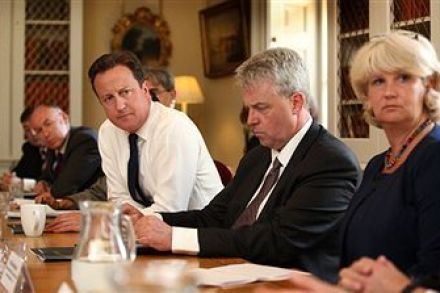
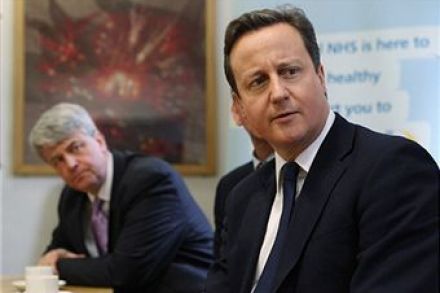
Listening is seriously damaging the coalition’s health. The Sunday Mirror carries a report that chimes with a week of rumours in Westminster: the NHS reforms are going to be significantly diluted to appease warring Liberal Democrats. The Mirror adds that Lansley is likely to quit in protest. Matt d’Ancona argues, in his essential column this morning, that this is not a listening exercise but a ‘full blown carefully orchestrated retreat’. It is, if you will, a political version of the battle of Arnhem: the NHS reforms were a reform too far in this parliament, so tactical withdrawal is now imperative. Clegg and Cameron’s signatures are on the original White Paper.

Ditching the dirt

From our UK edition

Cleanliness was nowhere near godliness in 17th-century Europe — except in Delft, where God came second. The Wellcome Collection’s examination of humanity’s relationship with dirt begins in Vermeer’s city, where thousands of girls with pearl earrings scrubbed hearths for a living. Delftware, those distinctive blue and white ceramic tiles so common in antique shops, was mass-produced because it was so easy to clean and molysmophobic merchants used it to plaster their interiors. It’s tempting to mock the fashion; but the show immediately moves on to Dickens’ s London – a miasma of grime, dust and disease. The obsessive compulsives of Delft were visionaries.

Brennan comes to Balls’ aid

From our UK edition

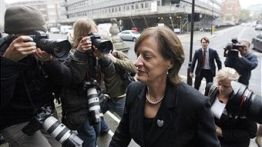
To present the government side in the Shoesmith case, former minister Kevin Brennan MP has written an extensive defence of Ed Balls' decision to sack Sharon Shoesmith. Brennan's argument is predicated on Ofsted's report. Brennan writes: 'Faced with such a report, the Secretary of State had to act decisively. Anyone who doubts for a moment the decision Ed Balls took should look again at that report and its implications for the leadership of child protection in that borough.' Shoesmith has cast doubt on Ofsted's report, asserting that its authors had been leant on after they had conducted their research and found her department to be under pressure but in good order. The appeal to the Supreme Court will clearly have to test the independence of Ofsted's report.

Meeting Christine Lagarde

From our UK edition

The FT has been speaking to Christine Lagarde, the French finance minister tipped to become managing director of the IMF. A few salient points emerge from it. First, she has more than a dash of hard-nosed Gallic defiance. Responding to the charge of a lack of a qualification in economics, she reiterated the comments she made to the Today programme earlier in the years: “From what I know of the job, I think I can do it. One of the qualities that people recognise in me is my ability to reach out, to try to build a consensus, to bring people to the common interest while still being a very firm and no nonsense person.” Her empathy is well documented, as is her sympathy for all things American.

Shoesmith strikes at Balls and executive power

From our UK edition

Sharon Shoesmith cut into Ed Balls on the Today programme this morning. She said: "Why don’t we ask Ed Balls why he acted on November 12, 2008 when he knew for 15 months that Peter Connelly had died and I was working with his officials, I was going to the government office, they were reading the draft reports. Haringey council knew all about it. We examined the conduct of our social workers, we found a disciplinary against them, but they weren't sacked - all of that was open and clear and on the table and everyone knew everything about that. It wasn’t until the spat in the House of Commons when David Cameron taunted Gordon Brown that everything changed overnight. That is the one occurrence that changes all of this story.

Less listening, more talking

From our UK edition

There was an exchange on Question Time last night that may go some way to explaining why the government’s health plans are so mired. One panellist, media lawyer Charlotte Harris, said that she was very worried by the substantial cuts being made to the NHS’ budget. Large sections of audience greeted this with rapture. (From 44 mins.) Immediately, Tory Louise Bagshawe and Lib Dem Jeremy Browne tried to grab David Dimbleby’s attention. It fell to Bagshawe to correct Harris, pointing out that the government has increased spending on the NHS when Labour would cut. The audience responded with boos – more in disbelief than disagreement, incredulous that the Tories would do anything other than cut the NHS.