David Blackburn

Bin Laden strikes from beyond the grave

From our UK edition

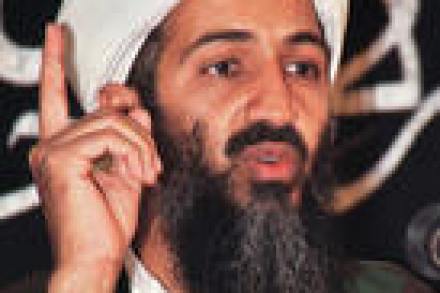
And so it starts. The news that suicide bombers have attacked the military base at Shabqadar, northern Pakistan, sounds a chilling note. The Pakistani Taliban has claimed responsibility for the attacks, committed in retaliation for the assassination of Osama bin Laden. Security experts and politicians warned that it would be so. It is, we are told, inevitable that similar atrocities will be attempted closer to home. There will also be concern that this may aggravate the already strained relations between the US and Pakistan, which would only strengthen the terrorists. Perhaps Bin Laden has become a more potent force since his death. The sight of a squalid man sitting in exile watching videos of his bygone glories was almost pitiful.
MacShane’s contradictory testimony to the Iraq Inquiry

From our UK edition

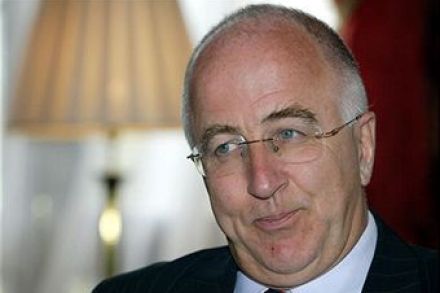
A trickle of documents from the Chilcot Inquiry have been released today, among which is the written witness statement of former Europe Minister Denis MacShane. It's rather intriguing. MacShane told the inquiry that it was his understanding that France 'would not leave the US, Britain and other allies alone in any action against Saddam' and that President Chirac then vetoed military action in the UN at the stroke of the twelfth hour, apparently against the wishes of his colleagues and France's political establishment. MacShane says he gained this impression after speaking to a senior French official at the Anglo-French summit at Le Touquet on 4 February 2003, six weeks before the invasion.

Laws punished but in the clear

From our UK edition

The Parliamentary Commissioner for Standards, Sir John Lyon, has delivered his report on David Laws’ expenses claims. The headline is as expected: ‘Mr Laws was guilty of a series of serious breaches of the rules', and it is recommended that he be suspended for 7 days from 7 June. It is a stern punishment for a serious transgression. However, nothing has really changed since Laws resigned from the government last May, because Lyon has not disinterred anything new. Crucially, the report accepts Laws’ explanation that he was conniving to protect his privacy, not to increase his personal wealth. For example, in paragraph 36 Lyon says that Laws would have been paid more in expenses had he followed the rules.

Cameron in new war with his backbenchers

From our UK edition

The House is united in loathing of IPSA, which explains why Tory MP Adam Afriyie’s amendment to the Parliamentary Standards Bill 2009 is proving so popular. Afriyie’s aim is ‘to simplify the way in which expenses and salary payments to Members of Parliament are made’ and attempt to limit IPSA’s costs.   The government, however, is wary of Arfiyie’s reform – sensing, perhaps, that the public might not stomach changes to the expenses system so soon after the recent scandal.   The bill’s second reading will take place this Friday and it is now understood that enough Labour backbenchers will support the motion to allow it to pass. It is rumoured that Cameron is insisting his backbenchers are whipped to defeat the bill.

In her own words

From our UK edition

As I wrote before the Easter break, Jennifer Egan's A Visit From the Goon Squad is a captivating novel. Reviewers are clamouring at its brilliance, but I agree with Will Blythe of the New York Times that it is 'unclassifiably elaborate'. You should believe the hype, but I can't quite say why. Here is Egan in conversation with Steve Bertrand. (She describes her methods and the life of the book, but she also reveals some of Kindle's shortcomings.

Across the literary pages | 9 May 2011

From our UK edition

Sir V.S Naipaul is the subject of this month's Literary Review interview, conducted by Patrick Marnham on this occassion. 'LR: You went to see a fortune teller in West Africa on your recent journey. What did you ask him? VSN: Oh, I always ask them a few specific questions. Will I own a house of my own one day? Will I find emotional satisfaction with someone? Will there be a book next year? Next year ... For me that is always a sign of life. But I pay no attention whatever to the replies. I've never had any wish to penetrate the personal future. The bigger future is always interesting, but I don't have this personal wish. LR: Was the African seer any good? VSN: My favourite answer, which is quite common, is 'Government help will be forthcoming'.

Sectarianism breathes again in Ulster

From our UK edition

Can Tom Elliott lead the Ulster Unionists? That’s the question commentators in Northern Ireland are asking, after the party suffered yet another reverse at the polls. Elliott was elected leader on a landslide in September and he is already under pressure, seemingly powerless to arrest the decline of the once dominant force in Northern Irish politics. He is visibly rattled, as the clip above proves. It was probably a reaction in the heat of the moment, but one that should alarm for those Tories who still seek an alliance with the UUP.* It was hoped that the scale of Elliott’s victory would unite the fractious party. But the divisions that characterised Sir Reg Empey’s leadership have intensified under Elliott. The factions are many and various.

Web exclusive: “AV is the thin of the wedge, that’s why we support it”

From our UK edition

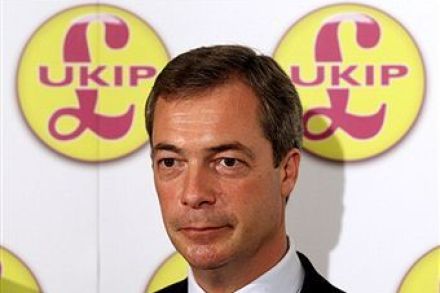
Nigel Farage is in a bullish mood. Also, the True Finns Party has shot a warning at Brussels by winning nearly 19 percent of the vote in a general election. Mr Farage hopes that the combination of an unpopular and insufficiently Eurosceptic coalition government, the EU’s budget increases and the European Court of Human Right’s recent controversies will win him similar victories. “I’ve waited a long time for this. Finally it’s changing,” he says.      Ukip’s lack of success is perplexing, given that 51 percent of Britons think our EU membership is counterproductive.

Will there be TV debates at the next election?

From our UK edition

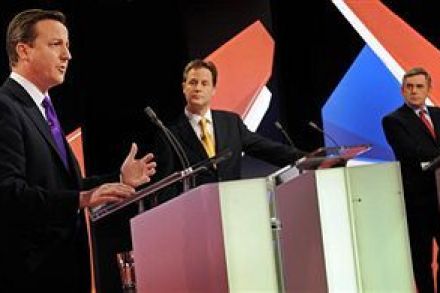
One might have thought that the TV debates would become an immovable fixture in British general elections. But apparently not. Speaking at the launch of a new study of the 2010 election a couple of nights ago, Adam Boulton said that it was far from certain that they will feature at the next election. Will Straw tweeted the news at the time, but it seems to have slipped through the cracks as attention has been diverted elsewhere. Apparently, broadcasters and the parties have reached an impasse at this early stage in the electoral cycle. The Conservatives are reluctant to recommit themselves to something that they believe contributed to their failure to win a majority.

May book of the month

From our UK edition

Historical fiction has been a staple of the reading public for more than a century. Fashions change and there are eras when these novels are more fictitious than historical. The current fashion sees history trump fiction, particularly in the realm of real crime. Colquhoun’s new novel, Mr Briggs’ Hat, is the story of the first murder on Britain’s railways, a whodunit that sent Victorian Britain into paroxysms of fear. You can read her introduction to the book, its themes and its place in the canon of British crime writing here. It is a deft exposition of sensationalism, charting Victorian Britain’s furtive delight in transgression and its concerns about the price of modernity and the loss of innocence.

Farage: AV is the thin of the wedge, that’s why we support it

From our UK edition

Nigel Farage is in a bullish mood. Buoyed by the coalition’s unpopularity, Labour’s listlessness and the success of the True Finns Party, he has declared that Ukip is "no longer a minority party". I interviewed him ahead of tomorrow’s local election, the first test of his second leadership stint and the new direction in which he is trying to take the party. You can read the full interview as a web exclusive here; and there are some highlights from the transcript below:   On AV   DB: Why are you supporting AV? NF: Well, first past the post is finished, it doesn’t work. DB: Why? NF: It doesn’t really have legitimacy. You know, it worked when we were a two party state.

Fear and loathing at the inkwell

From our UK edition

“It sometimes makes me wretch, just the thought of writing,” said an author whose book launch I attended last night. This was not said in jest as part of a routine of good natured badinage, or as a novel sales pitch. He meant it. “There’s a moment of deep anxiety. A quandary. A kind of self-loathing brought about by sudden self awareness: the realisation that what I’m writing is absurd and that I can’t improve on it. It’s the fear of failure. At that point I get the nausea.” It’s a common complaint: some writers just hate putting pen to paper. And because so few authors have immutable deadlines, many choose to procrastinate rather than scribble.

Dirty old man

From our UK edition

Essentially, Alan Bennett's new book is about its title: Smut. Here the National Treasure reads extracts from this duet of sly and unseemly stories.

The death of the human library

From our UK edition

How would the newspapers have reacted if Osama bin Laden had been killed on the same day as the Royal Wedding? No doubt tragedy would have ensued as 1,000 despairing picture editors hurled themselves into the sea. I’m glad the two events didn’t coincide, not least because the death of the military historian Professor Richard Holmes would have passed unnoticed. Many will remember Holmes’ clipped speech and solemn manner on television as he strode around the slopes of Waterloo or the Somme, relating past events with a singularly engaging zeal. But Holmes was more than just a TV historian, a phrase imbued with pejorative overtones. He was a revered academic who lectured on military history at Sandhurst for many years.

The Royal Wedding: across the web

From our UK edition

Here is a selection of articles on the Royal Wedding from around the web. For those, like me, who wouldn’t know an Empire Line if it slapped them in the face, Vogue’s fashion live blog has all the details and photographs of what broadcasters have called a “festival of British fashion.” Sam Cam was wearing a dress from Burberry, Princess Beatrice was bedecked in Vivienne Westwood and, the main event, Kate Middleton’s dress was made by Sarah Burton of Alexander McQueen. The Telegraph’s outgoing Fashion Editor, Hillary Alexander has more details here. It’s been quite a sales demonstration for Britain’s leading designers. Export led recovery here we come!

Royals behaving badly

From our UK edition

How would you behave if you were at the Royal wedding? I concede that at this stage the contingency is remote, but humour me anyway. It’s a grand sight, the sort of pageant that Britain does best. The royal family, bishops, assembled dignitaries, guardsmen lining the route: all that’s missing is a Spitfire, Vera Lynn and some fleeing Bosche. But Huw Edwards and some bearskins does not a state occasion make. The wedding will look splendid and solemn, but, once the religious ceremony ends, it’s like any other familial knees-up. So was it ever thus. The Gentleman’s Magazine, a staple of polite Georgian England, considered this question of deportment in an edition published around the marriage of the Prince Regent to Princess Caroline in 1795.

The government has a problem with lawyers

From our UK edition

The government’s strained relationship with the Civil Service is a recurring story at the moment. Much of the disquiet seems to be the normal tit for tat exchanges immortalised in Yes Minister. In the main, ministers and their advisors express high regard for their officials. But there are some resilient bones of contention between the government and its lawyers. Again, this is not unusual. When Gordon Brown was Chancellor, parliamentary counsel were exasperated by his inability to take decisions. Brown’s budgetary machinations were finalised in a predictably mad rush, which incensed those who had to amend the bill hours before it was put to parliament.

The Orwell Prize

From our UK edition

As Roy Greenslade notes, the Orwell Prize aims to reward those who have come closest to achieving Orwell’s ambition of ‘making political writing an art’. The Orwell Prize’s shortlist has been released today. Shortlist is something of a misnomer, as a glance at the exhaustive categories will reveal. Perhaps, in time, there will be a Twitter prize. The major category is the book prize. The shortlist is impressive: Helen Dunmore’s The Betrayal, an exploration of Stalin’s Russia after the Second World War. The late Lord Bingham’s The Rule of Law, a masterful examination of the balance of law in Britain and strangely humane and uplifting for such a theoretically considered book; Jonathan Sumption reviewed it for the Spectator.

Across the literary pages | 26 April 2011

From our UK edition

Gonzalo Rojas, the arch enemy of General Pinochet, has died aged 93. The former exile was regarded as the equal of Pablo Neruda among South American poets. His death has been described a “great loss for Chilean literature”. Charles Nicholl charts the renaissance of Thomas Wyatt, epitomised by Nicola Shulman’s new biography. Thomas Wyatt was the finest poet at the court of Henry VIII, but this has not always earned him much respect. The early 16th century is generally accounted one of the lowlands of English literature, a period of mediocrity between the pinnacles of Chaucer and Shakespeare. CS Lewis dubbed it the "Drab Age" and said of Wyatt: "When he is bad he is flat or even null, and when he is good he is hardly one of the irresistible poets.