David Blackburn

Not dark yet, but it’s getting there

From our UK edition

It was a strange scene. An audience of whiskery Classics enthusiasts listening to a lecture about the influence of Homer and Virgil on Bob Dylan, which is considerable – Sir Christopher Ricks has written a 500 page book on the subject. At the end of the lecture, this delightful and odd society moved to invite Dylan to its ranks, so impressed was it by his learning and art. A procession of old boys then shuffled out of Guildhall humming the tune to ‘Lonesome Day Blues’ (Dylan’s most Virgilian song), realising that they could have misspent their youth after all. It was a colourfully comic sight, dimmed by pathos. That was some years ago; now the movement to canonise Dylan as poet has strengthened.

Choppers add to the Libyan fog of war

From our UK edition

There was much ado about choppers in Westminster earlier today. Yesterday, French Defence Minister Gerard Longuet told reporters that Britain and France were to deploy attack helicopters to Libya; and that the British had instigated this move. The fog of war then descended. Labour’s defence spokesman Jim Murphy called on the British government to explain why the conflict is escalating. Armed Forces Minister Nick Harvey contradicted Longuet's account; and a source at the Ministry of Defence told me that this was the first he’d heard of helicopters being deployed to Libya in that role. The implication was that the French were trying to force the issue. Then again, a separate MoD source has told the Guardian that the “chances are it is going to happen”.

A coup for the Tories?

From our UK edition

The Tories are cock-a-hoop about the defection of UKIP MEP David Campbell Bannerman – positively crowing, in fact. “There’s nothing more satisfying,” said one CCHQer, “than UKIP suffering.” Activists and MPs alike reckon that the Conservatives could have won a majority last May if it weren’t for UKIP in the south-west. Vengeance is sweet, but is it of lasting importance? Campbell Bannerman has used a blog post to justify his action: David Cameron is an inspiring leader and an avowed eurosceptic. Perhaps it will become a salve for the right, increasingly seen as Cameron’s blind spot. Equally, the answers Campbell Bannerman gave to Total Politics’ Amber Elliott could be used in the tussle for wavering eurosceptics.

Clegg: No MP is above the law

From our UK edition

The sun shone on the deputy prime minister at DPMQs earlier today. Nick Clegg usually wears a grimace at the despatch box; but he was assured this morning, successfully defending a Labour onslaught on the NHS reforms. There were even flashes of, well, Flashman. He replied to a question from Chris Bryant by quipping, “Every time the Honourable member asks a question, I wonder why anyone bugged his phone.” Clegg also rebuked John Hemming for breaking the Giggs super-injunction yesterday; a popular move among those MPs who think Hemming degraded parliamentary privilege. Clegg said: “I don’t think anyone should be above the rule of law. And if we don’t like the law in this place then we should act as legislators to change the law, not flout it.

An especially businesslike relationship

From our UK edition

The ash cloud nearly claimed its first victim last night: Barack Obama had to leave Ireland early in order to fly to Britain. The Palace’s insistence on protocol has been upset and the President's entourage has been advised not to risk the tap water; other than that, all is well. However, the visit has set sceptical tongues wagging. Some diplomats wonder why the President is here. Afghanistan, the Middle East, joint national security and the world economy are on the agenda, but there is no unifying theme to discussions. Some ideologues fear that the eternal bond between Britain and America is relaxing into a union of convenience.

Across the literary pages | 23 May 2011

From our UK edition

Fresh from winning the International Booker, Philip Roth gives a rare interview to Benjamin Taylor and the Telegraph. ‘There are some writers who have made an indelible impression. I don’t know if they shaped me as a writer, but they shaped me as a thinker and a reader and as a literary person. When I first started out, at school, I had been steeped in Henry James and there was an “influence”, not all for the good, and there was a tone I picked up from James, that didn’t suit me at all. But it’s there in Letting Go (1962). Kafka made a strong impression on me. His serious comedies of guilt touched me. I think Bellow, of course, has been a major figure in my mind and imagination all my life as a writer.

A special relationship | 22 May 2011

From our UK edition

The visit of President Obama on Tuesday has not yet inspired rapid British soul searching about the ‘special relationship’, not by comparison to David Cameron’s trip to America last July at any rate. After an awkward beginning, the Obama administration has been at pains to stress that America’s alliance with Britain is inviolable even in a changing world. The administration’s deputy national security adviser, Ben Rhodes, said “there’s no closer ally for the US than the UK” last week. But like all close alliances, the two parties have their differences.

The World Service versus al-Jazeera

From our UK edition

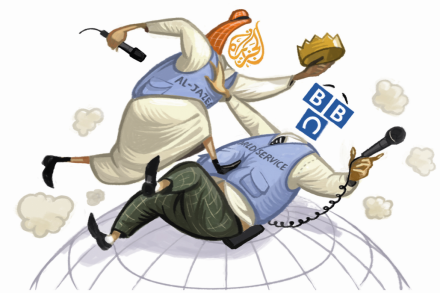
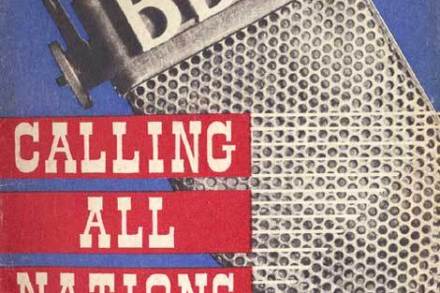
Yesterday’s debate on the future of the World Service was an unqualified success for its convener, Richard Ottaway. His motion received very extensive cross-party support and the MPs involved are confident of victory. As one source put it, “I haven’t met anyone – anyone – who agrees with that cut.” For its part, the government will “reflect carefully on the issue.” Parliament and Whitehall ring to anxious talk that cuts to the World Service will diminish Britain’s status abroad, and that less impartial state broadcasters, notably al-Jazeera, are capitalising on our withdrawal: al-Jazeera’s dominant coverage of the Arab Spring is a case in point.

What Ken Clarke should have said

From our UK edition

The Ken Clarke media storm continues. But, talk to lawyers and they complain that the Justice Secretary did not have sufficient command of his brief to redirect Victoria Derbyshire’s line of questioning. There was one particularly illustrative example when she said: “(The starting points) for single offence of rape by a single offender are 10 years’ custody if the victim is under 13, eight years’ custody if the victim is 13 but under 16, and five years’ custody if the victim is 16 or over.” Those numbers look a little light and they create the impression that the justice system is soft on rapists. Clarke should have countered that Derbyshire’s example lies at the very bottom of the CPS’ sentencing guideline scale.

Tory backbenchers oppose cuts to the World Service

From our UK edition

There is a debate in the Commons this afternoon, urging the government to spare the BBC World Service from cuts. The resistance is being led by Richard Ottaway, chairman of the Foreign Affairs Select Committee and author of a report condemning the Foreign Secretary’s decision to cut funding for the service.   Ottaway is likely to be well supported, as the Tory right is exercised by the effect that cuts are having on Britain’s standing in the world. John Whittingdale is on side, and there were plenty of backbenchers (among them, David T.C.

And the winner is…

From our UK edition

A few intrepid writers from the Right braved the lion’s den of the left-wing Orwell Prize last night, dominated as it was by hordes of hacks from the Guardian, the Observer, and the New Statesman. One of these brave souls even won an award. ConservativeHome’s Graeme Archer, whose quietly angry and deeply considered blog-posts took the prestigious Orwell Blog Prize. Archer’s original subject matter, written in prose as robust as granite, rebuffed strong opposition from the growing cacophony from the left-wing blogosphere. Indeed, his victory defies the popular belief that the day of independent right-wing blogging has passed. Jenni Russell won the journalist of the year award for her work on the Sunday Times and the Guardian.

Clegg’s great rejuvenator falls a little flat

From our UK edition

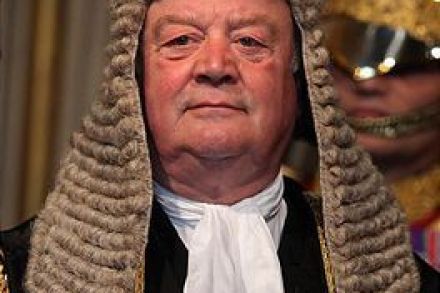
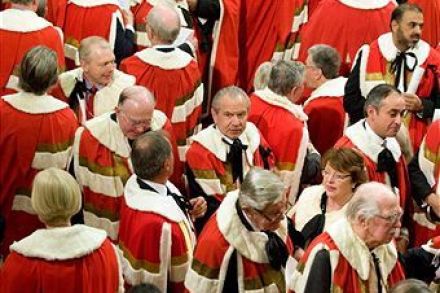
‘Constitutional reform is a waste of time, pure and simple. It never actually achieves its avowed end of reconnecting the voters with democratic institutions,’ wrote John McTernan, the former advisor to Tony Blair, recently. There are signs that the current government agrees.   Nick Clegg has unveiled the next stage of his constitutional reforms today by revealing draft plans to reform the House of Lords. The coalition speaks in unison in public: the Cabinet discussed reform last and apparently there was “very strong support for the proposals around the table”. But dissenting voices must have sounded in private.   The inestimable Rachel Sylvester reveals (£) that Clegg’s draft is very rough.

Turning political writing into an art

From our UK edition

The Orwell Prize will be awarded this evening and one of the following books will win: Death to the Dictator!, Afsaneh Moqadem Afsaneh Moqadem’s Death to the Dictator! is the fashionable choice for the award. Written by an Iranian dissident using a pseudonym to protect his anonymity, Death to the Dictator! is a fictionalisation of the failed Iranian revolution of 2009. The book opens with faceless security operatives dumping Mohsen Abbaspour’s tortured body at a roundabout on the outskirts of a town. Moqadem weaves an intricate yarn. He examines the character of tyranny, recalling Solzenitsyn and Paul Scott’s Raj Quartet, particularly the scenes between Captain Merrick and Hari Kumar in The Jewel in the Crown.

Labour’s apparent shift on free schools

From our UK edition

As I wrote on Friday, there is a sense that some on Labour's benches want to soften the party's education policy. It seems that the first subtle shift may have come over the weekend. Total Politics' Amber Elliott reports on a Fabian Society meeting where Andy Burnham apparently dropped his blanket opposition to free schools. Amber writes: 'Speaking at the Fabian Society conference at the weekend, Burnham signalled that he is not against free schools such as the one former-No10-strategist-turned-teacher Peter Hyman is setting up. Labour blogger Anthony Painter tweeted from the conference: "@andyburnhammp supports Peter Hyman's free school as a Labour alternative to the Tory concept. But also says whole system matters #Fabians.

Across the literary pages | 16 May 2011

From our UK edition

As part of the Guardian’s SF weekend, Iain M Banks says that the genre is not for dabblers. ‘The point is that science fiction is a dialogue, a process. All writing is, in a sense; a writer will read something – perhaps something quite famous, even a classic – and think "But what if it had been done this way instead . . . ?" And, standing on the shoulders of that particular giant, write something initially similar but developmentally different, so that the field evolves and further twists and turns are added to how stories are told as well as to the expectations and the knowledge of pre-existing literary patterns readers bring to those stories.

From the archives – Labour’s road to recovery

From our UK edition

The coalition is just a year old and Coffee House compiled an exhaustive Coalition A to Z to mark the occasion. It’s also a year since the Labour leadership saga opened. Writing in today’s Times (£), Phil Collins argues that party has not made much progress from its position a year ago, which he thoroughly examined for the Spectator last May. Beyond Brown and Blair, Phil Collins, The Spectator, 15 May 2010. So, they were looking in the wrong place all along. For years now the Labour party has been seeking a steely assassin to deal with its unelectable leader. Finally, where James Purnell failed tragically and Geoff Hoon failed farcically, Nick Clegg has succeeded.

Gove takes the attack to ailing Burnham

From our UK edition

There are intriguing manoeuvres on the education front today. Michael Gove has written a letter to Andy Burnham, calling on his counterpart to guarantee to protect the Academies programme. There’s nothing unusual in this: politicians are always writing pointless letters to each other. But the timing of this one is quite significant, coinciding as it does with former Blair spinner Peter Hyman’s decision to create a free school, with, it is understood, the tacit support of Andrew Adonis. As I’ve written before, Burnham has forsaken his reforming instincts. Convinced that Gove is a weak link, he has not seen the need to leave ‘old Labour’s’ comfort zone on education. Now the mood seems to be turning against him.

Another European squabble looms

From our UK edition

There is much excitement in Westminster at the moment about Hugh Fearnley-Whittingstall’s campaign to end ‘discards’ under the Common Fisheries Policy. DEFRA and non-governmental organisations estimate that perhaps as much as 60 per cent of a catch will be returned dead to the sea because the CFP’s controversial quota system is based on the amount of fish caught. DEFRA has been pressing the European Commission to reform the quota system for years. At last, they seem to have succeeded. The commission is due to announce in July that the quota system will now be based on the amount of fish landed in port. With that apparently comes a concession to reduce discards significantly.

Eh?

From our UK edition

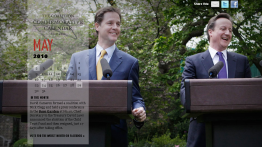
This photograph adorns the homepage of the Labour Party's website. It's rather odd to show the PM and his deputy looking quite so soigné as the starting point for a critique. The New Statesman's Dan Hodges descibes it as 'insanity'.