David Blackburn

The dirty secrets of ‘no win no fee’

From our UK edition

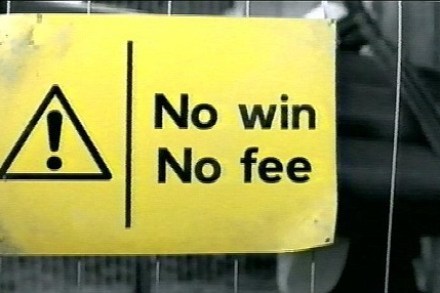
Jack Straw’s column in the Times today (£) contains the following revelation: ‘Our records indicate that you may be entitled to £3,450 for the accident you had. To claim free reply CLAIM to this message,” went the text that my pal Phil Riley received last week. This “accident” was, in truth, a minor prang. Phil had stopped in traffic. The chap behind drove into him, with minor damage to Phil’s car; no personal injuries. The other driver’s insurer paid Phil’s repair bill. Within days of this prang, 18 months ago, Phil was bombarded with texts and personal calls to tell him that if he would make a claim, three or four thousand pounds would be his for the personal injury he had suffered.

Gove turns on the education establishment

From our UK edition

Michael Gove is tenacious. With strikes set to close one in four schools on Thursday, Gove has launched a direct assault on the left-wing teaching unions. In a consultation published today, Gove has announced that exceptional graduates in maths and science will be paid bursaries of up to £20,000 to undertake teaching training. He also indicates that responsibility for teacher training will shift from universities to schools; teachers will predominantly learn on the job, as they do under the successful Teach First scheme. Also, ministers will attempt to close failing training courses, which they see as the cause of extraordinary levels of wastage.

Across the literary pages | 27 June 2011

From our UK edition

The Telegraph has an exclusive extract from Alan Hollingshurst’s The Stranger’s Child. And Hari Kunzru reviews the novel for the Guardian.   ‘As an accounting with class and history, Hollinghurst's novel will inevitably be compared to Kazuo Ishiguro's The Remains of the Day and Ian McEwan's Atonement. It is at its strongest when teasing out nuances of social behaviour: Paul Bryant, the shy bank clerk, is so concerned to behave appropriately with his employer's family that as he walks home after spending time in their company, "the small muscular contractions of pleasure and politeness remained almost unconsciously on his face". The fashionable decorator, Mrs Riley, makes Daphne uncomfortable by observing her "in her disappointed and reducing way".

Whitehall’s monolith faces reform

From our UK edition

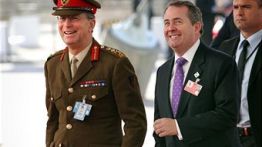
The Ministry of Defence is one of Whitehall’s largest and most dysfunctional departments; and it has long resisted effective reform. However, the parlous public finances dictate that reform take place. 8 per cent Budget cuts have to be delivered, while attempting to bring a £36bn black hole under control. Strategic retrenchment aside, efficiency is Liam Fox’s most potent weapon. To that end, Lord Levene has conducted an examination into departmental structures. Levene reports that the MoD’s maze of committees and sub-committees should be ripped-up to improve decision making and save money (and perhaps one of the ministry's five ministers of state). 'Sound financial management,' he says 'must be at the heart of what the MoD does.

Badgering Spelman

From our UK edition

The stars must be crossed for Caroline Spelman. First came the forests, then the bin collection fiasco, then the circus animals and now the FT’s Jim Pickard has news that the Cabinet will meet in mid-July to discuss whether to start a badger cull in the south-west. Badgers are one of those perennial issues of contention. As Pickard says: ‘It’s one of those classic issues where both sides have a highly convincing argument. The farmers (who have, I’m told, offered to underwrite the killing) believe that badgers have caused bovine TB among cattle herds and are pushing hard for the cull. But the animal welfare people want vaccination instead.

Clarke’s bill still not tough enough for the Right

From our UK edition

David Cameron made a great show on Tuesday of pledging to be tough on crime. He bowdlerised the most contentious and liberal elements of Ken Clarke’s proposals and vowed that "the right thing to do is to reform prison and make it work better, not cut sentences."  He insisted that his change of heart was a sign of strength, but even the least cynical observer could detect a sop to the mutinous Tory right. Well, it seems that the withdrawal has not gone far enough. The Sunday Times reports (£) that several backbenchers object to the redrafted Legal Aid, Sentencing and Punishment of Offenders Bill, on grounds that manifesto pledges have been broken. For example, bail while awaiting trial or sentence will count towards the total jail term for the first time.

How will the government respond to Thursday’s strikes?

From our UK edition

Activity in Whitehall becomes more fevered as the day itself approaches. Michael Gove wants to see off the NUT with as little bloodshed as possible, honouring David Cameron’s decree that ministers tread softly. To that end, he has already written to headmasters urging them to keep calm and carry on. And this morning, news emerges that Gove is asking parents and retired teachers who have passed CRB checks to fill in on Thursday to ensure that children have a constructive day at school. The Department of Education has not yet approached former members of the flagship Teach First scheme to return to school for a day; it’s probably too late to do so on this occasion, but doubtless there will be others.

Immigration is so much more than an electoral issue

From our UK edition

Further to Daniel’s piece about declining immigration in Europe, it is worth highlighting this passage from Iain Martin’s column in the Mail: ‘But once in Downing Street, Cameron was confronted by research from his personal pollster, Andrew Cooper, which confirmed the true extent of public concern about high levels of immigration. Ironically, Cooper was one of the very modernisers in the Tory Party who did not want Cameron to be tainted — as he saw it — by being seen as tough on immigration in the run-up to the election. But now he has changed his tune — and taken the Prime Minister along with him.

Miliband: We can’t go on like this

From our UK edition

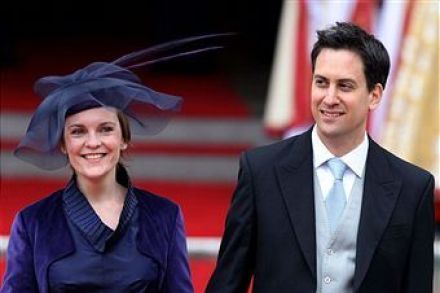
It’s odd how political leaders often address their parties in the clichéd terms of soap operas’ most tortured romances. Ed Miliband pre-trailed speech to the Labour’s National Policy Forum in Wrexham is replete with protestations of having grown apart and the need to listen and be more open with each other. “We cannot continue as we are,” he implores. But there is some substance to Miliband’s rhetoric of reconnection. He has already announced his intention to appoint his own shadow cabinet, which caused some consternation among Labour’s more reactionary elements.

Britain makes new senior diplomatic appointments

From our UK edition

From the Number 10 website: The Prime Minister is pleased to confirm the following senior appointments: Sir Peter Ricketts, currently the Prime Minister’s National Security Advisor, to become HM Ambassador to France; Sir Jon Cunliffe, currently the Prime Minister’s Advisor on Europe and Global Issues, to become the UK’s Permanent Representative to the European Union in Brussels; Sir Kim Darroch, currently the UK’s Permanent Representative to the EU, to become the Prime Minister’s National Security Adviser; and Sir Peter Westmacott, currently HM Ambassador France, to become HM Ambassador to Washington. These changes will take effect from January 2012.

Ancient hatreds mask Stormont’s current challenge

From our UK edition

Ignore the antediluvian hatreds for a moment. As Anne Dawson says, the recent violence in East Belfast was largely inspired by current economic distress. Northern Ireland’s economy is a serious cause for concern. Central expenditure per head is 25 per cent higher in Ulster than the UK norm and 70 per cent of Northern Ireland’s economy lies in the public sector according to parliamentary one estimate. Although the province has much to commend itself to business – competitive operating costs and excellent transport links serviced by substantial capital investment – private enterprise remains depressed. A report by PriceWaterhouseCoopers in March found that growth was negligible and that unemployment is running at 6.

Cameron: no more bailouts

From our UK edition

It’s another of those special Cameron victories in Europe: we’re in for a second Greek bailout, but not quite as much as we might have been. Britain will contribute a sum through the IMF; however, it will not be contributing to EU funds. Cameron has succeeded in ensuring that the European bailout will be conducted under the permanent European Financial Stability Facility (EFSF), to which only eurozone members are signatories. Although it should be noted that some Brussels experts doubt that the European Financial Stabilisation Mechanism (to which Britain has subscribed) could have been used in this instance, which further devalues the government's victory. Anyway, attention now turns to Greece and whether it will default.

Unlocking potential

From our UK edition

It is the newest and most exclusive literary club: those authors who have sold 1 million books on Kindle. At present, the club numbers just eight members: Lee Child, James Patterson, Steig Larsson, Charlaine Harris, Michael Connelly, Nora Roberts and Suzanne Collins. Those established names have just been joined by John Locke – a former insurance broker from Kentucky turned self-published author, rather than the seventeenth century political philosopher. Locke writes particularly crass bodice rippers. Here’s a choice extract to quicken your pulse: "She was smarter than me, and I hate when that happens. There was but one thing to do: seize the initiative. I played the trump card God provided: I stared directly into her cleavage.

World Service reprieve the latest step in FCO’s rehabilitation

From our UK edition

The BBC World Service has been reprieved. An additional £2.2m will be spent to preserve the Arabic service, in line with some of the wishes of Foreign Affairs Select Committee Chairman Richard Ottaway and Lord Patten, the chairman of the BBC and occasional consigliere to David Cameron. I don't share the Foreign Office’s sometime view that this is a ‘massive u-turn’, but it is a significant development. Opposition to cuts to the World Service budget came from across the House; but it originated from Tory backbenchers, who were very confident that they would secure a concession. The subsequent climb down suggests that Downing Street is prepared to consult with and act upon the wishes of the often recalcitrant Right.

Making the grade | 20 June 2011

From our UK edition

Prior to his suicide, David Foster Wallace gave an interview to Ostap Karmodi for the New York Review of Books. The interview, which has just been published by the NYRB, concentrated on consumerism and its effects on culture. Here is the opening excerpt: Ostap Karmodi: Do you feel we’re living in an age of consumerism or is that just a media concept that doesn’t have any real meaning? David Foster Wallace: This question, as you know, is very complicated. I can give answers that are somewhat simple and I can really talk only about America, because it’s really the only society that I know.

Stately, plump Buck Mulligan came from the stairhead…

From our UK edition

It’s Bloomsday. If Joyce is your bag, then here is a link to the Bloomsday page on the official James Joyce website. Joyce is an acquired taste and can be bitter when you’ve got it. Ulysees is too great a slog to contemplate for some. But an old drunk in Soho once told me that the way to crack Ulysees is to get someone to read it for you. Oddly, I think there’s truth in his involuntary offering of wisdom, though perhaps not in the way he intended, as I hope the above clip of Marcella Riordan reading the last lines of Molly Bloom’s soliloquy proves.

Beating the decline of biography

From our UK edition

As Dr Johnson famously observed, 'No man but a blockhead wrote, except for money.' But even the wisest don’t write for all that much these days. The prevailing view is that the market for serious non-fiction is wilting. Therefore the publicity of prizes counts for double. Yesterday, the shortlist for the BBC’S Samuel Johnson Prize for non-fiction was announced. The nominees will get some coveted coverage on the Culture Show in the coming weeks. The shortlist includes some familiar names to readers of this blog. John Stubbs has made the cut with his book, Reprobates, which re-casts the term ‘Cavaliers’ and re-imagines their role in the English Civil Wars. Stubbs wrote an introduction to his work for the book blog back in February.

Pressure at the pumps

From our UK edition

Away from the clamour in the chamber over the bowdlerisation of the NHS reforms, a group of MPs led by Robert Halfon convened in Westminster Hall earlier this afternoon to debate how rising fuel costs might be abated. Treasury minister Justine Greening attended for the government. With the average price of unleaded at 136.9p/litre and diesel at 141.5p/litre last month, fuel costs are now a major concern for ordinary families. According to the campaign group Fair Fuel UK, who are working with the MPs, the average motorist who has to drive to work spent £33/week on petrol last year, taken from median pre-tax earnings of £499/week in 2010. With inflation now rampant, this burden is becoming unsustainable for many. Campaigners implore that it needn’t be so.