David Blackburn

More than a soap opera

From our UK edition

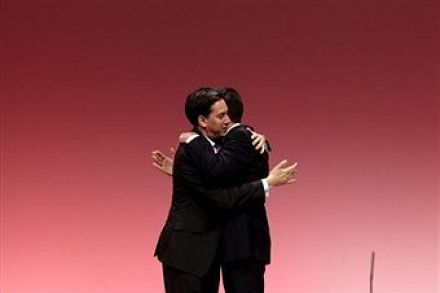
David Miliband is considering a return to frontline British politics. At least that is what Andrew Grice has heard. He reports: ‘David Miliband is considering a surprise comeback to frontline politics in an attempt to end speculation about a continuing rift with his brother Ed. Friends of the former Foreign Secretary said yesterday that his joining the Shadow Cabinet was a "live issue" in his circle of political allies. "There is a debate going on. Some people are arguing that it would be better to be a team player than look as though he is sulking on the sidelines," said one source.’ Better for whom, I wonder?
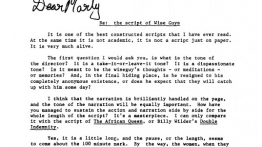
Dear Marty,

From our UK edition

Michael Powell, of Powell and Pressburger fame, replies to a script, titled 'Wiseguys', sent by Martin Scorcese for the master's prognosis. The screenplay had been based on Nicholas Pileggi's book Wiseguy (1986). 'Wiseguys', of course, became Goodfellas. Hat-tip: Letters of Note.

Night of the generals

From our UK edition

Last night, Admiral Sir Mark Stanhope, the First Sea Lord, said that the aircraft carrier and the jump-jets that were scrapped in last year's strategic defence review would have made the mission in Libya more effective, faster and cheaper. His comments follow Robert Gates' assertion that Britain and France were struggling to lead the Libyan operation without substantial American support. It follows, in the mind of Stanhope at least, that defence cuts are impeding Britain's military capability. This morning, Rear Admiral Parry (rtd) supported Stanhope.

Those three little letters

From our UK edition

The NHS saga is over at last, or so the government hopes. The coalition is expected to adopt the recommendations of the NHS Future Forum, which have been delineated by panel member Stephen Bubb in this morning’s Times (£). Last night, the prime minister and his deputy addressed their respective parliamentary brigades and each claimed the credit for re-shaping Andrew Lansley’s bill for partisan gain. The political saga continues. The Lib Dems have been crowing over their victory; the Tories are licking their wounds –a voluble Conservative MP has told Philip Johnston that a ‘once in a generation opportunity to reform the NHS has been lost.

Government split over enforcing the Digital Economy Act

From our UK edition

The Digital Economy Act (DEA) is to be 'rebooted' before the summer recess, so that it can be brought into force next January. Digital policy expert James Firth explains how the Act is being brought forward by placing it before the European Commission, a process that was overlooked when the Act was passed during the 'wash out' at the end of the last parliament. He also hints at a possible division on this issue within the Department for Culture, Media and Sport (DCMS), suggesting that this new approach is "being driven personally by Jeremy Hunt". So it seems. Some of those who were privy to discussions at the DCMS say that Ed Vaizey, the minister tasked with the digitalisation of Britain, insisted that government should not be regulating the Internet.

Across the literary pages | 13 June 2011

From our UK edition

The literary world is paying homage to Patrick Leigh Fermor, who has died aged 96. Here is an excerpt from the Times' obituary (£).  'The curtailment of his formal education was compensated by his intellectual curiosity and by the civilising influence of his mother who introduced him to the pleasures of art and literature. His gifts did not necessarily fit him for regimental duties or reconcile him to the restrictions of peacetime soldiering. His inclinations were rather those of an 18th-century patrician eager to scan the broader horizons offered by the Grand Tour. And so, shortly before his 19th birthday instead of joining the Army, he sailed to Rotterdam and set out on foot for Constantinople.

Softly, softly

From our UK edition

As I argued this morning, the Rowan Williams furore will be sustained if the government over-reacts. So far, so softly from Downing Street: ministers and prominent MPs have been across the airwaves this morning and no one has taken the so-called nuclear option. As you can see below, the responses have been mild. Paul Goodman observes that this is because the PM ‘doesn’t get too worked up’ about this sort of media conflagration. Here’s a brief selection of what Cameron’s lieutenants have said to counter Dr. Williams’ incandescence: Matthew Hancock: “It’s just slightly odd that he’s made these arguments which, in some cases, are simply incorrect, when it comes to especially welfare and also on education.

Blair is still a believer

From our UK edition

To an extent, British politics is still determined by whether or not you agree with Tony Blair. For more than a year, the coalition and the opposition have been debating whether to continue Blair’s public service reforms; this is a testament to his failure as Prime Minister as much as it to his success. Today, has given an interview to the Times (£), coinciding with the release of his memoirs in paperback. He uses it to question the Labour party’s current journey back into “nostalgia”. He says: “The attraction of a concept like Blue Labour is it allows you to say that there’s a group of voters out there we can’t reach at the moment, so what we should do is really empathise with their plight.

Téa Obreht wins the Orange Prize

From our UK edition

Congratulations to Téa Obreht, whose novel The Tiger’s Wife won the Orange Prize for Fiction last night. At 25, she is the youngest ever winner. Chairman of the judges Bettany Hughes said: "The Tiger's Wife is an exceptional book and Téa Obreht is a truly exciting new talent. Obreht's powers of observation and her understanding of the world are remarkable. By skilfully spinning a series of magical tales she has managed to bring the tragedy of chronic Balkan conflict thumping into our front rooms with a bittersweet vivacity." Obreht is Serbian-American and her award winning novel is a delicate attempt to mythologize the Yugoslavian wars of the 1990s.

The turbulent priest

From our UK edition

“Nowadays politicians want to talk about moral issues, and bishops want to talk politics,” said Sir Humphrey. This week’s New Statesman has been guest edited by the Archbishop of Canterbury. In his lead editorial, Dr Rowan Williams has launched a brutally eloquent assault on the coalition for embarking on a programme of radical reform for which, he claims, there is no mandate. With particular reference to the health and education reforms, Williams says: “With remarkable speed, we are being committed to radical, long-term policies for which no one voted. At the very least, there is an understandable anxiety about what democracy means in such a context.

PMQs Live-blog | 8 June 2011

From our UK edition

VERDICT: It’s nigh impossible to overstate what a pickle David Cameron found himself in this morning: the strain of the recent health debacle continues and he has had to orchestrate a u-turn on Ken Clarke’s liberal prison reforms, although don’t call it a u-turn. But, somehow, Ed Miliband contrived the PM’s escape. Miliband’s brief reconnaissance of the sentencing reform issue served only to highlight his one-time support for Clarke’s controversial reforms. Try as he might, he could not outflank the government. He merely looked opportunistic and Cameron made light (and hay) of this. After two misfired questions, Miliband moved on to the NHS. He was better here, but not much.

Retreating from Kabul

From our UK edition

Britain’s former envoy to Kabul, Sherard Cowper-Coles, has written an op-ed about NATO’s coming withdrawal from Afghanistan in this morning’s Times (£). The unspoken analysis is that: having failed to defeat the Taliban unconditionally in battle, it will be hard to secure peace and stability. Like Matt Cavanagh, who wrote an extensive report on the situation in Afghanistan for Coffee House last week, Cowper-Coles says that NATO is split between ‘shooters’, who perpetually ask for one more ‘big push’, and politicians, who are seeking negotiated settlement and military drawdown.

Cameron stamps on Clarke

From our UK edition

Ken Clarke was summoned to Downing Street yesterday, the BBC reports. He spoke to David Cameron for half an hour, after which the controversial sentencing review was dropped: there will not be a per cent fifty discount in plea bargaining and Clarke will have to find £130m of savings from elsewhere in his department. Clarke has paid for last month’s rape victim fiasco, which so incensed the party leadership. The government is adamant that this is not a u-turn; rather, it argues, it has consulted on extending plea bargaining from the current level of 30 per cent and decided against such a move.

Attention shifts to Yemen

From our UK edition

Since last week’s attack on Yemen’s President Saleh and his subsequent flight, Sana’a has been on the cusp of anarchy. Perhaps as many 400 people were killed in riots last week and the killing continues. Western diplomatic services fear for the safety of their citizens in Yemen. The MoD has been preparing contingencies. Forces and materiel deployed in the Libya are moving east. Two fleet auxiliary ships, equipped with helicopters and landing craft, and 80 Royal Marines have been stationed off the Yemeni coast. Should the 800 or so British nationals in Yemen need to be evacuated, the marines will secure a bridgehead. A further detachment, currently on exercises in Albania, is poised to join the task force.

Cameron on a charm defensive

From our UK edition

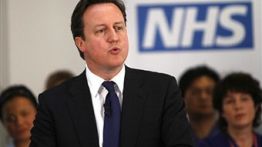
David Cameron is at his best when his back is to the wall. His speech on the NHS was largely as expected – a charm offensive designed to appease his warring coalition and reassure a fevered public. I’ll wager that he has succeeded; but reservations and pitfalls remain. Cameron recognises that competition is the stiking point for most Liberal Democrats, while the Tories insist on it. Competition will stay. He said, “New providers, more choice and competition raises standards and delivers value for money.” However, competition will not be unbridled. Cameron reassured doubters, “But let me clear, no: we will not be selling off the NHS, we will not be moving towards an insurance scheme.

Thatcher snubs Palin?

From our UK edition

Sarah Palin will be in town soon and she hopes to meet Mrs Thatcher. She told the Sunday Times: “I am going to Sudan in July and hope to stop in England on the way. I am just hoping Mrs Thatcher is well enough to see me as I so admire her.” However, it seems that the admiration is not mutual. The Guardian’s Wintour and Watt blog reports an old ally of the Lady’s saying: “Lady Thatcher will not be seeing Sarah Palin. That would be belittling for Margaret. Sarah Palin is nuts. “Margaret is focusing on Ronald Reagan and will attend the unveiling of the statue (in Grosvenor Square). That is her level.

Miliband offers with one hand and stabs with the other

From our UK edition

Ed Miliband delivered a speech at the Festival Hall this morning. A couple of strategic issues emerged from it. The first is that Labour has decided that the IMF is wrong: “This Government is going too far and fast, hitting families and making it harder to reduce the deficit.” This is not altogether surprising. Ed Balls’ recent article in the News of the World suggested that Labour will attack on the cost of living and youth unemployment, both of which may serve to slow the rate at which the deficit is reduced. As Fraser noted yesterday, Labour is aided by rising inflation, which is deepening the effect of cuts. However, Labour is still yet to admit to its role in the crisis or reveal how it would cut the deficit.

Accentuate the differences

From our UK edition

This is an age of ideas, not of ideology. That is the thesis of Amol Rajan’s enthralling overview of the intellectual trends in contemporary British politics, published in today’s Independent. As part of the piece, Rajan has interviewed Maurice Glasman, who gives a far clearer account of 'Blue Labour' than he did during his recent comments to the Italian press. Communities must be organised to resist the caprices of capital and the dead-hand of the state. Resist is probably the wrong word because the aim appears to be, in Philip Blond’s celebrated phrase, the ‘recapitalisation of the poor’, which implies some form of empowerment. Rajan notes that Glasman holds a lot in common with Philip Blond’s Red Toryism and the Big Society.

Cameron’s health worries

From our UK edition

David Cameron has made the NHS his political mission. “I can do it (explain his priorities) in three letters: NHS,” he once said. It was a reassurance that the NHS was safe in his hands. His conviction doubled as a vital tactical stance to prove that the Tories were 'nasty' no more. So, the news that he is re-affirming his faith with an NHS pledge card is telling – a response to the fact that the public do not trust the Conservatives with the health service. It's back to square one. According to Benedict Brogan, the pledges simply reiterate that the Tories can be trusted with the NHS. There is no attempt to explain how reform will unfold, nor indeed whether it will unfold at all.

Across the literary pages | 6 June 2011

From our UK edition

Michael Cunningham, author of The Hours, disabuses readers of the Guardian of their misconceptions about Virginia Woolf. ‘Virginia Woolf was great fun at parties. I want to tell you that up front, because Woolf, who died 70 years ago this year, is so often portrayed as the Dark Lady of English letters, all glowery and sad, looking balefully on from a crepuscular corner of literary history with a stone lodged in her pocket. She did, of course, have her darker interludes. More on that in a moment.