David Blackburn

Of technocrats and democrats

From our UK edition

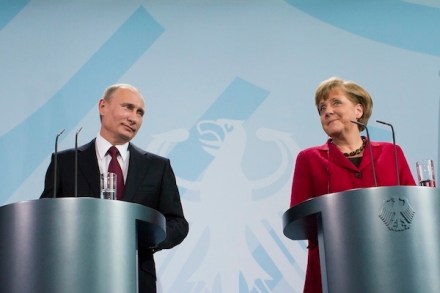
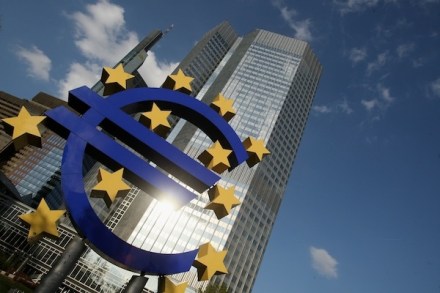
A former European leader was a guest at a private dinner in London recently. It was a polite and reverential occasion, but conversation grew lighter as Sauternes gave way to port. What, he was asked, is the most effective form of government? Easy, he replied, look at Europe: technocrats know best and they can ignore short-sighted voters. A battle between technocracy and democracy has broken out in Europe, as democratic Germany and technocratic Italy disagree over the next step in the euro-crisis. Last week’s G20 summit promised progress; Germany agreed to use EU bailout funds to reduce Spanish and Italian borrowing costs.

Fuel for a duel

From our UK edition

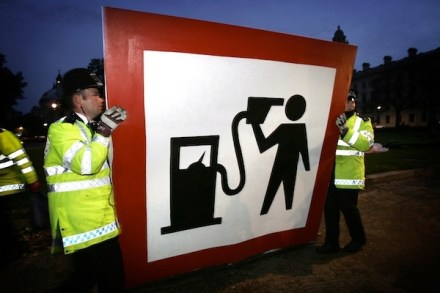
Dear commuter, how’s your journey panning out after you were woken by the sound of Ed Balls politicking about fuel duty? The shadow chancellor was a ubiquitous presence on the airwaves earlier (to say nothing of the tabloid press), laying out his opposition to the planned 3.02p fuel duty rise. He was on fine form, playing the caring shadow chancellor with the ease that Andrea Pirlo takes penalties. The rise would be, he said, ‘a real own goal’. Families are struggling. We’re in a recession. The price of oil has fallen by 20 per cent since Christmas but that has not been passed on to the consumer at the pumps. ‘The government should be pressuring oil companies to get the pump price down,’ he said.

Return of the nasty party?

From our UK edition

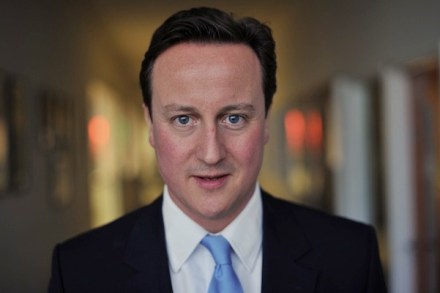
David Cameron is at his best when circumstances force him to be bold, or so the thinking goes. With his government floundering and the wounded media baying for blood, the prime minister has counter-attacked with radical welfare reform plans. Yesterday heard rumours of reduced rent subsidies for the under-25s. Today comes news of proposed cuts to jobless families’ benefits: specifically, the withdrawal of dole payments after 2 years, lowering the housing benefit cap, and stopping income support and additional child benefit if a couple have more than three children. Those with a sense of irony will recall the outrage over Lord Flight’s view that the welfare system encourages the very poorest to ‘breed’.

Culture notes: Our island story

From our UK edition

There’s one exception to the sometimes trivial and artificial events of the Cultural Olympiad: Writing Britain: Wastelands to Wonderlands at the British Library (until 25 September). Where other shows emphasise London’s separateness, Writing Britain subordinates the capital to the geography, peoples and history of the British Isles as a whole. Writers have recorded Britain’s development over a millennium, from the Arthurian myths to the dark satanic mills, from polite society to the urban underworld, from the wild moors to the simple delights of home.

What can the West do about the turmoil in Egypt?

From our UK edition

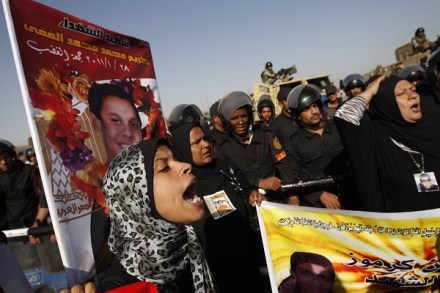
The situation in Egypt remains perilous, as protests mount against the military government which has delayed announcing the result of last weekend’s vote. Preliminary estimates, overseen by a panel of judges, put the Muslim Brotherhood ahead by 900,000 votes. But this is being contested by former Mubarak henchman, Ahmed Shafiq. Election monitors are examining more than a hundred alleged cases of multiple election fraud. This is the latest popular grievance against the military government, which has prorogued parliament, deferred parliamentary elections and suspended rights of demonstration in recent weeks.

A Jubilee moment of historic significance

From our UK edition

Martin McGuiness will meet Her Majesty the Queen and shake her hand in Northern Ireland. This is a seminal moment. It does not change McGuiness’s commitment to a united Ireland, but it is a strong statement from the Republican side that bygones are bygones. It is also a sign, perhaps, that the sacrifices Britain made over the Bloody Sunday Inquiry where worthwhile, because McGuiness is making a brave sacrifice by doing this: there will be those who condemn him for it. It is also significant that the Palace has achieved this. The conflict in Northern Ireland and the dark historical relations between Britain and Ireland are causes close to the Queen’s heart; and she has made peace and reconciliation a mission of her reign.

Gove for leader?

From our UK edition

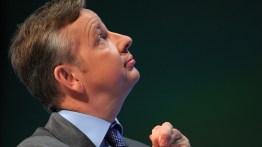
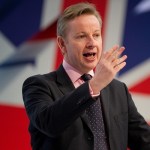
Michael Gove’s name is being muttered in parliamentary tea rooms, figuratively at least. The leak of his plans to replace GCSEs with a rigorous exam is opium to many Tories. Gove is well liked on the backbenches and within the party. And he also commands respect, being one of the few ministers who is not mired in catastrophe, although that may change as the pressure on primary school places increases and his opponents gain in voice. Odds on a Gove leadership are shortening, even though Gove is adamant that he does not seek the office. Even so, there might be overwhelming demand for him to stand.

Miliband’s misdiagnosis

From our UK edition

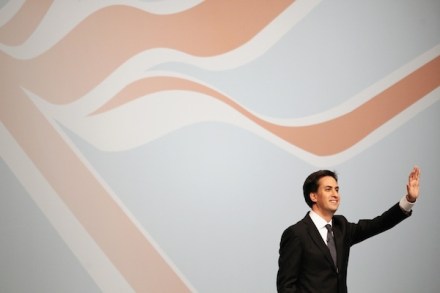
Ed Miliband will give a speech on immigration later today, marking out the territory on which he plans to engage those voters who feel that their communities and livelihoods are under threat from migrant workers. Yvette Cooper, the shadow home secretary, prepared the ground for Miliband earlier this week by echoing her husband’s sentiments about the need for greater control of economic migration from eastern Europe. The Labour leadership insists that the Blair government was wrong to waive transition controls in 2004, when many former Soviet republics acceded to the EU. Labour stress that this is not a 'British jobs for British workers' speech, but, rather, it aims to start a discussion about how the playing field might be levelled for British workers.

The politics of tax avoidance pt. 2

From our UK edition

David Cameron got into hot water yesterday when he pronounced Jimmy Carr’s tax avoidance ‘completely wrong’, inviting every nosey-parker to examine Tory donors. But he was a little less clear on the morality of one those donors’, Gary Barlow, arrangements, saying that he would look at the scheme in question. Cameron has done so and told reporters earlier today that he sees Jimmy Carr as an exception because his scheme was aggressive. He said that it was ‘seasonable, fair and reasonable’ for people to reduce their tax bill. It was simply a matter of degree, and Carr had crossed the line.

The Osborne question

From our UK edition

There is a simple rule in Tory politics: do not cross Lord Ashcroft. There is little love between the Conservative leadership and Ashcroft, the man who sustained the Tories through the wilderness years but was left high and dry in 2010 during the furore over his tax affairs. Admiration curdled into contempt, epitomised by Ashcroft’s weighty critique of the Tories’ disastrous 2010 election campaign. Tax is back in the news and so, by chance, is his lordship. Ashcroft has written a short but devastating piece on the Tories’ present strategy. He writes: 'It is depressing to hear that plans are afoot to paint Miliband as the Michael Dukakis of British politics: part of a metropolitan elite with no understanding of mainstream concerns.

The yellows imperil Gove’s schools revolution

From our UK edition

Michael Gove has caused a storm this morning, with his proposal to split GCSEs. The Mail has the scoop, but, essentially, this is in a bid to improve standards — Gove plans to replace GSCEs in maths, English and the three sciences, which will be awarded separately rather than as a block, with something similar to the old O-level; he also want more rigorous exams in history, geography and modern languages. Modules are also to be a thing of the past; Gove’s curriculum will be a test of memory as well as a test of understanding. Courses may be completed in 2 years or 3 years (ie, aged 17), depending on candidates' ability. Finally, Gove wants to introduce a new certificate for those pupils who are not academically inclined.

The politics of tax avoidance

From our UK edition

There is much excitement on the wires about David Cameron’s attitude to tax avoidance. The PM’s just told ITV news: 'He's [Jimmy Carr] taking the money from tickets and as far as I can see, he's putting all of that into some very dodgy tax avoiding scheme.' It is 'completely wrong', he said. Asked about today’s revelations in the Times, which include allegations against Cameron-backer Gary Barlow, the prime minister said: '[I will] look at that scheme ... as soon as I get in front of my computer.' Tax avoidance embarrasses the Conservative leader, especially as his government has not successfully curbed it. But two specific points emerge from Cameron’s statements this afternoon.

Cameron plays his part in an eventful G20

From our UK edition

And there we were thinking that the G20 would be another insipid talking shop. In fact there was intrigue, animus and even a modicum of progress on the crucial question of the moment: how to cure the Eurozone. In a major shift in policy, Germany has agreed to use European bailout funds to buy Italian and Spanish bonds in the hope of reducing yields to a sustainable level. It was felt that if the cost of debt financing was not reduced, then Spain and Italy might slip into the abyss.  £600 billion will be made available from the two EU bailout mechanisms, the EFSF and the ESM.

Overhauling the Rolls Royce

From our UK edition

‘I was sceptical [about civil service reform] until I read that unreadable column.’ This was the response of a Westminster type who I spoke to earlier about Francis Maude and Sir Bob Kerslake’s joint article on civil service reform in today’s Telegraph. Having re-read the jargon-ridden piece, I see what he means. Take this passage: ‘The Civil Service has to have a culture which is pacier, more innovative, less hierarchical and focused on outcomes not process. We also need sharper accountability, in particular from permanent secretaries and those leading major projects, and we need more digital services, better data and management information and for policy and implementation to be linked seamlessly together.

The pernicious myth of powerlessness

From our UK edition

‘Corruption,’ wrote Edward Gibbon in his peerless Decline and Fall of the Roman Empire, is ‘the most infallible symptom of constitutional liberty.’ I was reminded of this phrase when thinking about the Eurozone crisis. Commentators present a dichotomy between the discipline of northern Europe and the frivolity of southern Europe, which is characterised by bureaucratic, judicial and political corruption. Brussels has already imposed technocratic governments on Italy and Greece, and seeks to force Teutonic virtues on those economies. Constitutional liberty is to be limited in the hope of eradicating corruption (both in a literal and figurative sense) in southern Europe.

Miliband’s union problems deepen

From our UK edition

Ed Miliband must be livid. He has a sizeable lead in the polls, has taken ground on the economy and watches the government lurch from one self-authored disaster to the next. And then, and then, the trade unions engineer a very public row with the centrist think-tank Progress (which is funded by former Labour donor Lord Sainsbury) over the ‘soul’ of the Labour Party. Jackie Ashley observes in today’s Guardian that this silly spat has grown out of all proportion. Lord Mandelson was asked about it on the Andrew Marr Show yesterday, and he reiterated many of the points made by Denis MacShane in this Coffee House post of the previous day.

The morning after the night before

From our UK edition

This morning’s front pages are devoted to Greece, and the consensus is that the result of yesterday’s election amounts to little more than a stay of execution for Greece and the euro. At the time of writing, markets have responded to the news positively; but, fundamentally, nothing appears to have changed, so expect further turmoil. The formation of a Greek government is the foremost problem. James explained last night that the pro-bailout party New Democracy is unlikely to form a coalition with the centre-left PASOK party, which had indicated that it would only join a coalition that included radical leftists Syriza. This impasse persists for the moment, but there is speculation that PASOK might support New Democracy on a supply basis.

Debt as a threat to national security

From our UK edition

Today’s papers carry news that British nuclear submarines are going to be replaced: a strong indication that the government will replace Trident with a like-for-like deterrent in 2016, contrary to the wishes of the Liberal Democrats. Philip Hammond appeared on the Sunday Politics earlier today to answer questions from Andrew Neil on Trident and manpower cuts to the army. Hammond said that the Trident decision has not been taken. The government is, he said, simply ensuring that Britain can implement whatever decision is taken. On army cuts, he said, ‘We [Britain] will still be able to make a major contribution to a cross-alliance operation.

Make or break in Europe?

From our UK edition

‘I think we are at a make or break place in Europe,’ said former Greek Prime Minister George Papandreou on the Andrew Marr Show. Europe is holding its breath for the results of today’s election, which, should the radical leftists Syriza win, threatens to open a new chapter in the euro’s unhappy history. Germany remains adamant that Greek cannot renege on its bailout deal. But rumours that Germany would welcome Greece’s exit persist; indeed, the Sunday Times reports (£) that the European Union is, collectively, preparing emergency aid packages for Athens, should the country withdraw. These preparations are the sort of coherent and complete action that the euro-crisis has demanded.

100 years of Enoch Powell

From our UK edition

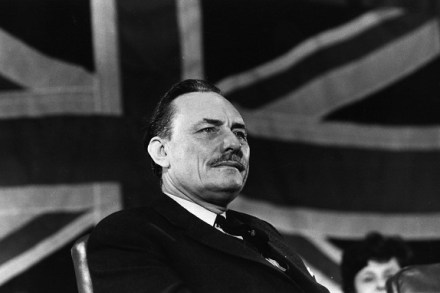
I heard a wonderful anecdote the other day. A well to-do couple knelt to receive communion. A man knelt next to them. They noticed that he was Enoch Powell. They told a friend after the service that a church which accepted Powell as a communicant was not for them. It is Enoch Powell’s centenary today, and his monstrous reputation persists, even at the communion rail. Sunder Katwala, the thoughtful former general secretary of the Fabian Society, believes that Powell, and in particular his infamous views on immigration and identity, should be regarded as 'a historical figure, an important, troubled voice in Britain’s difficult transition to the post-imperial society which we have become.