David Blackburn

Tories swing into action in Corby, at last

From our UK edition

The Corby by-election campaign is warming up, with the Tories selecting Christine Emmett as their candidate. Emmett is a local woman who lives in neighbouring Rutland. She runs her own management consultancy, and claims ‘extensive experience’ working with the NHS and in other areas of the public sector, notably in the fashionable area of ‘health and wellbeing’. The emphasis that the party is placing on Emmett’s work with public services, particularly the NHS, suggests that its strategy will concentrate on public service reform rather than economic policy.

The quiet cult of Andrew Strauss

From our UK edition

‘I’m fascinated by politics. But I’m not that enthralled by any of the parties.’ Those are the words of Andrew Strauss, who resigned the England cricket captaincy earlier today, in an interview with the Spectator last year. The interview was conducted by the former England cricketer Ed Smith, who remarked that ‘Strauss is not talked about with hushed awe’. Where the great Mike Brearley has entered mythology, Smith noted, Strauss has been merely marked ‘effective’. Now we must talk of Strauss the cricketer in the past tense; and Smith’s judgment merits revisiting. True, Strauss did not inspire awe. He was not a tactician, either in the modern or traditional mould.

Bookbenchers: Philip Davies MP | 12 August 2012

From our UK edition

Over at the books blog, Tory MP Philip Davies has answered our Bookbencher questionnaire. Davies is the present holder of the Readers’ Representative at the Spectator’s Parliamentarian of the Year Awards. He believes that 1984 is the book that best describes now; and he would rescue the three volumes of Margaret Thatcher’s autobiography from the burning British Library. Davies is known by some as the ‘darling of the right’, but after this he should be nicknamed The Gruffalo.

Danny Alexander’s real enemy

From our UK edition

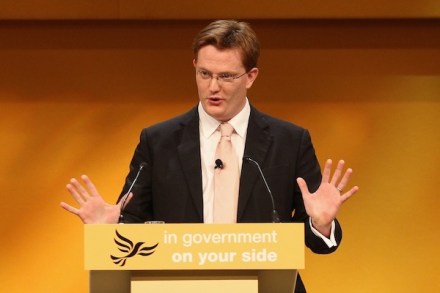
Danny Alexander, the Chief Secretary to the Treasury, is to drop his normally conciliatory voice to attack the Tories at the Lib Dem party conference in Brighton. So what? you may well ask. The mild-mannered Alexander is unlikely to strike the fear of God into his listeners, assuming that anyone beyond the conference hall will be listening, or indeed that the conference hall is full: Brighton being lovely at that time of year. Besides, bursts of splenetic outrage at one’s coalition partners have become a feature of conferences, particularly since last year’s unhappy AV referendum.

Mitt Romney and Paul Ryan’s big idea

From our UK edition

Mitt Romney has broken the habit of a lifetime and taken a risk. But it's an intelligent risk. That at least is the view of some commentators on hearing confirmation that Romney has appointed Paul Ryan as his running mate. Niall Ferguson tweeted earlier: ‘Romney gets it right with Ryan. Now this election gets serious. It's a straight fight between radical fiscal reform and Europeanization.’ David Frum makes a similar point (albeit with a clear note of scepticism) in a blog post for the Daily Beast: 'This election—which Romney once intended to make a referendum on Obama's record—will now become a referendum on Paul Ryan's bold budget ideas.' Frum provides 5 hypotheses on the appointment.

Henry Kissinger’s education

From our UK edition

Only America, a friend of mine once insisted, could produce the New Criterion. This friend happened to be American, but his point stands nonetheless. America alone is sufficiently large, wealthy and self-confident to sustain a conservative arts journal of such consistent quality. The New Criterion is 30 years old this year. The anniversary has given its editors cause for consideration as well as celebration. They have commissioned a series of essays on the questions prompted by the unnerving nature of the future.

Rereading Gore Vidal

From our UK edition

Gore Vidal was famously waspish or infamously nasty, depending on your point of view. Most outspoken (and successful) writers divide opinion, but Vidal does so more than most. His distinctive prose and the righteous fashion in which he expressed his liberal opinions are not for everyone; one man’s crusading iconoclast is a preachy monomaniac to those of different inclinations. In all the dense weight of recollections and memorials published since Vidal’s death on Tuesday, I have not seen a sharper criticism of his writing and its preoccupations than that made by Spectator reader Walter Taplin in a letter to the magazine in 1982. ‘Sir, On page 13 of the Spectator 23 October there was a cartoon of Mr Gore Vidal holding a cane.

A hard-going Booker longlist

From our UK edition

Here is the Booker longlist, announced earlier this afternoon: The Yips by Nicola Barker (Fourth Estate) The Teleportation Accident by Ned Beauman (Sceptre) Philida by André Brink (Harvill Secker) The Garden of Evening Mists by Tan Twan Eng (Myrmidon Books) Skios by Michael Frayn (Faber & Faber) The Unlikely Pilgrimage of Harold Fry by Rachel Joyce (Doubleday) Swimming Home by Deborah Levy (And Other Stories) Bring up the Bodies by Hilary Mantel (Fourth Estate) The Lighthouse by Alison Moore (Salt) Umbrella by Will Self (Bloomsbury) Narcopolis by Jeet Thayil (Faber & Faber) Communion Town by Sam Thompson (Fourth Estate) As expected, the judges are clearly determined to avoid last year's 'dumbing-down' controversy.

Compromised by not compromising

From our UK edition

‘In a relationship, when does the art of compromise become compromising?’ Thus spoke Carrie Bradshaw. Such knowledge suggests that I have passed her tipping point; my compromises have compromised me. But, then again, one can’t dissent from Robert Louis Stevenson’s view that ‘compromise is the best and cheapest lawyer’, especially when it comes to relationships. There are worse fates than having to do the washing-up occasionally to a backing of unwanted telly. Yesterday evening, I had hoped to watch highlights of England’s humiliation at the hands of the South African cricket team, but, alas, was forced to settle for Eastenders. Such is life. In fact, Eastenders wasn’t all that bad. It certainly wasn’t dull.

Osborne’s grim morning

From our UK edition

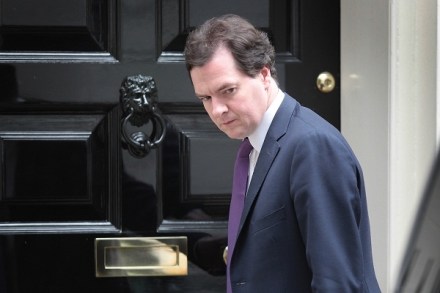
‘Unfortunately, it’s not enough.’ That is, broadly, the conclusion of John Longworth, the director of the British Chamber of Commerce, who has penned a visceral critique of the government’s economic policy in the Observer. Nothing, it seems, is sufficient: half-hearted infrastructure investment, non-existent aviation policy, lethargic borrowing to business, and regulatory reform that leaves businesses ‘mired in a thicket of red tape’. Longworth laments economic policy being determined by ‘political short-termism, electoral calculation and presentation’.

The state needs to be stronger

From our UK edition

Louise Casey, the government’s ‘troubled families’ tsar, is in loud voice in this morning’s Telegraph. The government, she says, must ‘get stuck in’ and intervene in these lives for the better by getting women to take ‘responsibility’ for themselves and their children. ‘It’s not toughness for toughness sake,’ she says. ‘It’s toughness so we sure their kids get to school so they don’t end up as criminals.’ Casey’s words are underpinned by the view that the state’s approach thus far has been wrong-headed. 'I also don’t think we should soft-touch those families. We are not running some cuddly social workers’ programme to wrap everybody in cotton wool.

Smut Samizdat

From our UK edition

Thanks to Twitter for alerting me to this small act of rebellion: Taken outside the display windows at Smiths, @HypnoPeter As Fleur Macdonald wrote a couple of weeks ago, it is a mystery 'why people might want to read it [Fifty Shades of Grey] rather than Réage’s The Story of O, Bataille’s The Eye or any back issue of Cosmopolitan. And that's to name but a few, and none of the masters like Henry Miller. As the Samizdat above tells you, assuming that you are in the market, go forth and find good smut. Please, anything but 'it'.

Porn season

From our UK edition

EL James has a lot to answer for. Yesterday brought news that a British publishing house, Total-E-Bound Publishing, will sex-up some of the classics in the hope of cashing in on the Fifty Shades of Grey phenomenon. In the forthcoming editions: Cathy and Heathcliffe will do a little bondage. Sherlock Holmes will bed down with Dr. Watson (you’ll have to read the books to find out what Mrs Watson makes of that). And Jane Eyre, of course, will get rogered by Mr Rochester, presumably while St. John Rivers plays with himself in his cottage, or perhaps even the schoolroom — the perverse possibilities are almost endless where poor, conflicted St. John is concerned.

Memories of a ‘monster’

From our UK edition

You’ve probably heard about Enoch at 100 already. This collection of essays in honour of Enoch Powell’s centenary has captivated that section of the public which argues that Powell should be remembered for more than his aberration, the egregious ‘Rivers of Blood’ speech. He campaigned for gay rights and the abolition of capital punishment, among many other ‘progressive’ totems. Over at the Books Blog, Jerry Hayes, the former Conservative MP, has reviewed the book, drawing heavily on Powell’s visionary writings on monetarism, Lords reform and the European project. Powell’s analyses remain pertinent, and I urge you to read the review if only to digest them.

Peter O’Toole’s new beginning

From our UK edition

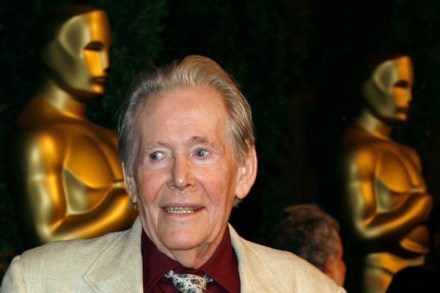
‘It is time for me to chuck in the sponge,’ said Peter O’Toole with characteristic singularity. The 79-year-old has announced his retirement from stage and screen, after a career that will span 56 years: with two films in post-production to be released next year. He goes, he said, ‘dry-eyed and profoundly grateful.’ He will devote his time to finishing a third volume of memoirs, which will record the ‘meat’ of his Hollywood career. The two previous volumes — Loitering with Intent: The Child and Loitering with Intent: The Apprentice — stand largely unread on my bookshelves. I dip into them from time-to-time; they’re that sort of book.

Government, the enemy

From our UK edition

‘I should not have written the book,’ said Anthony Burgess in 1985 of his most famous work, A Clockwork Orange (which celebrates its 50th anniversary this year). Burgess’ disavowal was total. The novel, he said, had been ‘knocked-off for money in three weeks’. The book was overhyped, 'misinterpreted'. That alleged misinterpretation owes much to Stanley Kubrick’s film adaptation, or at least that is what Burgess claimed. He said that Kubrick’s interpretation was ‘interesting’, which was not a complete compliment.

Banging on about Europe

From our UK edition

It’s funny how things turn out. David Cameron said in opposition that there was nothing worse than the Conservative party banging-on about Europe. These days, it bangs-on about little else. The prime minister is a repeat offender. He said on Friday that there should not be an in/out referendum on Britain’s membership of the European Union. It’s a different story today. In an article for the Sunday Telegraph, Cameron says that he is not afraid of the words Europe and referendum. But don’t mistake that for a pledge. Cameron writes, ‘I don’t agree with those who say we should leave and therefore want the earliest possible in/out referendum. Leaving would not be in our country’s best interests.

Ideologues and pragmatists

From our UK edition

Over at the books blog, former Tory MP Jerry Hayes has reviewed James Hanning and Francis Elliott’s Cameron: Practically a Conservative. The key to Hanning and Elliott’s analysis resides in their title. David Cameron is a practical politician, not an ideologue; his quiet values instilled by a comfortable upbringing and a natural talent for conciliation. Jerry concludes: ‘Personally, I would hate to be governed by an ideologue who had to jump through self-imposed Jesuitical hoops before making a decision. I much prefer someone who tries to do the right thing, even if they don't always succeed.’ I recommend reading the review in full (and Jerry recommends all to read the book, even those who can’t stand Cameron).

Who is the enemy?

From our UK edition

It is Armed Forces Day and army morale is low – according to the Telegraph at least. The prospect of a 20 per cent cut in personnel is provoking anger in the ranks, which the civilian can perceive dimly by looking at the posts left on the Army Rumour Service. Rumours of amalgamation and abolition have been circulating for some time in the run up to next week’s announcement. The Telegraph reports that historic English regiments are going to be remoulded, especially those that rely on foreign recruits (usually from the Caribbean and the Pacific Islands).

Miliband speaks to the common people

From our UK edition

Ed Miliband stands accused of many faults, but he rarely slips an opportunity to be opportunistic. James has said that the error and arrogance of the banking establishment, epitomised by the LIBOR and mis-selling scandals, allows Miliband to pose as a ‘tribune of the people’. And so it has come to pass. Miliband has today addressed the Fabian Society – a generous audience for him to be sure, but a suitably humble platform for him nonetheless.  He received a sort of reverse show trial: a lot of predictable questions to which he gave answers of breath-taking predictability. But that is their strength. Tony Parsons has a piece in today’s Mirror in which he argues that Miliband is beginning to sound prime ministerial.