David Blackburn

Mo Yan wins the Nobel Prize for Literature

From our UK edition

The new Nobel laureate is Mo Yan, a Chinese writer. He is the first Chinese citizen to win the prize, and doubtless will become the first of many as China’s cultural ascent matches its economic boom and political prominence. I must confess that I’ve never read anything by him, and I suspect that I’m not alone. The big chief at the Nobel academy, permanent secretary Peter Englund, suggests that we start with Yan’s novel, The Garlic Ballads. The Guardian has helpfully linked to this New York Times review of the novel. His novel Big Breasts and Wide Hips also seems to be a popular choice on the wires, and not solely because of the title. There is controversy about Yan's selection.

We need to talk about democracy

From our UK edition

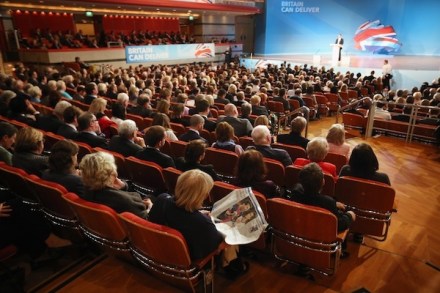
I’ve been away from party politics for a few weeks and have watched the conferences as an interested reader rather than an active participant, so it is interesting (for me at least) to consider their aftermath this morning. It seems undeniable that, from the perspective of having gone about one’s normal working life for three weeks, the conference halls seemed very distant, almost as if they existed in a different sphere of reality. This is not to say that they are unimportant or even that the politicians found in them are out of touch, necessarily; but it is to say that there is more to our national political life than these salons for the tribal.

Spreading the Word through patois

From our UK edition

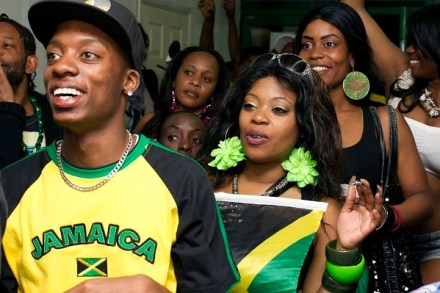
The Jamaican High Commission in London held a party last night to launch a patois translation of the Gospels. The translation, published by the Bible Society, is the culmination of 20 years work by academics at the University of the West Indies and other institutions, studying the rules of the creole created by plantation slaves and committing them fully to paper for the first time. The project has been part-funded by donations from congregations whose primary (and often only) language is patois rather than English, the language in which scripture has always been written and read in the nominally English-speaking Caribbean. This is an important cultural moment.

Should literature be political?

From our UK edition

‘Should literature be political?’ Njabulo S Ndebele asked Open Book Cape Town the other day. Ndebele, a renowned academic in South Africa, has written a précis of his speech for the Guardian. He draws a distinction between political novels, which dramatise activism, and other forms of literature that ‘politicise’ by deepening awareness. His point is often sunk by his own loquacity (‘These two books [The African Child and God’s Bits of Wood] reveal the continuations between political literature and literary politics. Both achieve transcendence through art that politicises and depoliticises all at once.

Interview – Patrick Hennessey, Kandak: Fighting with the Afghans

From our UK edition

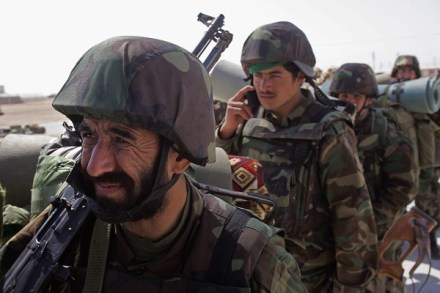
“It always struck me that it was a much easier war to support the closer you got to it,” says Patrick Hennessey of the war in Afghanistan. Hennessey, who served in Helmand with the Grenadier Guards in 2007, continues: "It was so obvious that we were making the country better and that we were broadly supported by the locals, certainly in a way that we weren’t in Iraq in 2006. I know that most Guardsmen preferred Afghanistan to Iraq in that respect because they felt they were doing something tangible and positive and that it was being appreciated by the people in the country, if not necessarily the people at home.” Hennessey has just published Kandak: Fighting with the Afghans.

Of snobs, nobs and plebs

From our UK edition

The muggles of Tutshill, Gloucestershire, have a bone to pick with J.K. Rowling. Tutshill is where Rowling spent her unhappy teens and apparently it is the model for Pagford, the snob-ridden village in Rowling’s anticipated foray into “grown-up fiction”, The Casual Vacancy. The villagers (who I assume cannot have seen an advance copy of the book, which is in solitary confinement until its release on Thursday) are livid at the rumoured insult they are about to be paid. One resident quipped: ‘She is a fantasy writer after all. This sounds like another of her fantasies.’ Rowling’s fantasies, though, have usually contained a small measure of social realism.

Teju Cole meets V.S. Naipaul

From our UK edition

If you have five minutes to spare this evening, read Teju Cole's account of meeting V.S. Naipaul. Writing from the covetable position of a column in the hallowed New Yorker, Cole is man enough to admit feeling awkward when he meets Naipaul, and, worse still, when he is addressed by him as an equal. It’s a winning approach, candid rather than lovey, and both men emerge well from it. Cole’s portrait of Naipaul is intriguing. Cole is not an unthinking admirer: he acknowledges that Naipaul has been ‘so fond of the word “nigger,” so aggressive in his lack of sympathy towards Africa, so brutal in his treatment of women.’ He appears to be honest, touchingly so.

Salman Rushdie’s ‘The Satanic Verses’ revisited

From our UK edition

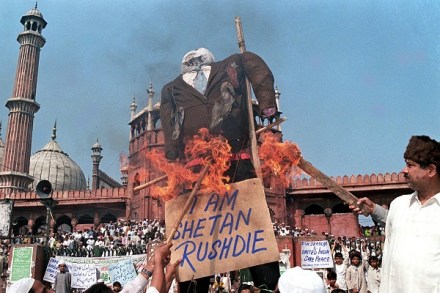
The publication of Joseph Anton (tomorrow), Salman Rushdie’s much anticipated memoir, has given newspapers cause to revisit The Satanic Verses. The commentary focuses on the bloodthirsty and backward response that the book continues to provoke. The novel has become a totem in various political and religious ‘debates’ (a word that is hopelessly misplaced in this perverse context of fatwahs and feeling). It is appropriate that Rushdie is celebrated as a champion of liberalism and rationality. There is no doubt that The Satanic Verses is among the most important books ever written. But, is it one of the finest? Despite the reams of brilliant and brave writing on the Rushdie affair, the question is seldom asked.

Iain Duncan Smith versus Jeremy Heywood

From our UK edition

There's war in Whitehall. The Sunday Times devotes its p2 lead (£) to the fact that Sir Jeremy Heywood, the Cabinet Secretary, is 'sceptical' of the Universal Credit, the key to Iain Duncan Smith's revolutionary welfare reforms. The newspaper has gathered its intelligence by reading the leading article of this week's Spectator, and repeats our point that civil servants will interpret Heywood's reservations as a 'go-slow order'. Here is what our leader column says: ‘Treasury officials have been against Duncan Smith from the start, due to the threat which Universal Credit posed to their beloved tax credits. Ambition in itself is looked down upon by ministers who deride ‘IDS’s grand projet’.

Green on blue is a problem for both green and blue

From our UK edition

The enormous naval deployment in the Persian Gulf, coupled with the deluge of leaks and rumours about a pre-emptive strike by Israeli forces on Iran, has perhaps diverted attention from the war in Afghanistan until the events of this weekend. The attack on Camp Bastion by 15 Taliban fighters masquerading as US troops, which killed 2 American marines and destroyed or damaged considerable materiel and installations, has captured headlines over the weekend, not least because the Taliban claimed that their primary target was Prince Harry. One possible response to the Taliban’s propaganda gambit is to point out that they failed in their alleged objective.

Sir John Major glimpses the sunny uplands

From our UK edition

The standard joke is that Sir John Major is the ultimate grey man, as if Charles Pooter had been painted by Wilhelm Hammershoi in particularly pallid light. But the pea-eating caricature of yesteryear was not in evidence on the Andrew Marr Show this morning. There was something calm and old-fashioned about Major during his interview; even his platitudes carried an air of wisdom. The former Disability Minister praised the Olympic and Paralympic Games, revelling in the fact that the games had revived aspects of our national character which he had assumed dead. The conversation was about old times: his father’s career in Music Halls during the early years of the 20th Century, past battles with the European Union and the legacy of Black Wednesday.

Booker Prize shortlist announced

From our UK edition

The 2012 Booker Prize shortlist has been announced. The runners and riders are: Tan Twan Eng, The Garden of Evening Mists (Myrmidon Books) Deborah Levy, Swimming Home (And Other Stories/Faber & Faber) Hilary Mantel, Bring up the Bodies (Fourth Estate) Alison Moore, The Lighthouse (Salt) Will Self, Umbrella (Bloomsbury) Jeet Thayil, Narcopolis (Faber & Faber) The Booker longlist was ambitious, a challenge to readers that was high-brow and out of touch as the world went mad for E.L. James's easy mix of spanking and wanking. The judges have continued in this high-minded vein with the shortlist, self-consciously so.

A tale of two Smiths: Zadie Smith and The Smiths

From our UK edition

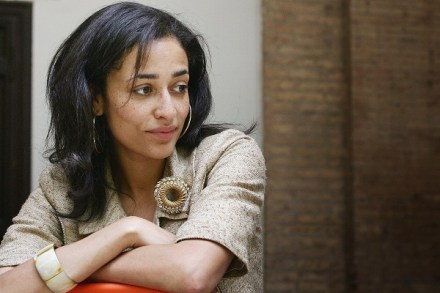
It is lit-fiction season: that time of the year of when the premier novelists of the age dominate the market. Ian McEwan, Pat Barker, Zadie Smith, Sebastian Faulks and Rose Tremain all have new books out, and Salman Rushdie’s much anticipated memoirs are to be launched this week, so many newspapers are devoting themselves to regurgitating stale observations about The Satanic Verses ahead of the main and keenly guarded event. Of the new books, Zadie Smith’s NW is garnering the most plaudits, or at least that seems to be the case.

The answer lies to the east of Heathrow

From our UK edition

A retired civil servant of my acquaintance usually provides a telling perspective on the administrative affairs of the day. We discussed the Heathrow row recently. He said that it was ‘right’ to delay any decision until 2015 so that proper investigations could be made and considered. If he thought that the Tories would not dare break their no-runway manifesto pledge in this parliament, then he did not mention it. For him, it was a question of process and nothing else. The policy not to have a policy on Heathrow until 2015 certainly exudes a bureaucratic air, compounding the sense that this government has fallen captive to a conservative civil service.

David Cameron and the Tory troubles

From our UK edition

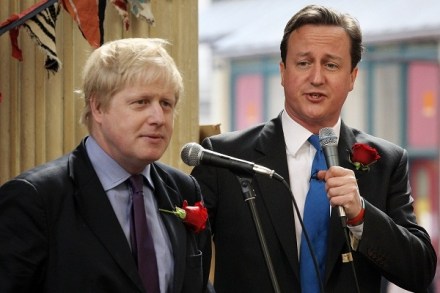
A scoop in the Mail on Sunday: Zac Goldsmith has allegedly told Boris Johnson that if he were to resign over a third runway at Heathrow, then he would encourage Boris to stand in the subsequent by-election (which everyone assumes that the Conservatives would win). Johnson’s aides have rejected the story ‘out-of-hand’, but it has inspired fevered speculation on Twitter, especially among those who dream that Boris is the answer to their electoral prayers. Those voices have also been given air by the revelation that Bob Stewart MP was approached earlier in the summer by a couple of backbenchers to run as a stalking horse against David Cameron. This prompts the question: if Stewart was to be the stalking horse, who then hopes to be the real contender?

Michael Fallon and Vince Cable join forces

From our UK edition

Michael Fallon has given a pugnacious interview to the Sunday Telegraph. He said that Britain must end its obsession with the ‘politics of envy’ and celebrate wealth creators as ‘Olympian’. (I wonder what the minister makes of the Romford Business Awards, which are presented by his colleague Andrew Rosindell, the Conservative MP for Romford.) As well as having venerated wealth, Fallon introduced several policy objectives: a new round of privatisation (Royal Mail being the first target), employment law reform to ease the dismissal of underperforming workers or where working relationships have collapsed, and a sustained attack on 3,000 regulations.

Briefing: the Christians taking their fight to Europe

From our UK edition

Away from the drama of the reshuffle, the European Court of Human Rights is hearing the pleas of four British Christians, who are arguing that UK law inadequately protects their right to manifest their faith under articles 9 and 14 of the European Convention on Human Rights. The applicants’ cases are well known. Nadia Eweida, a British Airways employee, was asked to remove or conceal the crucifix that she wore around her neck in line with new uniform prescriptions. She did so on several occasions, but eventually refused and was sent home. She lost her workplace discrimination claims on grounds that she had breached her employer’s regulations without good cause.

Naomi Wolf, Marie Stopes and grand deceit

From our UK edition

‘This man makes a pseudonym and crawls behind it like a worm,’ wrote Sylvia Plath in The Fearful. The weekend’s literary pages were gripped by a story of pseudonyms. R.J. Ellory, the well-regarded and critically acclaimed crime writer, has been caught penning rave reviews of his own work, and damning that of his rivals, under various pseudonyms on Amazon. Ellory ‘wholeheartedly’ regrets the ‘lapse of judgment’. The story recalls Orlando Figes’s dishonesty with Amazon reviews. Now as then, I’m at loss to understand why someone of Ellory’s reputation felt compelled to dive to this kind of petty chicanery.

Karl Rove’s a believer

From our UK edition

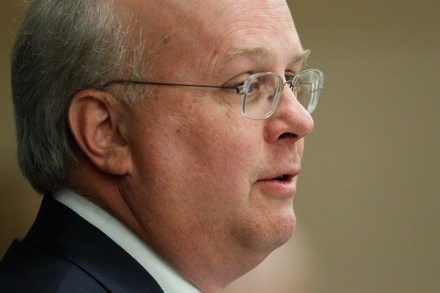
I’m indebted to John Rentoul for drawing my attention to this report of a talk given by Karl Rove to mega donors at the Republican National Convention. Rove is an advisor to American Crossroads, a Republican fundraising organisation; and, having been one of Dubya's chiefs, he remains a vital strategic voice in the party. He explained how Mitt Romney might win: “’The people we’ve got to win in this election, by and large, voted for Barack Obama,’ Rove said, in a soothing, professorial tone, explaining why the campaign hadn’t launched more pointed attacks on the president’s character. 'If you say he’s a socialist, they’ll go to defend him.

Baroness Warsi begs

From our UK edition

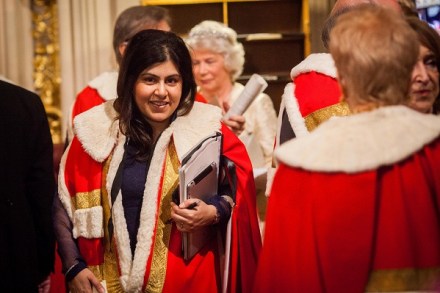
You know the story: Baroness Warsi is to be relieved of her duties as co-Chairman of the Conservatives. That at least is the expectation as the reshuffle nears. Warsi clearly expects such an outcome; otherwise she would not have told the Telegraph that she must remain in post if the Tories are to win the next election. She said: 'If you look at the demographics, at where we need to be at the next election, we need more people in the North voting for us, more of what...I call the white working class. We need more people from urban areas voting for us, more people who are not white and more women...'I play that back and think: 'I’m a woman, I’m not white, I’m from an urban area, I’m from the North, I’m working class – I kind of fit the bill.