David Blackburn

Cameron defies increasingly isolated Merkel

From our UK edition

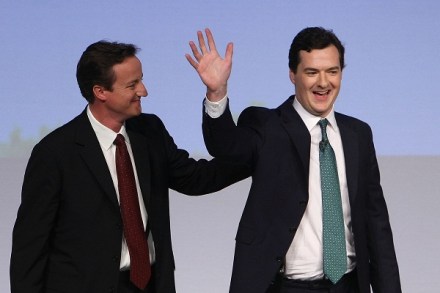
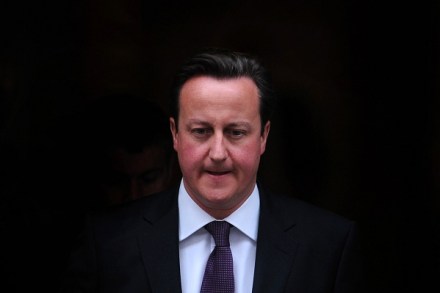
‘No’ used to be the French prerogative in matters of European integration. Charles de Gaulle made a late career out of it. But perhaps the title is passing to Britain. David Cameron indicated yesterday that he would veto any EU banking treaty that did not safeguard the City, as James said he would. Meanwhile, George Osborne joined Cameron in recognising that a European banking union, under design by ECB president Mario Draghi, is necessary if the euro is to survive. Angela Merkel agreed, saying that the answer to the present crisis was more Europe everywhere, only at a pace that suits weary German taxpayers. This sedate approach is becoming unsustainable.
Miliband resists temptation

From our UK edition

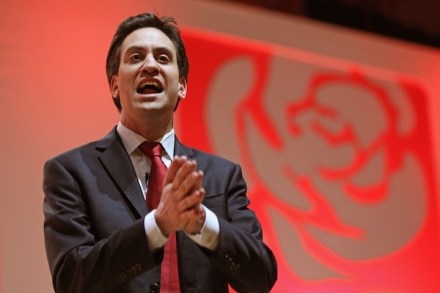
There has been much speculation that Labour might insist on a referendum on Europe. This has been fuelled by numerous factors: the parlous state of the Eurozone, the increasingly likelihood of a 2-speed Europe and, above all, the fact that David Cameron doesn’t want the Tories to ‘bang on about Europe’, especially when in coalition with the Lib Dems. There have been a series of high-profile Labour interventions on the subject in recent weeks. Both Peter Mandelson and Ed Balls, arch-schemers both, have mulled the question in public, and the appointment of Jon Cruddas, a pronounced Eurosceptic, as the party’s policy reviewer, tickled fancies still further.

Hammond’s war

From our UK edition

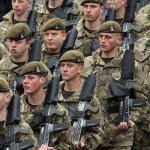
There is some consternation with the defence secretary today, who has indicated, in as much detail as he can at this stage, how the regular army will be reduced from a permanent establishment of 102,000 men to 82,000 men by 2020. You get a flavour of the disquiet on the Army’s anonymous message board service, where there is some anger that regular soldiers’ duties will be ‘outsourced’ to ‘contractors’ as and when required. Some servicemen, both on and off the message boards, are stumped by the government’s strategic logic. If the army lacked the strength and resources to hold positions in Basra and Helmand, then why is it cutting troop numbers still further, even if the majority of those are support troops?

David Owen: It’s time for a referendum on Europe

From our UK edition

There is an intriguing intervention from Lord Owen in this morning’s Times (£)  — and he has also written a book on the subject, Europe Restructured?. He writes: ‘The [likely response to the] eurozone crisis [greater integration] now presents us with a clear choice: do we want to be part of a country called Europe? Or should the UK be a self-governing nation in a new, looser European Community?’ (He goes on to pose two rather different questions for the referendum itself — Do you want the UK to be part of the single market in a wider European Community? Yes/No Do you want the UK to remain in the European Union, keeping open the option of joining the more integrated eurozone? Yes/No.) When might this referendum take place?

RIP Ray Bradbury, 1920 – 2012

From our UK edition

The revered science fiction, horror and mystery writer Ray Bradbury has died aged 91. He was best known for Fahrenheit 451, his blockbuster of 1953. He became known as a curmudgeon, and was something of a Luddite. He was a virulent opponent of the internet, which he viewed as a transient nonsense, doomed to fail. He refused to allow his books to be sold in digital editions, a stance which was curtailed last year when his publishers made it a condition of his contract. His recalcitrance was perhaps borne of his love of the printed book and of old fashioned libraries. He maintained that libraries were one of the few places that children and adults could ‘meet people’ (in the pages of books).

Cameron’s Warsi-related problems

From our UK edition

David Cameron finds himself in the same boat as Dr Frankenstein. Baroness Warsi, a political creation designed to bring Toryism to sceptical ethnic minorities in which Cameron has invested heavily, may have to be neutralised as she is engulfed by two inquiries. Paul Goodman writes of Cameron and Warsi’s awkward relationship in today’s Telegraph, and he makes three observations borne of his experience working with Warsi during the last parliament. They are: 1) That responsibility had been 'placed on the shoulders of a politician of no independent standing and with zero parliamentary experience.' 2) That Lady Warsi’s views on extremism aren’t Cameron’s.

Tyrie’s ‘only plausible’ solution to the euro-crisis

From our UK edition

The European melodrama continues. The European Commission is to publish draft legislation to insulate taxpayers from bailing-out Europe’s sclerotic banks in the future. The plan is to give governments the power to reduce the claims of shareholders and bondholders so that any losses are born by creditors not taxpayers. These changes, if enacted, would ease Mario Draghi’s design for a European banking union. But, as ever with Europe, these changes will come later rather than sooner, as late as 2018 in fact. These discussions are taking place while another Mediterranean storm appears to be gathering.

A delicate balance in Syria

From our UK edition

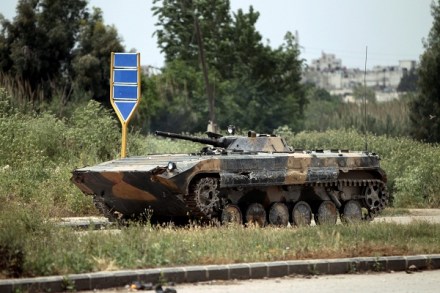
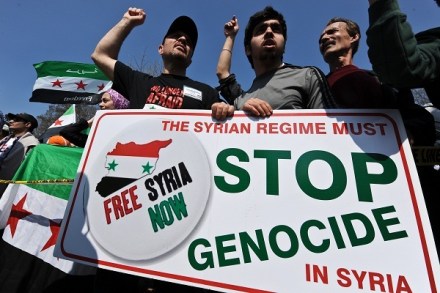
The situation in Syria is very precarious, according to multiple reports – including those of UN observers. Diplomatic tensions remain as before, with Russia and China unyielding in their intransigence. The question of intervention (in some form) is being considered, and all options are supposed to be on the table. Sir Malcolm Rifkind, chairman of the Commons foreign affairs committee, has said that a blockade of arms should be imposed by policing the eastern Mediterranean and encouraging Iraq and Turkey to secure their borders and airspace. He said: 'We have to find a way of demonstrating to them that it’s not just speeches that we make but we actually give practical help as well.

Watch out, Dave

From our UK edition

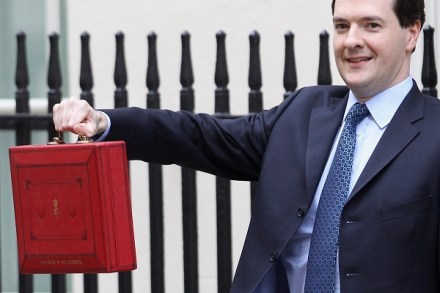
There is a cracking scoop in today’s Mail on Sunday. An anonymous Tory backbench MP has excoriated George Osborne’s performance as Chancellor. The MP repeats many of the arguments made by Fraser on Thursday, as the latest lines of the Budget were excised. Osborne is, apparently lazy, uninterested in economics and hubristic. The MP implies that Osborne’s mind is not sufficient to pull this off as chancellor. He writes: ''[Nigel] Lawson used to say that he had to work 18 hours a day and virtually gave up alcohol just to keep on top of things when he was Chancellor. And he had a formidable intellect to start with.

Mubarak sentenced

From our UK edition

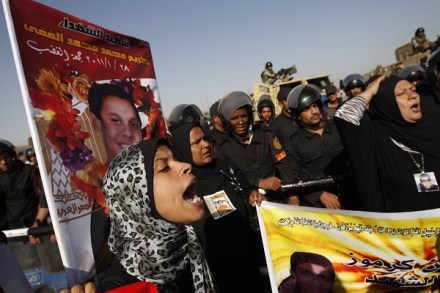
Jubilation has erupted outside a court in Cairo, where former President Hosni Mubarak has been sentenced to life imprisonment for his role in the killing of 850 anti-government protesters during last year’s revolution.  This has been a long process. When Mubarak was indicted, he was wheeled into a cage on a hospital bed, which raised questions about the state of his health and the fairness of the trial. The prosecution has been pushing for the deposed dictator to receive the death sentence, but that has been resisted. Mubarak was found guilty of conspiring in killing, but not guilty of corruption.

Sadly, protest music is alive and well

From our UK edition

There is plenty of nostalgia around in this Jubilee Weekend. Any look back on 60 years brings temptation to think that the past was better than the present. This is what Woody Allen calls ‘golden age’ fallacy, which is defined (in his Midnight in Paris) as an age-old and ‘erroneous notion that a previous time period is better than the one one’s living in.’ This disorder was on show during BBC 2’s Review Show last night, where guests were bemoaning the death of protest music.   The panel (dominated by Kirsty Wark and music critic Paul Morley) were discussing BBC 4’s 3 part documentary, Punk Britannia. The first part of this series is available on i-Player and it is worth watching as a piece of cultural – and political – history.

Euphoria gives way to worry as fog of war descends

From our UK edition

The slaughter of the innocents in Houla, Syria, has concentrated the West’s collective mind. The Times declares (£), not unreasonably, that there is a desire to stop what the UN, while making Robert Mugabe its tourism envoy, has tepidly described as ’18 months of violence’. The paper adds that 'all options are on the table'. Western voices are emitting decibels of disgust. Secretary of State Clinton has castigated the Russian regime for its intransigence in the Security Council, and has said that Russia’s policy will ‘contribute to a civil war’. Meanwhile, Senator John McCain has repeated his view that the Obama administration's inaction on Syria denies what it is to be American.

Happy birthday, Edward Lear

From our UK edition

The god of nonsense, Edward Lear, is 200 years old this year. (Yes, the Inimitable can’t have the whole stage for himself, and must give way to another peculiarly English genius.) To mark the occasion, the Spectator’s Jubilee Double Issue (available from all good newsagents and doubtless a few bad ones too — alternatively, you can subscribe at new.spectator.co.uk/subscribe) carries a piece by Thomas Hodgkinson, a devotee of Lear who also shares the old man's love of Corfu. I urge you to read the delightful piece in full, but here's an excerpt to tickle your fancy: ‘The Owl and The Pussycat’ was my favourite childhood poem. And I must confess that it remains among my favourite poems, appealing irresistibly to sentimentality and escapism in equal measure.

Euphoria gives way to worry

From our UK edition

The slaughter of the innocents in Houla, Syria, has concentrated the West’s collective mind. The Times declares (£), not unreasonably, that there is a desire to stop what the UN, while making Robert Mugabe its tourism envoy, has tepidly described as ’18 months of violence’. The paper adds that 'all options are on the table'. Western voices are emitting decibels of disgust. Secretary of State Clinton has castigated the Russian regime for its intransigence in the Security Council, and has said that Russia’s policy will ‘contribute to a civil war’. Meanwhile, Senator John McCain has repeated his view that the Obama administration's inaction on Syria denies what it is to be American.

Osborne’s gambles

From our UK edition

There is now a general acceptance that the Tories’ 2015 election manifesto will contain a pledge, dare one say a cast-iron guarantee, that voters will be offered a referendum on Britain’s relationship with the EU. James first revealed this in his magazine column a few weeks ago. The aim is to see off the surge from UKIP, prevent Labour from opportunistically seeking Eurosceptic ground, and to counter Boris Johnson’s popular adoption of the People’s Pledge. Since then it has been taken as read that George Osborne is responsible for this gambit, which is reasonable given that he is the Tories’ chief strategist, and a likely contender in a future leadership bid.

A good day to…

From our UK edition

While Jeremy Hunt was casting about, trying to save his political life at the Leveson Inquiry, the Treasury issued its latest u-turn: the expected volte face on charitable giving. Interestingly, the Sunday Times' Isabel Oakeshott reveals that yesterday she arranged to meet 2 senior Treasury officials this morning, but the meeting was postponed earlier today, which might suggest that the decision to drop the controversial tax change was taken at very short notice. If so, what does that say about the Treasury's view of unfolding events at the Leveson inquiry? Where, in addition to the pressure on Hunt, George Osborne has been implicated in elements of the BSkyB deal by Hunt while under stern examination from Robert Jay QC. In terms of the u-turn, there are two schools of thought.

Hunting season distracts from Euro-calamity

From our UK edition

As James observed yesterday evening, the Westminster media has its eyes on one story today: Jeremy Hunt’s career-defining appearance at the Leveson inquiry. A deafening cacophony has broken out from a host of tweeters, talking heads and irate scribblers. It will be a diverting piece of political theatre at the very least. There is drama of a different kind in the Eurozone. Irish voters will go to the polls today to approve an EU budgetary restraint treaty, which they are expected to approve. Meanwhile, Spain’s borrowing costs have reached ‘perilous levels’ (6.65 per cent) according to the Times’ commentary (£).

A turn up for the books

From our UK edition

Madeline Miller has won the Orange Prize — the last ever Orange Prize, in fact. She won the £30,000 and the coveted ‘Bessie’ statue for her debut novel, The Song of Achilles. Joanna Trollope, Chair of Judges, said: ‘This is a more than worthy winner – original, passionate, inventive and uplifting. Homer would be proud of her.’ This was a turn up for the books. Miller was the 8/1 outsider according to William Hill’s odds. Gamblers and pundits had expected Cynthia Ozick to win. Literary prizes have developed a habit of defying expectations in recent months. For instance, this year’s Costa Prize went to Andrew Miller for his novel Pure, when Matthew Hollis’s life of Edward Thomas was thought to be a shoo-in.

The doctors’ strike

From our UK edition

No public sector strike is easy to sell to the public. I recently did a stint of jury service and witnessed the chaos caused by court staff, members of the PCS union, striking over pensions. It’s one thing working around the inconvenience of jury service, but it’s quite another being kept on the premises when there is little chance of the courts actually sitting, as proved to be the case. But, the BMA have it doubly difficult. Today, doctors decided to strike for the first time in more than 40 years. Doctors have a reputation for being well-paid, a reputation that is ingrained and, when one examines the NHS pay structure, not wholly unmerited.

America — the good, the bad and the ugly

From our UK edition

‘What we all really want is for America to be what it once was,’ said Margaret Atwood at a recent writers’ event organised by the New York Times. She was discussing America’s present and immediate future with Martin Amis and E.L. Doctorow. They each wrote a piece for the New York Times Sunday Review on the subject, and each concluded that America, both as an idea and an entity, has been shaken by divisive and disconnected politics, an overbearing and undemocratic judiciary, a profoundly illiberal response to terrorism, the moral bankruptcy caused by corporate greed, and ingrained racial tensions. America is no longer a beacon of freedom and prosperity; as Edgar Doctorow put it, ‘America has become unexceptional’.