David Blackburn

Fears of a coup in Egypt

From our UK edition

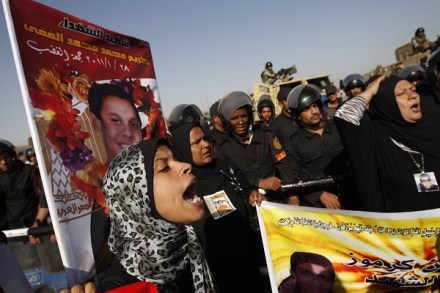
Chaos and confusion are mounting in Egypt tonight, where the country’s constitutional court has ruled that laws governing parliamentary elections are invalid. It follows that the Egyptian parliament must be dissolved, by the interim government led by the Supreme Council of the Armed Forces. And the constitution must be rewritten before the presidential run-off on Saturday.  The court also ruled that Ahmed Shafik, a former prime minister under Hosni Mubarak, could stand in that run-off, overturning a law that barred members of the previous regime from election. Shafik welcomed the decision, which leaves him free to challenge Mohamed Morsi, the Muslim Brotherhood’s representative. The message from the Brotherhood is one of defiance.
Osborne, competitiveness and confidence

From our UK edition

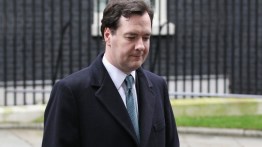
George Osborne will formally unveil the government’s banking reforms in a speech at Mansion House later this evening. The reforms are in line with the recommendations of Sir John Vickers’s Independent Banking Commission (ICB), as laid out by the Treasury, which published this White Paper earlier today. For those who’ve forgotten, Vickers suggested splitting retail and investment banking through a Glass-Steagall-type ‘ring-fence’ mechanism that would protect retail, SME deposits and overdrafts while commanding that the ring-fenced part of the bank is not dependent on other departments for liquidity.

Cameron: SpAds answer to me

From our UK edition

David Cameron was visibly rattled by Robert Jay QC, Counsel to the Leveson Inquiry, earlier today. Counsel was examining the relationship between the PM and Rebekah Brooks. Counsel concentrated on the text that Mrs Brooks sent Mr Cameron on the eve of his 2009 party conference speech. Mrs Brooks’s use of Cameron’s phrase ‘in this together’, which he used extensively in the subsequent speech, has led some to argue that their relationship was too close. In the morning session, Counsel asked Mr Cameron how often he met Mrs Brooks socially at the weekend. Mr Cameron was vague in response, only offering ‘well not every week’ in answer. (Mr Cameron returned from lunch with a clearer answer thanks to his wife’s meticulous diary keeping.

A great moment in the Commons

From our UK edition

History was made in the House of Commons this afternoon when two MPs spoke openly of their mental health problems; the first time that MPs have done so in the House. I’m indebted to Andrew Sparrow’s invaluable politics live blog at the Guardian, which carries the statements. Labour's Kevan Jones on his depression: 'Like a lot of men, you try and deal with it yourself. You don't talk to people. First of all it creeps up on you very slowly. I think in politics we are designed to think that somehow that if you admit fault or frailty you are going to be looked on in a disparaging way both by the electorate but also by your peers as well. We have got to talk about mental health in this House. Actually admitting that sometimes you need help is not a sign of weakness.

Amis: Porn is an attack on love

From our UK edition

Pornography is in the news, and Martin Amis has been thinking about pornography. Those two facts are not related, not necessarily. Tomorrow’s issue of the Spectator contains an interview with Amis, who is on vintage form. Pornography, he says, is an attack on love; it is the repudiation of significance in sex. Pornography has, he says, created a ‘big disconnection for human beings’ between their conceptions of sex and its biological realities. He says, ‘There is no more talk of love in porn than there is about having babies. It’s as if you made babies by some other way, like sneezing.

Clegg abandons Hunt

From our UK edition

A firestorm has torn across Westminster overnight, since Nick Clegg instructed his MPs to abstain from today’s opposition motion demanding that Jeremy Hunt be referred to Sir Alex Allan, the ministerial standards supremo. Numerous Tory backbenchers have taken to the airwaves to condemn their perfidious coalition colleagues. The Mail has the most complete record of the rage. One MP vowed revenge on the liberals. Another described the abstention as ‘an act of war’ before Cameron and Clegg appear before the Leveson inquiry. And Peter Bone said that the Lib Dems ‘are not fit to be in government because they can’t accept collective responsibility.’ Downing Street tells a different tale. ‘There is no split,’ a spokesman said.

Gay marriage, the CofE and the Tories

From our UK edition

There was, as Freddy has said, something inevitable about the Church of England’s response to the imminent prospect of gay marriage. A convinced Anglican, who also has intimate knowledge of constitutional law and decoding legislation, recently told me in no uncertain terms that the government’s plan could force the church to schismatic ends because, for it, the division between religious and civil marriage is not clear. Marriage may be a sacrament before God, but it is most certainly a legal institution, defined and licensed by the State. This places the established church and its clerics in an exposed position should parliament chose to redefine marriage under English law. (See points 21 and 24 in the annex to today’s CofE document for further details.

The language of left and right

From our UK edition

Stephan Shakespeare has a fascinating article on Con Home today, comparing which words voters associate with the terms ‘right-wing’ or ‘left-wing’. The results aren’t too surprising: the language of the left is, generally, softer than the language of the right. Shakespeare’s article is entitled ‘Fairness versus selfish’, which gives you an idea of how voters perceive the dichotomy. The upshot is that many voters still believe that the right is intrinsically ‘nasty’; ergo, the modernisation project has not gone far enough. This research, and the conclusions drawn from it, reminds me of Jonathan Haidt’s book The Righteous Mind (indeed, Shakespeare references an article by Haidt).

Helping troubled families

From our UK edition

Earlier today, the government, in the form of Eric Pickles, announced that it was launching new incentives to encourage local councils to improve the lives of 120,000 families, identified as ‘troubled families’ by the Social Exclusion Task Force in 2007. Those incentives are: A). £3,900 for each family whose children attain 85 per cent attendance at school. B). £4,000 for each adult in a troubled family who holds down a job for three months. The measures have been welcomed by the Local Government Association, which does not praise this government all that often. The cynic will say that the LGA is merely welcoming more money for its associates.

Dissenters against Osborne

From our UK edition

George Osborne has much to ponder this morning. First, there is the small matter of his evidence to the Leveson Inquiry later today (assuming that someone can check Gordon Brown's loquacity), which will prove diverting for those who remain gripped by those proceedings. Then there is the larger matter of the £80bn Spanish bank bailout. Osborne has welcomed the rescue, arguing that the Eurozone must survive and thrive if Britain is to prosper. His analysis is that the crisis on the continent is impeding domestic recovery. Fraser argued yesterday that this is a half-truth which verges on being a conceit. A number of Conservative backbenchers share Fraser’s scepticism and they have loosed-off volleys of criticism at the chancellor in today’s press.

Osborne at Leveson

From our UK edition

George Osborne was relaxed as he gave evidence to the Leveson Inquiry. He was succinct and focused, in contrast to Gordon Brown in the morning session. He was affable, joking about his ‘difficulties in Corfu’ — a reference to the infamous Deripaska affair. His confidence was such that he even said the inquiry was walking up a ‘blind alley’ in adjudicating on the fusion of news and comment in newspapers. This is not a new problem, he said, eighteenth century freesheets presented opinion as fact according to their view of the world.

The politics of sport

From our UK edition

Football dominates the newspapers this morning, with England due to begin their European Championship campaign tomorrow. But the issue of racism in Ukraine, and to a lesser extent Poland, is a major feature of the coverage, with some commentators suggesting that players should refuse to play if their teammates are subjected to abuse. Ruud Gullit, of sexy football fame, is the latest retired star to back unilateral walk-offs.  UEFA, the European football governing body, has already said that its on-pitch officials will book any player who leaves the field, which has outraged numerous players, including the frenetic Manchester City and Italy striker Mario Balotelli.

Theresa May and the right to family life

From our UK edition

Theresa May has been in the news recently, as she introduces plans to stop spouses coming to Britain unless they have savings of £18,000 and an additional £2,400 for each foreign born child they bring with them. The Home Secretary told Andrew Marr earlier this morning:  ‘It is important that we say you should be able to support yourselves and not be reliant on the state.’     She also reiterated her intention to stop foreign prisoners, whose family live in Britain, from using article 8 of the European Convention on Human Rights, which includes the right to ‘private and family life’, to resist deportation. She is going call a vote in the Commons next week to determine the balance between the interests of prisoners and the wider public.

Labour’s education dilemma

From our UK edition

The Labour Party has a problem with education. On the one hand, it recognises that the academies programme which it inaugurated is very popular with parents. But on the other hand, it knows that the unions, upon which it depends financially, are opposed to reform. This creates tension where policy is concerned: how can the party satisfy voters and the unions? This tension is embodied by the reform-minded shadow education secretary Stephen Twigg (a driving force behind the original adoption of academies), who appeared on Andrew Neil’s Sunday Politics earlier this morning. His words (and there were a lot of them) speak volumes about the party’s difficulty with the word ‘academy’.

UN observers enter Mazraat al-Qubeir

From our UK edition

Russian foreign minister Sergey Lavrov has said that ‘some foreign players’ are provoking opposition to the Assad regime while ‘demanding the international community take decisive steps to change the regime’. He also reiterated that Russia ‘will never agree to the use of force in the UN Security Council’, which would seem to impede Lord Owen’s plan that the West, led by the Turkish military, can intervene in Syria with Russia’s blessing. Meanwhile, UN observers recently entered Mazraat al-Quberir, scene of an alleged massacre of villagers. Journalists accompanying the observers report that there is evidence of killing (remnants of burnt flesh and bloodied clothing), but any bodies have been removed.

Missed history lessons

From our UK edition

It’s a slow news day in the political world, as we wait for the Spanish government to take its cap to Brussels. There are, however, some brilliant opinion pieces in the papers today to keep you entertained. First, Spanish author Carlos Luis Zafron has penned a visceral attack (£) on the self-appointed elites who have brought his country to the abyss. This passage might appeal most to CoffeeHousers: Peter Oborne made a similar case with regard to the whole EU in a devastating column on Thursday. Today, Charles Moore turns his epigrammatic attention to the subject. He concludes that the derided Cassandras have been vindicated. He writes: Missed history lessons is at the heart of Niall Ferguson and Nuriel Roubini’s joint enterprise in the FT.

The plot against public schools

From our UK edition

Matthew Parris has launched a critique on the charitable status of public schools in this morning’s Times. Matthew is not opposed to private education, just to the arrogance of the bastions of privilege that sell a lifestyle and connections as well as an education. Echoing the government’s social mobility Tsar, Alan Milburn, Matthew argues that these schools should earn their breaks by doing more for the communities that surround them, the vast darkness outside their hallowed walls.   He then urges the government to take the fight to the public schools, and, by extension, the legal system that protects their special position. He also backs publicly funded scholarships, a proposal of the Sutton Trust’s Sir Peter Lampl which was unveiled in the Spectator in March.

Interview: Evgeny Morozov and the net delusion

From our UK edition

You are reading this article thanks to the greatest invention of the last 50 years: the internet. The web is often regarded as a panacea for absolutely everything. It is revolutionising the world’s economy. It is changing leisure and entertainment. And it is also a political tool that can liberate oppressed people. Jared Cohen, a former internet guru at the US State Department, once remarked: ‘Any combination of these [digital] tools [Facebook, Google etc.] allows for a greater chance of civil society organizations coming to fruition regardless of how challenging the environment.’ There is nothing that this incredible device can’t do. It is the greatest ever democratiser. But, a few dissenting voices have risen above the fevered chorus.

Leveson summons the big dogs

From our UK edition

Gordon Brown, Sir John Major, Ed Miliband, Harriet Harman, Alex Salmond, Nick Clegg, George Osborne and David Cameron will appear before the Leveson Inquiry next week, for what will be the inquiry's last week of evidence. All eyes, of course, will be on Cameron, who is due to appear on Thursday. He will be embarrassed once again by his past proximity to disgraced News International executives, and his handling of the News Corp BskyB takeover. He previewed his likely answers on BSkyB in an interview with Andrew Marr last week. He said that his intention was for Vince Cable to marshal the bid, but that was scuppered by Cable’s preposterous comments about ‘declaring war’ on the Murdochs, made to Telegraph journalists posing as concerned floozies.

The net delusion

From our UK edition

The internet is democratising and enriching the world, right? It’s happening now in the Middle East, isn’t it? No it isn't, says Evgeny Morozov, author of The Net Delusion, not as such. The Spectator has an interview with him over at the books blog (spectator.co.uk/blogs/books). He spoke to us about those liberal westerners, many of whom are close to President Obama and Secretary of State Clinton, whose utopian dreams ask far too much of the internet, and how their misguided analysis of global affairs is strengthening dictators not weakening them. Here is a flavour of what he had to say: ‘We have a very confused sense of how modern authoritarianism works. It works differently.