David Blackburn

Delingpolegate?

From our UK edition

What's wrong with supporting James Delingpole? Ask the Guardian: it has had a tremendous amount of fun exposing the Tories’ campaign manager for the Corby by-election, Chris Heaton Harris MP, appearing to support The Spectator's very own James Delingpole. The paper has obtained video recorded by what it describes as an ‘undercover Greenpeace reporter’ of Heaton-Harris telling an audience at the Tory conference that he encouraged James Delingpole to stand as the anti-wind farm candidate in Corby. He says that he has made ‘a handful of people’ available to Delingpole, including the deputy chairman of his constituency. Finally, he adds, more in jest than complete seriousness it seems to me: ‘Please don’t tell anyone ever’.
George Osborne, the insubstantial chancellor?

From our UK edition

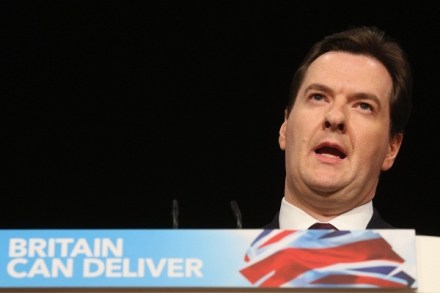
George Osborne’s public interventions on issues other than the economy are few and far between, which is why his article in today’s Times merits attention. In it, Osborne analyses some of the causes of Barack Obama’s victory and then applies his findings to the 2015 election in Britain. On the basis of this article, we can conclude that the Tories’ leading strategist expects to fight the next election in a challenging economic climate against two men, Ed Balls and Ed Miliband (in that order), who he intends to blame for causing Britain’s ills.

Government responds well to energy price fixing claims

From our UK edition

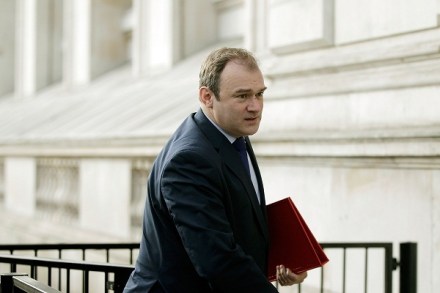
It is a busy day on the economic front, with new inflation figures (which are expected to show an increase) to be released at 9.30am and Ed Davey, the energy secretary, to address the House about further allegations (published in the Guardian this time) that the wholesale price of gas has been fixed by traders. The claims were made by a whistleblower, Seth Freedman, who used to work at ICIS Heren, an agency that reports on gas prices. The Financial Services Authority and the energy regulator, Ofgem, have both swung into action to investigate Freedman’s allegations. It is only natural that the government would state its response to the House and outline the regulatory authorities’ plans.

What can Theresa May do to deport Abu Qatada?

From our UK edition

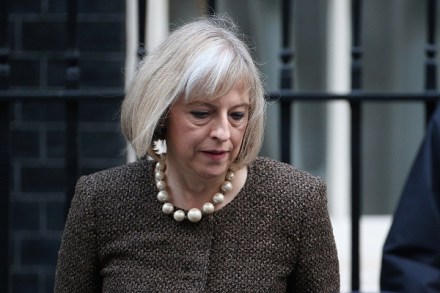
Theresa May gave a defiant statement to the house on the Special Immigration Appeals Committee’s (SIAC)  decision to uphold Abu Qatada’s appeal against deportation to Jordan on grounds that he would not receive a fair trial. She vowed to fight on by ‘appealing the decision’, which prompts the question: how will she do that? It’s necessary to understand what the SIAC considered (here is its judgment and here is a précis). First, it examined whether or not evidence given by Qatada’s former co-defendants in an earlier trial (from which Qatada was absent), Abu Hawsher and Al-Hamasher, is admissible in Qatada’s retrial.

The BBC saga distracts from Abu Qatada deportation and bail decision

From our UK edition

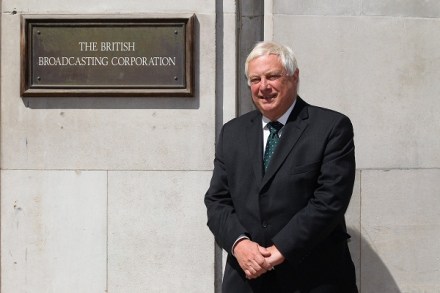
The decision to award George Entwistle a £1.3 million payoff appears, as my colleague Rod Liddle notes, to have misjudged the public mood (and indeed the mood of the majority of hard working and underpaid BBC staff). It is the sort of development about which the government feels it ought to comment, to provide a source of moral leadership. There is an added complication because the government must do so without infringing the BBC’s independence. There is even more danger in this case because the Chairman of the BBC has launched a very spirited assault on the corporation’s detractors in the Murdoch press and elsewhere; this is a possible culture war in the making.

Chaos at the BBC

From our UK edition

The BBC crisis continues to dominate the airwaves. George Entwistle’s £1.3 million payoff has set outraged tongues wagging. Tim Montgomerie has collected the furious comments made by several Tory MPs. Much of the rest of the press pack has followed suit, saying that the severance deal is yet another self-inflicted wound by BBC management. Meanwhile, Helen Boaden and Stephen Mitchell, who are respectively the director and deputy director of BBC News, have stepped aside pending the results of the Pollard inquiry. David Dimbleby told the Today programme that he couldn’t understand why George Enwistle resigned, adding that the continuing fallout from the Savile scandal is not the greatest disaster to befall the BBC.

Chris Patten claims he has a ‘grip’ on the BBC’s crisis

From our UK edition

Chris Patten has just appeared on the Andrew Marr Show to discuss the resignation of George Entwistle and to evaluate its fallout. Patten conceded that the BBC is mired in a mess of its own making and that it was inevitably under pressure as a result. He opened a media war while defending the BBC’s independence, saying that the corporation was ‘bound to be under fire from Rupert Murdoch’s newspapers’ and sceptical (Tory) MPs, adding later in the interview that Murdoch’s papers would be happy to see the BBC diminished.

Remembering the ‘end of the beginning’

From our UK edition

This is an unusual Remembrance Sunday; it is 70 years since the feats of arms which led Churchill to say: ‘Now this is not the end. It is not even the beginning of the end; but it is, perhaps, the end of the beginning.’ It is 70 years to the day since Allied troops were advancing through Morocco and Algeria as part of Operation Torch. It is 70 years to the week since the conclusion of the decisive 2nd battle of El Alamein in Egypt. It is also 70 years since the battle of Stalingrad began to turn against the Germans. More than 13,500 British, Commonwealth and Allied forces were casualties at Al Alamein, and nearly 500 Allied soldiers died during Operation Torch. And, of course, the carnage at Stalingrad far exceeded these substantial losses in North Africa.

Philip Roth retires

From our UK edition

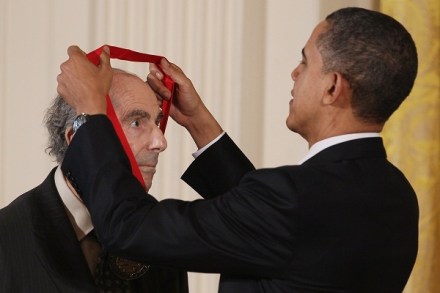
Philip Roth has retired. He told a French magazine that, at 79, he was ‘done’. There will be no more books. For the little it is worth, I think he ought to be a Nobel Laureate – American Pastoral stands as one of the best books written since the war about, among other things, the failings and failure of the post-war era, and The Human Stain and Portnoy’s Complaint aren’t too bad either. Roth is an obvious choice for the Nobel committee; but it is simply perverse of them to be scared of his renown, or even to mistrust it. Roth’s retirement recalls Martin Amis' view that writers die twice: the mind weakens, even though the flesh remains willing. Amis’ belief carries a negative, mournful air.

Eton style

From our UK edition

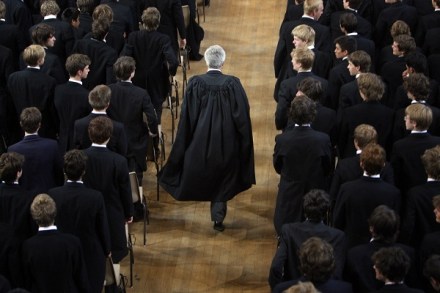
Tony Little, the headmaster of Eton College, has given an interview (£) to the Times’ Alice Thompson and Rachel Sylvester. It’s a curiosity. On the one hand, Little is extraordinary: a local boy who won a bursary to Eton in the ‘60s. On the other hand, he is emblematic of how the headmasters of the ‘great public schools’ have become representatives of their schools rather than hands-on managers. The interview reads like a sales prospectus for a philosophy of education. Little talks about the value of encouraging each boy’s talent to the full. Eton teaches 9 modern languages and coaches 30 sports. There is time in the school day for drama, music , art and debate.

The Jimmy Savile scandal and Alexander Solzhenitsyn

From our UK edition

‘The line dividing good from evil cuts through the heart of every human being… This line is not static within us; it sways to and fro over the years. Even in a heart imbued with evil, it allows a small bridgehead of good to remain. And it permits a small niche of evil to survive even in the kindest of hearts.’ These words were written by Alexander Solzhenitsyn, seeking to explain why The Gulag Archipelago was necessarily ambiguous. But they also fit elements of the Savile scandal, which is being prejudged in increasingly black and white terms. Charles Moore’s observation that this grim affair is a ‘dreadful warning’ about the perils of fame is compelling: ‘when you are up, no criticism, when you are down (and dead), no mercy.

Route to conflict? David Priestland’s Merchant, Soldier, Sage

From our UK edition

David Priestland is worried. Towards the end of his recently published book Merchant, Soldier, Sage, he warns: ‘[The crash of] 2008 has set the world on a course towards potential conflict, and the domestic and international forces that brought us the violence of the 1930s and 1940s are with us today – albeit still in embryonic form.’ It is fashionable, especially in heavily indebted Europe, to compare the uncertainties of the present with those of the 1930s. The Second World War is passing out of living memory and entering popular historical consciousness. Angela Merkel appeals to this when she warns that only the European project can guarantee peace; and Greek protesters who equate her with the Nazis assert the opposite view.

Hilary Mantel’s Bring up the Bodies wins the Booker Prize

From our UK edition

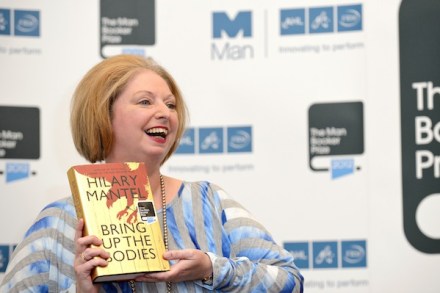
Hilary Mantel’s Bring Up the Bodies has won the Booker Prize, which seems right because it is the most accomplished book on the list – challenging but fundamentally readable thanks to the execution and, it must be said, the drama of the history of that period, which Mantel handles with the insight of a historian, though thankfully not a historian's total fidelity. If you don’t believe me, read the Spectator review written by Nicola Shulman, biography of the Henrician poet Thomas Wyatt. Mantel has joined Australian Peter Carey and South African J.M. Coetzee to hold a brace of Bookers. Speculation is already mounting about the 3rd instalment of her trilogy.

Ian McEwan’s novel questions

From our UK edition

Brevity does not imply levity. That, at least, is the view of Ian McEwan. The national treasure was speaking at the Cheltenham Literary Festival over the weekend when he crowned the novella, which he defined as a book of roughly 25,000 words, as the ‘supreme literary form’. He challenged publishers and critics who believe the novella to be inherently inauthentic and frivolous, arguing that the compact form brings out the best in the greatest writers. 'Somehow . . . the prose is better, more condensed, more rigorous. Characters have to be established with a great deal of economy. All this makes demands on a writer that brings them to a better calibre of prose. They don’t relax, it’s much more focused.

George Osborne’s Afghan letter from America

From our UK edition

George Osborne is a keen observer of American politics, so perhaps it is little surprise to read in the Telegraph that the chancellor is arguing for faster withdrawal from Afghanistan. The American presidential race has confronted national war-weariness. The Obama camp has long held that the 2014 drawdown date is firm; that is when the troops will come hom. It is even thought that US training and logistical support to Kabul will be curtailed together with combat operations. The Romney camp’s view has been less clear, which suggests that it has not wanted to leave itself exposed during the campaign by committing to anything from a position of comparative ignorance next to Obama.

The Nobel Prize’s EU joke prompts questions about the nation state

From our UK edition

The award of the Nobel Prize to the European Union is a tremendous joke; and like all great jokes it has brought people together. Commentators of left and right are united, for the most part, in condemning the Nobel Committee’s revision of history that claims the EU, a body that has only existed since 1993, deserves credit for securing ‘60 years of peace’ in Europe. Iain Martin and the legal commentator David Allen Green give the fullest accounts, rightly commending America’s enormous contribution to Europe since 1945. The timing of the award adds to the general mirth because there can be little doubt that events in the Eurozone are threatening the European project; or indeed that the European project is the author of its own misfortune.

Governing the world – an interview with Mark Mazower

From our UK edition

‘People begin to feel that… there are bonds of international duty binding all the nations of the earth together.’ This quotation, which resonates so clearly as yet more blood is shed in Syria, belongs to Guiseppe Mazzini, the 19th century Italian nationalist whose vision of a ‘Holy Alliance of peoples’ underscores much of Professor Mark Mazower’s Governing the World: The History of an Idea. Mazower’s book is an account of the ideas and institutions of international relations from the Concert of Vienna in 1814 to the present day United Nations. It is, then, the story of how Western hegemony has shaped the international sphere; this period of hegemony is soon to end and perhaps Mazzini’s international ambitions will die with it.

The gate beckons for Andrew Mitchell

From our UK edition

The papers are unanimous: Andrew Mitchell is a dead man walking, and like most pantomime ghouls he’s become a laughing stock. Fraser’s Telegraph column tells of MPs and cabinet colleagues ridiculing the chief whip. The joke deepens because Mitchell, perhaps due to his insistence that he did not use the word ‘pleb’, apparently does not recognise the gravity of those offences to which he has confessed. He is the still the merry cyclist, by all accounts. As Fraser points out, the joke becomes more serious at this stage because it shrouds the Tories’ attempt to tackle inequality with welfare and education reform.

Whitehall’s mistake over BAE and EADS

From our UK edition

There have been some sharp responses to the demise of the proposed BAE EADS merger. My personal favourite is John Redwood’s pithy: ‘Several of you wrote in expressing dismay at the proposed tie up between BAE and the Franco German civil aviation company. I did not write about it, as I assumed it would be an impossible deal to execute. The documentation was very voluminous, so I did not bother to read it. The politics were always likely to bring it down, so there was no need to analyse the business, economic and strategic issues.’ There seems to be little surprise that the deal collapsed. Most commentators welcome the failure, despite the commercial sense of the proposal.

The politics of the Nobel Prize for literature

From our UK edition

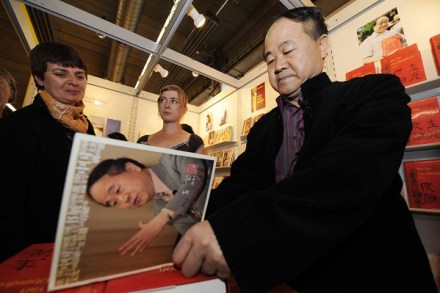
The Nobel committee have delivered their verdict on the literature prize: Mo Yan is new laureate. Over at the books blog, I explain why this is an important decision politically. Yan is the first Chinese citizen to win the award, a reminder that the country’s culture influence is growing together with its political and economic power. In that sense, the award has recognised that we are living in a new age. Yan’s books have been banned from time-to-time by the Chinese authorities, but he is accused by many of being too close to the party line. Several human rights activists are appalled that he has won the prize. However, others say that he is subtly subversive in a society that limits freedom of expression, which brings to mind books like The Master and Margarita.