David Blackburn

Tony Hall appointed Director General of the BBC

From our UK edition

It seems that Lord Patten has been reading the Spectator: Lord Hall, the BBC’s former director of news and the man who revolutionised the Royal Opera House, has been appointed Director General of the BBC, an appointment recommended by Tom Bower in last week's Spectator Diary. The BBC Trust states that Lord Hall will take over in March. Hall is a hugely respected figure. Here’s what Tom Bower wrote about him last week: ‘To avoid chaos, Patten cannot be fired without the government naming his successor. Step forward Tony Hall, the Royal Opera House’s chief executive. Hall was a respected editor of flagship broadcasting who resigned as the director of BBC News in 1999.

How easy would it be to withdraw from the European Court of Human Rights?

From our UK edition

As James says, the prisoner votes row will return to parliament before lunch today. The government is expected to offer the Commons three choices: The retention of the blanket ban, in defiance of the European Court of Human Rights (ECtHR) Enfranchising prisoners serving up to six months. Enfranchising those serving up to four years. Parliament is expected to vote for retention, as it has done so previously. Such an outcome would, obviously, set the UK government on a collision course with the ECtHR and leave it open to very costly compensation suits. Damages of around £1,000 per case have been awarded in other jurisdictions, and leaked documents published last year showed that the government’s lawyers estimate the cost of compensation suits could exceed £140 million.

The death of principle

From our UK edition

If you only have time to read one full length newspaper piece today, read this one by George Bridges, the former backroom Tory guru and CPS director. It is a brilliant, scathing meditation on the damage caused by the professionalisation of party politics. And, of course, it is a humble confession. If I had to pick one quotation from it (and there are many possible choices), it would be this one: ‘Opinion research is critical in politics, but only if it is used to tell a politician how to communicate, not what to believe – a point Lynton Crosby, the election guru who will advise the Tories’ 2015 campaign, repeats ad infinitum. It provides a map and a compass, but the leader must set the direction.

The Church of England is becoming a church in England

From our UK edition

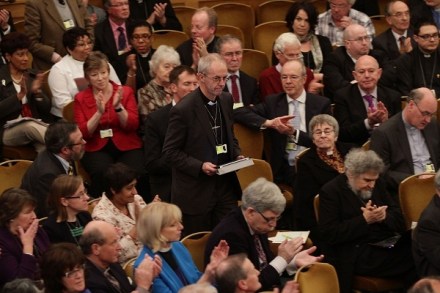
This morning’s newspapers (and indeed the airwaves) are full of apocalyptic predictions about the future of the Church of England. The failure of the General Synod to ordain women bishops has surprised plenty of bishops, many of whom express their ‘deep sadness’ about the affair to the (£) Times’ Ruth Gledhill. Yet the threat of schism on this issue is not wholly surprising, not least because the Anglican Church has rarely taken happily to reform. From the storms over Matthew Parker’s 39 Articles to this latest controversy, the C of E’s evolution has often been fractious. However, as a relatively faithful parishioner of the CofE, this affair does surprise me in one respect.

Ceasefire in Gaza?

From our UK edition

A ceasefire is expected in Gaza later this evening, but is yet to materialise. Unsurprisingly, agreement has been hard to reach. Indeed, it has become a tool of propaganda. Hamas was busily briefing the world's media that the ceasefire had been agreed even as rockets struck Rishon LeZion in southern Israel at 16.22 (GMT), causing two light casualties. Israel, for its part, was clear that there would be no ceasfire while it was still under attack. It was hoped that the message had got through: the BBC reported that the guns, so to speak, fell silent shortly after 16.40 for more than half an hour. However, it was the triumph of hope over expectation.

Cabinet row over imprisoned SAS soldier

From our UK edition

A lunchtime spat has broken out over Sergeant Danny Nightingale, the SAS serviceman who was sentenced to 18 months in prison by a court martial after pleading guilty to possession of a prohibited firearm (a 9mm Glock pistol) and ammunition. Sgt Nightingale's case has attracted wide public support. His friends and family said that the pistol, which was a ‘war gift’ from Iraqi soldiers he mentored in 2007, had not been packed by him, and added that a brain injury had made him forget that it was among his possessions. Supporters say that, owing to these facts, the sentence is unduly harsh. The government's hand has been forced. The Defence Secretary, Philip Hammond, wrote to the Attorney General, Dominic Grieve, asking for a review of the case.

George Osborne, balancing the budget on the backs of the rich

From our UK edition

George Osborne has a dilemma to answer in his autumn statement (which must be finalised by 28 November, when it will be submitted to the Office of Budget Responsibility). He has promised to offset politically welfare cuts worth £10bn with tax increases on the wealthy. There is an added complication in that Osborne cannot afford (literally) to choke recovery by imposing levies on sources of wealth creation. This leads him, logically, to pensions and property. The FT reports that the chancellor is considering reducing the maximum level of tax relief on annual pension contributions from £50,000 to either £40,000 or £30,000. It is estimated that these changes would net the Treasury an extra £600 million or £1.8bn a year respectively.

The politics of energy

From our UK edition

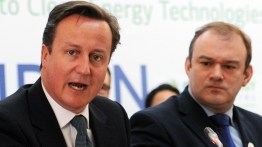
When David Cameron made his surprise announcement about forcing energy companies to offer customers their cheapest deal, he added, as an afterthought, that the leader of the opposition had missed the chance to be on the side of the consumer when he was energy secretary. I would be surprised if the average voter knows that Miliband was energy secretary; but, from Cameron’s perspective, the line of attack makes sense: energy prices and the cost of living are vital political issues for this government.

Where does power lie? Or where should power lie?

From our UK edition

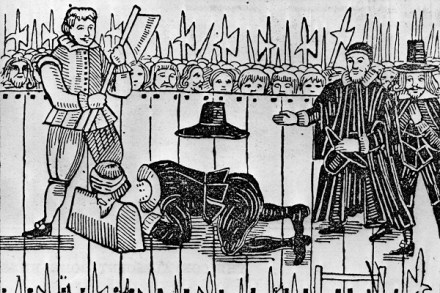
Iain Martin has written a cracking piece for the Telegraph entitled: ‘The coming battle with the EU is about sovereignty.’ Iain recommends a new play, 55 Days, which tells the story of the aftermath of the English Civil Wars and the execution of Charles I. He was gripped by this tale of power and politics, and asked Tristram Hunt and Douglas Carswell why the civil wars continue to resonate. Carswell, in his new book, The End of Politics: And the birth of i-democracy, argues that the 2010 intake, on both sides of the House, has revived parliament. MPs are defying the whips to assert their constituents’ views. The MPs are doing this, Carswell says, because the internet has brought them closer to their constituents.

David Cameron pulled every which way on Europe

From our UK edition

Another day, another set of newspapers full to bursting with pieces about Britain’s fractious relationship with the European Union – all of which, in their way, will unnerve David Cameron. The most enjoyable read is Boris Johnson’s column the Telegraph. Boris made his name as the Telegraph’s European Community Correspondent in the late ‘80s and early ‘90s, writing amusing stories about the EC’s penchant for mad waste and corruption. He gives a reprise today, drawing attention to the fact that the EU distributes your money to Spanish sheep farmers who do not have any sheep. Boris’ conclusion is that David Cameron must go into this week’s debates armed with Maggie’s handbag and tell Brussels that enough is enough.

David Cameron’s speech to the CBI

From our UK edition

Here is the full transcript of the speech David Cameron gave to the CBI earlier today. It is, on the face of it, a speech full of intent and energy; but, two and half years into government, David Cameron will be judged by what he does, not what he says. As John Cridland, DG of the CBI, put it in response to Cameron's words: 'Where's the beef?' I look around this room and see people I’ve been on trade missions with all around the world to Africa, China, India, Russia, Mexico, Brazil. It’s great to see Aggreko here - we were in Africa together and I’m glad you’ve sealed that deal in Cote d’Ivoire and are selling in one hundred countries today.

The gap between what David Cameron says and what he does

From our UK edition

David Cameron (and a host of other politicians, including Ed Miliband, Vince Cable and Boris Johnson) will address the CBI’s annual conference this morning. Cameron’s widely trailed speech is a call to arms; indeed, he wants to put the public sector on a war-footing. The speech will contain the usual spiel about Britain being in a ‘global race to succeed’ and the need for innovation and cutting red tape, faster decision making etc, etc, etc. You’ll know, of course, that these urgent words come from the man who feels that the decision on a third Heathrow runway cannot be made until after the next election. This fact mocks Cameron’s claim that 'the Cabinet I chair is now a Growth Cabinet...

Wole Soyinka: Boko Haram must be destroyed | 18 November 2012

From our UK edition

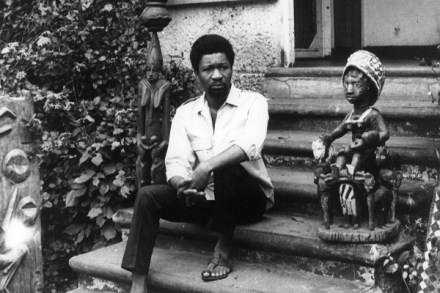
The Books Blog has an interview with Wole Soyinka, the Nigerian author who won the Nobel Prize for Literature in 1986. Soyinka is worth listening to for his ambivalence towards nationalism, his tolerant secularism and his recollection of solitary confinement during Nigeria’s civil war in the 1960s. But his comments on Boko Haram, the radical Islamist group that is terrorising northern and central Nigeria, are worth quoting here on a weekend of bloodshed in the Middle East. ‘I look at Boko Haram not just as a terrorist group, but also as a criminal gang, and a bunch of psychopaths. You don’t enter into dialogue with drug lords and criminals.

David Cameron under attack from voters, Ed Miliband, David Davis and Angela Merkel on Europe

From our UK edition

The Sunday Papers and the broadcast shows are packed with accounts of Britain’s fractious relationship with the European Union, and what that means for David Cameron. The Observer gives space to a poll, the headline of which says that 56 per cent of Britons would ‘probably or definitely’ vote to leave the EU against 30 per cent who would probably or definitely vote to remain in the union. The Independent on Sunday carries a ComRes poll on the more immediate question of next week’s EU budget discussions. The findings will give Mr Cameron a headache: 66 per cent of voters want the budget ‘cut rather than frozen’. The voters will be disappointed: a cut is a fantasy. Even a freeze is looking unlikely because recipient countries are likely to oppose it.

Five points from ‘Super Thursday’

From our UK edition

1). Independents and the changing face of politics. The election of 12 independent police commissioners (at the latest count) in Dorset, Gwent, North Wales*, Hampshire, Warwickshire, West Mercia, Kent, Avon & Somerset, Lincolnshire, Norfolk, Surrey and Gloucestershire is cause for celebration. The aim of elected Police and Crime Commissioners is to localise power in communities, making it more accountable and therefore, one hopes, improve the quality of the service. Independent commissioners are, theoretically, the purest form of this. The same applies to George Ferguson, the newly elected independent mayor of Bristol. Their success also expresses the fact that this was a profoundly anti-politics election.

John Prescott battling, and the Tories get thrashed in northern cities

From our UK edition

John Prescott's trials continue. There will be a run-off between Prescott and the Tory challenger, Matthew Grove. This has been quite a turn around, with Grove staging a late charge in the race for first preference votes when the rural East Riding area was called in his favour. He displaced the independent candidate, retired copper Paul Davison, who finished third by a mere 300 votes. The race has been very close so far; now it comes down to second preferences. Sky News's Jon Craig reports that the Tories are confident of an upset. There have already been a couple of shocks in the PCC results.

Too many elections and not enough votes?

From our UK edition

More people are interested in low turnout than turned out to vote at yesterday’s PCC elections; that is the story of the day so far. The figures quoted are baleful, ranging between 12 and 24 per cent (Harry Phibbs has a good guide). This makes elections to the European Parliament look popular. Indeed, one polling station in Newport took no votes whatsoever, which tells its own story. In terms of the politics of this, low turnout is thought to suit the Tories rather than Labour because more of their voters make it to the stations in elections like these. Indeed, there are fears for Big Bad John’s effort in Humberside because Tory areas might have been more motivated than Labour ones. (UKIP and the independent candidate are also fancied.

Lord Ashdown: Get out of Afghanistan quickly

From our UK edition

The headline on Lord Ashdown’s piece on Afghanistan in today’s Times (£) will please Lib Dem strategists. ‘This awful mistake mustn’t claim more lives.’ It allows the Lib Dems to play the anti-war card: we are the party that will bring Our Boys (and Girls) home. The strategists could take plenty of other lines from Ashdown’s quotable article. ‘All that we can achieve has been achieved. All that we might have achieved if we had done things differently, has been lost… Our failure in Afghanistan has not been military. It has been political.

Lord McAlpine speaks out

From our UK edition

Lord McAlpine has just given an incredibly moving interview to BBC Radio 4's World at One. He talks about how the false accusations affected him. He said, 'It gets into your bones, it gets into your soul. There's nothing bad as this you can do to people.' The damage, he said, could not be repaired because of the British proverb 'that there is no smoke without fire'. As Andrew Neil tweeted moments ago, 'Many should be hanging their heads in shame - and not just at BBC!!

Israel’s public relations problem

From our UK edition

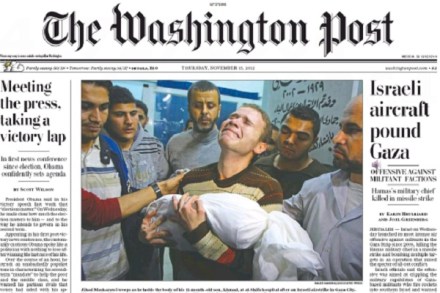
The front page of today’s Washington Post shows a picture of the BBC's Jihad Masharawi holding his dead 11-month-old son, an innocent victim of Israeli action against Hamas’ paramilitary targets following months of indiscriminate rocket attacks against civilians in southern Israel*. The Post’s front page reinforces the fact that Israel has a public relations problem when it retaliates in Gaza; a fact that friends of Israel ought to accept. My colleague Douglas Murray is right to assert that the western media often applies a double standard when reporting Israeli and Palestinian casualties: the suffering of Israeli citizens is not given the coverage it deserves.