Daniel Korski

A new world order – don’t be silly

From our UK edition

Go to any international think-tank conference and you will hear one complaint repeated ad nauseam: the intenational system, built after World War II - and incorporating the UN, NATO, the IMF, WHO etc. - is no longer fit for purpose. It needs to change to accomodate new threats, like climate change, and new powers like India and Brazil. The last point is particularly oft-heard. If India provides the majority of UN peacekeepers, should Delhi not have a permanent say on the UN Security Council? Now that China has become a pillar of the global economy, should the Beijing government not have more votes on the IMF board? The limited representation of these states is thrown into relief when compared with the over-representation of European states like Britain and France.
Aung Sang Suu Kyi, a victim of the post-American world

From our UK edition

Today the Burmese junta convicted pro-democracy campaigner Aung Sang Suu Kyi to a further 18 months under house arrest after a U.S. man swam uninvited to her lakeside home in May and stayed there for two days, breaching the terms of her house arrest. Gordon Brown and Nicolas Sarkozy have led the world’s outrage, urging the UN Security Council and European Union to impose tougher sanctions on the regime.   Unfortunately, not much is likely to happen to the Burmese generals. They remain protected not only by their neighbors, but by China and India who have both economic and strategic interests in keeping the regime intact. Like China, power-hungry India is keen on exploiting Burma's huge oil and gas resources.

How Cameron should structure his national security team

From our UK edition

Reports that the Tories are thinking about appointing a Minister for Afghanistan raise the broader question of how they should structure their national security team. Though the Tories bang on about their idea of setting up a National Security Council, there has been precious little detail given  of how it would work, how it would be different than the Foreign and Defence Policy Secretariat in the Cabinet Office and who would staff it. The National Security Council should be led by a minister, sitting in either the Commons or the Lords, who would also act as the National Security Adviser to the Prime Minister, supported by a National Security Director, from the ranks of the Civil Service.

The Iraq inquiry should examine bureaucratic as well as political failings

From our UK edition

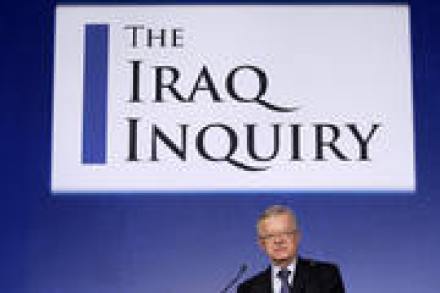
The Iraq Inquiry has now begun. Its chair, John Chilcot, has stressed that he will conduct the inquiry rigorously and, as far as possible, openly. These are sound goals. But I'm concerned about the way the inquiry staff is being organised. Margaret Aldred, a senior Cabinet Office official, will lead the staff effort. That is a real cause for concern. Ms Aldred, originally an MoD official, has been at the heart of British security policy-making in the last couple of years. Though the heads of the Overseas and Defence Secretariat - the PM's de facto National Security Adviser – have regularly changed, recently from Nigel Sheinwald to Simon McDonald, Ms Aldred has remained. Her role in security policy has probably been greater than any other British official.

A bigger army must not come at the expense of a British Peace Corps

From our UK edition

Earlier this week, James lent his voice to those who want to grow the British army. The British army currently consists of around 98 000 regular soldiers and 34 000 territorial army soldiers taking its size is about 132 000. but this has not proven adequate to deploy anything near enough troops in Helmand or even Basra. But I nonetheless remain a little weary of the proposal. Growing the army will not help the situation in Helmand. The lag time for recruitment, training and deployment means that new forces would be available far too late – perhaps only in five years -- to ease the stresses now facing British forces.

Judging Dannatt

From our UK edition

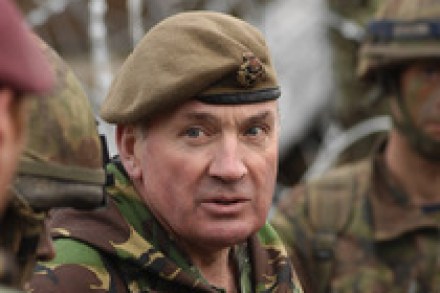
With Labour insiders threatening to “go after” General Sir Richard Dannatt once he retires from his post as Army Chief and takes on the chairmanship of RUSI, it seems only fair to give an early, but balanced, assessment of his tenure. Like most people who reach the top of the army, General Dannatt’s career is the stuff of legend. Though he only meant to be in the army for three years, he distinguished himself while serving in Northern Ireland, earning the Military Cross and setting-off on a career that in would see him serve in Cyprus, Germany, Bosnia, and Kosovo. A tour in the MoD was followed by command of NATO’s Allied Rapid Reaction Corps. Yet when he replaced the gruff and outwardly popular Mike Jackson, few people knew what to expect of Dannatt.

Hail President Blair?

From our UK edition

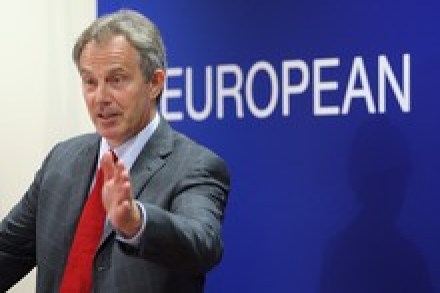
So Tony Blair will be an official British candidate for the job of EU Council President should the Irish vote for the Lisbon Treaty (and the Polish and Czech presidents sign the document). That's what Baroness Kinnock has said. For many CoffeeHousers, this will combine two things you love to hate. But few Britons have the ex-Prime Minister's international starpower and commitment to a free-trading Europe. The French Presidency has shown that only big country, big personality leadership can make a difference on the key foreign policy issues. But for those very reasons, it is hard to see Nicolas Sarkozy and Angela Merkel backing a Blair candidature. Both will be loath to share the limelight with a President Blair when that other President, Barack Obama, comes around for visits.

Time for a British Manley Commission?

From our UK edition

If the government wants to stem the haemorrhaging of elite support for NATO’s Afghan mission, there is one major thing it can do at this stage: establish a British version of the Manley Commission. In Canada, ex-Deputy Prime Minister John Manley was asked by the Harper government to take a hard look at Canada’s role is Afghansistan, and lay out a clear plan. Its work effectively rebuilt Canadian support for the war effort. The Brown Government is simply not trusted to give an honest assessment of what is happening on the ground or give the military what it needs. The Defence Secretary is an unknown entity outside of Westminster (and even inside), and can hardly be expected to succesfully champion something as contentious as the war.

Who watches the watchmen?

From our UK edition

In the US, a storm is brewing over Dick Cheney’s alleged role in concealing an intelligence programme from Congress. Whatever the details of the alleged offence, it raises an interesting question: should oversight of the intelligence community intrinsically be different from other kinds of parliamentary oversight? Over in the States, Legislators were content to delegate the management of intelligence agencies to the executive until a series of abuses was revealed in the early 1970s, and the House and Senate Committees on Intelligence were set up in 1977. In Britain, however, Parliament has only had scant role in overseeing the intelligence community.

The UK “surge” debate

From our UK edition

The support for Britain's involvement in Afghanistan is, for the first time, showing major signs of fraying. Nick Clegg broke ranks with the other party leaders last week, and this weekend the total number of British deaths went beyond the number of soldiers killed in Iraq. Understandably, the Sunday papers are filled with stories about the lack of troops and kit. The Observer reports that an emergency review is taking place in the MoD to see if more soldiers need to be sent out. So what to make of it all? First of all, it is clear that there were too few troops and civilians deployed to start off. I have given my take on what went wrong initially in Helmand to the Foreign Affairs Committee, as have some of the protagonists like Ed Butler.

Good lord

From our UK edition

Earlier this week, Lord Malloch Brown announced he's resigning his brief as Africa Minister in the Foreign Office. I'm sure this will cause some rejoicing, including among my Coffee House colleagues. It was, after all, the Spectator that went to town on the former UN staffer's grace-and-favour appartment in Admiralty Arch and the other niceties offered to him by the Prime Minister a few years ago. However, I have always found Malloch Brown professional, courteous, and insightful. He may have struggled to find his proper role immediately upon appointment - foolishly describing himself as a Richelieu-type character to David Milliband's king - and sometimes allowed his sense of self-worth get the better of him, but he was miles ahead of any other Foreign Office minister.

National security priorities: your say

From our UK edition

Watch out: it's security review season. The Brown government is about to issue a second version of its National Security Strategy. You can expect Pauline Neville-Jones to put out a revised version of the paper she did for the Tories a while ago. The Obama administration is set to launch a new "Quadrennial Diplomacy and Development Review," to be headed up by Deputy Secretary of State Jacob "Jack" Lew and Policy Planning chief Anne-Marie Slaughter. While NATO has just begun work on its Strategic Concept, and Russia recently updated its National Security Strategy. Oh, and the EU disseminated a new Security Strategy under the French EU Presidency, which also saw the French government issue its Livre Blanc, a national security-type document.

The Lib Dems threaten to go AWOL 

From our UK edition

Though Nick Clegg has greater pre-existing international experience than either David Cameron or Gordon Brown (having worked in Brussels), he cannot help but see international affairs through a narrow political lens. Last year it was Israel's targetting of Hamas, now it is Nato's Afghan mission. Clegg wants the British troop contribution to ISAF either massively expanded or for the boys to come home. Simple enough. But it is also a sign that the Lib Dems, despite having such foreign policy luminaries like Ming Campbell on their benches, lack depth. It would be great for the number of British troop in Helmand to be expanded. But with almost 9000 troops already deployed, any uplift is likely to be limited.

Is General Jones on his way out?

From our UK edition

With Obama’s administration gradually filling up, problems appear to be brewing at the centre. Though picking ex-General James Jones as a National Security Adviser was seen as a smart move, associating the general’s wide experience and bi-partisan appeal with the young president, it may be turning out not to be so clever after all. President Obama continues to rely on his campaign advisers, principally Denis McDonough, nominally one of Jones’ deputies, and Mark Lippert, the Chief of Staff of the National Security Council and a confidant of Vice-President Biden. Both aides have a close personal bond with the President.

Iran’s Dubček moment

From our UK edition

Even though the Second Iranian Revolution may, for the time being, be quelled by the Mullahs, many different foreign policy factions in the West see the events of the last few weeks as good for their preferred Iran policy. Writing in the Guardian, Jonathan Freedland argued it has helped the anti-war contingent. Now that the world has seen how freedom-yearning Iran's youth is, how can anyone condone a bombing campaign against Iran's nuclear facilities that may kill some of the Twitter-using students? But a very senior US official, who spoke on background, told me that the State Department, at least, see the incipient revolution as good for its potential post-engagement Iran policy.

Obama’s bear-hug

From our UK edition

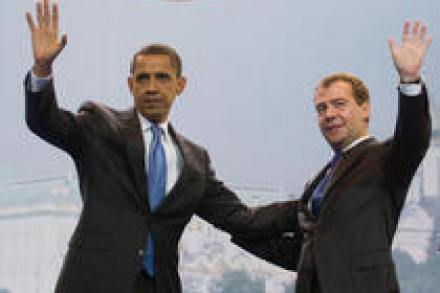
Presidents Obama, and Medvedev (and Prime Minister Putin) seem to be having a good summit. Nuclear talks look like they have gone well, there has been mention of expanding NATO's transit for its Afghan mission through Russia, and the mood - crucial at any summit - has been reasonably good. Nobody stared into any one else's soul, but the leaders nonetheless agreed, as Bush and Putin did a few years ago, that the US and Russia can do business. But is a rapprochement between the US and Russia really possible? Dmitri Trenin, of Carnegie Russia, says the West and Russia share many threats. But he also says that anti-Westernism is an "obsession" on the part of Russia's elite.

Defence review: your say

From our UK edition

So, a Defence Review has been set in motion even though the Government has for a long time said they would hold off from ordering such a study. But with the operational pressure growing, the financial situation dire, and clamour from the likes of George Robertson and Paddy Ashdown for a security rethink, the Government has been left with little choice. Kick-starting the review process also has the advantage of robbing Liam Fox, should he become Defence Secretary, of a "Bank of England moment" - i.e. a quick, early governmental decision that delivers some new momentum for Team Cameron. And Defence Secretary Bob Ainsworth needed to do something to stem the growing scepticism with which his appointment has been met.

NATO navel-gazing

From our UK edition

Right now I'm sitting at an event in Brussels to launch NATO's new Strategic Concept, featuring ex-US Secretary of State Madeleine Allbright, the current and future NATO Secretaries-General, the senior NATO military commander, Admiral Stavridis, and 400 of NATO's Best Friends Forever. The Strategic Concept, what is that? It is the alliance's main strategic document, meant to update NATO's view on threats and challenges. The last one was agreed more than a decade ago. But implementing out the new strategy isn't going to be easy. The alliance is divided into at least three. Those who fret about Russia's agressive behaviour. Those who think expeditionary operations are key. And, finally, those who belong in neither group. Members of the last contingent want to do as little as possible.

No Brits in Europe’s likely new line-up

From our UK edition

With the Swedish EU Presidency beginning, and most diplomats mildly optimistic that the Lisbon treaty will be approved by the Irish in a new referendum, European leaders have turned their attention to filling Europe’s top jobs. But Tony Blair, who looked a shoo-in for the post of President of the European Council (not quite the “President of the EU”), now looks as if he has been dropped. Blair’s main backer, Nicolas Sarkozy, is said to have gone off the idea of bringing his British friend back from the political cold; while Germany’s Chancellor, Angela Merkel, was never keen.

What election?

From our UK edition

Today a Danish journalist came to ask me abut the campaign for the British European elections. "What campaign?" I asked him. Expensesgate has so dominated the airwaves that there has been little room for anything else, let alone elections to a legislative assembly that few people care, or even know, much about. With at least one of the government’s politically-appointed advisers telling me she has begun looking for another job in anticipation of Gordon Brown’s downfall, even most people in politics are focused on the House of Commons, not the European Parliament. That is a shame, because the European Parliament decides some pretty important things.